Learn from Iranian technology.
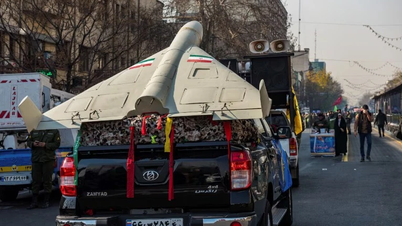
According to Mehr News, the official announcement by the South Korean Ministry of Defense that it is developing a long-range suicide drone based on the US Lucas model is extremely important news.
The American Lucas drone was developed through reverse engineering from Iran's Shahed-136 UAV. This means that South Korea is now moving forward on a path that began with Iranian domestic technology.
This is not the first time the West has acknowledged this reality. About four months ago, the American publication National Interest published a detailed report on the striking similarities between the Lucas UAV and the Shahed-136, stating that the American UAV was essentially a reverse-engineered version of the Iranian model.
Now, with South Korea following a similar path, it could be argued that what was once considered Iran's unique achievement has become a model for developing a new generation of inexpensive drones for advanced military forces.
This development is not merely a technical success, but also marks a shift in Iran's position in the world of defense technology.
Over the past decades, one of the main pillars of the media war against Iran has been the propagation of the idea that a country sanctioned, isolated, and deprived of Western technology is incapable of producing advanced equipment.
But the experience of the past four decades has shown a different path. Instead of waiting for sanctions to be lifted, Iran has focused on a capability that no sanctions can stifle: its human resources, indigenous knowledge, and self-confidence.
This shift in approach gradually led to the formation of thousands of knowledge-based companies, research centers, and technology complexes, producing competitive products in a wide range of fields from nanotechnology and medicine to the defense industry.
Iran's UAV industry is one of the clearest examples of this path.
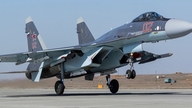
Contrary to the popular belief that military superiority can only be achieved through extremely expensive equipment and complex systems, Iran has chosen a different approach: designing simple, low-cost, mass-produced systems.
The Shahed-136 embodies this very philosophy. While it may not be the most sophisticated UAV system in the world, its intelligent design and low cost have changed the rules of the game on the battlefield.
Products resulting from sanctions
When a technology can deliver similar operational efficiency at a much lower cost, it naturally becomes an ideal model. The significance of the news from South Korea lies precisely in this point.
The Shahed-136 drone is a product of such thinking. This type of drone was not created under normal conditions, but during the most extreme period of sanctions, restrictions, and pressure.
Perhaps if the import of equipment and technology were completely unobstructed, the impetus to develop such a system would never have arisen.
But these restrictions, contrary to the intentions of those who imposed the sanctions, became an opportunity for internal capabilities to flourish.
More importantly, this reality is not only reflected in Iranian media today. When American media reports on the Shahed aircraft being reverse-copied and South Korea reiterates a similar argument, this is an indirect acknowledgment of Iran's technological prowess.
In the language of military competition, no nation copies worthless technology. Reverse copying itself is a sign of the technology's operational value and effectiveness.
From this perspective, Shahed-136 should be seen as a shift in Iran's position in the technology supply chain. A country that for many years was described as merely an importer of technology has now, in some areas, reached a point where its products inspire the design of new systems in other countries.
Of course, this success also creates new responsibilities. Just as technological development is important, so is communicating accurate information about it.


If scientific and defense achievements are not presented properly, the media landscape will be dominated by those attempting to portray these successes as insignificant, accidental, or negligible, when the reality is quite different.
From the US to South Korea, there is evidence that Iran's technology is no longer just an internal matter; it has become part of a global transformation trend in the UAV field.
The story of the Shahed-136 is ultimately not just the story of a single UAV; it is the story of a nation that, under the most extreme conditions, instead of waiting for outside aid, relied on its own internal capabilities.
If today Iranian technology has become a design model in advanced military forces, it is above all the result of investment in knowledge, innovation, and belief in internal capabilities—a path that has taken Iran from "limited" to "the norm."
Source: https://giaoducthoidai.vn/the-gioi-phat-sot-vi-uav-cua-iran-post783577.html