

From April 1, 2025, India will abolish the 20% export tax on onions – a decision seen as a major boost for the global agricultural market.
In April 2025, the Indian government officially announced the abolition of the 20% export tax on onions, a decision that has the potential to bring about profound changes in the global agricultural market.
As one of the world's largest onion exporters, India not only influences the global supply chain but also directly impacts prices, trade balances, and import strategies of many countries.
India - the center of the global onion value chain.
India has long been considered a "king" in the global onion market. According to the Food and Agriculture Organization of the United Nations (FAO), the country consistently ranks among the top onion exporters worldwide, accounting for approximately 25-35% of annual exports. Traditional markets such as Bangladesh, Nepal, the UAE, Malaysia, Saudi Arabia, and Vietnam rely heavily on Indian onions due to their low cost, stable supply, and quality that meets domestic consumption needs.
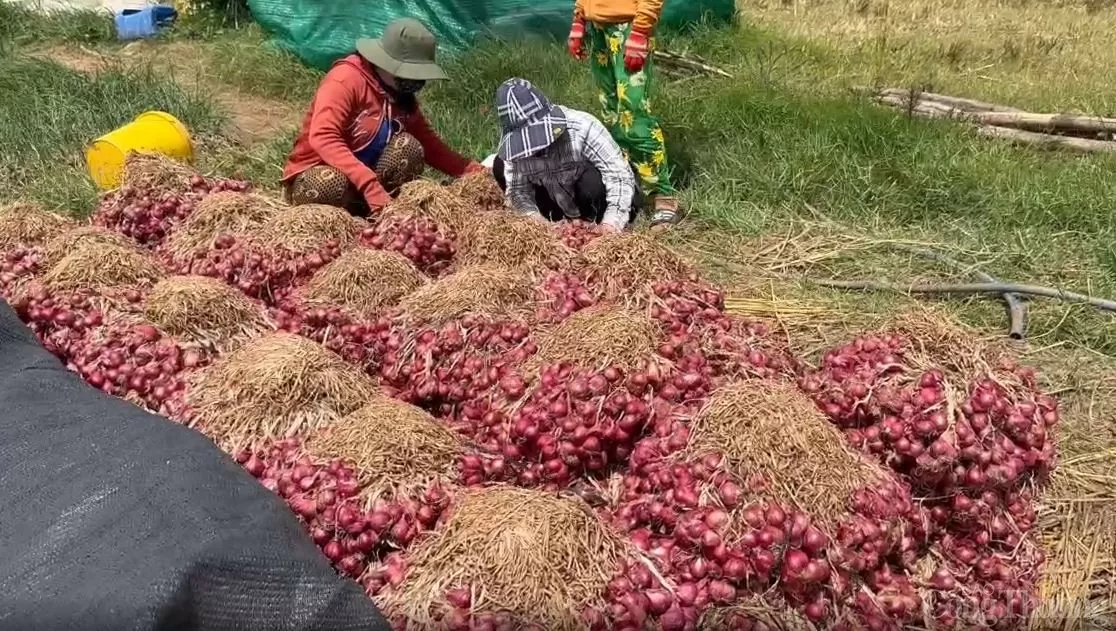 |
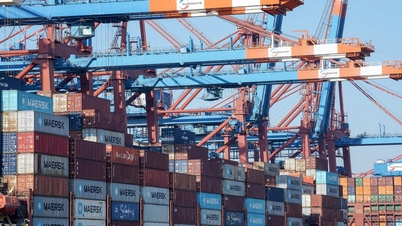
| India is among the top onion exporting countries globally, accounting for approximately 25–35% of the annual export market share. (Illustrative image) |
However, when India imposed a 20% export tax in 2020 to stabilize domestic prices and protect local consumers, onion exports plummeted. Importing countries were forced to switch to alternative sources such as China, the Netherlands, or Egypt, even if it meant accepting higher prices. This not only caused India to lose market share but also altered the global competitive landscape.
Tax removal strategy: An opportunity for recovery and expansion of influence.
The removal of the export tax by 2025 is seen as a recovery strategy by the Indian government, aimed at recapturing the market and supporting the agricultural economy . Given the continued high demand for onions in the global market, this move is expected to significantly reduce the price of Indian onions compared to the period before the tax was imposed, thereby increasing the product's competitiveness.
Observers believe this will create a significant ripple effect. Importers will tend to return to the Indian market, increasing export volumes in the short term. This puts pressure on competitors such as China, the Netherlands, and Pakistan, forcing them to adjust prices or quality to maintain market share. Some international organizations also warn of the possibility of a slight decrease in global onion prices due to the "supply effect" from India, leading to narrowed profit margins for rival exporting countries.
Domestic economic benefits: From farmers to the value chain
Domestically, the decision to abolish the tax is expected to bring a range of economic benefits. According to India's Ministry of Agriculture, major onion-producing states such as Maharashtra, Gujarat, and Karnataka will directly benefit from increased exports. Farmers' incomes could improve due to higher selling prices and renewed demand from international importers.
Furthermore, the large inventories of onions in recent years, which have put pressure on the domestic market, will be consumed more quickly, thereby stabilizing domestic prices and minimizing post-harvest waste. The restart of export activities will also provide impetus to the entire value chain: from logistics, transportation, packaging to processing, thereby creating hundreds of thousands of indirect jobs and promoting rural economic development.
A challenge that cannot be ignored.
While offering many potential benefits, increasing onion exports also faces some significant risks. One of the biggest concerns is the potential imbalance between domestic supply and demand. If onion exports increase too rapidly, the domestic market could experience shortages, driving up domestic prices. This is a situation that occurred in 2019 when onion prices surged, forcing the government to impose a temporary export ban.
Furthermore, with inflation in India still not fully under control, rising food prices such as onions could contribute to increased pressure on the cost of living, especially for low-income urban groups. Over-reliance on export markets also puts the agricultural economy vulnerable to international fluctuations. If major markets like the Middle East and Southeast Asia suddenly cut imports, the Indian onion industry could face large inventories and a sharp drop in prices.
Long-term balanced strategy: Lessons from the past
In this context, experts suggest that India needs to develop a well-coordinated strategy between exports and domestic demand to ensure food security and sustainable growth. Besides technical support and improved onion varieties, the government should invest in market forecasting systems, warehousing, and cold chain management to help farmers and businesses effectively respond to supply and demand fluctuations.
Experience from past fluctuations shows that growth in the agricultural sector can only be sustainable if it is guided by flexible governance and a long-term vision. In this context, onions are not just an export commodity, but also a measure of the government's ability to coordinate and ensure a balance of interests between farmers, consumers, and exporters in the global market.
India's decision to abolish the onion export tax in 2025 is not just a trade policy adjustment, but also reflects a strategic shift in agricultural development thinking – from protectionism to proactive integration. This decision opens up opportunities to restore its position in the global market, bringing tangible economic benefits to farmers and businesses, but also highlights the urgent need for flexible supply-demand management and a long-term vision. In a volatile world, India's success will depend on its ability to strike a harmonious balance between domestic interests and pressures from the international market. |
Source: https://congthuong.vn/an-do-bo-thue-hanh-tay-the-gioi-se-doi-vi-379673.html
![[Image] "Journey of Hope" promotes the organ and tissue donation movement in Vietnam.](https://vphoto.vietnam.vn/thumb/1200x675/vietnam/resource/IMAGE/2026/05/20/1779294400833_1-8910-jpg.webp)
![[Photo] National Assembly Chairman Tran Thanh Man working with the Standing Committee of the National Assembly's Delegation Affairs Committee.](https://vphoto.vietnam.vn/thumb/1200x675/vietnam/resource/IMAGE/2026/05/20/1779294340023_ndo_br_1-1691-jpg.webp)
![[Photo] General Secretary and President To Lam works with the Party Committee of the Ministry of Health on the work of Vietnamese traditional medicine.](https://vphoto.vietnam.vn/thumb/1200x675/vietnam/resource/IMAGE/2026/05/20/1779294323718_a1-bnd-2978-3319-jpg.webp)







































































Comment (0)