

 |
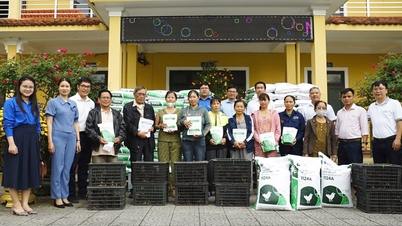
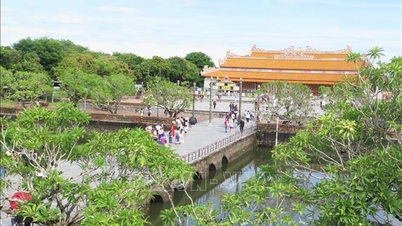
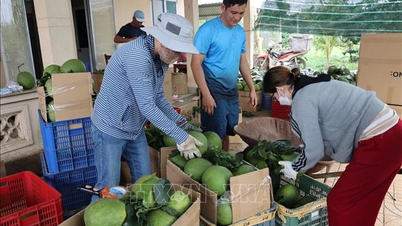
| Developing the Thuy Bieu green tea brand (illustrative image) |
Ensuring financial resources for the commune level.
The 11th session of the Hue City People's Council, 8th term, 2021-2026, approved a resolution on the decentralization of revenue sources, expenditure tasks, and the percentage distribution of budget revenue among local government levels in the city.
Accordingly, after nearly half a year of implementing the two-tiered local government model in the city, it has been observed that the expenditure of commune and ward budgets (collectively referred to as communes) has increased rapidly due to the work and tasks inherited from the district level. This reality necessitates ensuring increasingly large financial resources for state management activities, public services, and infrastructure investment at the grassroots level. Meanwhile, the revenue sources and allocation ratios according to Resolution No. 11/2025/NQ-HĐND dated June 20, 2025, have revealed many aspects that are no longer appropriate, especially the commune budget revenue being much lower than the commune's expenditure needs, leading to limitations on the commune's proactive role in organizing and implementing assigned tasks.
Currently, commune budgets heavily rely on revenue from land-use conversion fees collected from households and land use fees from mixed-use land plots. This revenue source is small and unstable. After the abolition of district-level administration, land development projects and revenue generation from land use fees have been transferred to the city for management by the district People's Committees. According to the current decentralization, the city budget receives 100% of the revenue from land use fees from these land plots.
Allocating revenue from land funds transferred from the former district level to the commune-level People's Committees in a reasonable proportion will provide them with additional revenue for development investment according to the decentralization plan. Reviewing and adjusting the revenue sharing ratios between the city budget and the commune-level budget, especially for land-related revenues, is an urgent requirement to gradually increase commune-level budget revenue in line with assigned tasks, while simultaneously enhancing the proactive approach, responsibility, and efficiency of commune-level budget management.
This resolution will replace Resolution No. 11/2025/NQ-HĐND dated June 20, 2025, which will expire on January 1, 2026. This resolution is also considered consistent with several regulations effective from 2026 and aligns with the decentralization of socio -economic, defense, and security management, as well as the management capacity of the city and commune levels. The allocation of state budget revenue ensures that the city budget plays a leading role; this is consistent with the two-tiered local government model.
In line with reality
Regarding revenue allocation, city-level budgets receive 100% of revenue from sources such as: resource tax (excluding resource tax from oil and gas exploration and exploitation); agricultural land use tax; fees for leasing water surface areas and sea areas; fees for leasing and selling state-owned housing; lottery revenue, etc. Supplementary budget balancing and targeted supplementary revenue from the central budget are also included. For commune-level budgets, the revenue that receives 100% of revenue includes: revenue from the operation of public service units managed by the commune (the portion remitted to the state budget as stipulated by law); non-agricultural land use tax; fees collected by commune-level state agencies; land and house registration fees; revenue remitted to the state budget from the exploitation and disposal of public assets managed and processed by commune-level agencies, organizations, and units in accordance with the law on the management and use of public assets, etc.
The percentage allocation between the central budget, the city budget, and the commune-level budget is based on the principle that revenue managed by the city, such as: land use fees from projects whose investment policies are decided by the city; land funds managed by the city, subject to bidding and auction; revenue from land use conversion managed by the city; and one-time land lease fees, are divided according to a ratio of 15% for the central budget and 85% for the city budget.
For revenue managed at the commune level, such as revenue from land use conversion managed by the commune; revenue from mixed-use land funds; and annual land lease fees, the central budget receives 15%, the city budget receives 42.5%, and the commune budget receives 42.5%. However, for land use fees from land funds invested in and transferred to the city by the former district level, and then auctioned off by the city People's Committee to the commune, the central budget receives 15%, the city budget receives 60%, and the commune budget receives 25%.
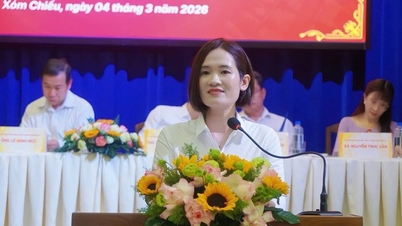
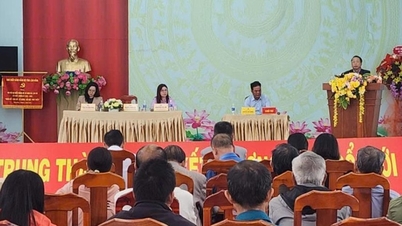
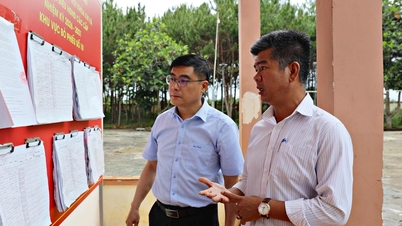
Speaking on the draft resolution, Mr. Vo Le Nhat, Chairman of the Phu Xuan Ward People's Committee, shared that when the two-tiered local government system comes into operation, many tasks and functions are decentralized to the commune-level government for management. Therefore, the city needs to supplement resources to ensure the management and operation process; and pay attention to resources for the maintenance and repair of essential infrastructure in the area.
This resolution will be effective from January 1, 2026 to December 31, 2026. The resolution also specifies that the communes of Long Quang, Khe Tre, Nam Dong, A Luoi 1, A Luoi 2, A Luoi 3, A Luoi 4, and A Luoi 5 currently have low land use fee revenue and face difficulties in balancing their socio-economic development investment expenditures. Therefore, the City People's Committee will provide supplementary funding to these communes, not exceeding 42.5% of their actual funding needs.
Source: https://huengaynay.vn/kinh-te/them-nguon-luc-dau-tu-cho-cap-xa-160742.html




































































Comment (0)