

 |
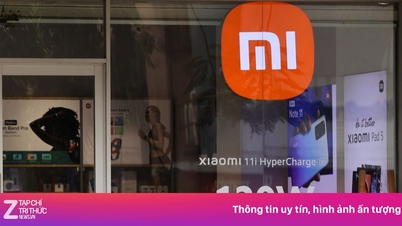
A Xiaomi smartphone model. Photo: Bloomberg . |
According to SCMP , several Chinese smartphone manufacturers have cut their production plans by tens of millions of devices in 2026. This is a consequence of the global memory shortage affecting the consumer electronics industry.
Based on documents sent to suppliers, Xiaomi has narrowed its projected production for the year from 10-70 million smartphones. Previously, in Q4 2025, the company aimed to ship 180 million devices.
Another prominent name is Transsion, which has also lowered its production target for this year from 30-45 million units compared to its initial forecast (around 115 million devices).
Sources emphasize that Xiaomi and Transsion are the two companies most heavily affected by the rising memory prices. Production targets for the year will be adjusted based on market conditions.
The name that was least affected.
Smartphone manufacturers are facing a "hypergrowth cycle" in the memory sector. The top three suppliers—Samsung, SK Hynix, and Micron—are all shifting their focus to high-performance memory for AI, leading to a shortage of memory for consumer products.
Rising memory chip prices have led to continuous adjustments in production forecasts, despite generally cautious sentiment, SCMP quoted a source in the supply chain as saying.
Some smartphone manufacturers, such as Huawei, are less affected due to their close relationships with Chinese memory chip manufacturers, such as ChangXin Memory Technologies. This helps Huawei avoid global repercussions.
Overall, Chinese smartphone manufacturers are still struggling to fully assess the impact of the memory chip shortage. One source indicated that companies are opting for a wait-and-see strategy before adjusting production.
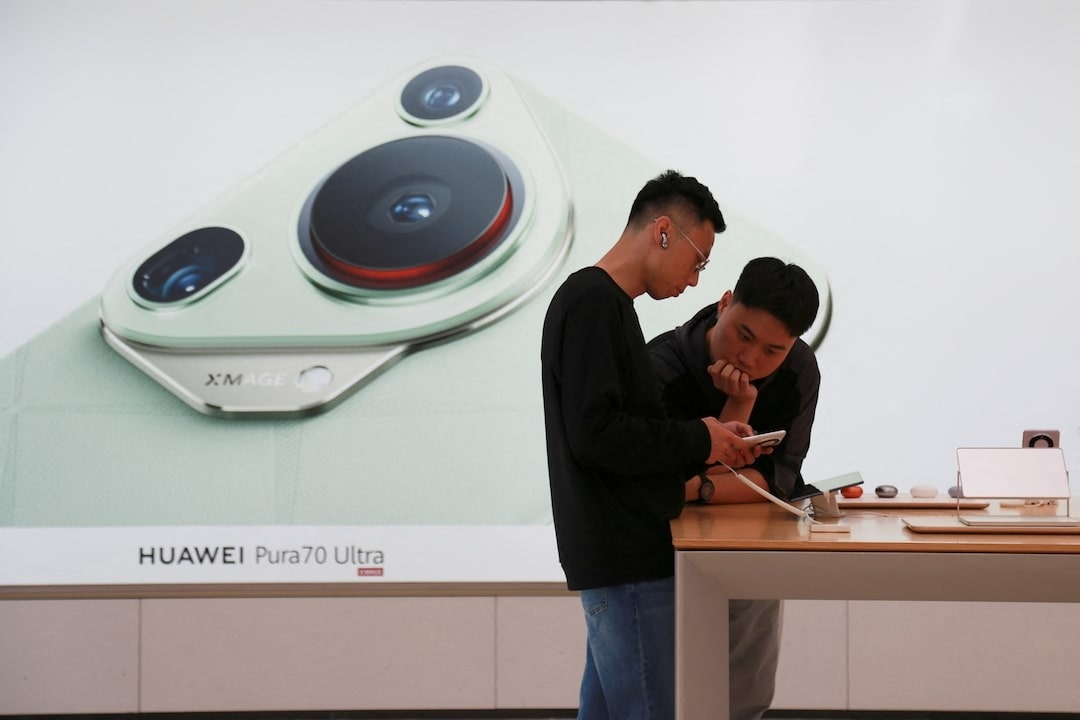 |
A Huawei store in Shanghai, China. Photo: Reuters . |
In mid-January, the Chinese technology news site Jiemian reported that Xiaomi and Oppo had cut their production targets by more than 20%, while Vivo reduced them by nearly 15%.
To address the memory shortage, Oppo has brought Realme back as a sub-brand, similar to OnePlus, to streamline resources and control costs.
According to DigiTimes , some major brands like Apple and Samsung may be less affected in the short term due to their scale and premium pricing. Meanwhile, Huawei benefits from its domestic supply chain and products that are geared towards the high-end segment.
In December 2025, research firm IDC lowered its forecast for the global smartphone market, projecting a 2.9-5.2% decrease in sales in 2026. Analysts believe that some Chinese phone manufacturers targeting the low-cost segment may be most significantly impacted.
Analyst Will Wong from IDC said that Chinese smartphone manufacturers have significantly narrowed their shipment targets, not setting high expectations for the first half of 2026. Some companies have opted to adjust product specifications to "control price increases and protect profits."
Samsung is facing difficulties.
The soaring price of memory has also prompted Samsung to reassess its strategy for the Galaxy S26 series. According to the Korea Times , the company is reportedly considering two options: absorbing the increased costs to maintain a competitive edge over rivals, or raising product prices.
According to the latest rumors from SamMobile , Samsung is trying to keep the price the same as last year (around $1,300 ), at least for the Galaxy S26 Ultra model. However, the company may cut back on some pre-order incentives, such as doubling the storage capacity for early buyers.
Samsung is expected to announce the pricing for its new laptop line at the end of January. Analysts believe this will signal the company's smartphone pricing strategy.
According to market research firm Omdia , the price of LPDDR5 memory for smartphones is expected to increase by approximately 70% compared to the beginning of 2025, while the price of NAND flash memory used in smartphones is projected to increase by up to 100%.
Analytics firm TrendForce also forecasts that the cost of materials (BoM) for smartphones will increase by 5-7% compared to 2025. Meanwhile, Counterpoint Research estimates that memory prices could increase by an additional 40% in the second quarter, leading to an 8-15% increase in BoM compared to current levels. This could push the average selling price of smartphones up by 6.9%.
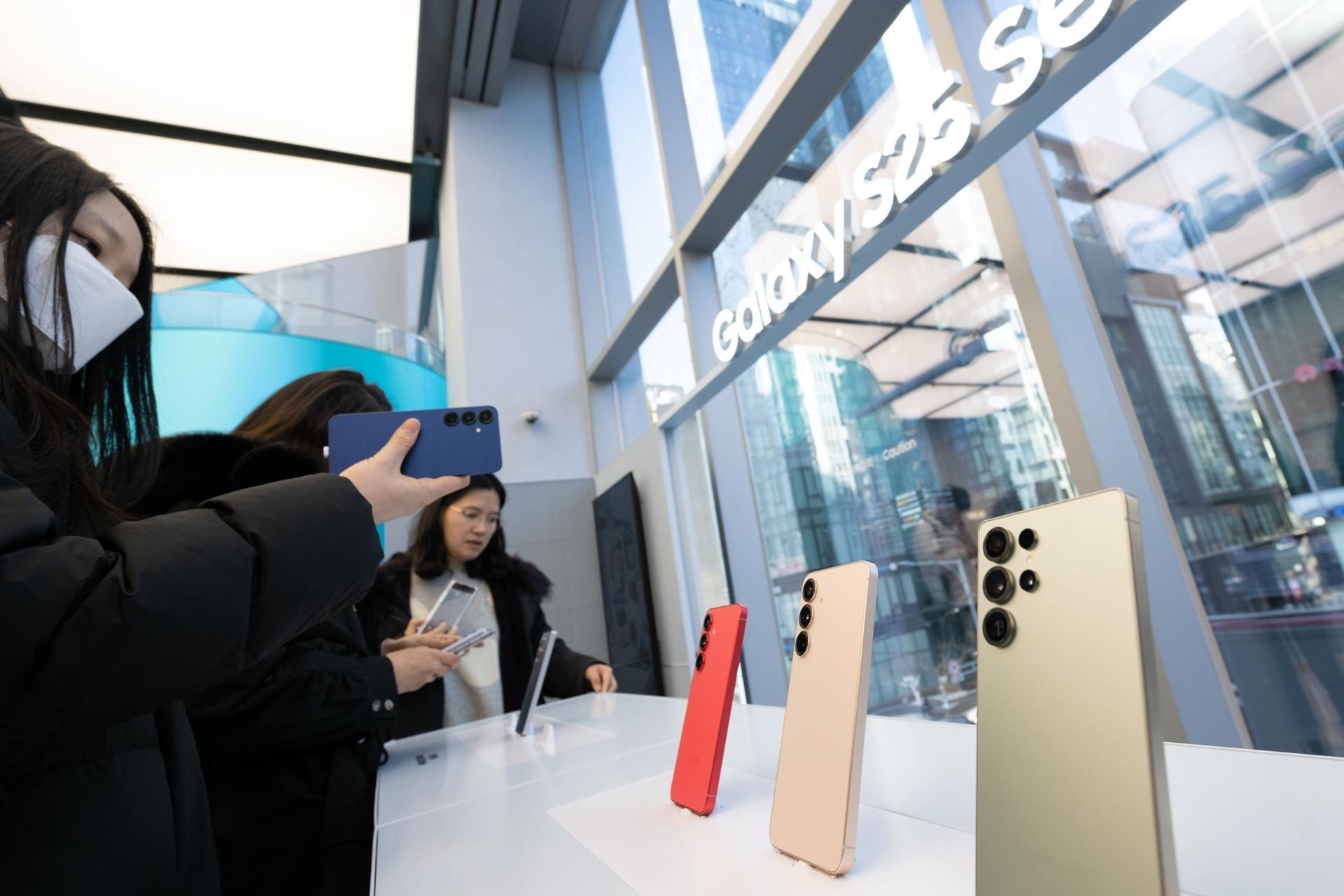 |
Customers experience the Galaxy S25 in front of a Samsung store in Seoul, South Korea. Photo: Korea Times . |
The PC industry has been impacted. According to DRAMeXchange , PC DRAM prices in Q4 2025 increased by 38-43% compared to the previous quarter.
Computer manufacturers have warned of rising prices. Analysts believe the smartphone market will follow suit.
Last year, Samsung kept the price of the Galaxy S25 series unchanged, despite the Snapdragon 8 Elite chip being about 20% more expensive than its predecessor.
With the Galaxy S26, the company planned to use its own Exynos 2600 chip in the standard version. However, the sharper-than-expected increase in memory chip prices may cause the South Korean company to reconsider the situation.
In December 2025, it was reported that Samsung's mobile division was considering signing a long-term contract with a memory division to ensure a stable supply, but the negotiations reportedly failed.
Samsung has yet to confirm the pricing for its upcoming smartphone models. The Galaxy S26 series is expected to launch at the Unpacked 2026 event in late February.
An unprecedented period
Carl Pei, founder of the startup Nothing, is one of the leaders who has publicly shared his concerns about memory scarcity. In a social media post on January 14th, he emphasized that 2026 will be an "unprecedented year" for the smartphone industry.
"Essentially, AI has reshaped demand. Smartphone memory is now crucial to AI data centers, as large-scale cloud computing providers pre-order chips years in advance to support the AI boom."
"For the first time, smartphones are having to compete directly with AI infrastructure, and as a result, memory prices are rising sharply," said Carl Pei.
In the article, Pei also shared that the smartphone industry has relied on the assumption for 15 years that components would become increasingly cheaper.
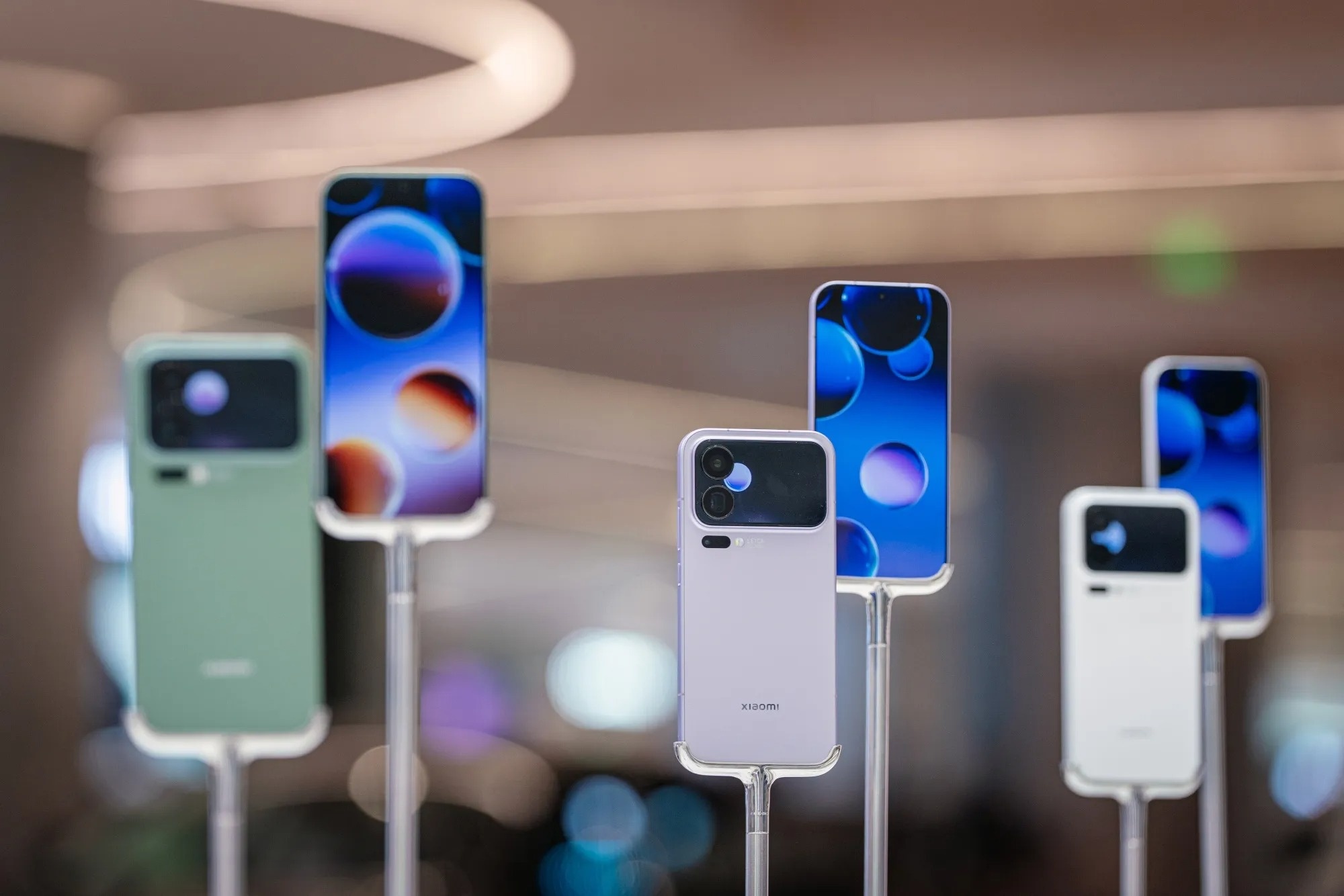 |
Xiaomi smartphones in a store in Beijing, China. Photo: Bloomberg . |
Despite short-term fluctuations, the downward trend in memory and display prices has allowed smartphone manufacturers to upgrade specifications annually without raising prices. However, this model will be broken in 2026 when memory costs rise sharply.
In some cases, memory costs have tripled, and are expected to rise further as demand continues to outpace supply.
According to the founder of Nothing, memory is becoming one of the most expensive smartphone components, potentially accounting for the largest share of smartphone production costs by the end of the year. Components that cost less than $20 last year could see prices rise to over $100 for high-end models.
"Brands are faced with the choice between raising prices (in some cases by 30% or more) and downsizing the product range."
The 'higher specifications at lower prices' model adopted by many budget brands is no longer sustainable by 2026. Some markets, particularly in the mid-range and low-end segments, are likely to decline by 20% or more. Brands that once dominated these segments will struggle," Carl Pei emphasized.
Source: https://znews.vn/thi-truong-smartphone-hon-loan-post1622100.html






















































































Comment (0)