

Electric vehicle sales in the US have failed to take off due to high prices, high maintenance costs, low confidence in quality, and businesses losing money with every sale.
Americans love cars, but not electric ones. According to a Pew Research Center poll, less than two-fifths of the U.S. population intend to buy a purely electric vehicle (EV). Charging systems are booming and there are increasingly more electric vehicle models to choose from, but the survey results are even lower than the previous year.
The business results also reflect this. In the third quarter, electric vehicles accounted for only 8% of total car sales. Since the beginning of the year, fewer than one million electric vehicles (excluding hybrids) have been sold in the US. This is just over half the sales of the European market. Meanwhile, Chinese consumers are buying four times as many electric vehicles.
From July to September, General Motors (GM) sold 20,000 electric vehicles in the U.S., compared to over 600,000 fossil fuel-powered vehicles. On average, dealerships took 92 days to find a buyer for an electric vehicle, compared to 54 days for a gasoline-powered one. Excluding California, Florida, and Texas, which account for more than half of U.S. electric vehicle sales, these vehicles remain scarce in other states.
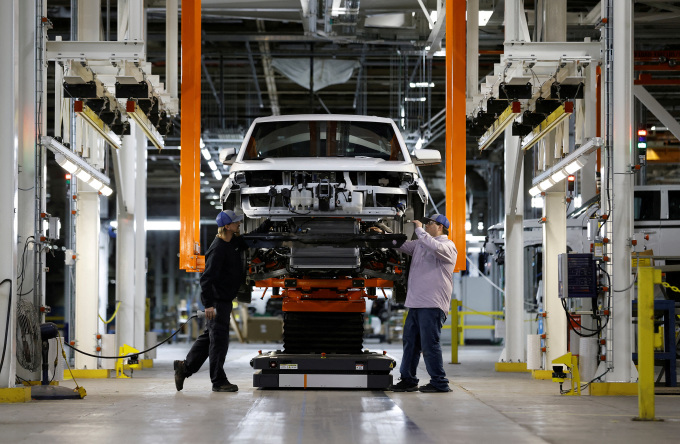
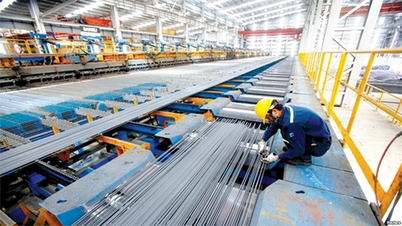
The Lordstown Motors Endurance electric pickup truck assembly line at Foxconn's electric vehicle manufacturing facility in Lordstown, Ohio, on November 30, 2022. Photo: Reuters
Low demand is forcing American automakers to reassess their ambitious electric vehicle production plans. In October, Ford announced it would postpone a $12 billion investment in electric vehicles. That same month, GM delayed a $4 billion plan to convert a plant into an electric pickup truck facility by a year. The Detroit giant also abandoned its electric vehicle production targets, including its expectation of 100,000 electric vehicles in the second half of this year, and did not set any new targets.
Battery manufacturers that have partnered with automotive companies to build battery plants in the US are also becoming cautious. In September, SK Battery laid off more than 100 employees and reduced production at a plant in Georgia. Just last November, LG Energy (South Korea) announced it had laid off 170 workers at its plant in Michigan.
All of this highlights the obstacles on the path to electrifying automobiles in the US, according to The Economist . This revolution will determine the nation's energy transition because passenger cars account for 20% of total US carbon emissions.
The biggest hurdle is price. An average electric vehicle costs $52,000, according to the consulting firm Cox Automotive. This isn't much higher than the average price of $48,000 for a gasoline-powered car. However, beyond the purchase price, the cost of owning and maintaining the vehicle for the next five years is significantly higher. Specifically, after adding operating costs, it costs an average of $65,000 to own an electric vehicle, due to the need for expensive home charging systems and costly insurance. This is $9,000 more than a gasoline-powered car.
The government 's $7,500 tax incentive for electric vehicles may offset some of the price disadvantages. However, it only applies to electric vehicles with batteries manufactured or assembled in North America, or those with a minimum level of critical minerals from countries with which the U.S. has free trade agreements.
Even when the chosen vehicle qualifies for the incentive program, buyers must still file federal income tax returns to complete the necessary procedures. Meanwhile, electric vehicles are still relatively new, and the rapidly changing technology makes it difficult for customers to predict how quickly a vehicle will depreciate after purchase. This factor causes them to hesitate or not buy at all.
Another reason is that some customers are still not confident about the quality. In the past few years, several electric vehicles have been recalled due to faulty batteries. Furthermore, according to a quality survey by research firm JD Power, 7 out of 10 car models experiencing the most basic problems, such as faulty door handles, are electric vehicles.
Nevertheless, sales of affordable electric vehicles remain strong. Inexpensive electric cars priced under $30,000 seem to offer better value for money to Americans, but they are difficult to find. Cheap, high-quality Chinese electric vehicles from companies like BYD have made China the world's largest electric vehicle market and are now flooding Europe. However, they haven't been able to penetrate the US market due to high tariffs and other barriers.
Meanwhile, American automakers are following Tesla's lead in focusing on premium models to seek higher profit margins. GM and Honda (Japan) recently canceled a joint $5 billion plan to build affordable electric vehicles.
All of this is putting the American automotive industry in a downward spiral. Consumers' reluctance to spend money on expensive electric vehicles is forcing manufacturers to offer steep discounts to clear inventory. Tesla has lowered prices several times over the past year. Manufacturers in general are offering average discounts of nearly 10% on electric vehicles, double the discounts offered on gasoline-powered cars.
But this is making things even more difficult for electric vehicle divisions within automakers. Ford is losing $62,000 on each electric vehicle sold, compared to a net profit of $2,500 per gasoline-powered vehicle. This continuous loss could discourage companies from investing in electric vehicles, which is a key factor in attracting more customers.
American automakers are still hoping to break free from this vicious cycle. They are mostly delaying investments in electric vehicles rather than giving up. In the next year or two, many companies plan to unveil dedicated platform structures for a purely electric vehicle, instead of taking a gasoline-powered chassis and replacing the internal combustion engine with an electric motor and battery pack.
Some of the quality issues of electric vehicles, which have been persistent problems, are expected to be resolved once production lines for this type of vehicle are perfected. And from January 2024, tax incentives will also be available at sales points, easing the burden on buyers in the paperwork process.
All of these factors will ultimately improve quality, expand product ranges, lower prices, and enable companies to profit from selling electric vehicles. Ultimately, the electric vehicle revolution in the US may arrive, but a little later than expected.
Phiên An ( according to The Economist )
Source link






































































































Comment (0)