

Hoi An boasts a rich culinary tradition, utilizing readily available ingredients from the mountains, plains, and coast, reflecting both the characteristics of the central coastal region and the unique charm of Hoi An itself.
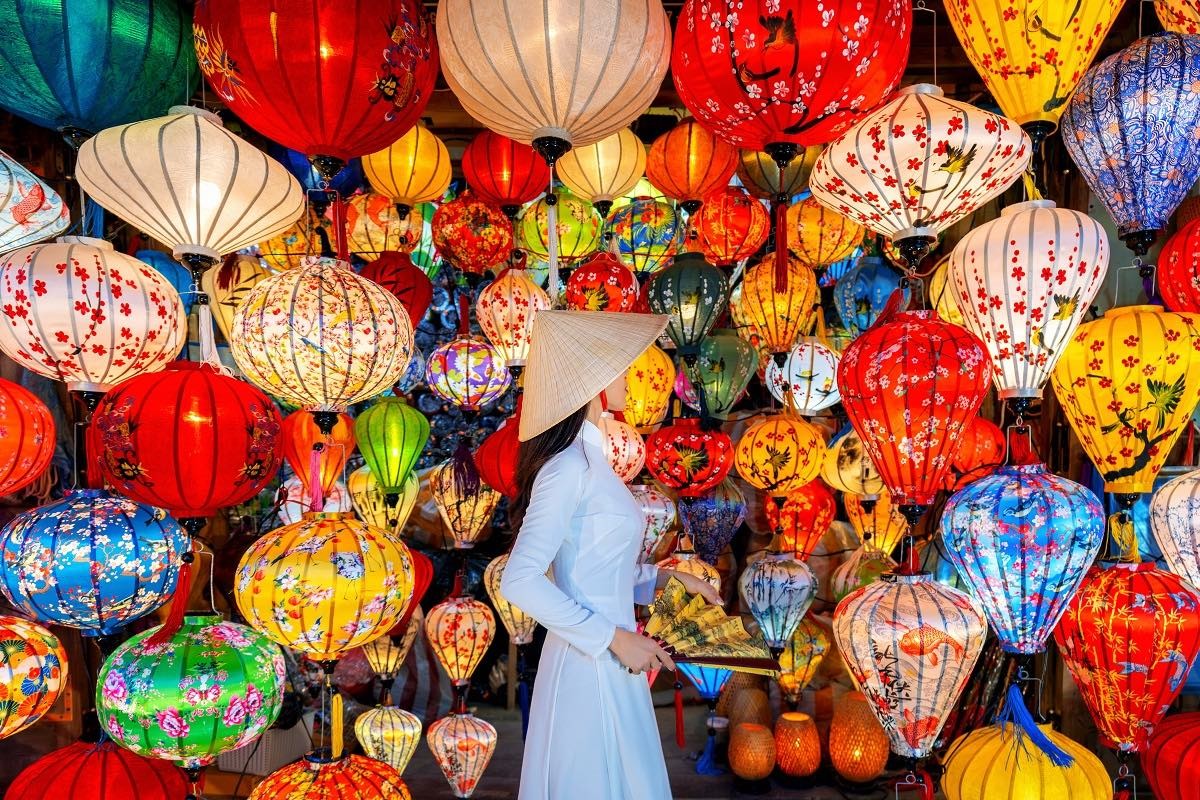 |
| Hoi An Old Town sparkles with vibrant lanterns. (Source: TITC) |
Strolling along charming and picturesque streets, admiring the old houses steeped in history, immersing oneself in the nostalgic natural scenery, and not forgetting to enjoy the unique cuisine are memorable experiences for tourists on their journey to the heritage city of Hoi An.
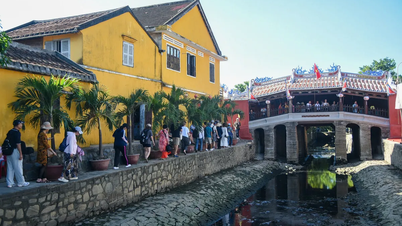
The ancient town sparkles beside the Hoai River.
Nestled on the tranquil Hoai River – a tributary of the lower Thu Bon River – the ancient town of Hoi An retains its timeless beauty. Once a bustling international trading port in the 17th and 18th centuries, it served as a hub for trade and commerce among Vietnamese, Chinese, Japanese, and Westerners. Therefore, Hoi An's cuisine is a fusion and culmination of many distinctive cultures.
Thanks to its diverse topography, the people of Hoi An have accumulated a rich culinary tradition, utilizing readily available ingredients from the mountains, plains, and coast. This cuisine reflects both the characteristics of the central coastal region and the unique features of Hoi An itself.
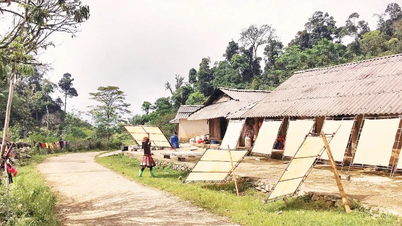
Hoi An's climate is a blend of the southern and northern climates, with distinct rainy and dry seasons, and warm, pleasant weather year-round. Perhaps it is because of this climate that fresh vegetables have become an indispensable part of every meal for the people of Hoi An, most famously the vegetables from Tra Que village.
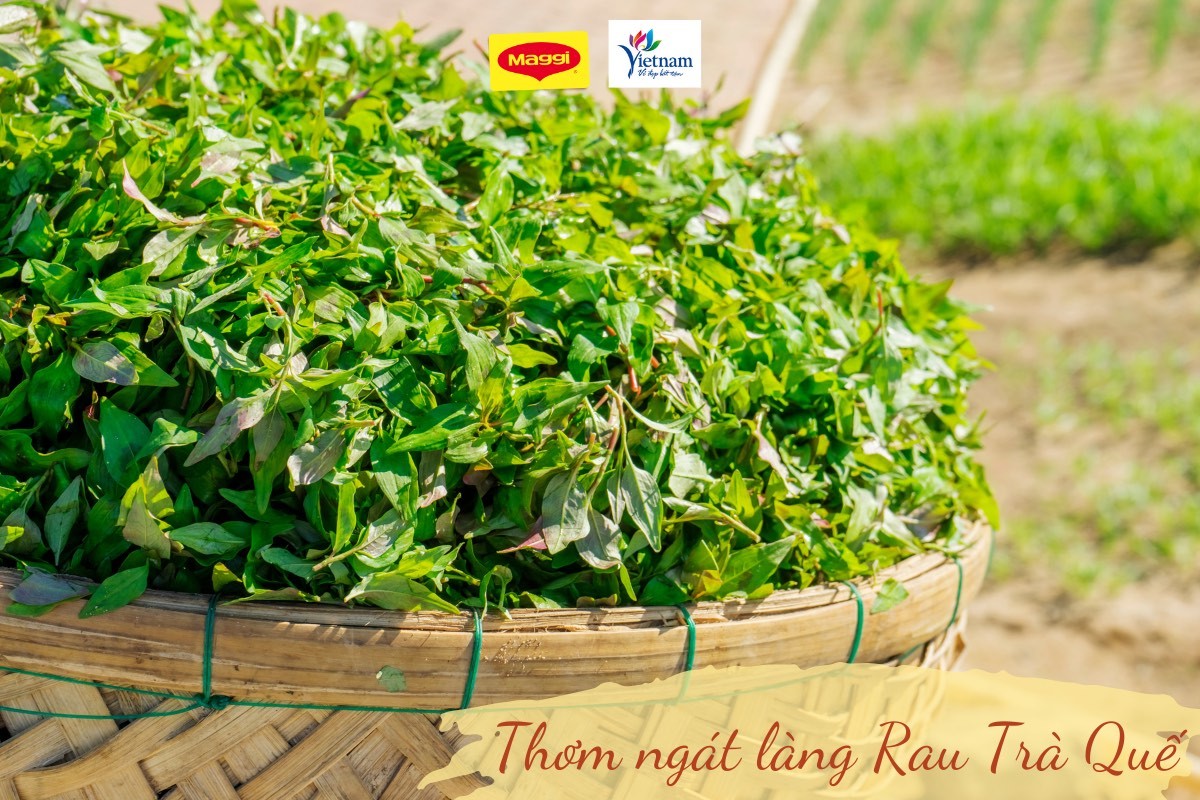 |
| Baskets of fresh, tender herbs from Tra Que vegetable village. (Source: TITC) |
Here, visitors will have the opportunity to learn about dozens of diverse leafy vegetables and herbs grown on fertile land, such as Vietnamese coriander, mint, basil, coriander, perilla, chives, onions, bitter herbs, and fish mint… There are so many types of vegetables here that the people of Hoi An even pass down the saying: “Whoever goes to Tra Que, go there/ Tra Que has the craft of making fermented mung bean sprouts/ In the morning they sell onions/ In the evening they water the plants for five watches without lying down . ”
Visitors can also experience the authentic life of a farmer by personally tilling the soil, planting, and harvesting vegetables. Or they can enjoy Hoi An specialties such as banh vac (rice cakes), clam salad, Quang noodles, cao lau (noodles)... prepared from freshly harvested vegetables.
Hoi An culinary culture - Where culinary excellence converges.
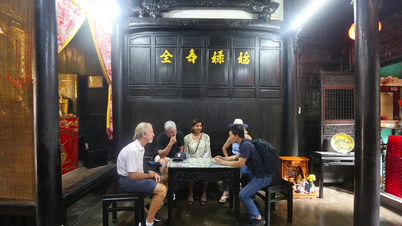
Hoi An's streets are characterized by ancient houses, some of which are hundreds of years old. Today, some of these houses have become spaces for tourists to enjoy food and drinks when visiting this heritage site.
In a nostalgic and romantic setting, the simple flavors and presentation of Hoi An's dishes transport visitors back in time, allowing them to immerse themselves in the bustling atmosphere of a golden age and experience the unique traditional culture. In Hoi An, simply eating a steamed bun, a savory pancake, a rice paper roll, or a bowl of clam salad is enough to feel the gentle spirit of the people of Hoi An, and the blessings bestowed upon this fertile land by the rivers, the sea, and the plains.
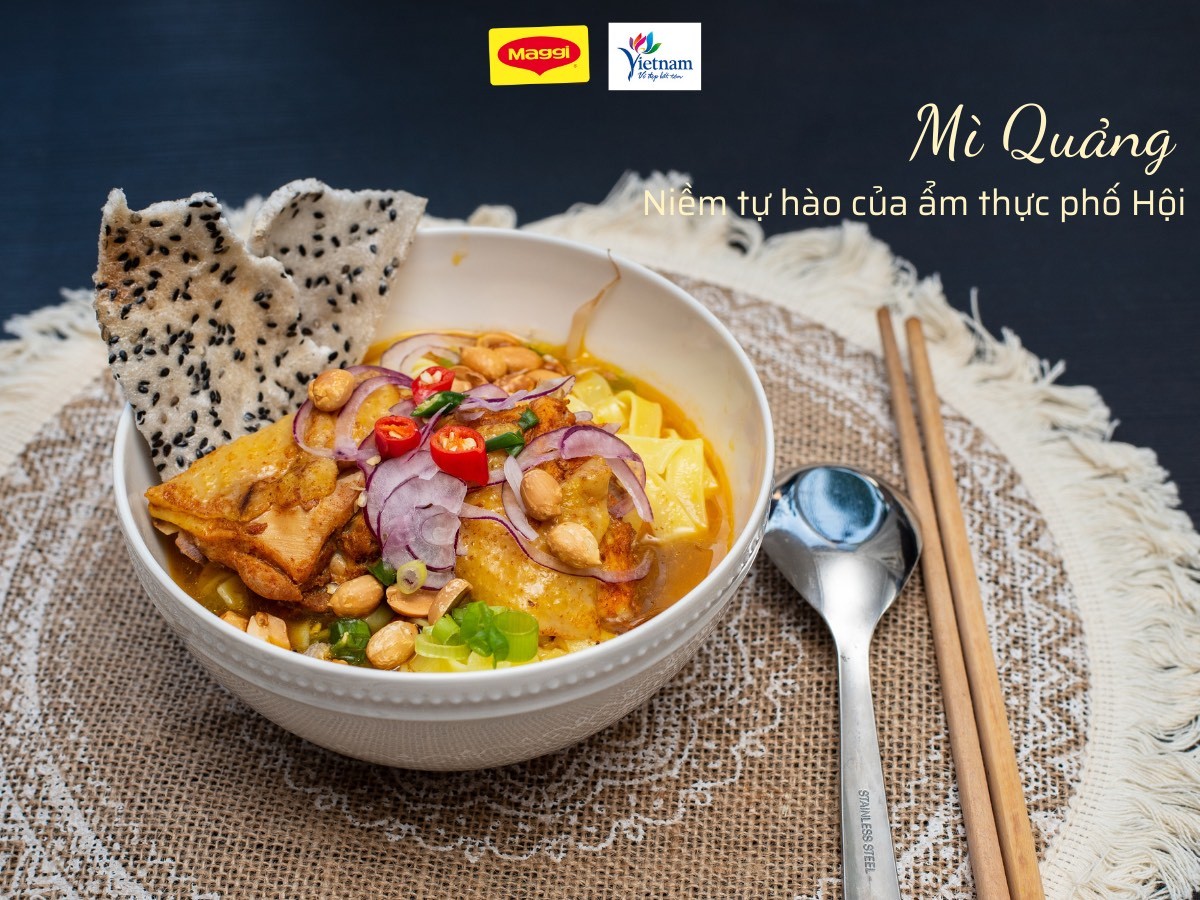 |
| Quang noodles, one of 12 Vietnamese dishes awarded "Asian culinary value". (Source: TITC) |
One of the proudest aspects of Hoi An's culinary culture is Quang noodles – a dish that showcases the flexibility and creativity of the local people, who adapt their recipes to the season. Almost any ingredient, whether shrimp, pork, chicken, snakehead fish, or frog, can be used in noodle dishes. Quang noodles are made from a type of less sticky rice and are coated in fragrant peanut oil infused with shallots to prevent them from sticking together.
The subtle aroma of peanut oil, combined with its unique flavor, has made this dish so appealing that it was officially recognized by the Asian Record Organization as one of the 12 Vietnamese dishes with "Asian culinary value".
While in Hoi An, don't forget to try Cao Lau, a dish frequently mentioned as a specialty in folk songs about this region: "Hoi An has Hawaiian cuisine / Japanese Bridge, Ong Bon restaurant, Nam Co's Cao Lau," or " Hoi An's specialty dishes / Ong Canh's Cao Lau, Tam Tam's banh xeo ." According to locals, the name Cao Lau originates from the fact that in the past, this was a delicacy enjoyed on a high floor, where diners could savor the unique flavor of Cao Lau while admiring the shimmering streets of Hoi An alongside the bustling Hoai River with its numerous boats.
The process of making cao lầu noodles is very elaborate: the chef must soak the rice in carefully filtered ash water, then grind it into a watery paste. The paste is then repeatedly dried using a cloth before being rolled out and cut into strands, steamed, and dried. A bowl of cao lầu is vibrant and visually appealing, with braised pork, braising sauce, and crispy pork cracklings, served with fresh herbs and spices harvested from Tra Que vegetable village. The secret to a truly delicious bowl of cao lầu lies in the braising sauce, which has both the sweetness of the meat and the rich flavor of sugar, soy sauce, and fish sauce.
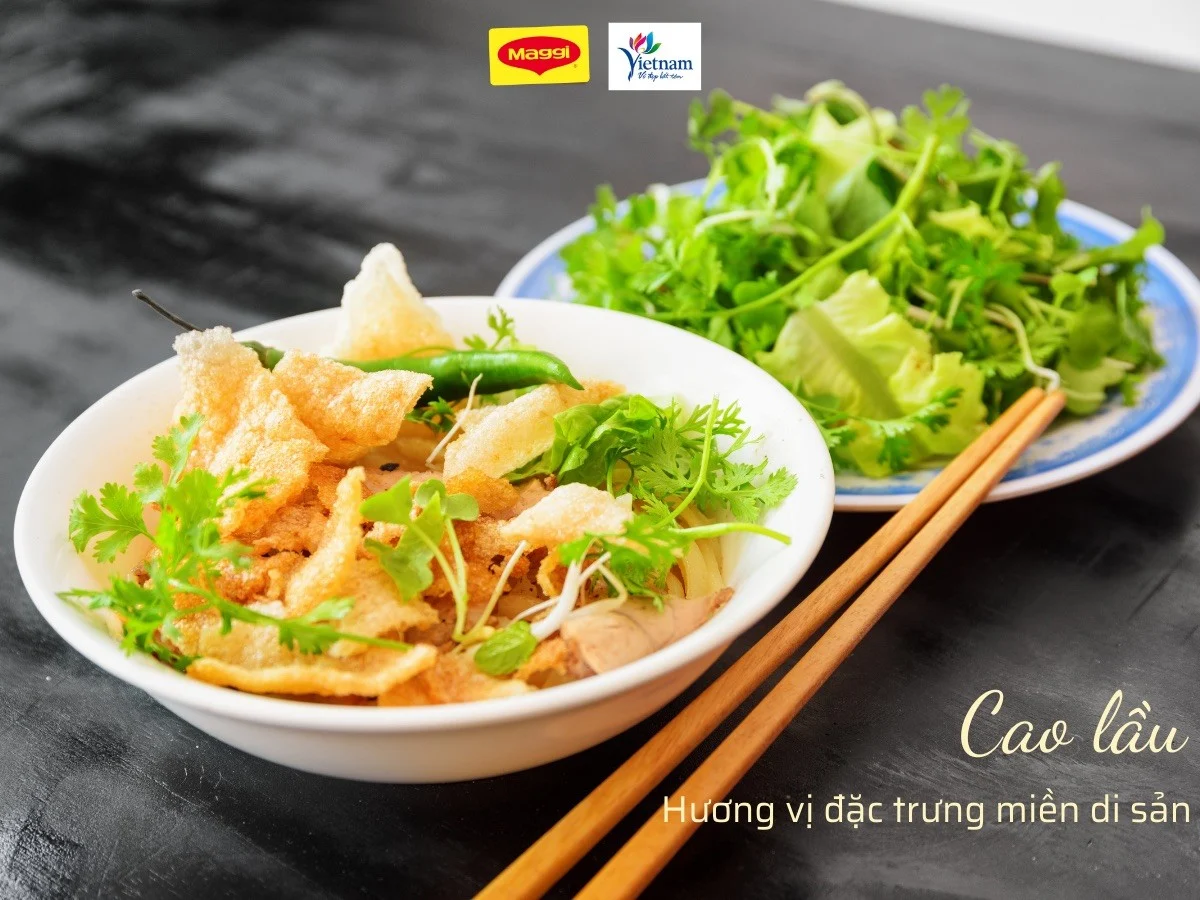 |
| Cao Lau is a famous dish in Hoi An. (Source: TITC) |
Hoi An also attracts tourists with a famous specialty dish - chicken rice. With skillful hands, the people of Hoi An utilize fresh, delicious chicken from Tam Ky and fragrant, sticky rice grown along the Thu Bon River to create this renowned and delicious chicken rice. The tender, succulent chicken, combined with the sticky, golden-brown rice, served with a salad and a special sauce, will leave a lasting impression on visitors.
Previously, chicken rice was commonly sold from street vendors throughout the streets and alleys. Later, it became popular among locals and is now available in almost all restaurants, large and small, on the streets of Hoi An.
The people of Hoi An in particular, and Quang Nam province in general, have a saying, " When you're hungry, eat a bon bon fruit ." Bon bon is a specialty fruit of the mountains and forests. Not only is it a dessert, but with their inherent creativity, the locals also use it to prepare many delicious dishes, the most notable being bon bon salad.
The rambutan fruit, harvested from the tree, is peeled, separated into segments, and the thin, silky membrane is removed. It is then mixed with stir-fried shrimp and finely chopped pork belly. The dressing includes lime juice mixed with sugar, garlic, chili, and topped with roasted peanuts, fried onions, and Vietnamese coriander.
Authentic bon bon salad combines the perfect balance of sour, sweet, spicy, and aromatic flavors. When enjoying it, diners can savor it with crispy shrimp crackers or simply eat it on its own – either way, it will leave a lasting impression.
 |
The picturesque ancient town of Hoi An lies beside the Hoai River. (Source: TITC) |
Walking through Hoi An, tourists will easily spot many street vendors selling sweet soups (chè). Chè is a particularly popular snack among the locals. Unlike Hue's elaborately prepared sweet soups with their royal flavors, Hoi An's sweet soups lean towards a rustic, simple style, such as corn sweet soup with black grass jelly, black sesame sweet soup, and mung bean sweet soup… Sitting on a plastic chair, enjoying a cup of sweet soup while gazing at the small streets, one truly appreciates the charm of this city.
Hoi An offers more than just ancient architecture, nostalgic atmosphere, vibrant bougainvillea, or enchanting lantern-lit nights; in the hearts of every visitor, it also boasts delicious cuisine that, once tasted, leaves a lasting impression, making people long to return and enjoy a moment of leisure and peace.
Source























![[Photo] Prime Minister Pham Minh Chinh receives the Chinese Ambassador to Vietnam](https://vphoto.vietnam.vn/thumb/1200x675/vietnam/resource/IMAGE/2026/04/05/1775397481797_ndo_br_dsc-5512-jpg.webp)



















































Comment (0)