


village in the middle of the city
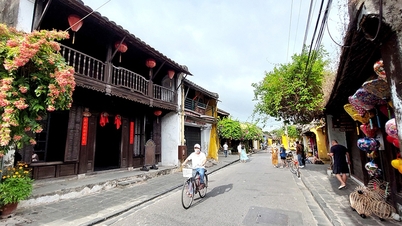
Throughout history, Hoi An has been considered a unique urban center, a place where "villages exist within the city." From the 16th to the 18th centuries, it was a bustling international trading port. Despite being a vibrant commercial center, the lives of Hoi An's residents still retain strong traces of traditional village culture.
Despite being in an urban area, the residents of Hoi An still preserve familiar village values in their daily lives, such as camaraderie, neighborly affection, mutual support, and respect for elders. The combination of urban commercial elements and traditional village values has created Hoi An's unique character. Amidst the bustling trade of the ancient port, community relationships remain strong through kinship and family ties.
The formation of clans in Hoi An is closely linked to the pioneering efforts of its inhabitants. From a founding ancestor who established a livelihood, descendants gradually multiplied, establishing ancestral temples and forming clan organizations to preserve family traditions.
Over the centuries, Vietnamese and Chinese ethnic groups have coexisted, exchanging cultures and contributing to the unique identity of the ancient city of Hoi An.
Family genealogy - the "history" of each lineage.
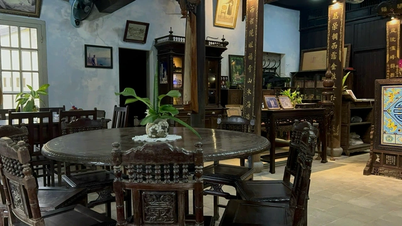
In the clan life of Hoi An, ancestral halls and family genealogies play a particularly important role. In addition to the ancestral altar in each family, many clans also build ancestral halls to serve as a place of communal worship and a center of spiritual life for the entire clan.
Ancestral halls typically enshrine the founding ancestor and subsequent generations of the family, while also preserving the original family genealogy. They are also the venue for clan meetings, ancestral commemoration ceremonies, and other important gatherings of descendants.
As the number of descendants increased, branches of the family often separated to establish their own ancestral temples for convenience in worship. However, these branches still maintained connections with the main ancestral temple, creating a clan system that was both branched and closely connected.
Family genealogies are considered a valuable asset for each lineage. They not only record the names, birth dates, and death dates of family members, but also preserve much important information about the family history and the land where they lived.
Through family genealogies, one can learn about the migration of ancestors to Hoi An as well as the changes that took place in this land. Therefore, for researchers, genealogies are not only family documents but also valuable historical sources for understanding the social history of Hoi An. Currently, Hoi An still has many families that preserve valuable genealogies, such as the La, Tran, Truong, Chau, Luu, Le, Diep, and Ta clans…
The thread that binds generations together.
Along with ancestral halls and genealogies, the clan organizational system plays a crucial role in community life in Hoi An. Each clan usually has a clan council to manage common affairs, headed by the clan leader - the person representing the prestige and traditions of the clan.

One of the most important occasions for clans is the ancestral commemoration day, usually held in the last months of the year, also known as the ancestral tomb ceremony. This is the time when descendants from all over return to the ancestral hall to offer incense and remember their ancestors. The atmosphere of the ancestral tomb ceremony is both solemn and warm: everyone helps to clean the tombs, prepare the offerings, and recall the family traditions. After the ceremony, descendants gather to visit, share stories about their work and lives after a year of separation.
In daily life, many clans still maintain strict rules regarding hierarchy and forms of address within the family. In many Vietnamese clans, roles are determined by rank: even if the cousins are younger, they are still called "brother" or "sister"; even if the cousins are older, they are still called "younger sibling".
Today, behind the beauty of Hoi An ancient town lies a system of enduring clans that have contributed to preserving values of kinship, family ties, and traditions through generations.
Source: https://baodanang.vn/van-hoa-dong-toc-o-pho-hoi-3329754.html

![[Image] "Journey of Hope" promotes the organ and tissue donation movement in Vietnam.](https://vphoto.vietnam.vn/thumb/1200x675/vietnam/resource/IMAGE/2026/05/20/1779294400833_1-8910-jpg.webp)

























































Comment (0)