

The Israeli-Hamas hostage exchange agreement is a breakthrough after weeks of conflict, but there is still a long way to go.
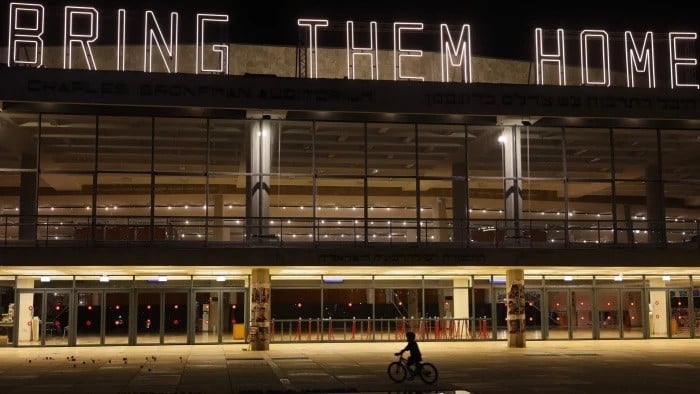 |
| Israel and Hamas have reached a four-day ceasefire agreement and released key hostages. The photo shows a banner calling for the release of hostages in Tel Aviv, Israel. (Source: AFP/Getty Images) |
On November 22, following negotiations in Qatar, with contributions from the United States and Egypt, Israel and the Hamas Islamic movement in the Gaza Strip reached an agreement on hostage exchange and a ceasefire. The agreement officially took effect on November 23 (local time). According to observers, this is the most significant diplomatic breakthrough since the conflict erupted 45 days ago.
Specifically, the two sides will agree to a four-day ceasefire. More importantly, the agreement includes the release of 50 women and children currently held hostage in the Gaza Strip. In return, Israel will release 150 Palestinian women and children. If conditions are favorable, Hamas will continue the exchange of 50 hostages for 150 prisoners in November.
In terms of procedure, hostages in the Gaza Strip will be released in groups of 10-12 people per day on consecutive days. Israel will do the same when its first hostage returns. A senior US official said three of their citizens are expected to be released in this phase, including a three-year-old girl. Israel will facilitate the delivery of large amounts of humanitarian aid, including fuel, to the Gaza Strip.
There are reports that the parties have discussed extending the ceasefire, on the condition that 10 Israelis are released for each day the agreement is in effect.
Multiple reactions
After the agreement was reached, the parties involved and the international community responded quickly.
The Israeli public strongly supports the agreement to release the hostages. Posters displayed during recent marches in Tel Aviv read: "Bring them home." Their relatives consider it the "best deal," at least for now.
On the government side, Israeli Prime Minister Benjamin Netanyahu asserted that the hostage rescue agreement was a difficult but correct decision, allowing Israel to continue its conflict with Hamas.
However, some hardline officials in his cabinet objected, considering it a "bad" deal that failed to secure the release of all hostages, thus reducing the chances of completely eliminating Hamas. General Herzi Halevi, Chairman of the IDF Joint Chiefs of Staff, assessed: "The ground operation provides a better opportunity for the hostages to return home. They inflict damage on Hamas and create the necessary pressure. Therefore, we will continue this pressure."
Currently, Hamas leader Yahya Sinwar in the Gaza Strip, who is believed to be in charge of the hostage negotiations, has not issued an official comment. Last month, he stated that he was "ready to exchange hostages immediately with Israel." All hostages in the Gaza Strip would be released in exchange for Palestinian prisoners in Israel, estimated at up to 6,000.
The international community also reacted quickly.
On social media platform X , Palestinian Authority (PA) Interior Minister Hussein al-Sheikh wrote: “President Mahmoud Abbas and Palestinian leaders welcome the humanitarian ceasefire and appreciate the efforts of Qatar and Egypt.” The Jordanian Foreign Ministry hopes the agreement is the first step towards a complete end to the conflict.
For his part, US President Joe Biden welcomed the agreement and affirmed: “The agreement will bring more American hostages home. I will not stop until all of them are released.” Considering it “the result of the government’s tireless diplomatic efforts,” Foreign Minister Antony Blinken asserted that the US would “not stop as long as Hamas continues to hold hostages in Gaza.”
British Foreign Secretary David Cameron said this was "an important step toward alleviating the suffering of the hostage families and resolving the humanitarian crisis in the Gaza Strip." He urged all parties to strictly adhere to the agreement.
European Commission President Ursula Von Der Leyen warmly welcomed the agreement, thanking all parties involved and affirming that “everything in our power will be done, using this time to organize humanitarian aid for Gaza.”
Meanwhile, Russian Foreign Ministry spokeswoman Maria Zakharova stated: “Moscow welcomes the four-day ceasefire between Israel and Hamas. This is precisely what Russia has been calling for since the conflict escalated.”
Chinese Foreign Ministry spokesman Mao Ning welcomed the agreement and hoped it would “contribute to resolving the humanitarian disaster and de-escalating tensions.”
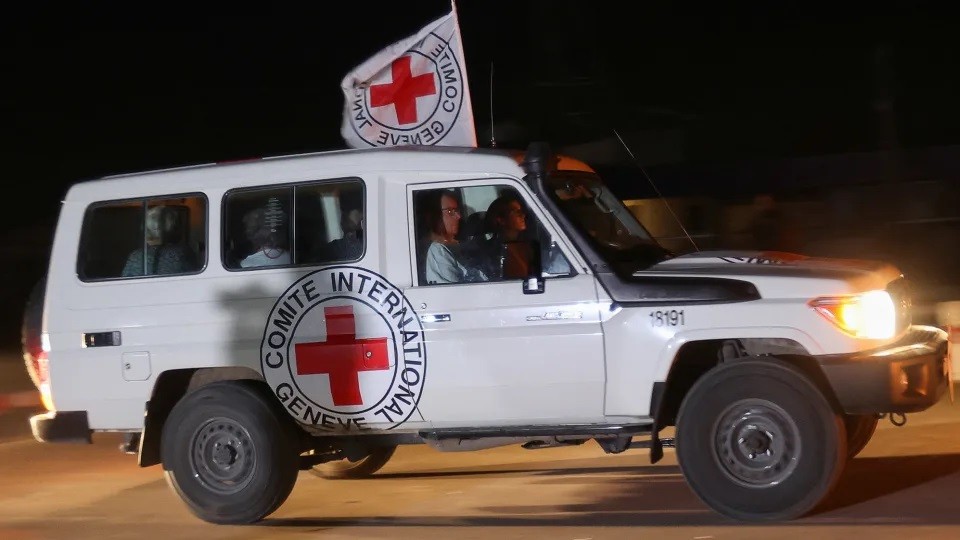 |
| A Red Cross vehicle carrying hostages released from the Gaza Strip arrived at the Egyptian border on November 24. (Source: Reuters) |
There are still difficulties.
However, this means that more than 200 Israelis and foreign nationals remain held hostage. According to the Financial Times (UK), the two sides may negotiate further regarding the release of foreign nationals, including Nepalese and Thai citizens.
However, the fate of the remaining Jews is more complicated. Hardline Israeli ministers may not be ready to release all Palestinian prisoners. Furthermore, according to security analysts, once Hamas releases all hostages, the IDF could further intensify its landing operation, focusing on the more than 500km long tunnel system beneath the Gaza Strip.
In addition, the humanitarian aid story is also noteworthy. According to the Financial Times , under pressure from the US, Israel has allowed more vehicles carrying humanitarian aid and fuel to enter the Gaza Strip. With this agreement, the Jewish state will "open its doors" to hundreds of trucks carrying humanitarian goods, medical supplies, fuel, and other items into the area over four days.
However, it remains unclear whether this aid will be sufficient to meet the growing needs in Gaza. An estimated 1 in 2.3 million of the region's residents have been displaced from the north and are seeking refuge in schools and hospitals in the south.
Analysts believe that even if the aid is provided, there is no guarantee that the goods will be coordinated and distributed to those in need, given the current fuel shortages and dispersed population. These will be key challenges for negotiators in the Qatar conflict in the coming period.
Thus, it can be seen that the temporary ceasefire and hostage exchange agreement between Israel and Hamas is a small but necessary step in the journey to completely end the conflict in the Gaza Strip, bringing peace there in particular and the Middle East in general.
Source
![[Photo] National Assembly Chairman Tran Thanh Man working with the Standing Committee of the National Assembly's Delegation Affairs Committee.](https://vphoto.vietnam.vn/thumb/1200x675/vietnam/resource/IMAGE/2026/05/20/1779294340023_ndo_br_1-1691-jpg.webp)
![[Image] "Journey of Hope" promotes the organ and tissue donation movement in Vietnam.](https://vphoto.vietnam.vn/thumb/1200x675/vietnam/resource/IMAGE/2026/05/20/1779294400833_1-8910-jpg.webp)

![[Photo] General Secretary and President To Lam works with the Party Committee of the Ministry of Health on the work of Vietnamese traditional medicine.](https://vphoto.vietnam.vn/thumb/1200x675/vietnam/resource/IMAGE/2026/05/20/1779294323718_a1-bnd-2978-3319-jpg.webp)



















































































Comment (0)