Leading us on a tour of her nearly 1-hectare coffee plantation with approximately 700 thriving trees, Ms. Tran Thi Thanh Thuyet inspected each row of trees while recounting the early days of her business. Since 1998, when many households in the area were still primarily growing cassava, fruit trees, or some traditional industrial crops, Ms. Thuyet began researching and experimenting with growing Robusta coffee.
 |
| Ms. Tran Thi Thanh Thuyet in Lia commune inspects her thriving robusta coffee garden - Photo: LA |
This was a rather bold decision at the time because Robusta coffee was traditionally associated with the Central Highlands provinces, while the western part of Quang Tri province had long been accustomed to Arabica coffee. Lacking much experience, she researched the techniques herself, then went all the way to Di Linh district, Lam Dong province (formerly) to buy seedlings to plant. The first batches of plants showed quite good adaptability to the local climate and soil conditions.
From a few initial experimental rows of coffee plants, the coffee growing area has expanded year after year. Today, nearly 1 hectare of the family's land is completely covered with robusta coffee. Notably, instead of letting the old trees wither over time, she proactively contacted reputable nurseries in Lam Dong to bring in new varieties for grafting and improvement. Among these, the grafting method using the "dwarf green" variety on old robusta rootstock has yielded outstanding results.
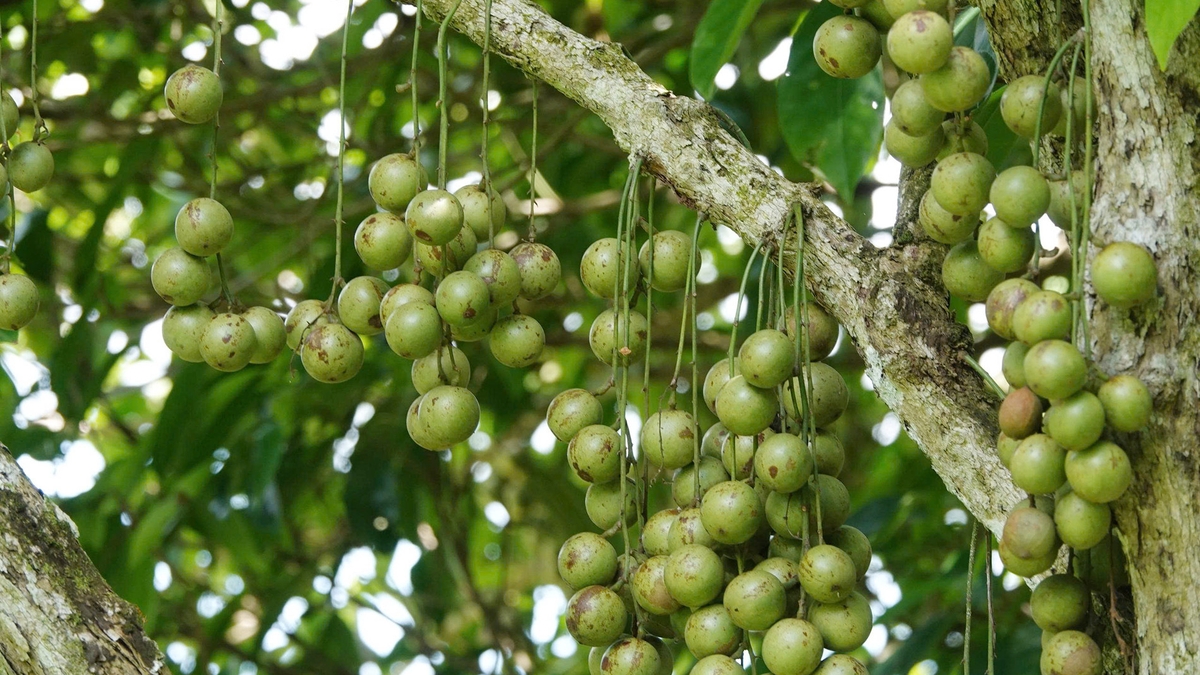
The new grafted shoots not only help the plants resist diseases better and minimize pest damage, but also produce dense clusters of fruit, with large, uniform fruits and strong secondary branch development. “Coffee plants, like many other crops, require regular variety improvement and proper care to achieve high yields. Simply planting and leaving them unattended makes high productivity very difficult,” she said.
 |
| Ms. Tran Thi Thanh Thuyet in Lia commune regularly monitors the irrigation system and cares for her robusta coffee garden to ensure crop yield and quality - Photo: LA |
According to Ms. Thuyet, unlike Arabica coffee, Robusta coffee requires growers to invest in quite systematic care, from installing irrigation systems, building water reservoirs, fertilizing to pruning and shaping the canopy. However, harvesting is easier. This is because Arabica coffee ripens sporadically, so growers have to spend a lot of money hiring laborers to harvest each batch of ripe fruit, while Robusta coffee ripens all at once and the fruit adheres very firmly to the branches.



Thanks to this, her family can wait until the fruit is about 80-90% ripe before spreading tarpaulins to harvest all the fruit on the tree. Another advantage of robusta coffee trees is their relatively long harvesting cycle. With good care, the trees can provide stable harvests for 15 years or more before needing replanting. When applying grafting methods, the production interruption time is also not too long.
"After grafting, there is usually about a year without any harvest. In the second year, the tree begins to bear its first fruits, and in the third year, it can be officially harvested," Ms. Thuyet said.
Currently, each robusta coffee tree in the garden yields an average of about 20kg of fresh fruit. With approximately 700 trees covering nearly 1 hectare, the annual yield reaches about 14 tons. In favorable years, the yield can exceed 16 tons of fresh fruit, higher than the average for many coffee growers in the area. By 2025, the price of fresh coffee fruit in the locality is expected to reach approximately 23,000 VND/kg. At this price, the family's coffee garden will generate revenue of over 320 million VND. After deducting production costs, the model will yield a profit of 170-200 million VND, enabling the family to develop economically and improve their living standards.
Not only does it provide income for her family, but Thuyet's model has also become a place where many households in the area come to visit and learn from her experience, especially in recent years, when coffee prices have consistently remained high.
 |
| Ms. Tran Thi Thanh Thuyet in Lia commune grafted and renovated Robusta coffee using the dwarf green variety onto old coffee rootstock - Photo: LA |
According to Ms. Nguyen Thi Phuong Thuy, an agricultural officer at the Lia Commune General Service Center, robusta coffee is a crop that adapts quite well to some areas in the commune, especially in Thuan 1 and Thuan 2 villages. Surveys show that there are currently about 10 hectares of robusta coffee plantations in the commune, with 3-5 hectares currently producing crops. Ms. Thuy stated that the biggest challenge is that many households still rely on traditional farming methods and haven't invested in proper care and maintenance.
Meanwhile, robusta coffee plants require growers to regularly monitor their growth, supplement nutrients and irrigation, and perform proper pruning. “This crop has the potential to bring quite high economic value, but it also requires relatively systematic care techniques. Based on our observations, households that follow the correct technical procedures see their robusta coffee plants grow well and yield relatively stable economic returns. Among them, Ms. Tran Thi Thanh Thuyet's model is one of the exemplary models in the area today,” Ms. Thuy said.
According to Tran Dinh Dung, Chairman of the People's Committee of Lia Commune, in addition to cassava, rubber, bananas, and other fruit trees, many households in the commune have boldly switched to different crop structures to improve production efficiency per unit area. Among them, the robusta coffee cultivation model of Ms. Tran Thi Thanh Thuyet's family is one of the models that has yielded quite good economic results in the area.



According to Mr. Dung, based on this, in the coming time the locality will continue to strengthen propaganda and technical guidance; promote support from national target programs and projects to encourage people to replicate suitable models. This will create more livelihoods, increase income, and gradually form effective production models suitable to local conditions.
Le An
Source: https://baoquangtri.vn/kinh-te/202606/thu-nhap-on-dinh-tu-cay-ca-phe-voi-b266548/