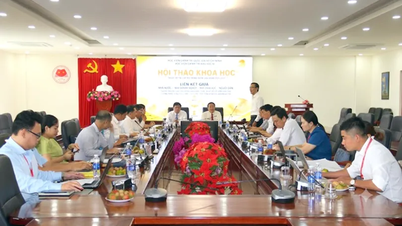
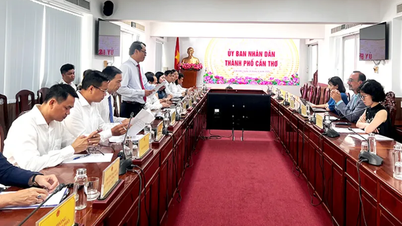
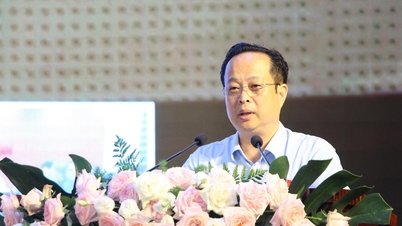
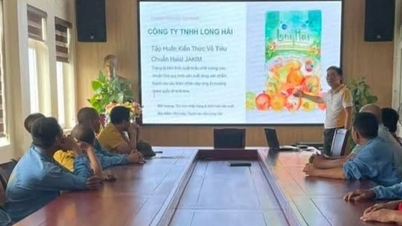
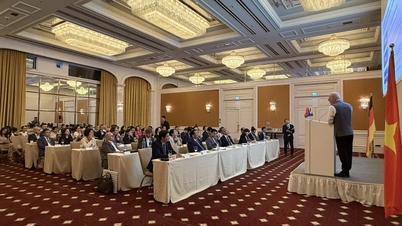
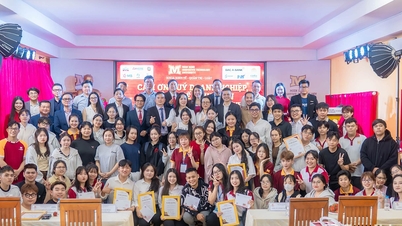
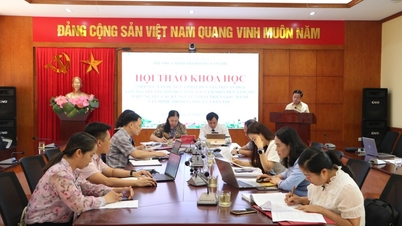
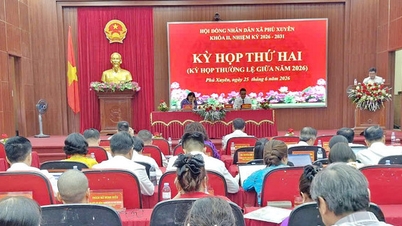
Trainees participated in a training course on applying environmentally friendly rice farming practices.
According to materials presented at the training course, the agricultural sector accounts for approximately 18% of total greenhouse gas emissions. The main causes stem from outdated practices in traditional rice cultivation, such as: inadequate water management, continuous flooding, overuse of chemical fertilizers, and high fertilizer loss rates leading to soil pollution. Burning rice straw after harvest also contributes to air pollution and greenhouse gas emissions.
The TOT (Training of Trainers) course goes beyond simply disseminating agricultural techniques; it emphasizes the application of behavioral science in communication. Participants will gain an understanding of the psychology, habits, and barriers farmers face when adopting new technologies. This understanding will enable them to develop relatable and persuasive communication messages, helping farmers proactively change their behavior, transition from traditional farming methods to advanced techniques, reduce emissions, and protect the agricultural ecosystem.


![[Photo] The 9th National Congress of the Vietnam Farmers' Association conducts personnel work.](https://vphoto.vietnam.vn/thumb/192x108/vietnam/resource/IMAGE/2026/06/07/1780832086465_ndo_br_1-7163-jpg.webp)
At the training session, Dr. Nguyen Thanh Tam, Director of the Production Ecosystem Program at the Mekong Institute, Can Tho University, shared technical solutions related to environmentally friendly rice cultivation. Dr. Nguyen Thanh Tam emphasized: “Reducing the amount of seeds sown, managing water using alternating wet and dry methods, and applying balanced fertilizers in the correct dosage are key to healthy rice growth, minimizing pests and diseases; and simultaneously reducing methane emissions from prolonged flooded rice fields.”
Besides intensive farming techniques, a key issue that received significant attention from delegates was the management and processing of post-harvest by-products. Instead of burning straw, which pollutes the environment, or plowing it under flooded conditions, creating greenhouse gases, Dr. Nguyen Thanh Tam guided farmers to collect and utilize this resource to the fullest extent for growing straw mushrooms, making animal feed, or composting organic microbial fertilizer. This circular economy model not only helps to thoroughly solve the problem of environmental pollution but also brings significant income to farming households.
Mr. Nguyen Van Luy, a farmer from Thoi Thuan A hamlet, Truong Thanh commune, cultivates 1.3 hectares of rice, producing three crops per year. Since 2024, he has received training from the City Farmers' Association on the implementation of the Sustainable Development Project for 1 million hectares of high-quality, low-emission rice cultivation linked to green growth in the Mekong Delta by 2030 in Can Tho City, specifically for the 2024-2025 period. Mr. Nguyen Van Luy said: “Through the cultivation seasons since 2024, my family's rice fields have significantly reduced input costs while maintaining stable yields, producing bright, beautiful grains that fetch good prices. Participating in this training course has reinforced and provided me with much useful knowledge. Upon returning to my locality, I will actively share and guide other members and farmers to change their rice farming methods, working together to achieve sustainable wealth and protect the environment.”
Mr. Dang Tan Giang, Vice Chairman of the City Farmers' Association, affirmed that the success of the training course does not stop at the classroom sessions, but must be measured by the practical effectiveness on the fields and the profound transformation in farmers' production mindset. Mr. Giang hopes that the 21 trainees representing the city's farmers will disseminate the knowledge they have acquired to other farmers in their localities after returning. The core objective is to encourage members and farmers to actively change their mindset from "agricultural production" to developing a sustainable and efficient "agricultural economy" with reduced emissions.



Text and photos: THANH THƯ
Source: https://baocantho.com.vn/thuc-day-canh-tac-lua-than-thien-voi-moi-truong-a208137.html