

21:33, 07/05/2023
BHG - Despite periods of ups and downs, Ha Giang oranges have always been one of the most highly regarded brands and a major producing region in the country. However, the frequent occurrence of "bumper harvest, low prices" and "poor harvest, high prices" situations, tree degeneration, infestation by various pests and diseases, and a decline of over 2,700 hectares in the past two years are alarming.
 |
| Leaders from the Department of Agriculture and Rural Development, Bac Quang district, and experts inspected the condition of orange trees affected by pests and diseases in Tien Kieu commune. |
According to the Department of Agriculture and Rural Development, orange trees have been identified by the province as one of the five key agricultural and livestock products for restructuring the province's agricultural sector. Therefore, during the period 2015-2020, the province issued many policies to support and encourage the development of commercial agriculture, including orange trees, such as Resolutions No. 209, 86, and 29 of the Provincial People's Council. In particular, on December 1, 2020, the Provincial Party Committee issued Resolution No. 04 on the sustainable development of Sành orange trees in the province, for the period 2021-2025, with a vision to 2030; and the Provincial People's Council issued Resolution No. 58 on specific policies to support the development of household garden economies and the sustainable development of Sành orange trees in Ha Giang province, for the period 2021-2025.
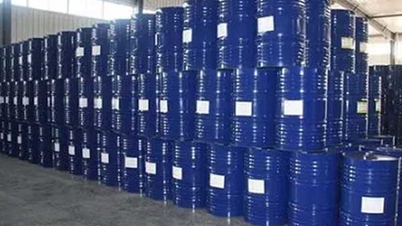
Thanks to the province's support, in 2020 the total area of orange cultivation in the province reached 8,570 hectares, with 4,268 hectares applying VietGAP standards. The total area for production was 6,997 hectares, with an average yield of over 130 quintals/hectare, a total output of over 91,000 tons, and a value of approximately 1,000 billion VND, bringing high economic efficiency to farmers; on average, 1 hectare of oranges provides households with an income of 20-25 million VND or more (after deducting costs), with areas supported by loans for intensive cultivation and applying VietGAP processes yielding 40-50 million VND/hectare or more (depending on the season). In 2016, the "Ha Giang Mandarin Orange" product was granted Geographical Indication by the Ministry of Science and Technology for the orange growing area in 38 communes in 3 districts: Bac Quang, Quang Binh, and Vi Xuyen. The Ha Giang orange brand is increasingly establishing its reputation in the market, with thousands of tons of oranges sold annually in Vinmart supermarkets and wholesale markets in Hanoi, Hai Phong, Ha Tinh, Quang Ninh, Bac Ninh, etc. Four orange processing facilities have been established in the province, producing various products such as orange juice, orange essential oil, and concentrated orange juice.
However, to date, the total area of orange orchards in the province has decreased by over 2,700 hectares, down to 5,824 hectares (3,785.6 hectares of Sành oranges; 2,038 hectares of Vàng oranges), with 5,063.2 hectares producing fruit; an average yield of 130 quintals/hectare; and a total production of over 65,800 tons. Many orchard owners have had to abandon orange cultivation and switch to other crops. The initial cause identified by experts is the orange trees being affected by yellow leaf disease, root rot, and death.
Experts from the Vietnam Academy of Agricultural Sciences affirm that the yellowing leaves, root rot, and death of orange trees are due to three main reasons: Firstly, most orange growers in the province propagate their trees by grafting or purchasing grafted seedlings (the proportion of orange trees using grafted seedlings currently accounts for 70% of the total orange growing area in the province); secondly, seedlings propagated by grafting mostly lack clear origins and do not meet standards, resulting in weak resistance to pests and diseases. Therefore, after 3 to 5 years, the trees begin to show signs of yellowing leaves and root rot.
Furthermore, the farming techniques used by local people significantly affect the growth of orange trees. A large portion of the land used for orange cultivation in the province is not properly prepared before planting; some areas are not within designated orange-growing zones; trees are not adequately watered during the dry season; well-rotted manure is not used to improve the soil, or is used incorrectly; and chemical fertilizers and pesticides are overused. These factors create opportunities for pests and diseases to develop, leading to the decline of orange trees.
In addition, the orange-growing areas in the province are affected by 18 species of pests and 10 types of diseases. Particularly, Tristezra disease, Greening disease, and yellow leaf and root rot are the three most dangerous diseases causing degradation in orange-growing areas, reducing yields by 20% - 26%.
Despite being affected by pests and diseases, our province has consistently maintained the focus on improving the quality of Ha Giang oranges, especially the Sành orange – the province's signature fruit – aiming to shift the economic structure in agriculture, develop Sành orange cultivation in conjunction with the development of a specialized agricultural commodity sector, improve people's lives and incomes, and create jobs. Resolution No. 04 of the Provincial Party Committee's Standing Committee sets the goal for 2025: Maintaining a stable Sành orange cultivation area of 5,000 hectares throughout the province; focusing on improving and applying intensive farming techniques to increase productivity and quality, and building a value chain linking production, processing, and consumption of the product on an area of 2,000 hectares. Many solutions to achieve these goals have been identified and developed, from leadership and guidance to the issuance of mechanisms and policies; supporting and encouraging the application of science and technology; providing agricultural extension guidance and technology transfer; and training human resources. preserving, processing, and promoting the consumption of products…
However, to sustainably develop orange cultivation and overcome the problems of pests and diseases, reduced acreage, and degradation, according to Dr. Cao Van Chi, from the Fruit and Vegetable Research Institute (Ministry of Agriculture and Rural Development): The yellowing and root rot of orange trees is not only occurring in Ha Giang but has also taken place in concentrated orange-growing areas such as Cao Phong (Hoa Binh) and Ham Yen (Tuyen Quang). Based on the identified objective and subjective causes, this consequence is inevitable. Therefore, overcoming this requires the involvement of all levels, specialized sectors, and the people to implement comprehensive solutions regarding varieties, planting techniques, care, and pest and disease control procedures; especially the proactive efforts of orchard owners. However, in the short term, the province needs to conduct a comprehensive review and assessment of orange tree development to adjust and supplement orientations, mechanisms, and policies that are appropriate to the practical situation.
Text and photos: Luong Ha
Source link
![[Photo] General Secretary and President To Lam meets with National Assembly delegates from ethnic minorities.](https://vphoto.vietnam.vn/thumb/1200x675/vietnam/resource/IMAGE/2026/04/20/1776696701056_a1-bnd-8331-3342-jpg.webp)
![[Image] National Assembly discusses the implementation of the socio-economic development plan.](https://vphoto.vietnam.vn/thumb/1200x675/vietnam/resource/IMAGE/2026/04/20/1776696707422_ndo_br_img-20260420-185419-jpg.webp)









































































Comment (0)