

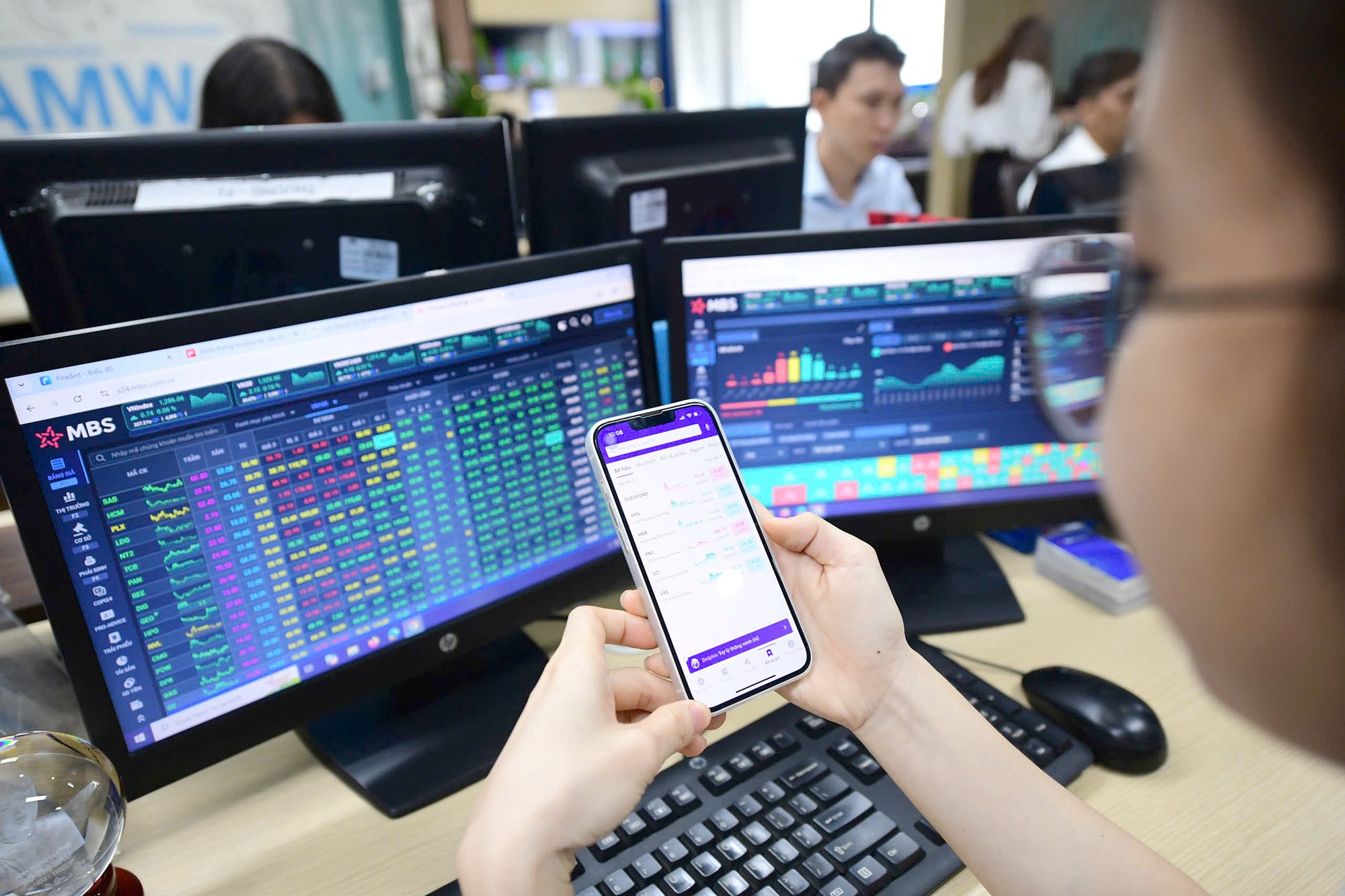
A stable exchange rate creates opportunities for business expansion and investment in the stock market - Photo: Q.D
Tuổi Trẻ newspaper interviewed Mr. Truong Van Phuoc, former acting chairman of the National Financial Supervision Committee.

Mr. Truong Van Phuoc
* Sir, at the beginning of 2024, the VND "suddenly" depreciated by more than 5% against the USD, but now it has strengthened again. This development is different from previous years, why is that?
- In recent years, market sentiment and trends have shown that the USD/VND exchange rate is always linked to the fluctuations of the USD in the international market through the USD Index (which includes a basket of USD with 6 major currencies such as EUR, Japanese yen, British pound...).
Meanwhile, the USD also has its own story: COVID-19; countries loosened monetary policy to support their economies , especially in the US. Consequently, after the pandemic, inflation was high, forcing the US to raise interest rates to tighten monetary policy, peaking at 5.5%, the highest in 40 years.
High-interest money always has value. But using high interest rates to bring inflation down also creates difficulties for economic growth, employment, and so on.
However, in the US, despite high interest rates, inflation persists, impacting economic growth, and many indicators such as employment are not meeting forecasts. At the beginning of 2024, it was thought that the US would lower interest rates, but the wait was long and nothing happened, shocking the market and pushing the USD Index up to 106 in the first quarter, peaking in April 2024.
As mentioned, the VND/USD exchange rate is always tied to the USD. Therefore, in the first few months of the year, the VND depreciated by more than 5% against the USD, at one point reaching 25,500 VND/USD. Now that the USD Index has fallen to 100, the VND has regained its value, sometimes reaching just 24,500 VND to buy 1 USD.
* The VND is strengthening; will it return to 24,000 VND/USD?
- It's true that the increase at the beginning of the year caused confusion for businesses and people because in previous years they had become accustomed to a "stable exchange rate," with the highest depreciation of the VND not exceeding 3%. Therefore, the fact that the VND depreciated by more than 5% in the first quarter of 2024 has led to market concerns that the VND may depreciate even more in 2024.
This stems from the belief that even if the US further reduces interest rates, USD interest rates will still be high in 2024, and the USD is a strong currency with a large market share in payments. Essentially, exchange rates are always influenced by two factors: the difference in inflation and interest rates between the US and Vietnam.
Currently, US inflation is declining, while Vietnam is striving to maintain it at 4-4.5%, but there are many unfavorable factors such as natural disasters and wage adjustments… Therefore, the likelihood of the USD depreciating further against the VND is not high.
The exchange rate range of 24,500 VND/USD is likely to be a fairly balanced level. The forecast for the USD/VND exchange rate for the whole year is a fluctuation of 2.5-3%, meaning the USD/VND exchange rate will return to a "calm" state after the sharp increase at the beginning of the year.
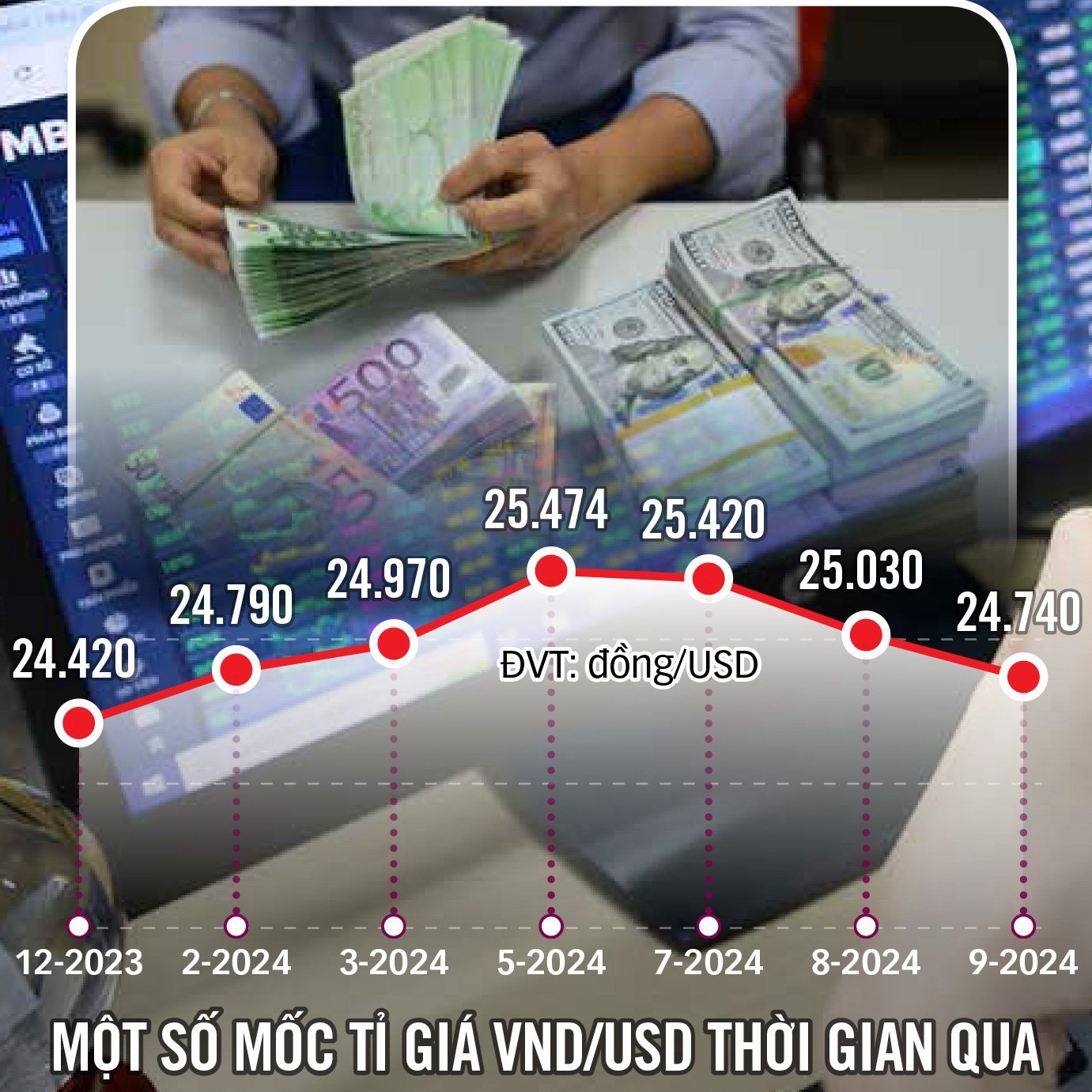
Graphics: T. ĐẠT
* With the US beginning its USD interest rate reduction program and the presidential election in November, these two factors represent crucial turning points in exchange rate management. What will Vietnam's response be?
- Yes, those are two important turning points that will have multifaceted impacts on the world and the Vietnamese economy. The Fed will probably cut interest rates further in the remaining three months of 2024. As for the US elections, there will certainly be many policy changes.
Regardless of the direction, there will be fluctuations. With an increasingly integrated economy, I believe we need maximum "shock-absorbing buffers" to cope with these changes. The general trend is that the USD will weaken in the near future because the Fed's interest rate reduction path will continue, possibly until the end of 2025.
However, it's also worth noting that many international forecasts suggest global inflation is poised for further declines over the next few years. Therefore, monetary easing is necessary not only in the US but also in other economies. Countries are also lowering interest rates. When interest rates fall, the USD weakens, but the currencies of countries that cut interest rates also weaken. This impact will keep the USD within a relatively stable exchange rate range. This is a crucial factor and a signal that could influence the USD/VND exchange rate.
With an economy steadfastly pursuing high growth targets and implementing a market-based pricing roadmap, maintaining inflation at the target of 4-4.5% remains a challenge. For exchange rate stability, the central exchange rate must be stable based on internal factors of the Vietnamese economy such as capital flows, economic growth, balance of payments, foreign investment, etc., in addition to the USD Index. This is the "shock-absorbing buffer".
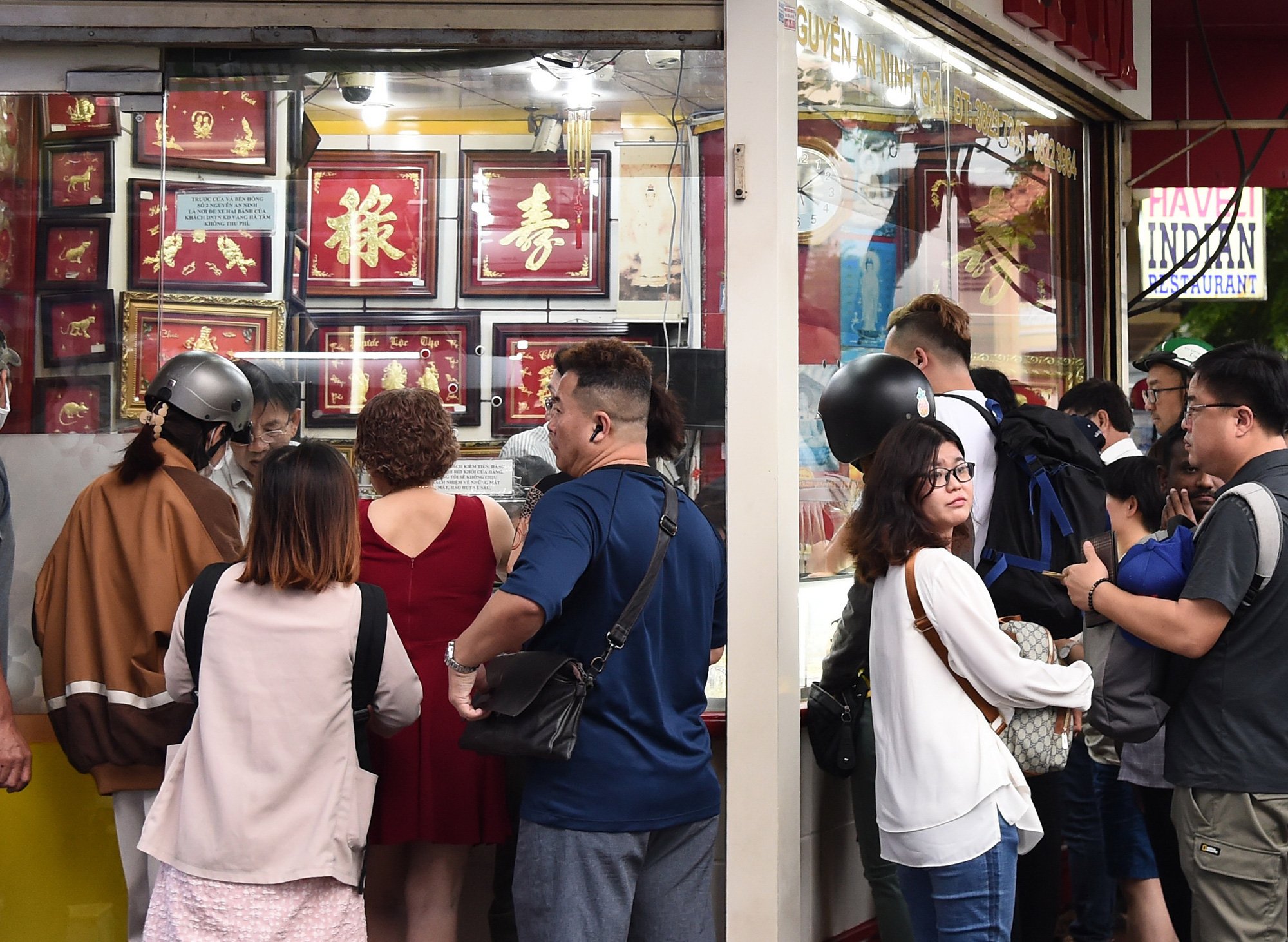
Tourists exchange money at a foreign exchange office (District 1, Ho Chi Minh City) - Photo: TU TRUNG
* Many people interpret the central exchange rate like they're guessing the program's theme music, so besides being a "shock absorber," what other signals should the central exchange rate announced by the State Bank of Vietnam send?
- The current exchange rate management mechanism is the central exchange rate announced by the State Bank of Vietnam. From the central exchange rate, the market is allowed to fluctuate in both directions (+/-5%), meaning the market exchange rate has a fluctuation range of 10%.
Recently, when the central exchange rate increased by over 3%, the market sometimes saw prices around 25,500 VND per USD. This led the market to understand the trend of the exchange rate, creating expectations and forecasts for trading purposes, such as some hoarding USD and others trying to buy it… further increasing market tension.
Therefore, when announcing the central exchange rate, it is necessary to take into account many other factors from within the Vietnamese economy in addition to the fluctuation of the USD Index to avoid the market situation as predicted and reacted to, where if the USD Index rises, the USD/VND also rises and vice versa.
Simply put, the central exchange rate must send a signal of stability, acting as a shock absorber, similar to building a house by the sea. To build, you need to determine the peak sea level rise, the capacity to respond to and withstand the rising water, to avoid a situation where, out of excessive worry about rising water, you build the house far from shore, only to have to move it back when the water level doesn't rise that much. This back-and-forth is very costly.
Here, businesses rush to buy when they see the exchange rate rising, but they buy too much and lose money when the exchange rate falls.
Mr. TRUONG VAN PHUOC
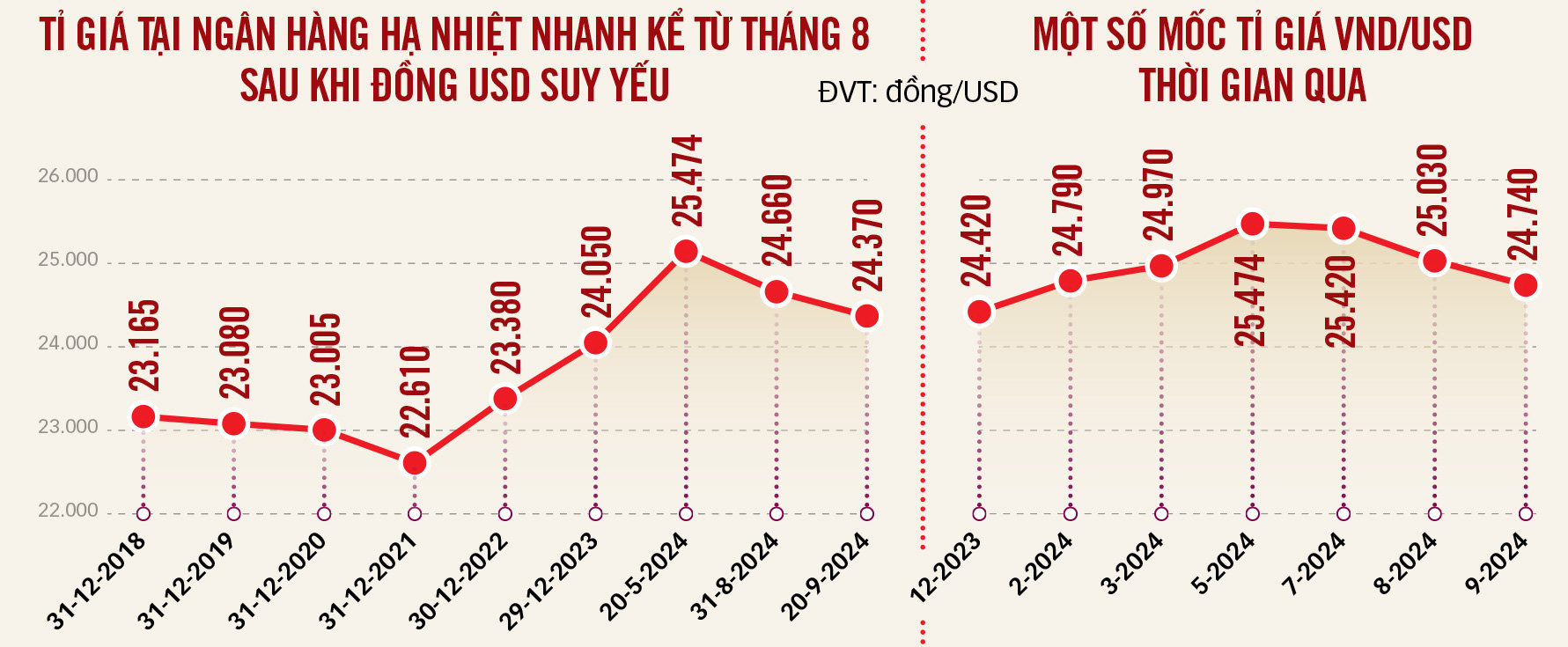
Data: WiGroup - Graphics: T. ĐẠT
* With the USD/VND exchange rate easing, what will be the trend for VND interest rates, and will it be enough to change asset holding trends (VND, USD, etc.)?
- Interest rates are closely related to inflation. If inflation is at 4-4.5%, deposit interest rates may fluctuate around the inflation rate plus 1-2%, which is the expectation of depositors in Vietnam – a positive real interest rate.
In the first nine months of 2024, deposit interest rates showed two distinct trends: in the first three months, rates fell sharply, but from April 2024 to the present, they have increased again by 1%. The forecast is that interest rates will continue to rise, but not rapidly, and will slow down, estimated to increase by another 0.3 - 0.5%.
The reason is that in the last three months of the year, banks need to increase lending by approximately the same amount as in the first eight months, so their deposit needs also increase. Certainly, people will have to consider holding assets when the USD/VND exchange rate returns to its usual rhythm, increasing by no more than 3% per year, lower than VND deposit interest rates.
* With falling USD interest rates, foreign capital will return. What are the key factors in attracting capital, especially into the Vietnamese stock market?
- In recent years, capital flows from countries around the world have poured into the US to take advantage of high interest rates. Now that the US is starting to lower interest rates, that trend is reversing. This trend will happen gradually. That capital will likely "return" to emerging markets, such as Vietnam, and the stock market is one such destination.
However, how much foreign capital is absorbed and attracted depends on the attractiveness and stability of those economies. Ultimately, low inflation and a stable exchange rate will attract repatriation of capital. Therefore, it is crucial for Vietnam to maintain macroeconomic stability, control inflation as targeted, and prevent excessive fluctuations in the USD/VND exchange rate.
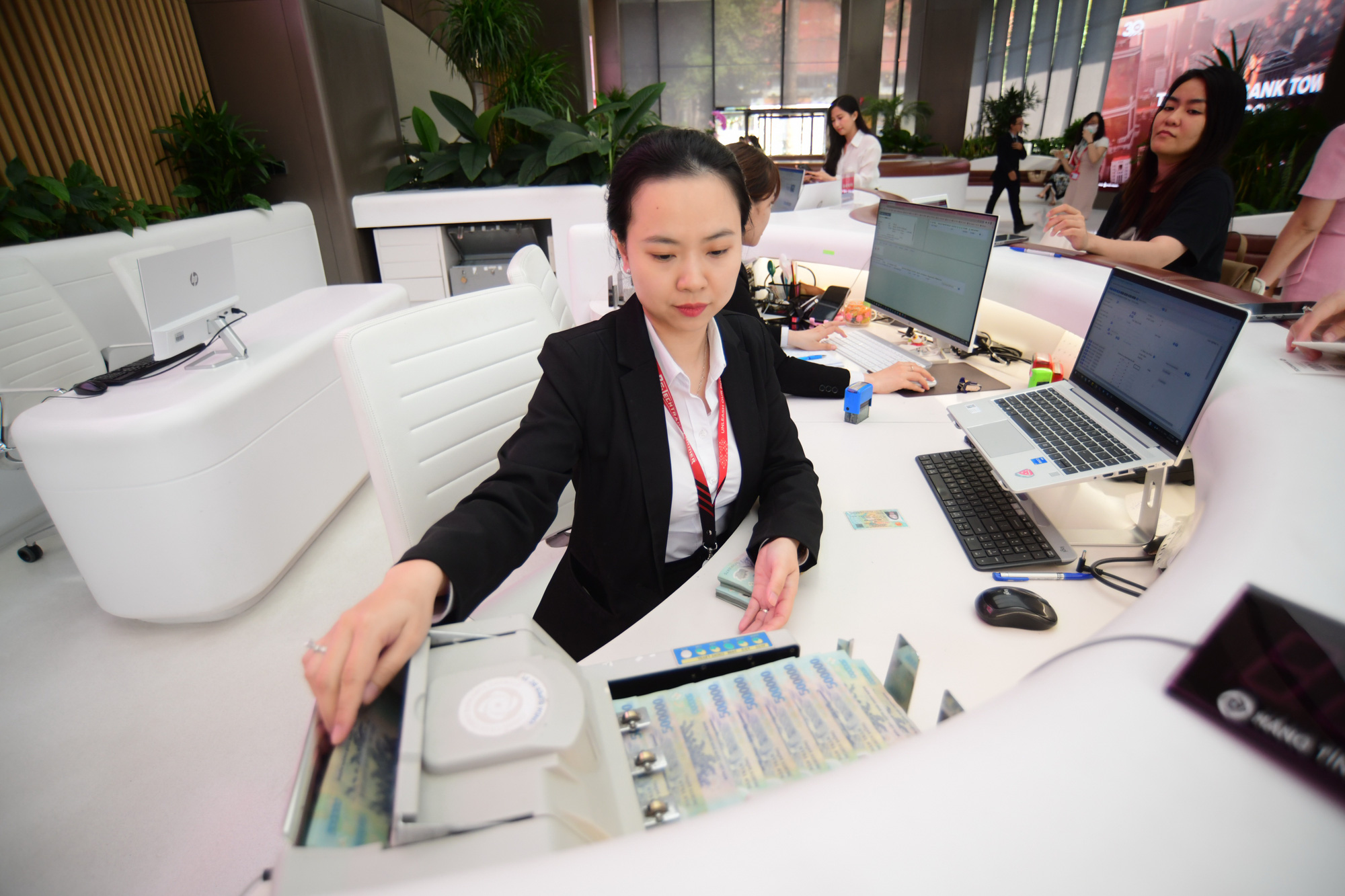
Customers conducting transactions at Techcombank, District 1, Ho Chi Minh City - Photo: QUANG DINH
Businesses facing less stress from USD debt.
In the first half of this year, the VND/USD exchange rate sometimes increased by as much as 5%, putting many businesses with USD-denominated loans in a precarious situation. With the recent sharp decline in the exchange rate, coupled with the Fed's interest rate cut, these businesses can breathe a sigh of relief.
Mr. Truong Thai Dat, director of DSC Securities Analysis Center, said that the exchange rate has cooled down, only increasing by more than 2% compared to the beginning of the year. The core reason stems from the weakening of the US dollar, thereby reducing hoarding, arbitrage for foreign exchange gains, and the pressure of net withdrawal by foreign investors in the investment market.
According to DSC experts, the State Bank of Vietnam's regulatory efforts, having sold approximately $6.5 billion from the national foreign exchange reserves, cannot be overlooked. After the Fed begins lowering interest rates, around the end of the third quarter or the beginning of the fourth quarter of this year, the State Bank of Vietnam may repurchase foreign currency from the system to replenish the reserves that previously supported the market.
Mr. Dat also argued that the value of the Vietnamese currency has maintained a certain degree of depreciation compared to world currencies, which helps increase the competitive advantage in exports and attract foreign investment.
Dr. Can Van Luc and the team of authors from the BIDV Training and Research Institute believe that a more stable exchange rate will contribute to reducing import costs. In addition, the research team also suggests that the Fed's interest rate cut contributes to stabilizing interest rates, reducing the cost of debt capital and foreign currency investment for businesses.
In Vietnam, falling foreign currency interest rates, especially for USD, have contributed to lower foreign currency borrowing costs for both existing and new loans, according to the research group.
Furthermore, statistics from Tuoi Tre newspaper, based on financial reports, show that many businesses with large USD-denominated debts recorded "huge" exchange rate losses in the first half of 2024, such as Novaland, Vietnam Airlines, Hoa Phat, and many businesses in the electricity sector… When the exchange rate decreases, the most obvious benefit is that it will reduce the pressure of exchange rate losses for these businesses.
So what is the forecast for the exchange rate at the end of this year? Mr. Tran Duc Anh - Director of Macroeconomics and Market Strategy at KB Securities Vietnam (KBSV) - believes that the pressure on the exchange rate from now until the end of the year is no longer too great.
The USD/VND exchange rate is projected to fall to around 25,000 VND/USD – a 3.5% increase compared to the beginning of the year – based on factors such as FDI disbursement, better remittances in the latter part of the year, and the weakening of the USD after the Fed cut interest rates.
Source: https://tuoitre.vn/ti-gia-em-dem-vnd-manh-len-20240922085727229.htm






























































































Comment (0)