

Why do experts make such a statement?
Among the environmental changes in China in recent years, the most notable is the 30-year journey of transforming a barren desert into a lush green oasis. This achievement has truly shaken the world. However, not long ago, in an interview with Chinanews, researcher Wang Tao from the Northwest Institute of Ecological Environment and Resource Sciences of China outlined four alarming problems that have emerged after the desert's reclamation. What are they?
First, let's look back at northern China, bordering the Gobi Desert near the Mongolian border, 30 years ago. Back then, the desert was a desolate wasteland covering much of the land, making it difficult for people to settle down and make a living. Local people even believed that their descendants could not live on this land, and that it would be very difficult to restore its vitality. Then, change came.
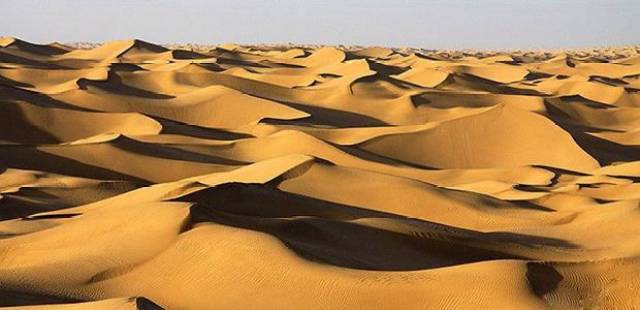
The northern region of China bordering the Gobi Desert near the Mongolian border was entirely sand 30 years ago. (Photo: Sohu)
The Chinese government launched an ambitious plan, known as the "Oasis Project," in the 1980s. Over the next few decades, billions of trees were planted and countless people participated in the project, transforming the desert into an oasis. The results of this transformation were clear: the desert began to shrink, vegetation began to flourish, and ecosystems began to expand.
4 frightening problems have emerged after desert reclamation.
However, while many rejoiced at this remarkable achievement, expert Wang Tao issued a warning about several underlying problems. He also emphasized that behind this success lie undesirable issues that need careful consideration.
First, there is the impact of oase construction on the ecosystem. With the formation of oases, some plant and animal species that originally lived in the desert begin to lose their habitat. Although desert conditions are harsh, they are home to many rare and endangered species. Faced with the threat of homelessness, they gradually disappear. This triggers a chain reaction, leading to a sharp decline in biodiversity and unpredictable impacts on the entire ecosystem.
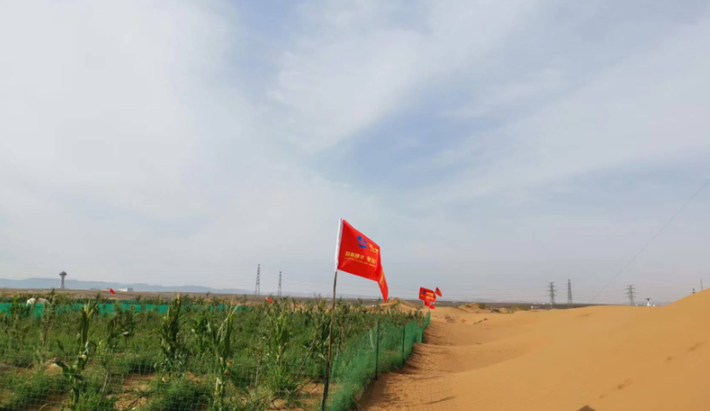
The Chinese government has launched an ambitious plan, known as the "Oasis Project". (Photo: Sohu)
Secondly, the oasis project is facing a water crisis. To maintain the oasis's fertility, a large amount of water is used for irrigation. However, the arid northern regions are already water-scarce. To address this problem, the government has built reservoirs and canals, but this has caused irreparable damage to the surrounding environment. The exploitation and use of water resources has led to wetland degradation and river drying up, threatening the broader ecosystem and groundwater.
Thirdly, the economic changes brought about by oases are also worth considering. Along with the migration of people to oase areas, urbanization has accelerated. New cities have sprung up, and the economy has flourished. However, the imbalances caused by this rapid economic growth are gradually becoming apparent. The balance between urban development and environmental protection is being disrupted. To some extent, we view oases and economic development as a trade-off, and unfortunately, environmental benefits are being sacrificed.
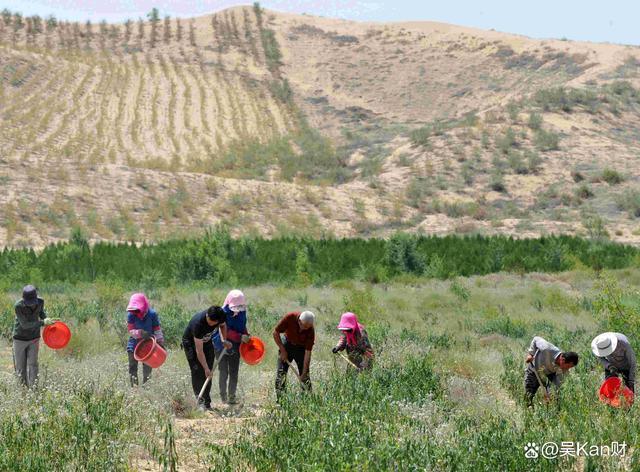
However, while the locals rejoiced at the miraculous transformation of the desert into an oasis, some problems were also quietly emerging. (Photo: Sohu)
Furthermore, we also need to consider the impact of desert tourism in China. Due to the development of desert tourism in China, tourists have generated a large amount of waste in these areas, leading to a series of negative consequences. First, there is the environmental destruction of scenic spots. The large number of tourists has damaged the environment of some tourist destinations, such as causing widespread littering. The waste and pollution brought about by tourists threaten surrounding plant and animal species, disrupting the ecological balance.
It's important to remember that deserts are also vital carbon sinks, absorbing large amounts of carbon dioxide, thus reducing greenhouse gas emissions and alleviating global warming. Therefore, protecting deserts can not only improve the local climate but also play a crucial role in addressing global climate change.
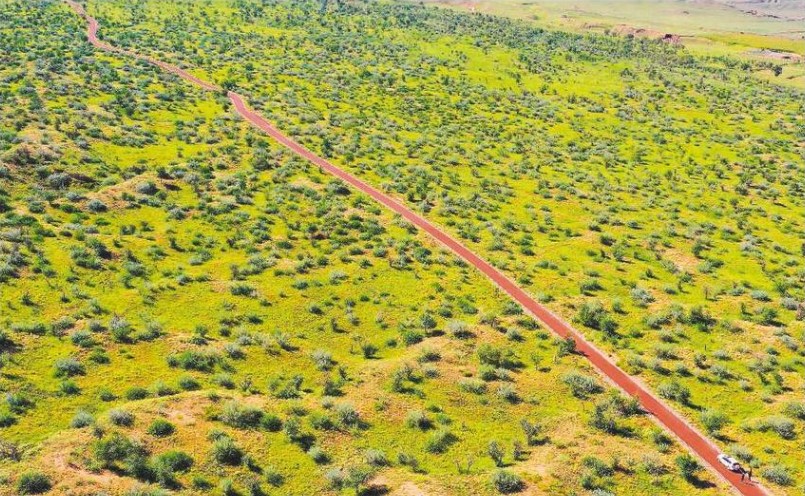
China's Oasis project has shown the world the potential and challenges of environmental change. (Photo: Sohu)
Therefore, while China's oasis marvel also gives us pause for thought, we must recognize that environmental change is not only a massive and difficult task but also requires careful consideration of the impact of each decision. China's Oasis Project has shown the world the potential and challenges of environmental transformation. Scientists believe we need to learn from this and strive to find a balance between environmental protection and economic development. Only in this way can we truly achieve sustainable development and leave future generations a beautiful and healthy Earth.
By protecting deserts, we can safeguard these vital biological communities and maintain ecological balance. This action not only benefits the reproduction of species but also protects biodiversity and maintains ecological equilibrium. Ultimately, protecting deserts can promote sustainable development and is of great importance to humanity. Let's work together, considering desert protection our responsibility, so that deserts can become beautiful oases, bringing more benefits to people and the Earth.
Compiled by Nguyet Pham
Source: https://giadinh.suckhoedoisong.vn/ky-tich-30-nam-bien-sa-mac-thanh-oc-dao-xanh-cua-trung-quoc-chuyen-gia-tiem-an-nhieu-nguy-co-dang-so-172241203073547991.htm
![[Photo] Prime Minister Pham Minh Chinh receives the Chinese Ambassador to Vietnam](https://vphoto.vietnam.vn/thumb/1200x675/vietnam/resource/IMAGE/2026/04/05/1775397481797_ndo_br_dsc-5512-jpg.webp)



























































































Comment (0)