The widespread price surges have subsided.
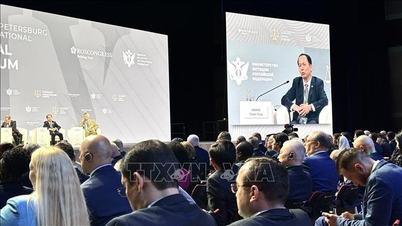
At the seminar "Identifying Real Estate Financial Trends in 2026" organized by VietnamFinance Magazine on the morning of June 6th, Dr. Le Xuan Nghia - former Vice Chairman of the National Financial Supervision Committee - stated that real estate will continue to receive significant support from capital flows in the economy . However, this does not mean that the market will repeat the sharp price increases seen in previous periods.
According to Mr. Nghia, the supply is showing signs of improvement thanks to a series of mechanisms and policies issued by the Government and the National Assembly to remove difficulties for the market in recent times. Simultaneously, the demand for housing and real estate investment remains high.

However, widespread price increases of 20-30% are considered unlikely. This is because the economy's capital flow is no longer primarily concentrated in real estate but is more evenly distributed across various sectors such as industrial production, trade, services, and infrastructure development.
"Capital will not only flow into real estate but will also be allocated to many other economic sectors. This will help the market develop more healthily," Dr. Nghia commented.
According to this expert, in the context of increased public investment and the implementation of many key infrastructure projects, some areas and real estate segments may still record positive growth. However, the general trend will be an increasingly clear differentiation between localities, product types, and project quality.
Mr. Nghia believes that the real estate market in the coming period will continue to be supported by a stable macroeconomic foundation, positive economic growth rate, developing infrastructure, and abundant social capital. However, instead of widespread price surges, capital flows will be more selective and focused on projects that meet real needs.
"There's no market freeze, but there's also no widespread overheating. Capital flows will be more selective and focused on projects with real value, benefiting from infrastructure and meeting market needs," Dr. Nghia emphasized.



Investors prioritize cash flow, making legal compliance a decisive factor.
One of the key points highlighted by experts at the conference was the dramatic shift in the mindset of real estate buyers.

According to Ms. Pham Thi Mien, Deputy Director of the Vietnam Real Estate Market Research and Evaluation Institute (VARS IRE), the market is witnessing a shift from a mindset focused on price increases to one seeking exploitation value and the potential for generating cash flow.
According to Ms. Mien, buyers today are no longer betting solely on future price increases, but are more interested in the efficiency of property use, rental potential, business exploitation, and the potential for generating stable income.
"The change in buyer sentiment isn't because they're more pessimistic, but because the market has forced them to be more professional," Ms. Mien observed.
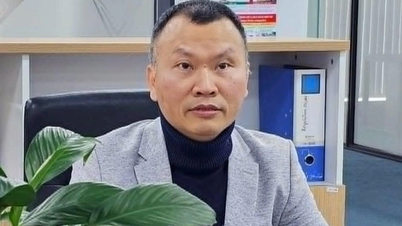
Sharing the same view, Dr. Ngo Tri Long - former Director of the Institute for Market and Price Research, Ministry of Finance - believes that the coming period requires investors to change their approach to real estate. According to Dr. Long, instead of assuming that real estate is an asset that always appreciates in value, investors need to view it as a conditional asset, whose value must be assessed based on many factors such as location, legal status, exploitation potential, and actual market demand.
Mr. Long advised that investors should not invest solely due to the fear of missing out (FOMO). Before deciding to invest, it is necessary to carefully check the legal documents, ensuring that the property is not subject to disputes, is not within a planned development area, or has other potential legal risks. At the same time, it is important to prioritize assessing the potential for generating cash flow rather than simply expecting future price increases.
Mr. Long noted that investors should use financial leverage within controllable limits, avoiding debt repayment pressure when the market fluctuates. Referring to actual market transaction prices is also an important factor in mitigating risk.


Analyzing the factors impacting the market in 2026, Dr. Ngo Tri Long believes that the economic recovery, stricter real estate credit control policies, limited capital mobilization channels for real estate, and the unresolved supply-demand imbalance will cause capital flows to shift towards more sustainable directions.
Investment capital will gradually shift away from short-term speculation towards products that serve real housing needs and have long-term development potential. In this context, legal compliance will become the most important "asset" determining the value of a project.
"The market will enter a phase of deeper differentiation based on location, product quality, and the reputation of the developer. Businesses that develop projects to serve real needs will have more opportunities than those engaging in short-term speculation," Mr. Long emphasized.
Source: https://tienphong.vn/tien-dang-do-vao-dau-post1849335.tpo
![[Photo] General Secretary and President To Lam attends the 13th National Congress of the Ho Chi Minh Communist Youth Union](https://vphoto.vietnam.vn/thumb/1200x675/vietnam/resource/IMAGE/2026/06/25/1782356968989_ndo_br_1-jpg.webp)


![[Photo] General Secretary and President To Lam receives Palestinian Ambassador Saadi Salama](https://vphoto.vietnam.vn/thumb/1200x675/vietnam/resource/IMAGE/2026/06/25/1782365384740_a1-bnd-9423-8322-jpg.webp)
![[Image] Schools organize meetings and introduce teaching models to students admitted to grade 10.](https://vphoto.vietnam.vn/thumb/1200x675/vietnam/resource/IMAGE/2026/06/25/1782368077271_ndo_br_z7970052192242-1ec8daeb77a6eed1a4e9f58c564ddd3e-jpg.webp)