 |
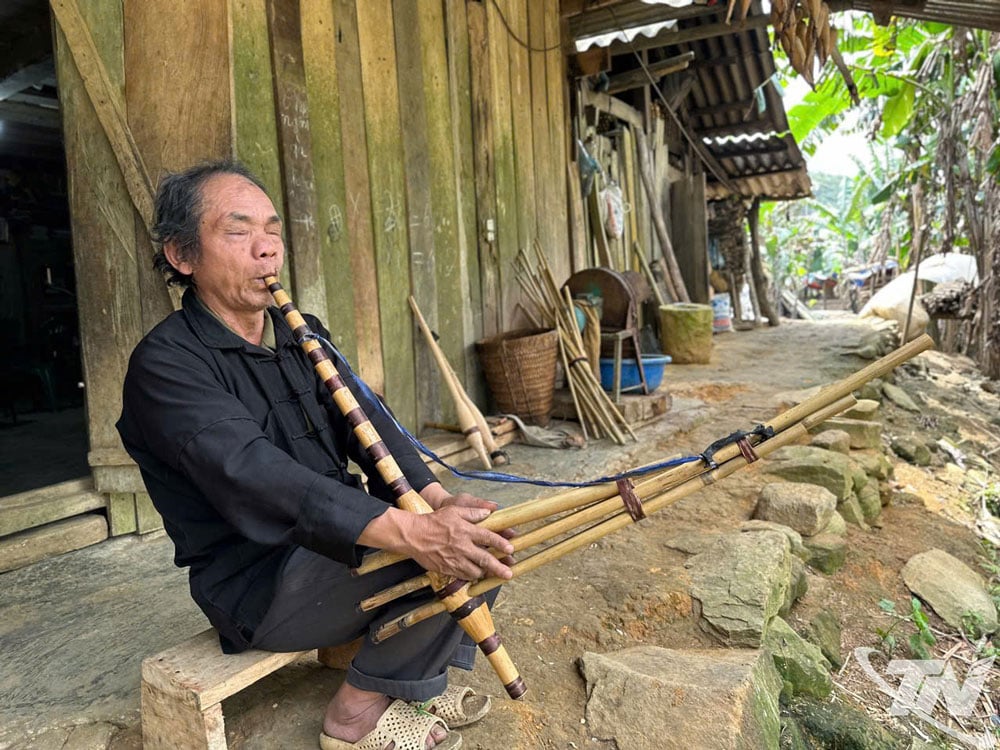
| Mr. Ly Van Vu plays the Hmong flute. |
Passion for the Hmong flute and a life full of challenges.
Despite being blind from a young age, Mr. Vu refused to surrender to fate. Born into a poor family and having lost both parents early, he lived with relatives. Life was full of hardships, but his dream always burned brightly: to see the colors of the world around him and to play with friends.
One day, while sitting at home, he was surprised to hear the sound of a Hmong flute echoing from afar. Those sounds made him restless. "How can one play a flute like that? How can one craft a flute that produces such wonderful sounds?" That question kept reverberating in his mind.
At the age of 18, he was taught how to make and play the khene (a type of bamboo flute) by the flute makers in his village. Despite being blind, Mr. Vu persevered in learning, starting with his first flutes and making many mistakes until the first sound was perfect. "I never gave up, even though many flutes were ruined at first," he shared.
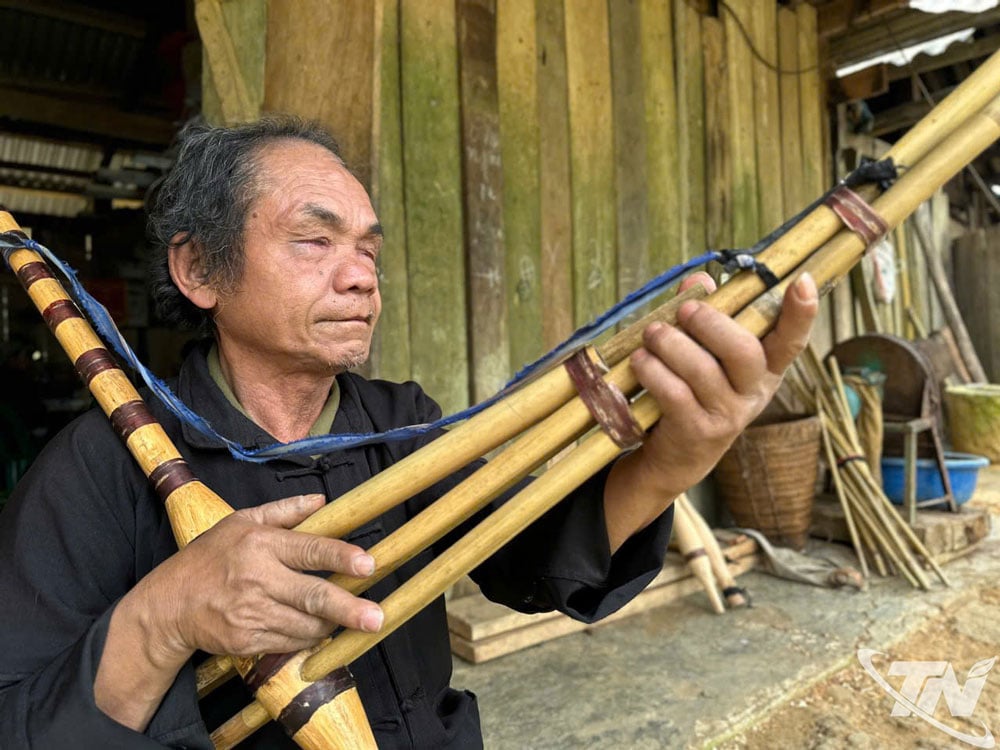 |
| Mr. Vu makes Hmong flutes. |
The sound of the Hmong flute connects lovers.


At the age of 26, Mr. Vu was still unmarried, which made him feel inferior in society. However, it was the sound of the bamboo flute that changed his destiny. While playing the flute in Bao Lam district, he met Ms. Ma Thi Nhua, his future wife. "The flute helped me find my life partner," Mr. Vu shared.
Family life wasn't easy, with four young children and the struggle to make ends meet. However, Mr. Vu used his craft of making the khene (a type of bamboo flute) to support his family. Each month, he could make 4 to 5 khene, selling them for about 1.5 million dong each. Despite being blind, he still made the khene by hand and took them to the market to sell.
Crafting a Hmong mouth organ is a meticulous process. Mr. Vu explains: "First, I choose bamboo, neither too old nor too young, then I dry it. Next, I carve holes for the brass reeds – the most important step, because the reeds determine the sound of the mouth organ." After each finished mouth organ, he carefully tests the sound and adjusts the reeds to perfection.
Despite his blindness, Mr. Vu's hands are skillful, as if there is perfect coordination in each movement. Each khaen is a work of art, imbued with his love and dedication to national culture.
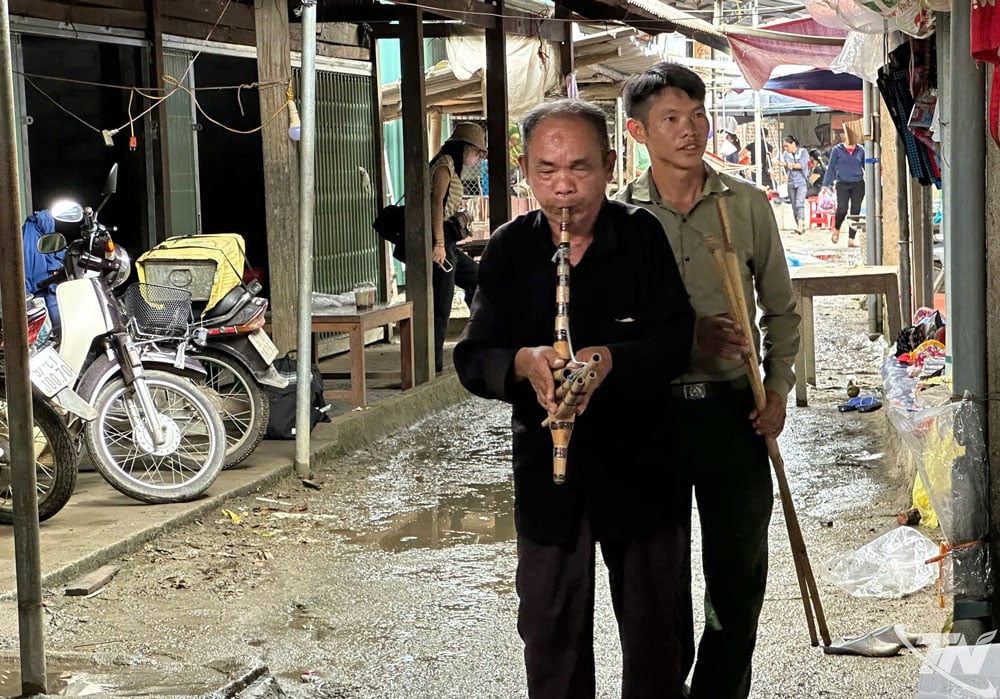 |
| Despite being blind, Mr. Vu still made his own flutes and took them to the market to sell. |
The Hmong flute - The soul of the Hmong people.
For Mr. Vu, the khèn (a type of bamboo flute) is not just a musical instrument. It is a close friend, always by his side in times of joy and sorrow. During Tet (Vietnamese New Year), festivals, or even when he gets married, the khèn is always an indispensable part of the celebration.
He shared: "The Hmong flute is the voice of the heart, a bridge between the spiritual world and humanity. The sound of the flute is also a joy when welcoming the New Year, the sound of welcoming the bride to her husband's home, and a declaration of love."



Even with his hair turning gray, Mr. Vu still wants to pass on his passion for the Hmong flute to the younger generation, so that this culture does not fade away. "I want the Hmong flutes to soar higher and further, so that future generations can preserve and promote them," he confided.
Bidding farewell to Mr. Ly Van Vu, who has preserved the "soul" of the Mong ethnic group on the summit of Nghe Luong for nearly 50 years, we believe that the sound of his flute will forever resonate, contributing to the maintenance and development of Mong culture in the Cao Minh highlands. That flute not only invites tourists to the northern communes of Thai Nguyen province but also connects people with nature, the past, and the present.
Source: https://baothainguyen.vn/van-hoa/202507/tieng-khen-mong-tren-dinh-nghe-luong-c1b18c9/