

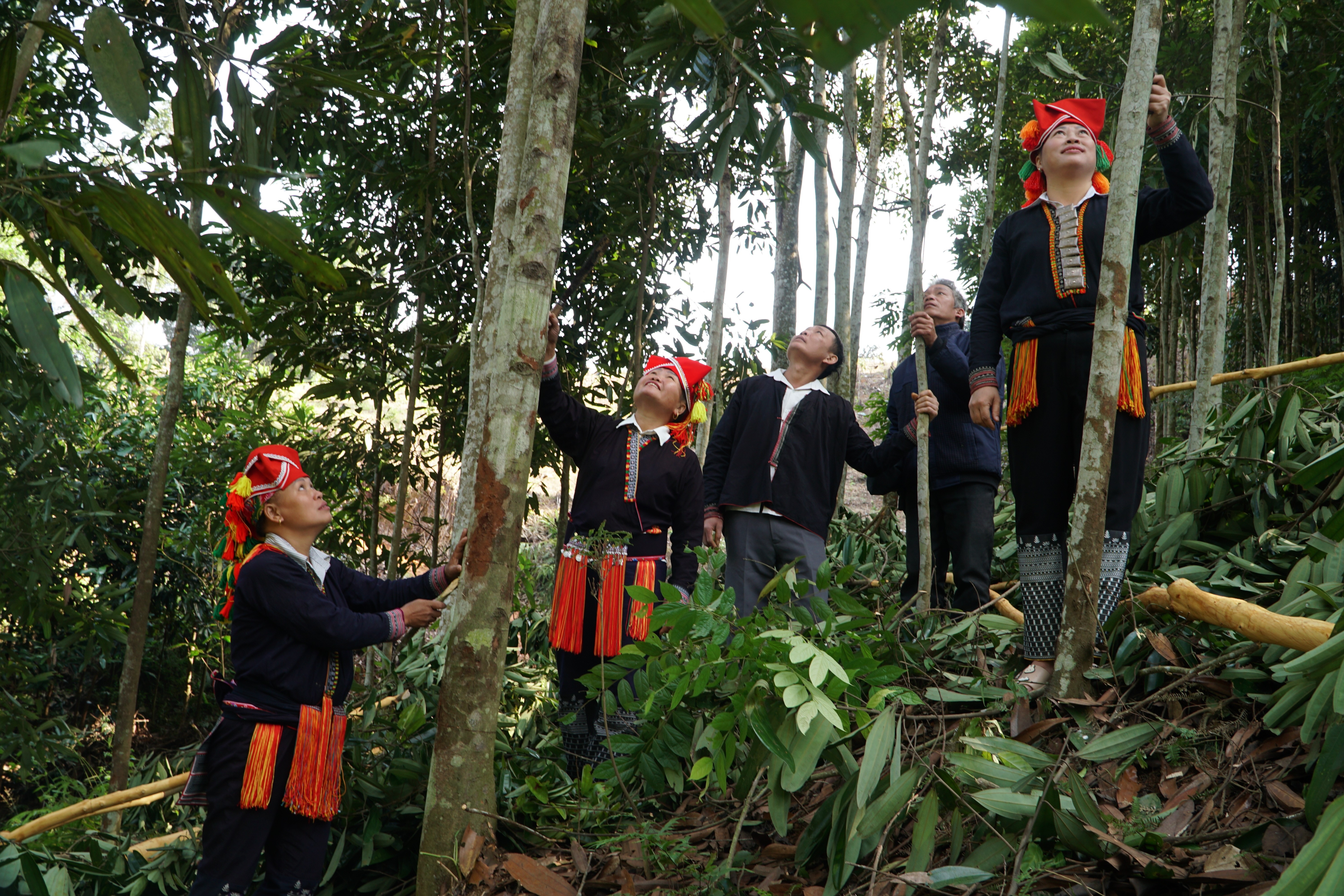
Once a poor household in Bao Ha commune, the family of Mr. Dang Van Nhi in Bong 2 village has now achieved a stable and enviable life: a spacious house, 6 hectares of cinnamon trees currently yielding harvests, grown-up children, and a warm, happy family. Since the 1990s, recognizing the economic benefits of cinnamon trees when some households in the village brought seedlings from Van Yen to plant, Mr. Nhi and his wife boldly followed suit, proactively learning cultivation techniques from practice. Gradually expanding their area, the family now owns 6 hectares of cinnamon trees.
Previously, due to limited access to information, Mr. Dang Van Nhi's family lacked proficiency in some advanced farming techniques, leading to pest damage to a portion of their cinnamon plantation; they also did not prioritize developing the cinnamon raw material area in an organic and sustainable direction. However, through media channels and newspapers, he promptly updated his knowledge, changed his production mindset, boldly switched to organic cinnamon farming, and became a pioneering household in this model in the locality.
Originally from Hung Yen province, Do Chi Tuan, from Lang Dau village, Phuc Khanh commune, moved to Lao Cai province with his family to start a new life. He is a pioneer in growing V2 oranges in the commune. With the experience he accumulated from his family, he successfully developed a V2 orange farming model on 7 hectares, bringing in hundreds of millions of dong annually. Thanks to information from newspapers and social media, and seeing the success of many farmers with fruit tree cultivation models, Do Chi Tuan decided to experiment with other citrus fruits. He planted Canh oranges, lemons, pomelos, etc., and all were successful, yielding high harvests.
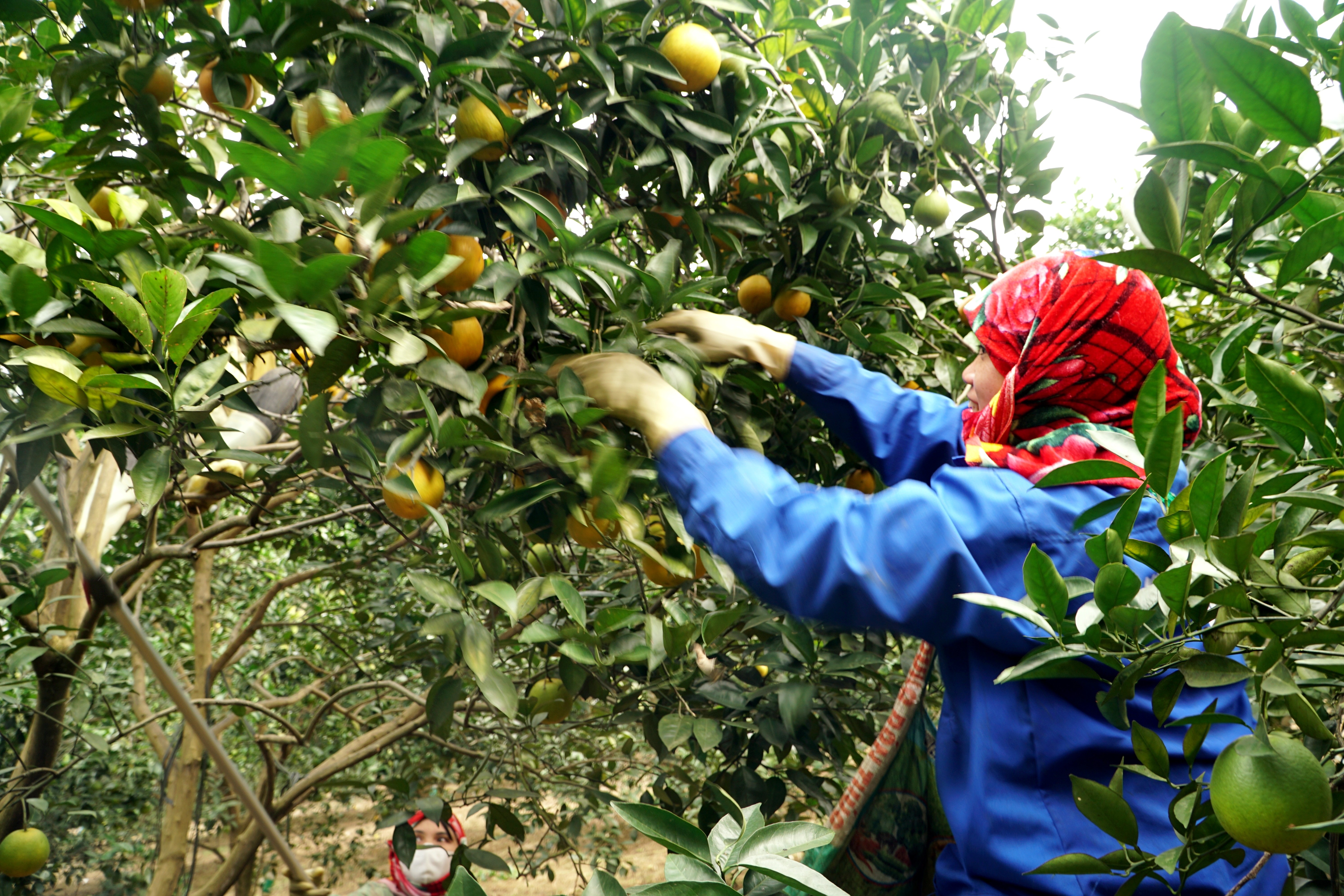
Mr. Do Chi Tuan shared: "The information age opens up many opportunities for farmers. I always proactively seek information on techniques for planting and caring for fruit trees, thereby accumulating experience, innovating my thinking, and effectively applying it to actual production."
Thanks to hard work and the application of science and technology in planting and caring for his orchard, Mr. Do Chi Tuan's fruit garden yields over 200 tons of oranges annually. With an average selling price of 10,000 VND/kg, after deducting expenses, he can earn hundreds of millions of VND in profit. The orchard also provides employment for 5-6 local laborers.

These are just two of many exemplary economic development models of farmers in Lao Cai, formed and effectively implemented thanks to timely access to useful information. Recognizing "information poverty reduction" as the "key" to sustainable poverty reduction, Lao Cai has focused on building information infrastructure reaching even the most remote villages; innovating methods of information and communication through mainstream media and social media platforms; and creating useful sections on the provincial newspaper, radio and television, and information pages of communes and wards. Through these efforts, the percentage of people accessing information has been gradually increased, effectively disseminating the Party's guidelines and the State's policies and laws; contributing to the renewal of awareness and thinking about economic development, while simultaneously building and spreading sustainable poverty reduction models.
Source: https://baolaocai.vn/tiep-can-thong-tin-xay-dung-mo-hinh-kinh-te-hieu-qua-ben-vung-post889135.html



































![[Video] Sunset at Lap An Lagoon – Where the sun sets over the fishing nets](https://vphoto.vietnam.vn/thumb/1200x675/vietnam/resource/IMAGE/2026/05/31/1780192137701_beach-landscape-sea-water-nature-grass-745871-pxhere-com.jpeg)























Comment (0)