"The Golden Star Warriors" still showed high fighting spirit, but there are still many issues in their playing style that require the players and coaching staff to change and improve if they want to achieve the goal of qualifying for the 2027 Asian Cup finals.
Low metabolic rate
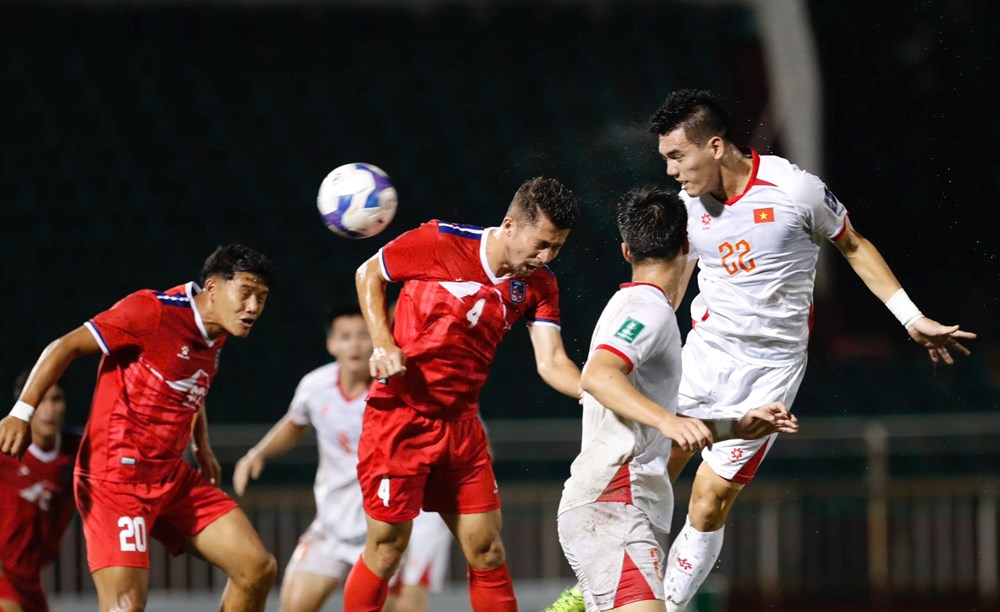
A narrow victory against Nepal gave the Vietnamese team three crucial points, keeping their hopes alive of competing for the top spot in Group F with Malaysia . However, this hard-fought win further exposed a persistent problem: the players' poor finishing ability.
Against a much weaker opponent, the "Golden Star Warriors" created numerous clear-cut scoring opportunities, but could only secure the victory thanks to… an own goal by a Nepalese defender. More worrying is the players' mentality, affected by their "desire to score." Many situations showed that the Vietnamese strikers tended to rush their actions, lacking composure and optimal judgment. Several good chances were missed simply because their shots were too weak or inaccurate from close range.
Statistics show that the Vietnamese team created 19 shots throughout the match (almost 10 times more than their opponents), with 10 on target, but failed to score. Notably, Tien Linh, Thanh Nhan, and Dinh Bac each hit the post once, Van Vi had two good chances in the penalty area but both shot wide, and Duc Chien and Gia Hung also had opportunities at the end of the match but failed to capitalize.
The slippery pitch and wet ball due to the heavy rain before the match may have affected the quality of play, but that's only part of the problem. Playing at home, dominating the game and creating so many good scoring opportunities, yet failing to score even one goal – that's the real issue.
In the first leg five days earlier, the Vietnamese team controlled possession for over 70%, unleashed 24 shots, but only scored 3 goals, two of which came when the opposing team was playing with ten men in the second half. Remarkably, after scoring the third goal in the middle of the second half, the home team, playing in two-thirds of the field with four forwards – Tien Linh, Thanh Nhan, Gia Hung, and Dinh Bac – created tremendous pressure on the opponent's goal but were unable to score.



Of the 9 goals scored by the Vietnamese national team in 4 matches of the 2027 Asian Cup qualifiers, 4 were scored by defenders, with Van Vi – a wing-back – being the top scorer (3 goals). Tien Linh – considered the team's number one target striker by coach Kim Sang-sik – has only scored 1 goal, Hai Long has a similar record, while Tuan Hai has yet to score. The remaining goalscorers are Quang Hai, Ngoc Quang – who is unable to participate in this training camp – and Xuan Manh – a central defender.
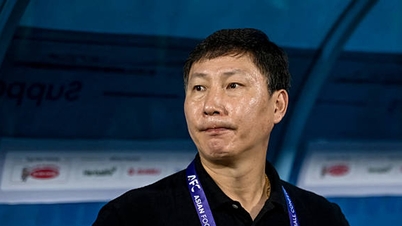
After the second leg against Nepal, coach Kim Sang-sik frankly admitted this problem with the team. The South Korean strategist affirmed that the team will continue to improve their finishing and experiment with more personnel for the positions that are lacking: “After the first leg against Nepal, we focused on improving our ability to capitalize on opportunities and finish in the final third of the field. In the next training camp, I will continue to look for ways to help players finish more effectively, and at the same time consider adding more players to the necessary positions.”
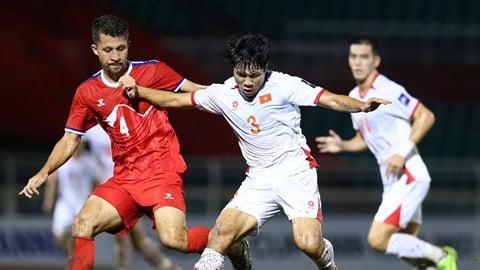
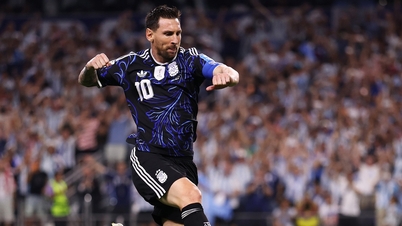
Vietnam team wins a hard-fought victory against Nepal.
The young players need to perform better.
Coach Kim Sang-sik has called up eight young players from the U23 squad to play in the two matches against Nepal: Tran Trung Kien, Khuat Van Khang, Nguyen Hieu Minh, Nguyen Xuan Bac, Nguyen Thanh Nhan, Nguyen Phi Hoang, Nguyen Nhat Minh, and Nguyen Dinh Bac. The inclusion of this group of young players has brought a fresh perspective and more tactical options to the team, helping them to better prepare for the SEA Games 33 and the 2026 U23 Asian Championship.
In the first leg at Go Dau Stadium, coach Kim Sang-sik brought Gia Hung, Dinh Bac, and Thanh Nhan onto the field in the second half. In the return leg, he started Trung Kien, Thanh Nhan, and Hieu Minh, then brought Gia Hung and Van Khang on in the second half. Thus, only Xuan Bac, Phi Hoang, and Nhat Minh have yet to play.
The common thread among the players when they were given the chance to play was that they always gave their all, showing the enthusiasm of youth, trying to integrate well with the senior players, and striving to impress the coaching staff. However, it must be frankly admitted that no U23 player left a strong impression in the two matches.



There are many reasons, such as integration ability, playing time, and possibly tactics. Playing against a weak opponent like Nepal is a great opportunity for young players to showcase their abilities. Opportunities like this are rare at the national team level, but it seems the U23 players haven't quite grasped them. "I am pleased with the spirit and effort of the young players, but they still need more time to mature. Every match at the national team level is a great lesson," Coach Kim Sang-sik expressed.
Coach Kim Sang-sik's decision to give opportunities to the U23 team is the right direction in the process of generational transition. This is a golden time for young talents to hone their skills and learn from their seniors.
However, opportunities only truly become meaningful when they know how to seize them, demonstrating their difference through performance and professional attitude. For the U23 players, this is not only a valuable experience but also a test of their character and desire to contribute. They need to show more to become not just "future replacements," but current key players helping the Vietnamese national team aim for a ticket to the 2027 Asian Cup Finals with confidence and youthful energy.
Source: https://baovanhoa.vn/the-thao/tiep-tuc-cai-thien-khau-dut-diem-175280.html