After 9 years of implementation, the Value Added Tax Law on fertilizers has revealed many shortcomings, requiring prompt amendment of this tax law.
The three biggest drawbacks of fertilizers not being subject to value-added tax.
Law 71/2014/QH13 amending the Value Added Tax (VAT) Law No. 13/2008/QH12, promulgated on November 26, 2014, came into effect on January 1, 2015. Based on Clause 1, Article 3 of Law No. 71/2014/QH13, fertilizers, machinery and equipment specifically used for agricultural production... are items exempt from VAT.
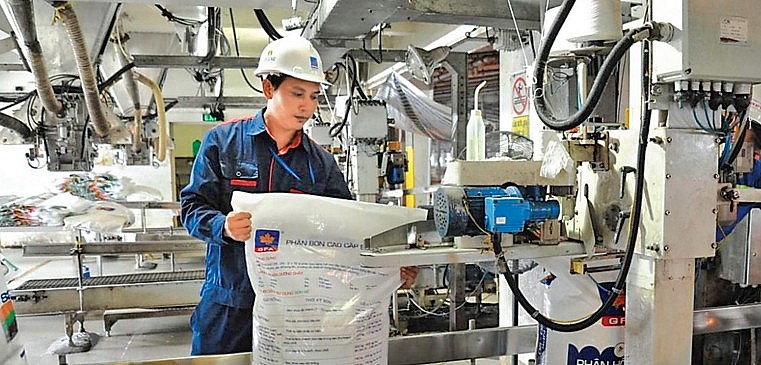 |
| Exempting fertilizers from VAT leads to unfair competition between domestically produced and imported fertilizers. |
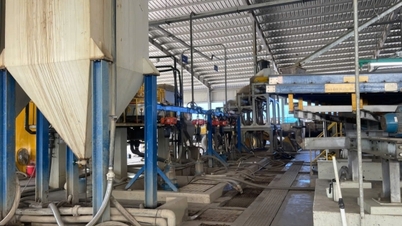
After 9 years of implementing the change from a 5% VAT-taxable item to a VAT-exempt item for fertilizers, several shortcomings have arisen affecting the domestic fertilizer production industry, leading to a decline in new investment projects aimed at modernizing fertilizer production technology and producing new generation and high-efficiency fertilizers.
Listing the three biggest drawbacks when the Value Added Tax Law on this product comes into effect, Dr. Nguyen Tri Ngoc - Vice President and General Secretary of the Vietnam General Association of Agriculture and Rural Development - said: Firstly , all input VAT on raw materials and services used in fertilizer production is not deductible and must be accounted for in the cost of production, increasing the cost and selling price of fertilizers. According to statistics from the Ministry of Finance , the amount of non-deductible input VAT included in the cost of fertilizer production from 2015 to 2022 has reached nearly 10,000 billion VND.
Secondly , there has been a decline in investment by domestic fertilizer manufacturing and trading businesses. This is due to the fact that the entire input VAT on investment in technological innovation is not deductible, leading to increased investment costs and reduced investment efficiency. Furthermore, the shift of fertilizers from the 5% VAT rate to a VAT-exempt status means that all input VAT used in fertilizer production and trading is not deductible and must be accounted for as an expense, causing a decrease in profits for domestic fertilizer manufacturers. This poses a risk to the development of the domestic fertilizer industry.
Thirdly , exempting fertilizers from VAT leads to unfair competition between domestically produced and imported fertilizers, as imported fertilizers are not subject to the 5% VAT.


In response to these shortcomings, on December 18, 2023, the Standing Committee of the National Assembly unanimously voted to add the draft Law on Value Added Tax (amended) to the 2024 legislative agenda. This draft will be submitted to the National Assembly for consideration at the 7th session and passed at the 8th session. On June 17, 2024, the National Assembly heard a presentation on the amendment of the Law on Value Added Tax, presented by the Minister of Finance on behalf of the Government. According to the presentation, the Government proposed including fertilizers under the Value Added Tax scheme at a rate of 5%.
The proposal suggests applying a 5% VAT rate to fertilizers.
According to Dr. Nguyen Tri Ngoc, many countries around the world (China, Brazil, Russia) are applying VAT on fertilizers at a lower rate than other common goods, aiming to reduce fertilizer costs, promote the development of the domestic fertilizer industry, encourage investment in advanced technology for producing smart, environmentally friendly fertilizers, and meet the goals of sustainable agricultural development. In these countries, VAT policies are applied in conjunction with other import and export tax policies to achieve overall effectiveness.
In China – the world's largest producer and consumer of fertilizers and a leading exporter – fertilizers are subject to an 11% VAT rate. In Russia – one of the world's largest producers and exporters of fertilizers – fertilizers are subject to a 20% VAT rate.
In several countries such as China, Brazil, Russia, and Germany, numerous policies have been implemented to promote the development of the fertilizer industry, particularly those encouraging research and development and investment in products utilizing new technologies. The application of VAT on fertilizers allows businesses to deduct input VAT (typically 10%), which helps improve the quality and efficiency of investment projects in innovative fertilizer production technologies.
The adjustment to shift fertilizers from a VAT-exempt item to a VAT-taxable item at 5% (as in previous VAT laws) is based on a comprehensive assessment of the economic impact, including: the impact on state budget revenue; the impact on the development of domestic fertilizer manufacturing enterprises; and the impact on agriculture, farmers, and rural areas.
Industry experts analyze that, firstly , the VAT portion of the cost components of fertilizer products will be accounted for separately from the product's cost and deducted by output VAT. Therefore, the production cost and cost of goods sold for fertilizers will decrease (corresponding to the amount of input VAT that is separated).
Secondly , consumers of fertilizer products do not bear the input VAT (as it has been separated from the production input costs), but they will bear the output VAT of the fertilizer. However, if a 5% VAT rate is applied to fertilizers, the output VAT will be lower than the input VAT (the average input VAT rate is higher than 5%), so there is room for a reduction in fertilizer prices.
Thirdly , businesses are motivated to invest in research, technological innovation, and the production of high-performance fertilizers and next-generation fertilizers, which will contribute to increased crop yields, improved product quality, and thus sustainably enhance the efficiency of agricultural practices. Increased domestic production by businesses will gradually reduce fertilizer imports.



Fourth , the State collects a tax on fertilizers, which provides additional resources for scientific research... This will increase farmers' production efficiency per unit area and enhance the competitiveness of domestic agricultural products. Adjusting the VAT policy, bringing fertilizers back under VAT status, will create a level playing field in terms of taxation and competition, laying the groundwork for reducing production costs and selling prices of fertilizers.
The policy on applying VAT to fertilizers needs to be based on a long-term vision, aiming for the sustainable development of the domestic fertilizer production industry and the sustainable development of the agricultural sector. It should create a level playing field for domestic fertilizer producers and importers, eliminate unfair competition for domestic production, and lay the foundation for reducing fertilizer prices and costs for agricultural producers.
Experts also recommended amending Law 71/2014/QH13, specifically changing the section related to fertilizers from a VAT-exempt item to a VAT-taxable item at 5%. They also suggested using policy tools to regulate and stabilize fertilizer prices; and strengthening policies to support farmers in transitioning to sustainable agricultural production methods, using fertilizers efficiently, and reducing fertilizer costs.
| Including fertilizers under the 5% VAT rate is consistent with the nature of VAT, based on strict control between input and output VAT. This also aligns with Vietnam's general policy when amending the VAT Law (expanding the taxable scope to ensure systematic compliance). |
Source: https://congthuong.vn/thue-gia-tri-gia-tang-mat-hang-phan-bon-tiep-tuc-de-xuat-tang-len-5-355258.html
![[Image] National conference summarizing one year of operation of the overall organizational model of the political system, the three-tiered government model.](https://vphoto.vietnam.vn/thumb/1200x675/vietnam/resource/IMAGE/2026/07/01/1782882811691_ndo_br_1-jpg.webp)