The Ministry of Health has just issued the operational plan for the project to support the deployment of polio vaccination (IPV) in the expanded immunization program in 2023, funded by GAVI with non-refundable aid.
According to the plan, localities will continue to administer the first and second doses of the IPV vaccine as part of the Expanded Immunization Program (EIP) in 2023.
The Central Institute of Hygiene and Epidemiology has requested the Institutes of Hygiene and Epidemiology/Pasteur Institutes and provincial/city health departments to review and propose the need for IPV vaccine so that supplementary vaccinations for children who have not received both doses containing the polio component can be implemented in the second quarter of 2023. The children eligible for vaccination are those born in 2021 and 2022.
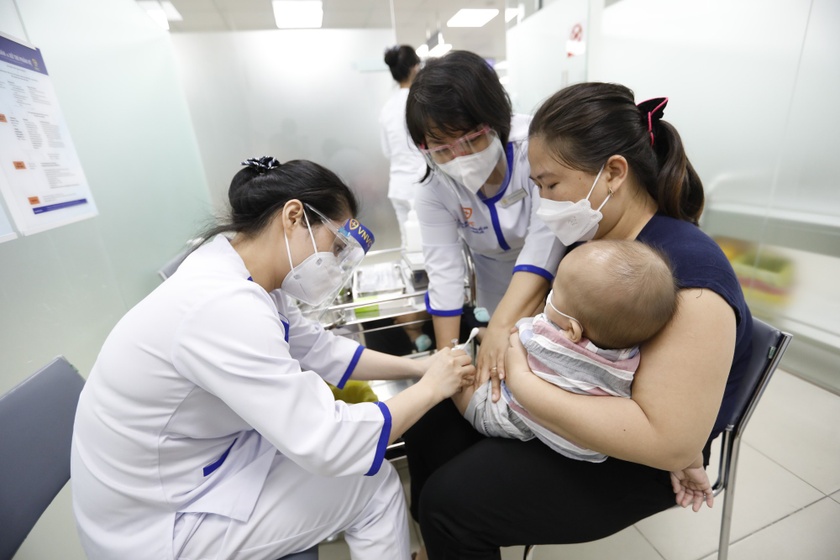 |
Vaccinating children. Photo: Ngoc Duong |
The vaccine supply, provided by GAVI (Global Alliance for Vaccines and Immunization), includes over 3.1 million doses. Vaccination supplies, including syringes and safety boxes, have been distributed to the provinces.
Previously, in 2021-2022, due to the impact of the Covid-19 pandemic and social distancing measures, many localities had to temporarily suspend routine vaccination programs, resulting in the lowest vaccination rates for many vaccines in the past 20 years.
Specifically, the vaccination rates for oral polio vaccine (bOPV) and IPV injection in 2021 were only 69.4% and 80.4%, respectively; in 2022, they reached 70.1% and 89.2%; the rate for the second dose of IPV reached 73%, leading to a decrease in demand for these vaccines compared to the plan and an increase in the amount of IPV vaccine in stock at all levels.
Against the backdrop of low global polio vaccination rates due to the impact of the Covid-19 pandemic, the world has recorded cases of wild polio virus spreading from endemic countries to countries that have eradicated polio.
At its November 2022 meeting, the World Health Organization's Western Pacific Regional Committee for Polio Eradication (the Committee) reclassified Vietnam from a low-risk group to a high-risk group for the introduction of wild polio or the emergence of polio cases caused by genetically modified viruses. The Committee recommended that Vietnam urgently restore vaccination rates for vaccines included in the Expanded Immunization Program (Ministry of Health), especially polio, measles, and rubella vaccines, and implement catch-up and booster vaccination programs for high-risk areas.



![[Photo] Prime Minister Pham Minh Chinh presides over the conference announcing the establishment of the International Finance Centre in Vietnam.](/_next/image?url=https%3A%2F%2Fvphoto.vietnam.vn%2Fthumb%2F1200x675%2Fvietnam%2Fresource%2FIMAGE%2F2025%2F12%2F21%2F1766309817714_ndo_br_dsc-3400-jpg.webp&w=3840&q=75)

![[Photo] Prime Minister Pham Minh Chinh presides over a meeting on private sector economic development.](/_next/image?url=https%3A%2F%2Fvphoto.vietnam.vn%2Fthumb%2F1200x675%2Fvietnam%2Fresource%2FIMAGE%2F2025%2F12%2F20%2F1766237501876_thiet-ke-chua-co-ten-40-png.webp&w=3840&q=75)
















































Comment (0)