

According to the Tay people's beliefs, Then means heaven – it is a song passed down from the gods and fairies, often performed during important ceremonies such as prayers for peace and a good harvest. An indispensable instrument in Then singing is the Tinh Tau instrument. Then singing combines spiritual elements with entertainment, expressing feelings, praising the homeland, love, and labor. Accompanied by the melodious Tinh Tau, each Then melody weaves the rhythm of the four seasons: spring with its vibrant festivities, summer with its quiet, heartfelt remembrance of ancestral virtues, autumn with its gentle lullaby during the new rice offering ceremony, and winter with its warm embrace around the hearth connecting generations.
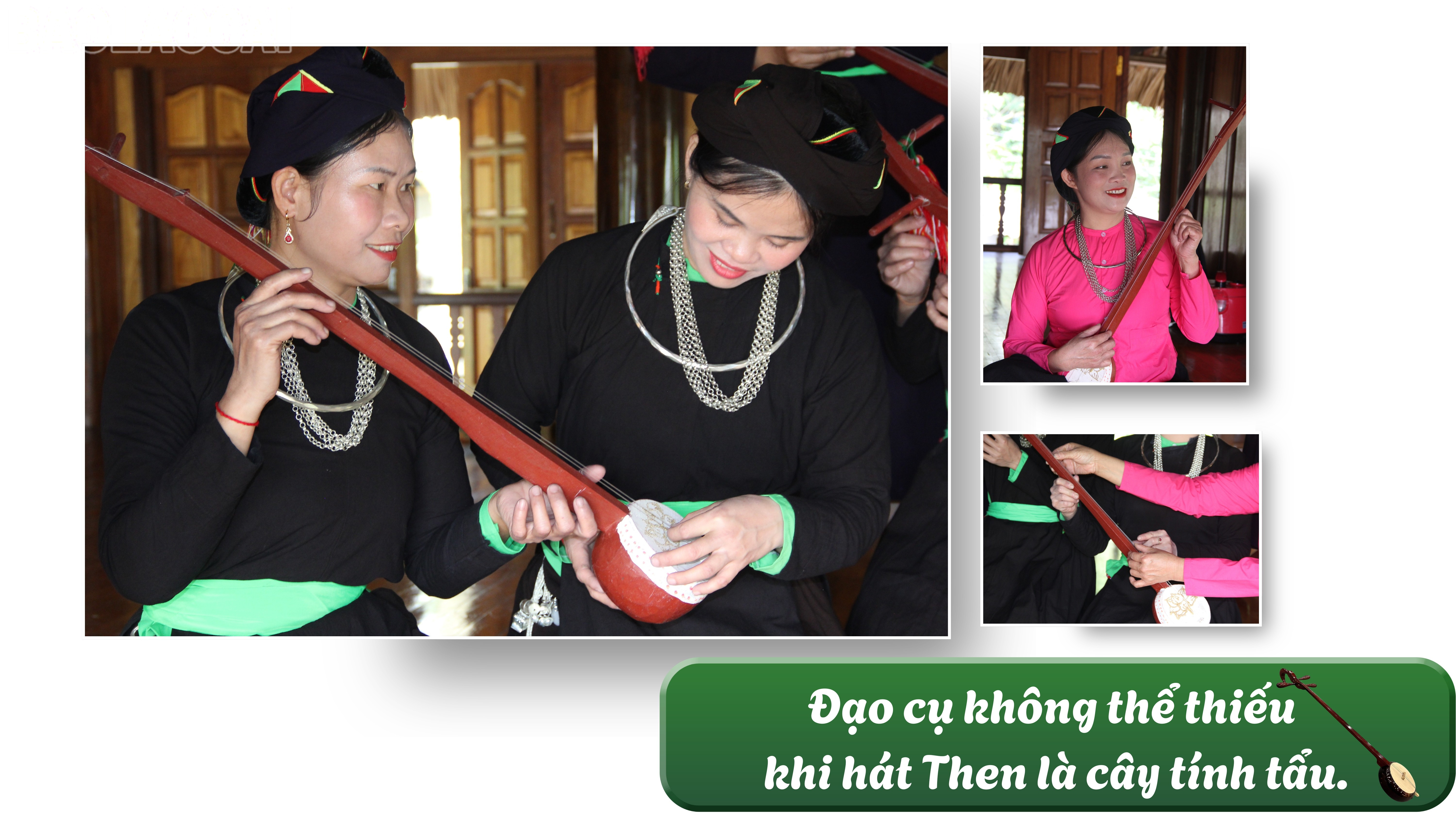
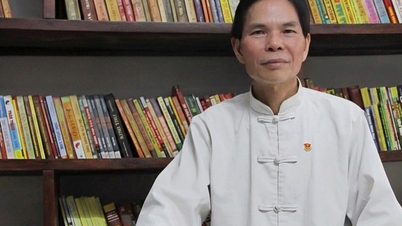
In the early days of winter, we returned to Ngọn Đồng village, Hưng Khánh commune, to meet the Meritorious Artisan Hoàng Kế Quang – the "keeper of the flame" of Then singing in this region. This wasn't my first visit to his house, but this time the feeling was different. Age had thinned him, and his health wasn't what it used to be, but in return, the village had changed. More people now knew how to sing Then, and his former students still frequently visited him when he was ill, gathering around to tell him stories as a way of giving energy to the old teacher who had sown the seeds of culture throughout his life.
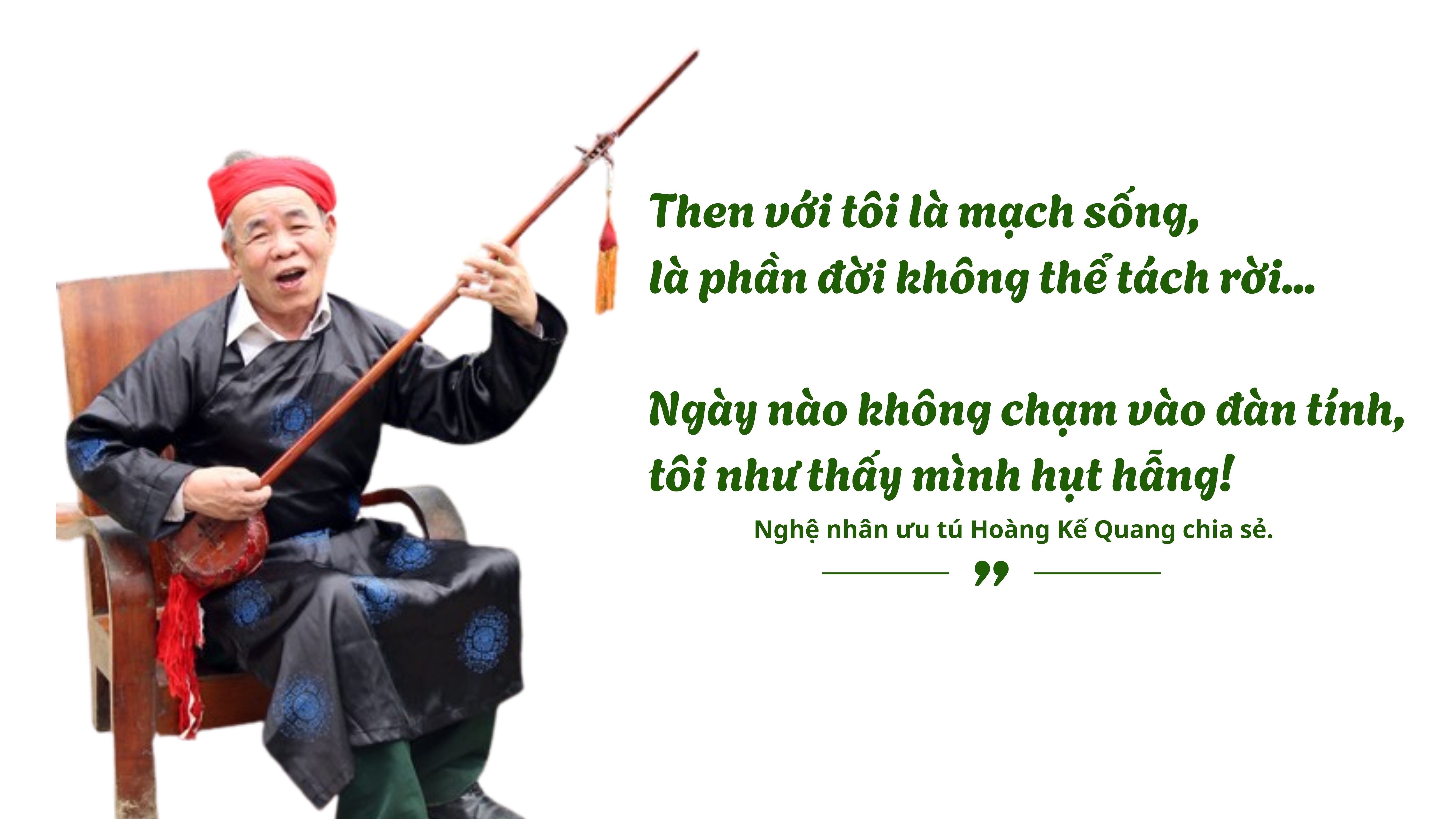
With the same gentle smile and warm eyes of someone who has dedicated their life to Tay culture, Mr. Quang slowly said, "Then is my lifeblood, an inseparable part of my existence. If I don't touch the zither every day, I feel a void." In that moment, I understood that his journey with Then was not just an art form, but a deep, enduring love that has become the root of his soul for over half a century.
Although artisan Hoang Ke Quang has been experiencing health problems since the end of 2022 and is no longer directly involved in teaching activities, the spiritual legacy he left behind continues to resonate in the cultural life of Hung Khanh. He is the bridge between the past and the present, between tradition and modernity, between folk art and community culture.
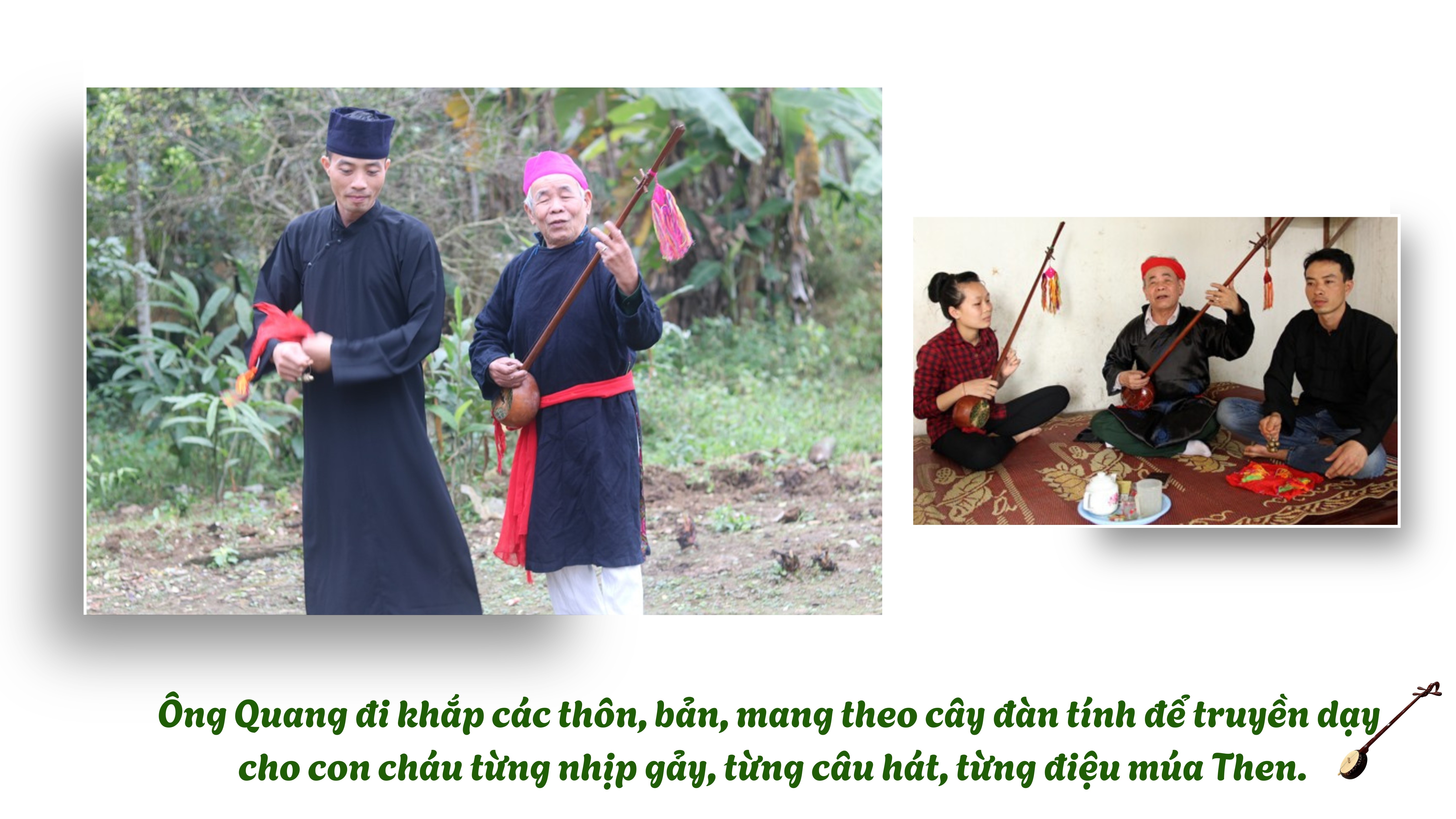
He recounted that, from the age of 12, he followed his father – a renowned Then shaman in the region – throughout the villages to sing, learn, and deeply feel the unique echoes of Then. During each festival throughout the year, Mr. Quang would immerse himself with the villagers in Then dances and Xòe Then performances, letting the sound of the zither become a bridge connecting emotions, allowing him to share in the joy, nostalgia, and memories of the entire community.
Recalling my first meeting with Mr. Quang, hearing the melodies of the song "Remembering Uncle Ho" swept me into a torrent of emotions: "The leader who saved Vietnam/Uncle Ho loved his country and the Vietnamese people/The whole nation followed the red flag he raised/In historic Ba Dinh Square in autumn/The country is independent, the people are free, prosperous, and happy..."
Each lingering tremor, each melodious note, made it clear to the listener that it was not just a song, but also the heartfelt reverence of the Tay people for their beloved national leader. Furthermore, Mr. Quang devoted great effort to teaching and passing on his knowledge.
Thanks to his perseverance, many communities such as Nui Vi, Khe Lech, Ngon Dong, Khe Cam, Pa Thooc, etc., have established performing arts groups, built cultural communities, and preserved folk traditions. He traveled throughout the villages, carrying his zither to teach the children and grandchildren each rhythm, each song, and each dance.
"I only hope that the younger generation understands and loves Then as their ancestors did. Preserving Then is not the responsibility of one person, but of the entire community," Mr. Quang further shared.
In 2015, Mr. Hoang Ke Quang was honored by the President of Vietnam with the title of Outstanding Artisan in the field of folk performing arts of Yen Bai province. This is a well-deserved recognition for his persistent contributions over 50 years to the preservation and promotion of the Tay ethnic group's cultural heritage.
Leaving Hung Khanh, we made our way to Lam Thuong commune – where many artisans are still diligently preserving the art of Then singing. Mr. Hoang Van Dai, over 60 years old, lives in Tong Pinh Cai village and is often called by the locals the guardian of the Then singing tradition. In his simple stilt house, still faintly smelling of wood, he welcomed us with a gentle smile.
"In the old days, every family had someone who knew how to sing Then songs and play the zither. Now everything is so modern, young people pay less attention. That's why I still try to teach the children; as long as there are people who want to learn, I will continue to teach," Mr. Dai confided.
Every afternoon, the sound of the zither played by the children learning to play it echoed through Mr. Dai's yard. They were curious and eager to hear him tell stories about the origins of the instrument, about ancient folk songs, and about religious beliefs connected to their lives.
Mr. Dai added: "The đàn tính (a traditional Vietnamese stringed instrument) may seem simple, but each note must have a soul. That soul is the love for the village."
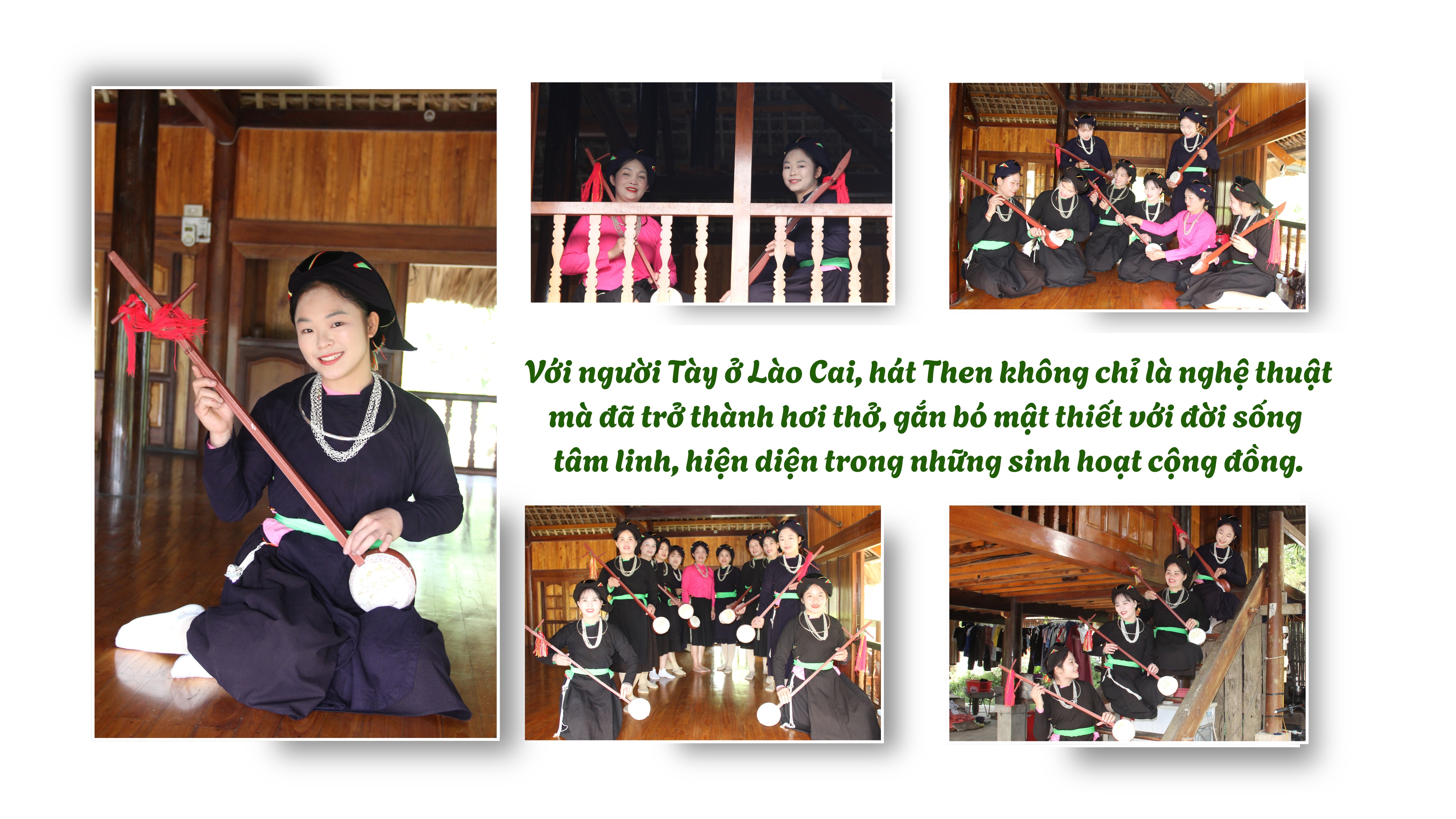
Not only Mr. Dai, but also the younger generation like Ms. Hoang Thi Thuy Hang in Tong Pinh Cai village, Lam Thuong commune, are actively preserving and spreading the art of Then singing. For more than 5 years, Ms. Hang has established a performing arts troupe of 10 members, regularly performing at festivals and events in the village, serving community tourism , and contributing to keeping the melodies of Then singing vibrant and relevant to modern life.
“I only hope that future generations will still be able to hear the sound of the zither as I did when I was a child. If we don't preserve it, these melodies will gradually disappear, and who will keep them for us?” - Ms. Hang said, her eyes shining with determination and full of passion for Then music.
For the Tay people in Lao Cai, Then singing is not just an art form but has become an integral part of their spiritual life, present in festivals, rituals for peace and good harvests, community activities, and even in expressing their innermost thoughts. Then is not just music , but also the soul carrying memories, emotions, and sincere wishes. In each Then song, the melodious sound of the zither blends seamlessly with the rhythm of the four seasons in the life of the Tay people in Lao Cai.
Source: https://baolaocai.vn/tim-ve-dieu-then-post888057.html
![[Photo] Trial run of the election process at polling stations in Dong Da ward (Hanoi)](https://vphoto.vietnam.vn/thumb/1200x675/vietnam/resource/IMAGE/2026/03/12/1773306146728_ndo_br_van-hanh-thu-to-bau-cu-4070-755-jpg.webp)

![[Photo] Hanoi is ready for the "National Festival"](https://vphoto.vietnam.vn/thumb/1200x675/vietnam/resource/IMAGE/2026/03/12/1773305846167_ndo_br_z7612336508628-14627dc7d18cc27532ffea5d4089713b-4105-jpg.webp)




















































Comment (0)