

 |
A crowd of tourists walks through Bukchon Hanok Village in Seoul, South Korea, on October 25, 2024. Photo: Reuters . |
Tang Junjie, 22, from Sichuan, plans to take her family to Japan for their first overseas trip together, coinciding with China's longest Lunar New Year holiday ever.
Tang had booked his plane tickets months in advance, as Japan was a familiar destination after three previous independent trips. However, the sudden deterioration of relations between the two countries forced him to change his plans.
"Initially, we were just transiting through Seoul on our way to Japan. But the airline wouldn't refund us, so the whole family decided to stay in Seoul instead of continuing our journey," the traveler told SCMP.
The Tang family was among the wave of Chinese tourists who flocked to South Korea from February 15th to 23rd. China and Japan have been experiencing diplomatic tensions since last November following remarks by Japanese Prime Minister Sanae Takaichi. Beijing subsequently advised its citizens to limit travel to Japan.
The South Korean Ministry of Culture, Sports and Tourism estimates that up to 190,000 Chinese tourists visited the country during the nine-day holiday, an average daily number 44% higher than the same holiday period last year (January 24-29).
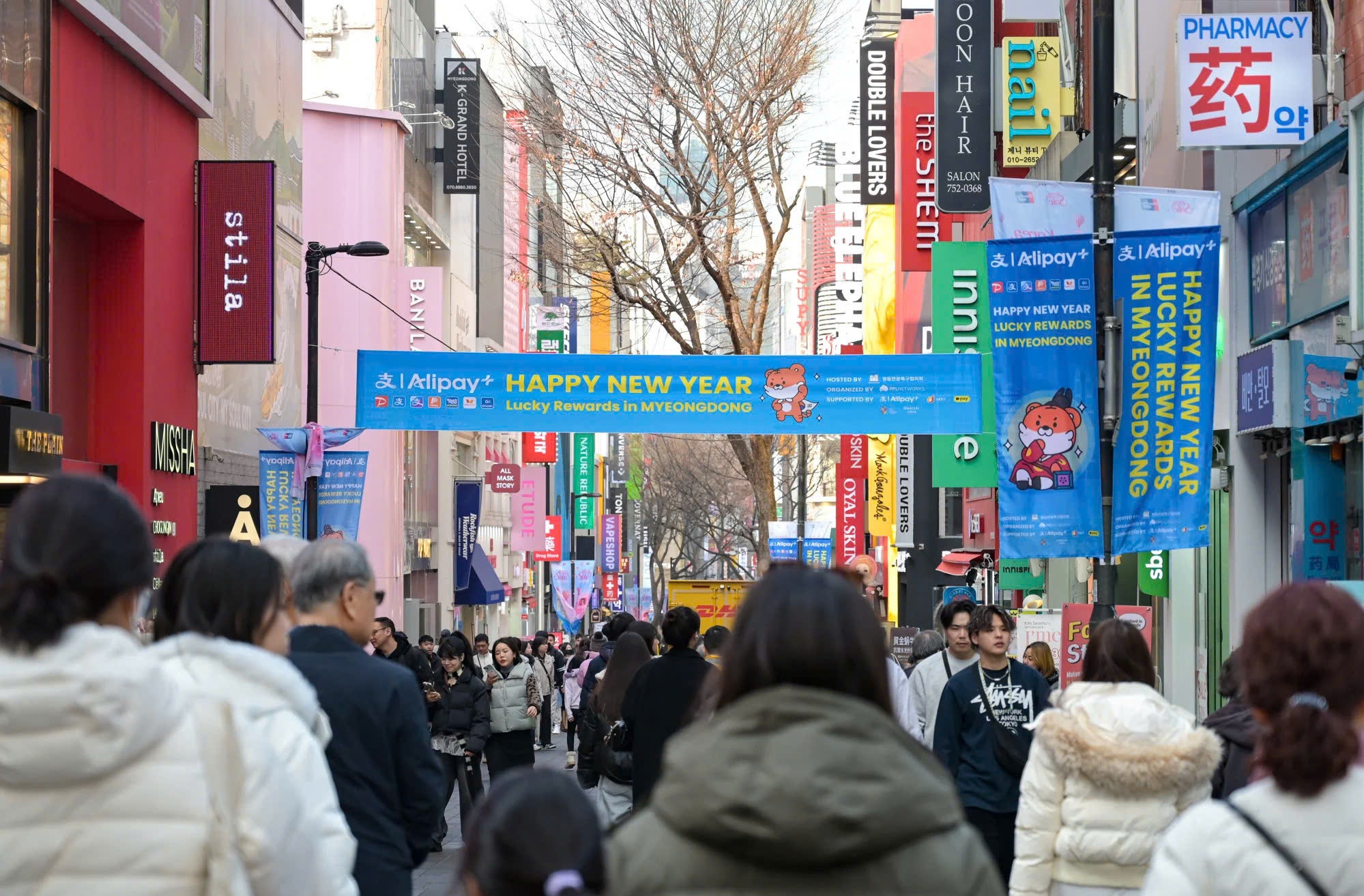 |
Billboards promoting China's Alipay payment platform are displayed in the popular Myeong-dong shopping district in Seoul, February 20. Photo: Alice Li. |
Wang Xinyue, from Shandong, said this was her first time in South Korea and she was "surprised by the large number of Chinese tourists in Myeong-dong; everywhere you go, you hear Chinese spoken."
Wang and his group of friends were drawn to the shopping and beauty services, such as dermatological treatments. Their hotel room cost nearly 1,000 yuan ( US$145 ) per night, double the price during the off-season.
Lotte Department Store, a retail group, reported a 120% increase in sales to foreign customers between February 13th and 18th compared to the same period last year. Sales from Chinese customers, including mainland China, Hong Kong, Macau, and Taiwan, alone increased by 260%.
The Grand Hyatt Jeju hotel, with 1,600 rooms and a favorite destination for Chinese tourists, recorded up to 1,590 room bookings per day during the holiday, almost reaching full capacity.
Paradise City, a complex operating a casino exclusively for foreigners near Incheon International Airport, reported an average occupancy rate of 95% thanks to online promotional campaigns targeting Chinese tourists.
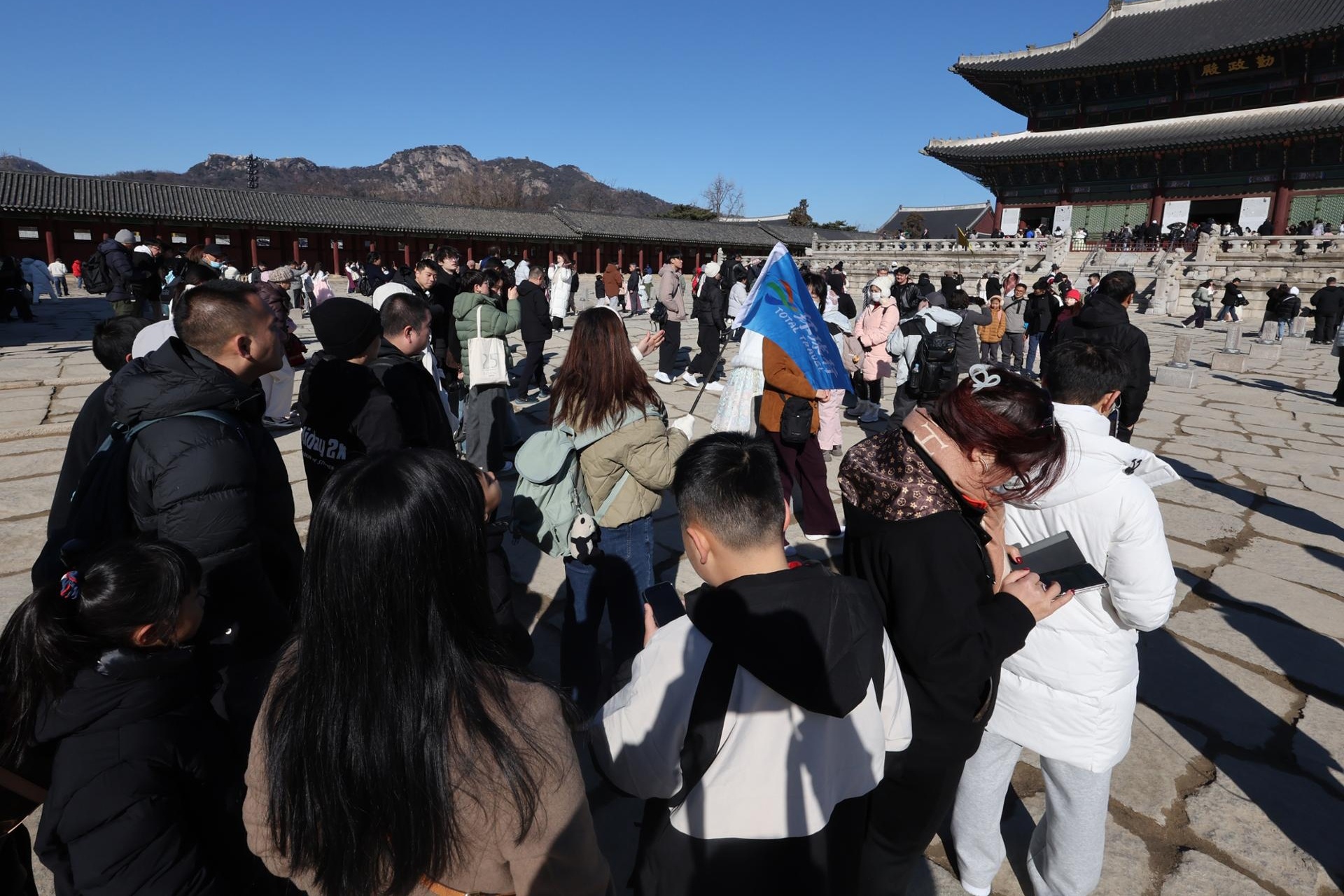 |
A group of Chinese tourists visit Gyeongbok Palace in Seoul, South Korea, on February 17. Photo: Yonhap. |
Analysts believe that the recent resumption of high-level diplomatic relations between China and South Korea has helped reduce travel barriers. The temporary visa waiver policy for Chinese tour groups of three or more, effective from September 2025, has also contributed to boosting visitor numbers.
On February 9th, the South Korean ambassador to China predicted that the number of mainland Chinese visitors to South Korea this year could exceed 6 million, recovering to pre-pandemic levels.
However, behind the optimistic atmosphere lies a familiar worry. Business leaders understand that the flow of tourists could reverse quickly, something South Korea experienced and Japan is now facing.
In 2016, the number of mainland Chinese tourists to South Korea peaked at 8.06 million before plummeting after Beijing protested Seoul's deployment of a missile defense system. In March 2017, China suspended group tours to South Korea and did not resume them for more than six years.
Source: https://znews.vn/toi-thay-khach-trung-quoc-o-moi-noi-post1630030.html


















































































Comment (0)