

From Buon Ma Thuot to the gateway to Saigon
In December 1972, answering the sacred call of the Fatherland, Do Trung Minh (born in 1955 in Cau Giay, Hanoi ) enlisted in the army and was assigned to Squad 2 (Platoon 1, Company 2, Battalion 80, under Division 304). After completing his training, he and his unit marched to the Southern battlefield.
In July 1973, the young soldier was assigned to a fire support squad under Company 2 (Battalion 4, Regiment 24, Division 10, Corps 3). By August 1974, Minh had taken on the position of squad leader of the guard squad of the Staff Headquarters of Regiment 24 (Division 10, Corps 3), tasked with protecting the command headquarters and the unit's superiors.
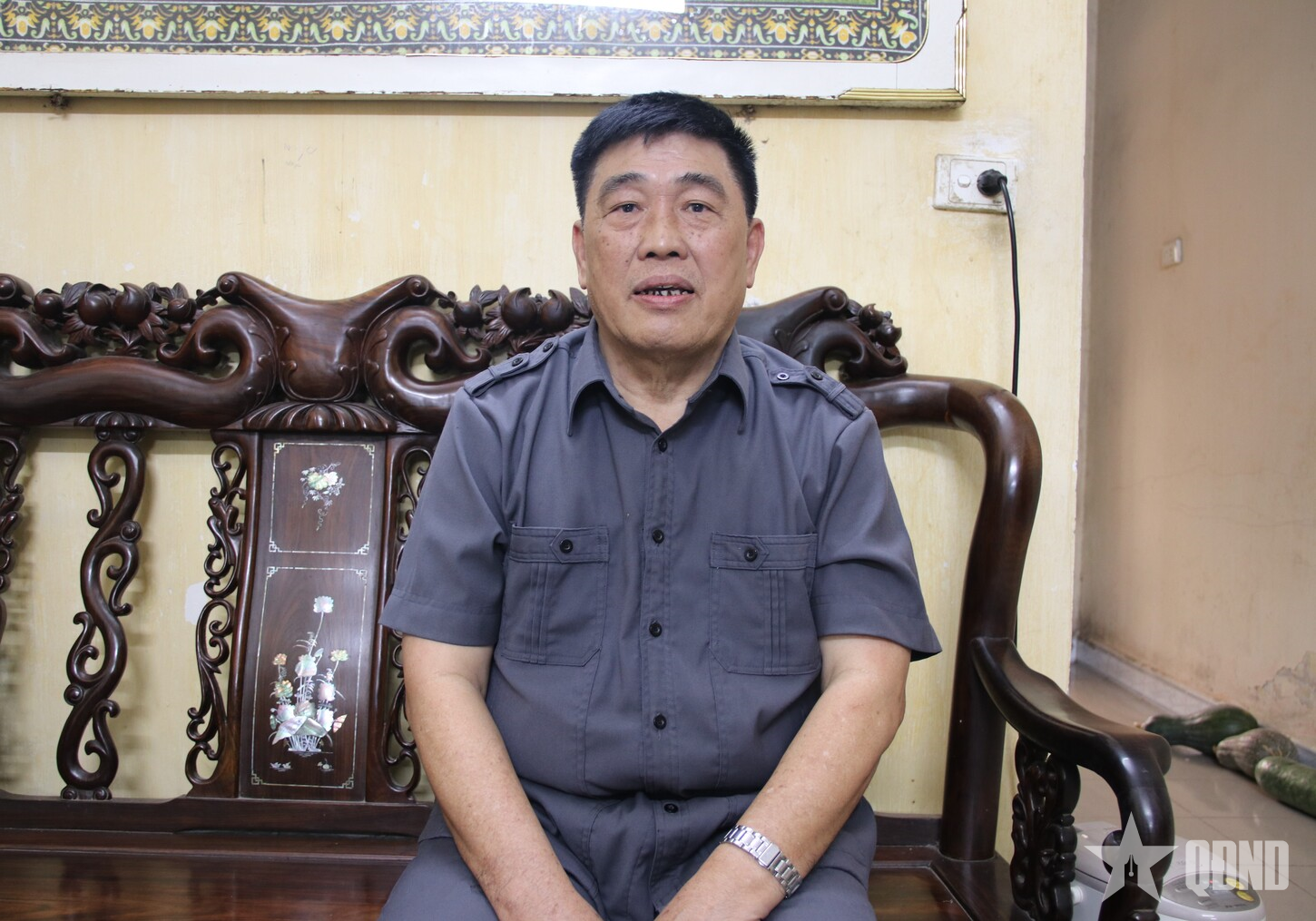 |
| "With the mission of ensuring the absolute safety of their superiors, the guards must always maintain a high level of vigilance, strict discipline, the highest sense of responsibility, and unwavering dedication," Colonel Do Trung Minh emphasized. Photo: Hai Ly |
“During the Central Highlands Campaign, while accompanying the commanders for protection, what I remember most is the night before our troops opened fire on Buon Ma Thuot. At that time, the enemy was stronger than us, so the atmosphere in the unit was very tense. Colonel Dang Vu Hiep, then Political Commissar and Party Secretary of the Central Highlands Front, met with the commander of Battalion 4 (the unit assigned to penetrate deep into the center of Buon Ma Thuot town), and instructed: 'If the situation is difficult, if the unit can hold out for one day, it will be a brilliant achievement.' No one said anything more, but everyone understood: it was an order and an absolute trust. Afterwards, Battalion 4 successfully planted the flag on the headquarters of the puppet 23rd Division,” Mr. Minh proudly recounted.
On April 7, 1975, under the command of General Vo Nguyen Giap, "Speed, even greater speed, boldness, even greater boldness, seize every minute, every hour, rush to the front, liberate the South. Decisive battle and total victory," the 24th Regiment (10th Division, 3rd Corps) was ordered to leave the Central Highlands battlefield and march swiftly along the Ho Chi Minh Trail to participate in the historic Ho Chi Minh Campaign.
In this campaign, the 10th Division was tasked by the 3rd Corps with capturing Tan Son Nhat Airport and the South Vietnamese General Staff Headquarters. These were two of the five key targets of the campaign. Specifically, Do Trung Minh's unit (24th Regiment) was responsible for a deep penetration attack from the South-Southwest, targeting Tan Son Nhat Airport to seize the Airborne Command, the 5th Air Force Division Headquarters, the American advisory area, and the technical and radar communications area.
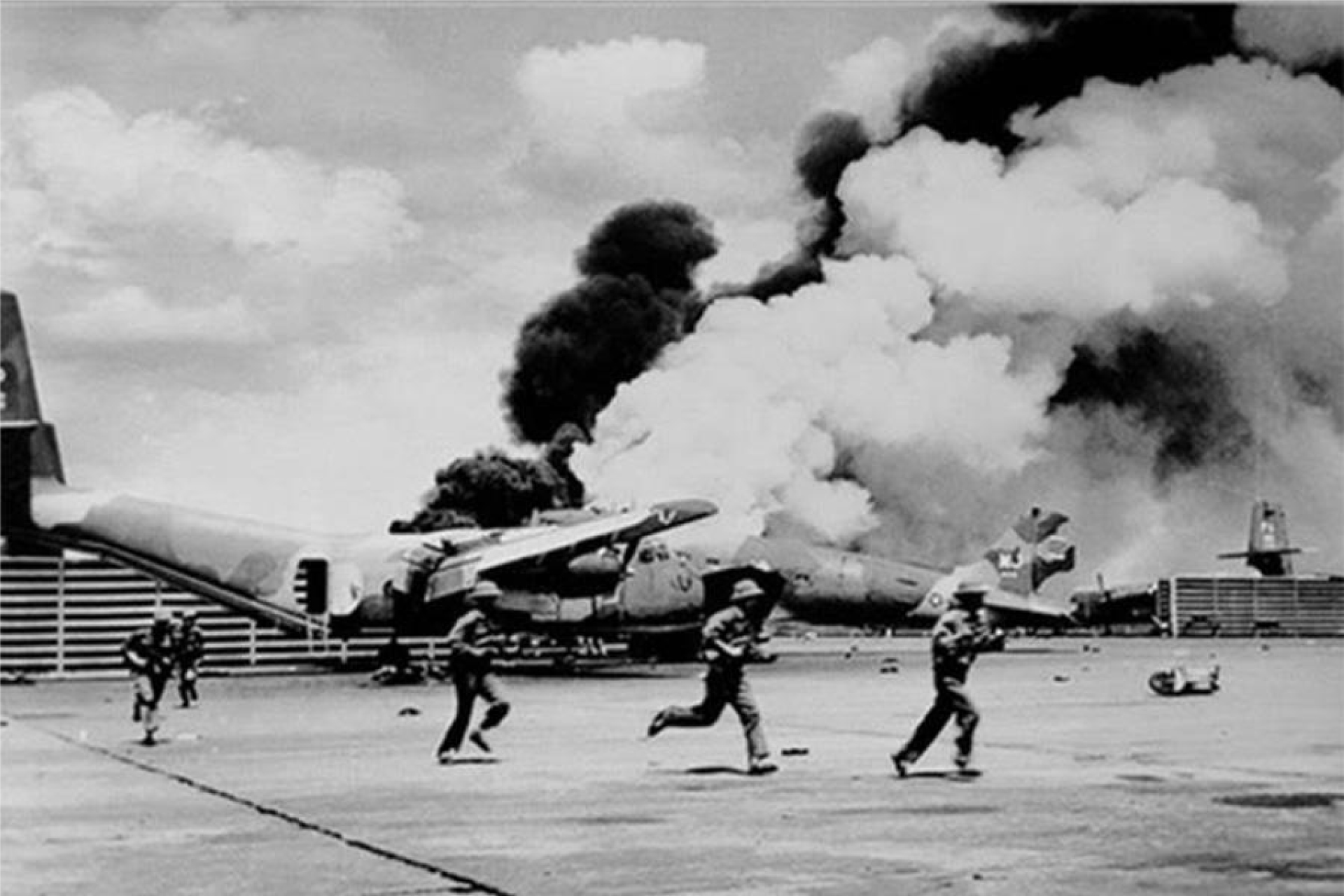 |
Soldiers of the 3rd Army Corps capture Tan Son Nhat airport. (Photo: VNA) |
At exactly 5:30 a.m. on April 29, the 24th and 28th Regiments, along with tanks, armored vehicles, artillery, and anti-aircraft guns, were ordered to sortie. Following the markers planted by the engineering corps on Highways 5 and 6, bulldozers advanced ahead, clearing forest edges and mounds of earth to make way for tanks and troop carriers. The convoy of vehicles, camouflaged and flying liberation flags, marched in a column formation across the Cu Chi plains, advancing towards Saigon.
Mr. Minh recalled: “Around 11 a.m. that day, when our forces were about 4 kilometers from Cu Chi, we encountered an enemy infantry and armored force that was trying to stop us. Our troops fought back and destroyed the enemy tanks and an armored platoon. Immediately afterwards, our tanks and infantry, seizing the advantage, quickly advanced through Cu Chi towards Cau Bong bridge.”

From Cau Bong, the 24th Regiment continued its advance, capturing the Quang Trung Training Center and the Ba Queo intersection. By 9 PM on April 29th, the combined arms thrust of the 10th Division was approximately 2km from Tan Son Nhat Airport and the South Vietnamese General Staff Headquarters.
The "finishing blow" at Tan Son Nhat Airport
During his more than 50-year military career, Colonel Do Trung Minh participated in many major campaigns, from fierce battles in the Central Highlands Campaign and the Ho Chi Minh Campaign, to the sweeps against the Fulro rebels in Lam Dong , and fighting to protect the northern border. He has many battle memories, but the most memorable for him is the historic battle at Tan Son Nhat airport.
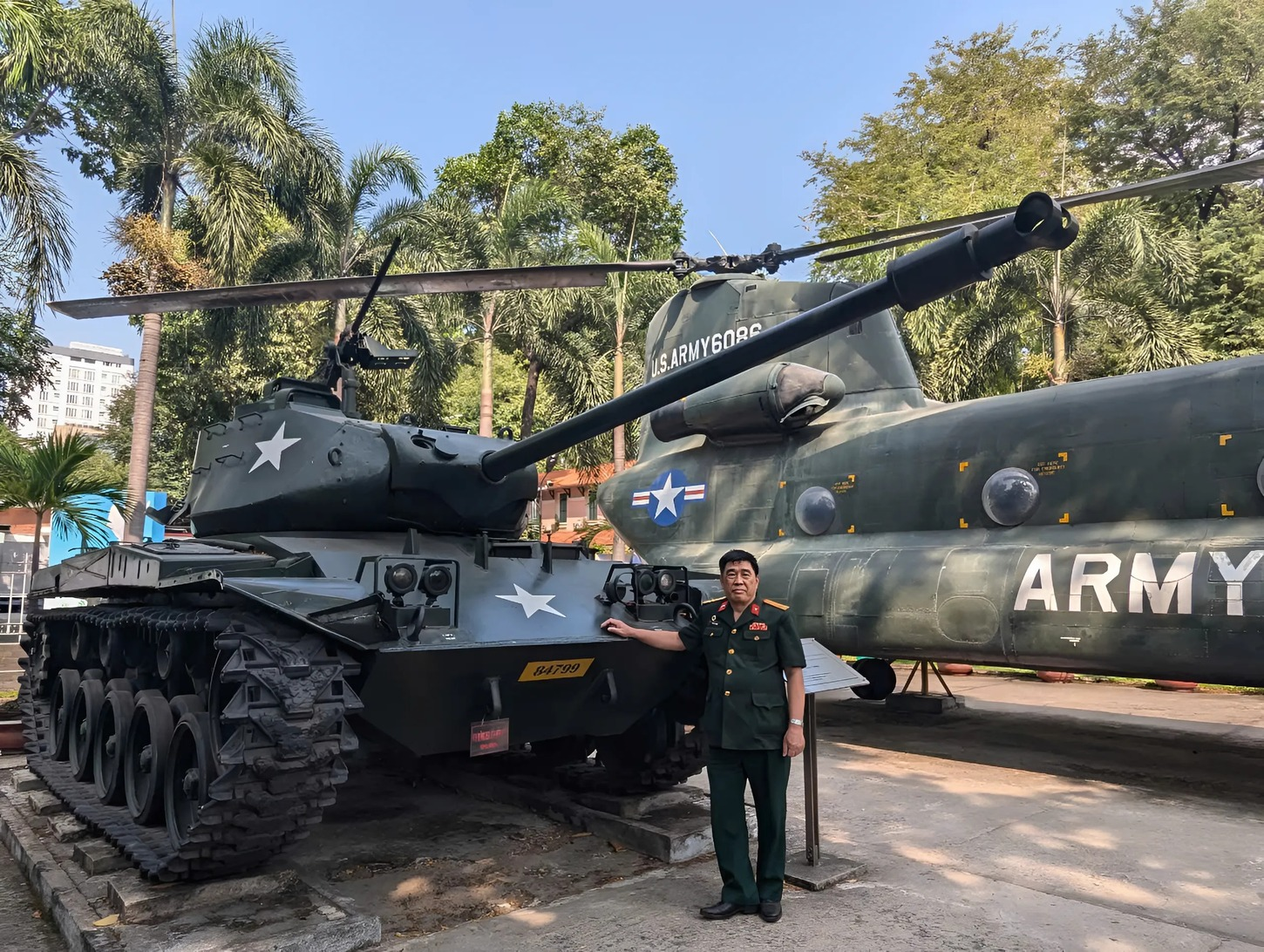 |
| Veteran Colonel Do Trung Minh revisits his old battlefield. |
Flipping through the pages of his battlefield diary, gazing at the photographs capturing moments of returning with comrades to visit old battlefields, Colonel Do Trung Minh reminisced: "At exactly 4:30 AM on April 30, 1975, the 10th Division was ordered to open fire. Then, the large artillery batteries of the 3rd Corps roared, unleashing a storm of fire on Tan Son Nhat airport. From the very first minutes, three enemy targets within the airport were engulfed in flames. By 8:30 AM, targets such as the Air Force Command, the Air Force Command, and the Armored Command of the puppet regime… were all consumed by smoke and fire, causing panic and disarray among the enemy."
At this time, Minh's regiment was ordered to attack and capture the Bay Hien intersection. Here, the enemy had established a strong defense, with a dense deployment of puppet troops equipped with many modern vehicles and weapons. The battle raged fiercely, with our soldiers and the puppet army fighting for every house and street corner.
“That morning, my closest friend was killed by a bomb. The night before, we had sat together, sharing a cigarette, dreaming of the day the country would be unified and we could return home to visit our families. Witnessing my comrades—some killed, some wounded, yet still steadfastly holding their ground—made me even more determined to charge forward and destroy the enemy,” Mr. Minh’s voice choked with emotion.
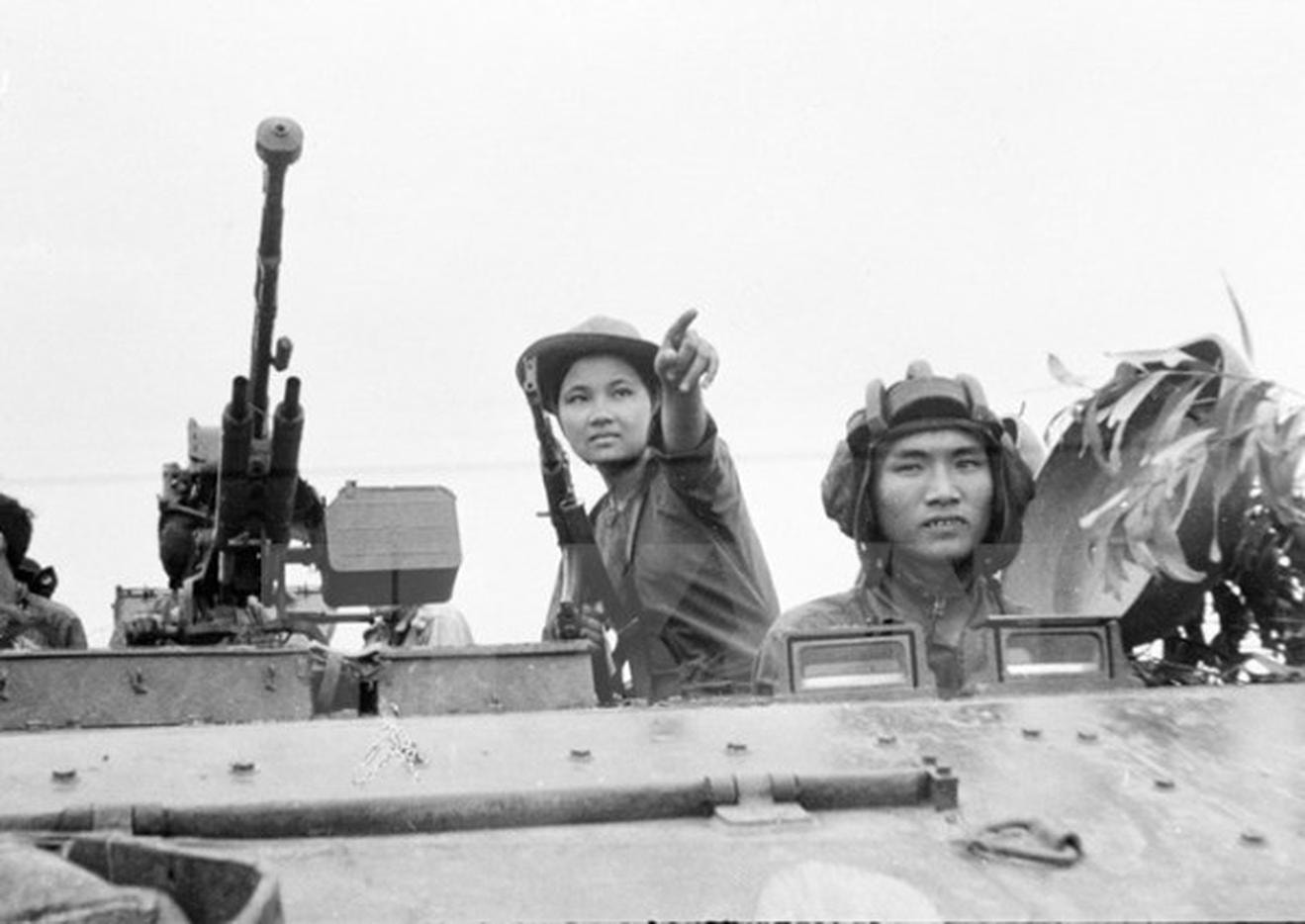 |
| Female Saigon commandos guide Liberation Army troops into Tan Son Nhat airport. (Photo: VNA) |
Using the tactics of "internal support and external cooperation," and "attacking the enemy while advancing, clearing the way while progressing," after an hour of heroic fighting, Mr. Minh's unit (24th Regiment) captured the intersection and quickly marched towards Tan Son Nhat Airport. At Gate 5 of the airport, our troops encountered fierce resistance from the enemy, but with the spirit of "One day is worth 20 years," the officers and soldiers of the 24th Regiment, in coordination with the main forces, approached the target and tightened the encirclement of the enemy.
“The assault on Tan Son Nhat airport encountered almost no significant resistance, as the enemy had largely disintegrated after the fierce bombardment from our firepower. Each target was successively secured. By noon on April 30th, our troops had completely taken control of Tan Son Nhat airport. The national flag flew proudly atop the flagpole of the South Vietnamese Air Force Command headquarters, shining brightly in the sun. At that moment, we were overjoyed, thinking of our homeland and families, and burst into tears like children,” Colonel Do Trung Minh said emotionally.
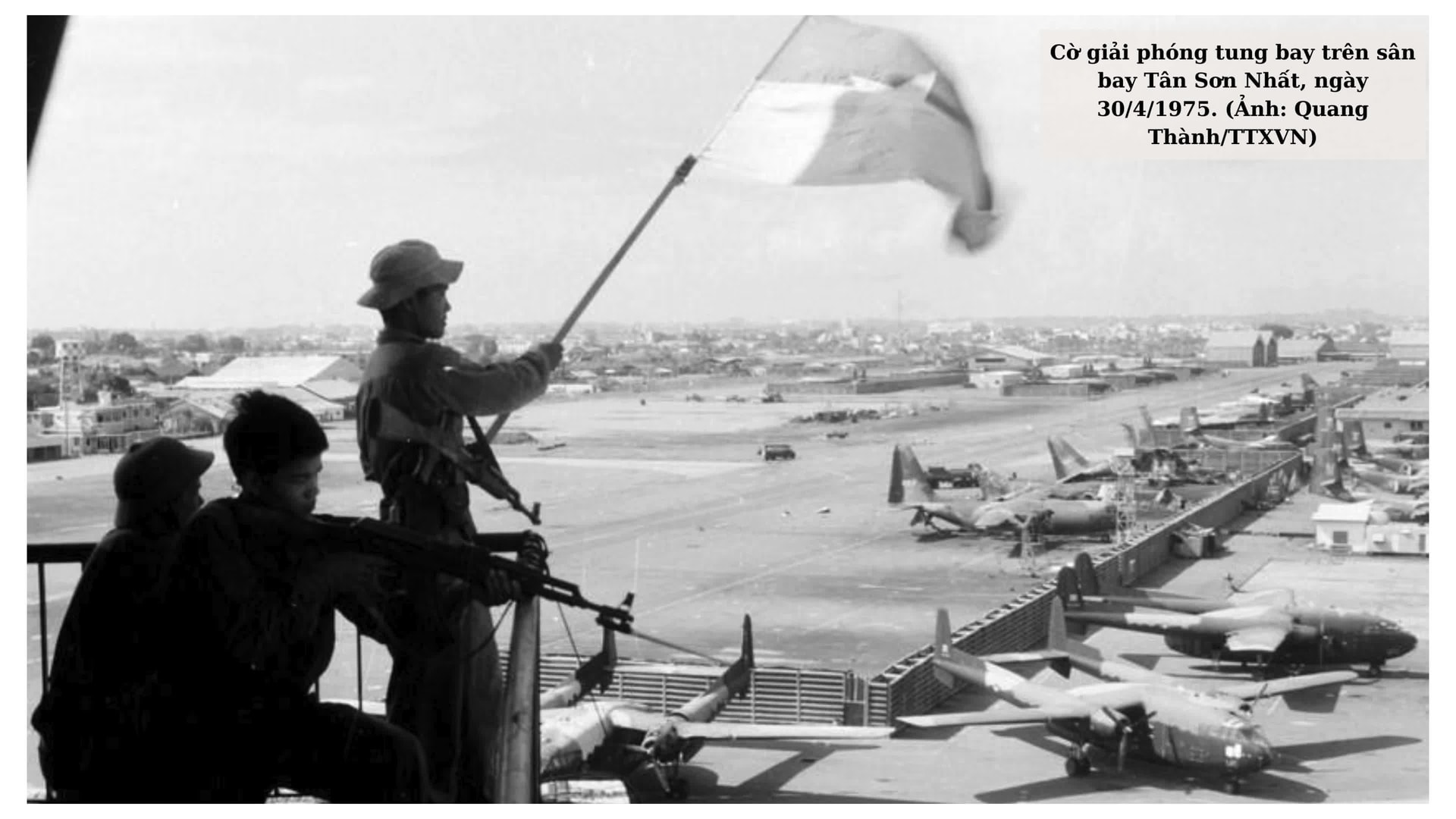 |
| The liberation flag flies over Tan Son Nhat airport, April 30 , 1975. Photo: Quang Thanh/VNA |

After the country was reunified, in 1976, Do Trung Minh continued to participate with his unit in hunting down remnants of the Fulro rebels in Lam Dong. A year later, he was sent to study at the Military School of the 3rd Army Corps, and then participated in combat to protect the northern border until 1986. From 1986 to 1999, he successively studied and worked at units such as: the Dalat Army Academy, the 10th Division (3rd Army Corps), and the National Defense Academy. In 1999, he was appointed as the Chief Inspector of the Ministry of National Defense and continued working until his retirement in 2014 with the rank of Colonel.
Half a century has passed, and Colonel Do Trung Minh, a veteran, is now in his twilight years, but for him, the Spring 1975 General Offensive and Uprising, especially the battle at Tan Son Nhat airport, remains as vivid as yesterday. For today's generation, these soldiers are not only witnesses to history, but also living symbols of patriotism and indomitable spirit. Their memories are not just stories, but also a flame that awakens future generations to live worthy of those who sacrificed their youth and blood to write the words: Peace.
TRAN HAI LY
Source: https://www.qdnd.vn/50-nam-dai-thang-mua-xuan-1975/toi-tu-hao-duoc-tham-gia-tran-danh-san-bay-tan-son-nhat-825035





























![[Video] Sunset at Lap An Lagoon – Where the sun sets over the fishing nets](https://vphoto.vietnam.vn/thumb/1200x675/vietnam/resource/IMAGE/2026/05/31/1780192137701_beach-landscape-sea-water-nature-grass-745871-pxhere-com.jpeg)































Comment (0)