



The workshop attracted a large number of scientists and researchers.
A distinguished ethnologist
In the recollections of many researchers and scientists who were students of or had the opportunity to work with ethnologist Tu Chi, he was not only a great intellectual and methodological genius, but also a "spiritual father," offering dedicated and meticulous guidance in both work and life.
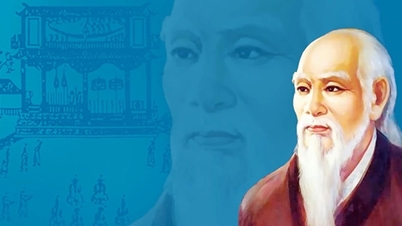
Ethnologist Nguyen Tu Chi (full name Nguyen Duc Tu Chi, pen name Tran Tu) was born on December 17, 1925 in Dong Hoi (formerly Quang Binh province, now Quang Tri province).
His ancestral family was the Nguyen Duc family in Ich Hau commune, Can Loc district, Ha Tinh province, a renowned Confucian scholarly family. He grew up and matured in Hue. In 1945, just after passing the full Baccalaureate exam in Philosophy and Literature at Pellerin High School in Hue, the August Revolution broke out.
Faced with many crossroads, he chose the path of joining the Viet Minh in the jungle, then moving south to Zone 5 to resist the French. In 1953, after participating in rent reduction and land reform, he was discharged from the army and transferred to Viet Bac to work at the Vietnam News Agency (VNA).
He returned to Hanoi in 1954, enrolled at Hanoi University in 1957, and then went to Guinea in 1961 as an education expert until 1963.
Upon returning to Vietnam, he worked at several organizations, most notably as an editor for the Culture and Arts Magazine.
Upon returning to Vietnam, he also focused his research on Vietnamese and Muong villages, most notably his work "The Structure of Traditional Vietnamese Villages in Northern Vietnam." He approached the subject from a theoretical perspective, drawing on abundant field data obtained through keen observation and meticulous work in the field. The work clearly and comprehensively illustrates traditional Vietnamese villages, from their overall structure to their constituent parts and functions.
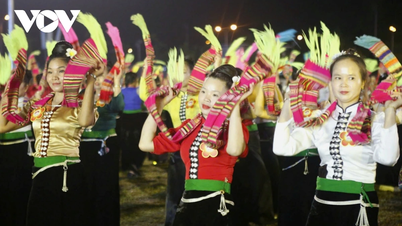
Another of his great successes in research was on the Muong people, exemplified by his work "Muong Skirt Waistband Patterns". He recognized that the patterns on contemporary Muong fabrics are similar to the motifs that the ancients depicted using bronze casting techniques on Dong Son bronze drums.
Furthermore, in his work "The Realm of Life and Death in the Traditional Beliefs of the Muong People," ethnologist Tu Chi depicted the three-tiered, four-world universe of the Muong people…
Not only was ethnologist Tu Chi a brilliant scientist, but he was also a man of great compassion. He had a powerful influence and inspired the scientific research community in general, and the ethnology and anthropology research community in particular.
In his speech at the opening ceremony of the Vietnam Museum of Ethnology (1997), French President Jacques Chirac stated that, along with Nguyen Van Huyen, he (Nguyen Tu Chi) was a great scholar and a role model.
In his speech at the opening ceremony of the Vietnam Museum of Ethnology (1997), French President Jacques Chirac stated that, along with Nguyen Van Huyen, he (Nguyen Tu Chi) was a great scholar and a role model. For his professional achievements, ethnologist Nguyen Tu Chi was awarded the Ho Chi Minh Prize by the President of the Socialist Republic of Vietnam.
A mentor to the next generation of scientists.
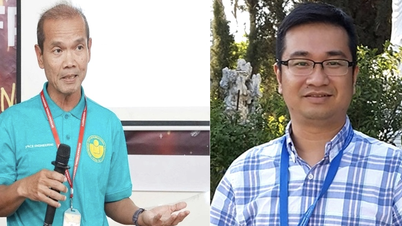
Speaking about ethnologist Nguyen Tu Chi, Professor Dr. Le Hong Ly, President of the Vietnam Folk Arts Association, said that he was a highly influential academic figure. "What we call modern anthropology today, in fact, many of the methods were practiced by ethnologist Tu Chi from the 1960s. His methods of field research, his approach to community life, his observation of even the smallest details – all of these are still taught in universities around the world today," he said.

According to Professor Dr. Le Hong Ly, Nguyen Tu Chi's research later became valuable resources for younger generations. Many researchers continued and inherited his methods, further developing them. It can be said that he was one of the pioneers who laid the foundation for modern anthropological research methods in Vietnam.
Associate Professor, Dr. Bui Hoai Son, Standing Member of the National Assembly's Committee on Culture and Education, stated that the conference is a significant scientific and cultural event to honor a scholar who dedicated his entire life to traveling, living, observing, reflecting, and writing about the cultures of Vietnamese ethnic groups with all the care, humanity, and tireless passion.
Associate Professor, Dr. Bui Hoai Son emphasized that mentioning ethnologist Tu Chi is not only mentioning a brilliant scholar but also a true cultural figure. He did not conduct research from afar or observe from the outside; instead, he approached the community with respect, with a spirit of engagement, with a desire to understand and share, being both meticulously scientific and subtly empathetic. Therefore, each of his works possesses a unique cultural and anthropological depth.
According to Associate Professor, Dr. Bui Hoai Son, ethnologist Nguyen Tu Chi paved the way for scientific progress in an honest, humane, humble manner, always striving for national harmony. His exemplary research works have become milestones in Vietnamese ethnology.
Professor Tran Lam Bien was once one of the closest and most trusted students of ethnologist Tu Chi. He recounted his memories of the early days when Tu Chi guided him on his scientific research journey. “Every path I took was marked by the presence of Professor Tu Chi. He was particularly concerned with our understanding and diligently trained us, but his training was subtle, gentle, and gradually ingrained, leading us to success as a natural course of action. Tu Chi was a giant of intellect. If researchers could learn from the example of such esteemed senior figures, our Social Sciences and Humanities would advance much further,” Professor Tran Lam Bien affirmed.
Scientists unanimously agree that the researcher and ethnologist Nguyen Tu Chi deserves due recognition. Naming a street in Hanoi after him is a necessary step, so that future generations will understand and remember the man who laid the foundation for ethnographic research in Vietnam.
LINH KHANH
Source: https://nhandan.vn/ton-vinh-nha-dan-toc-hoc-tu-chi-post933630.html







































































Comment (0)