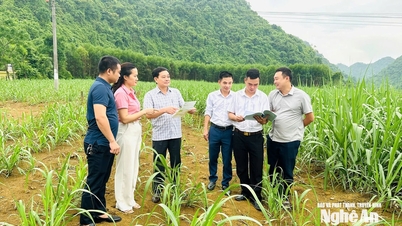
On the hillsides of Luong Thinh commune these days, the green of Bat Do bamboo is gradually replacing less productive cultivated areas. No longer just a story of planting trees to "eradicate poverty," the people here have begun to think in terms of commodity production, closely linking with processing plants to ensure sustainable output.
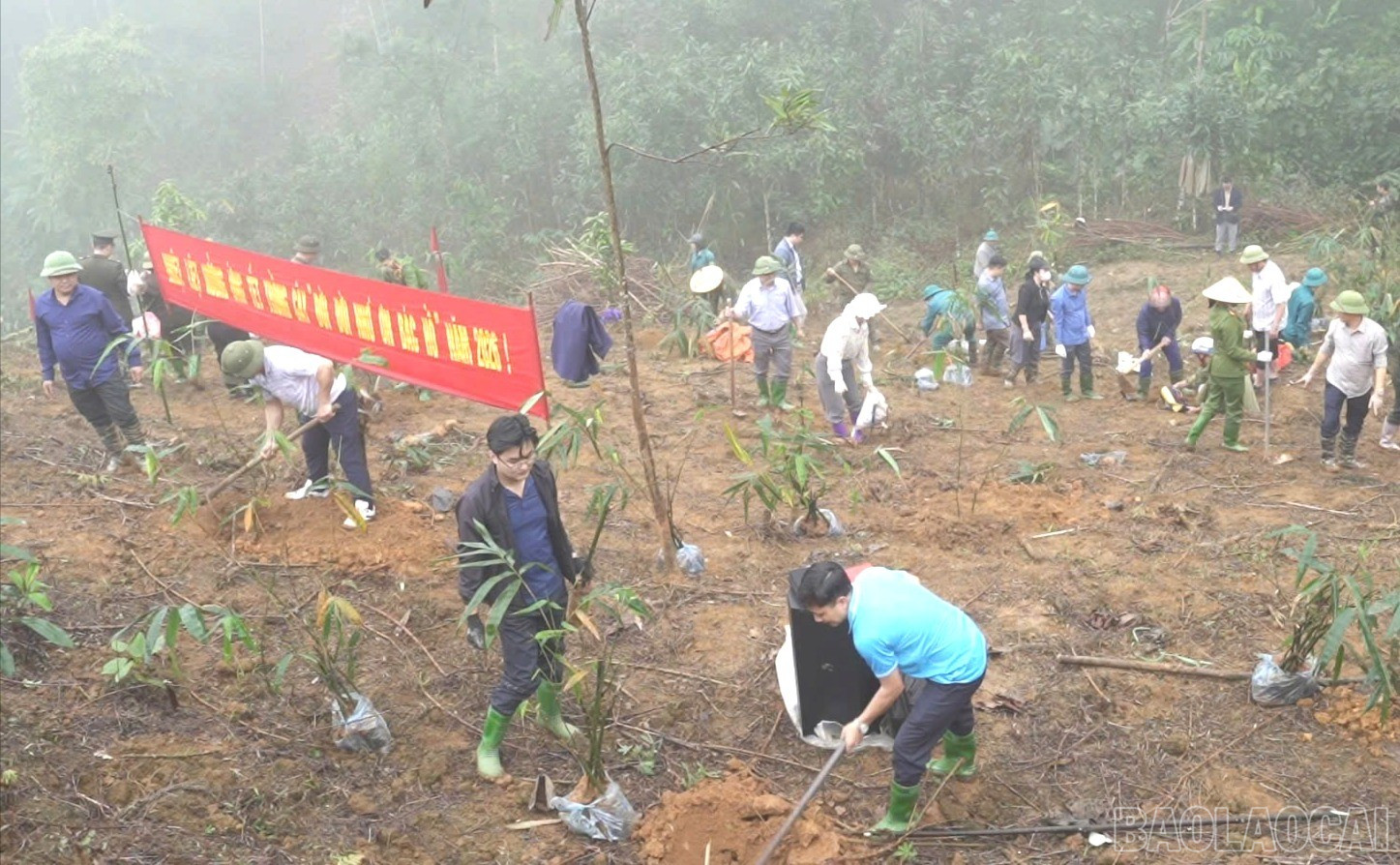
By 2026, Luong Thinh commune will plant over 100 hectares of Bat Do bamboo.
According to local authorities, the entire commune currently has nearly 635 hectares of Bat Do bamboo. The goal is to expand this area to over 1,000 hectares by 2030. This is not a mechanical growth figure but the result of a well-planned strategy, based on a thorough assessment of soil conditions and market demand.
Mr. Le Anh Tuan, Vice Chairman of the People's Committee of Luong Thinh commune, said: "To prepare for the 2026 plan, starting from the end of 2025, we reviewed and allowed people to register the planting area. The results were very positive, with the total registered planting area reaching over 100 hectares, far exceeding the target of 80 hectares set by the commune's People's Council."
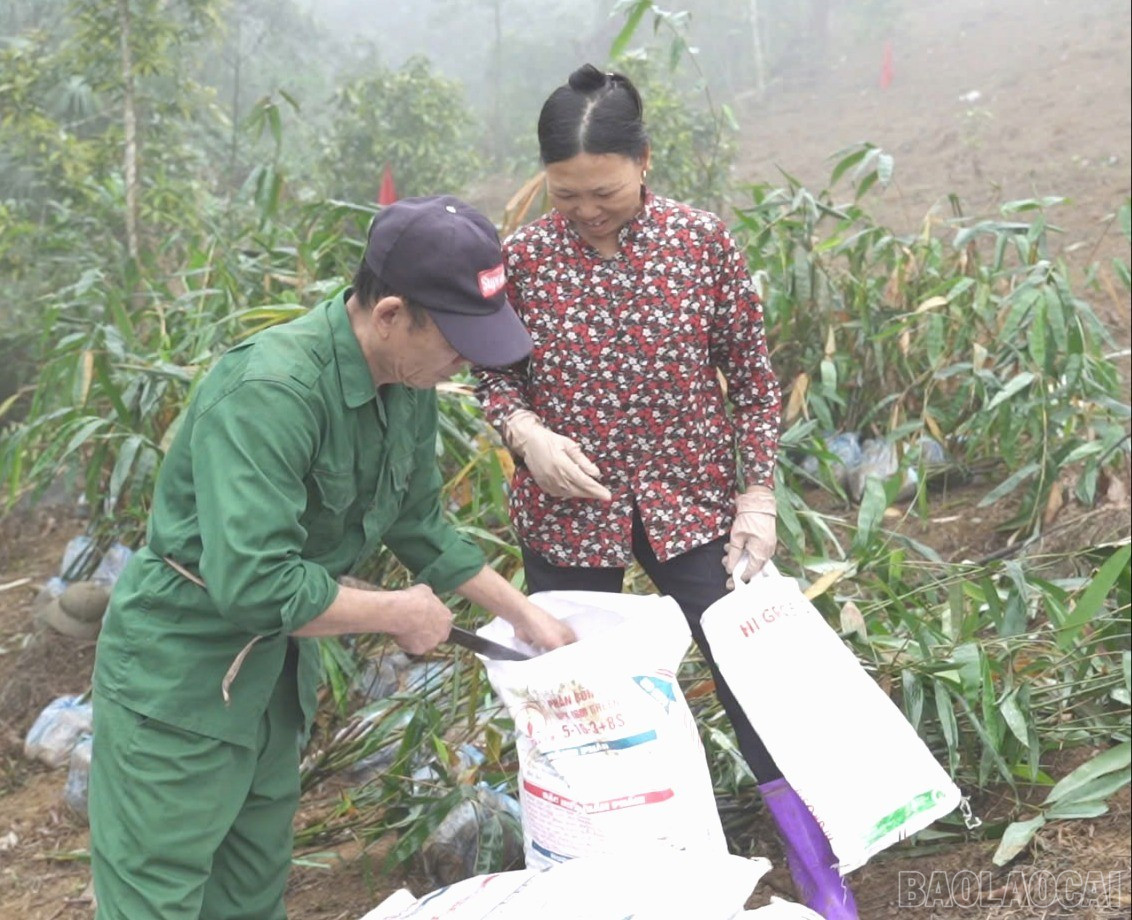
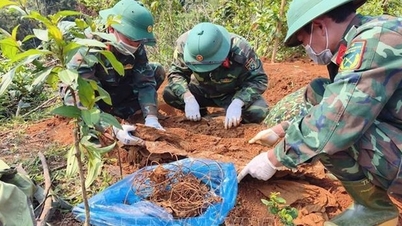
Mr. Vu Quang Khanh prepares base fertilizer before planting bamboo shoots.
A new feature in this year's implementation is the flexibility in land allocation and utilization. Besides large-scale concentrated planting areas, the commune encourages people to utilize scattered plots of 0.1 to 0.2 hectares in areas with high humidity. This approach helps maximize the use of production resources, ensuring a stable and continuous supply of produce to purchasing units.
The success of a policy is not measured solely by the numbers on paper, but by the changes in the lives of each household. In Quang Vinh village – a "bright spot" for forestry economic development – the movement to plant Bat Do bamboo is spreading strongly.
Despite being busy planting bamboo shoots on the hillside, Mr. Vu Quang Khanh from Quang Vinh village, Luong Thinh commune, enthusiastically shared his journey of cultivating bamboo shoots: "My family started planting bamboo shoots in 2005 under the forestry promotion program. With 2 hectares of bamboo shoots currently yielding harvests, after deducting expenses, my family earns 50 million VND each year."
In 2026, Mr. Khanh's family decided to make a significant investment by planting over 4,000 more bamboo saplings. This farmer's confidence stems from the close attention and support he has received from relevant departments and agencies, from the Provincial Department of Agriculture and Environment to local authorities, in providing technical assistance and seedlings. For households in mountainous areas, an income of tens of millions of dong per year from forestry is a dream, allowing them not only to have enough to eat but also to accumulate savings for reinvestment.
Ms. Ha Thi Nhung, head of Quang Vinh village in Luong Thinh commune, said that she was initially quite worried when she received the target of planting 7 hectares of bamboo in 2026, because the village's vacant land was running low after many years of promoting greening. However, the enthusiastic response from the villagers surprised her.
"The results of the field survey show that the entire village has registered to plant up to 31 hectares of bamboo, exceeding the assigned target by four times. People now don't need much persuasion; they see the example of those who came before them, and they see the connection between the forest gardens and the deep processing factory, so they are very confident in their production."
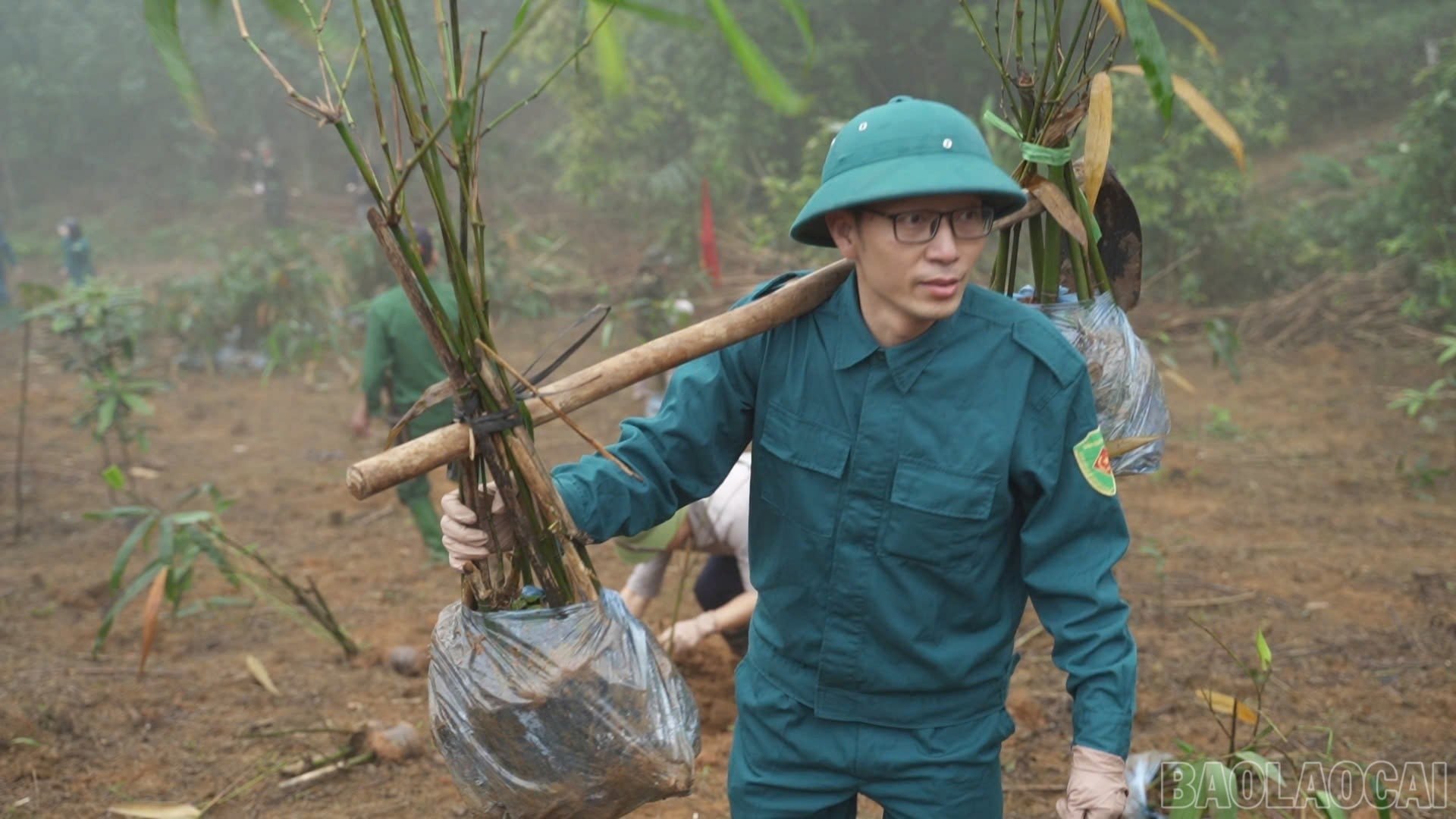
The seedlings are prepared months in advance.
The expansion of the Bat Do bamboo cultivation area in Luong Thinh is in line with the province's overall direction of developing forestry economics while protecting the environment. The Department of Agriculture and Environment is actively coordinating with the locality to guide people on planting and caring techniques according to clean standards, meeting the strict requirements of processing and export units.
The emergence of deep processing plants has solved the problem of "bumper harvests leading to price drops," a constant worry for farmers. According to Ms. Ha Thi Nhung, head of Quang Vinh village, before the establishment of concentrated raw material areas, the lives of the people were very precarious. Since the Bat Do bamboo shoot has become the main crop, with the commitment of businesses to purchase it, the sustainability of economic development has been clearly affirmed.
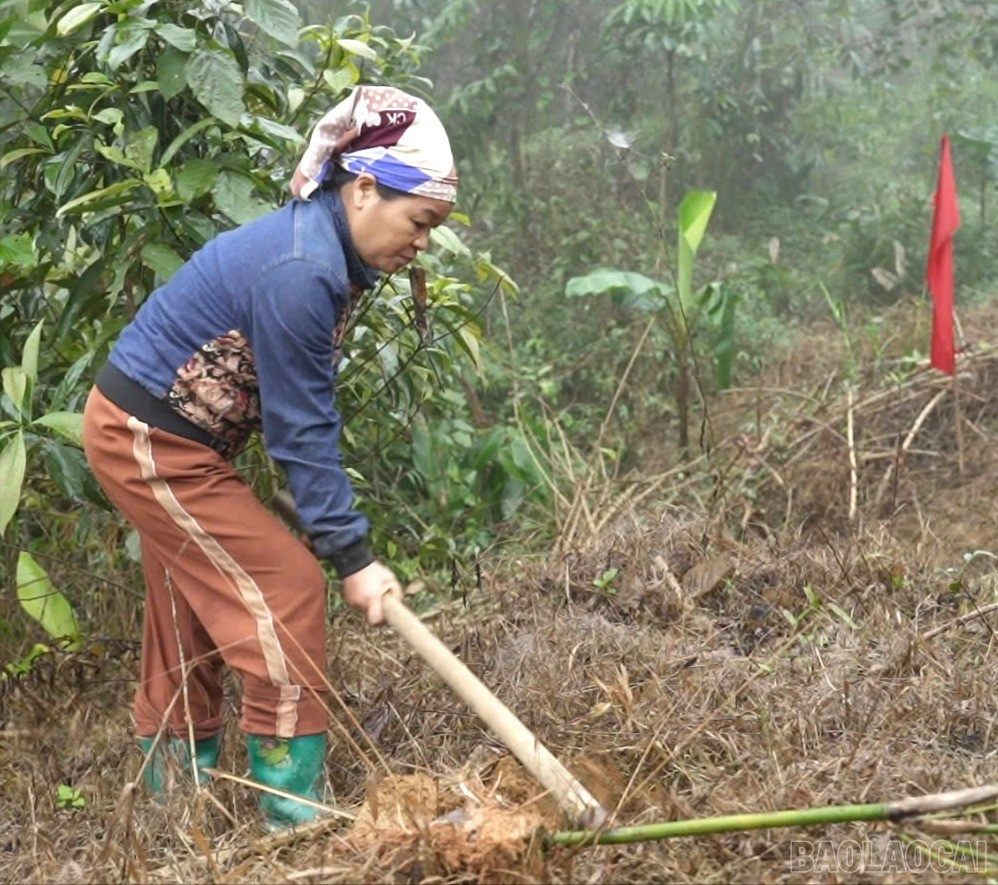
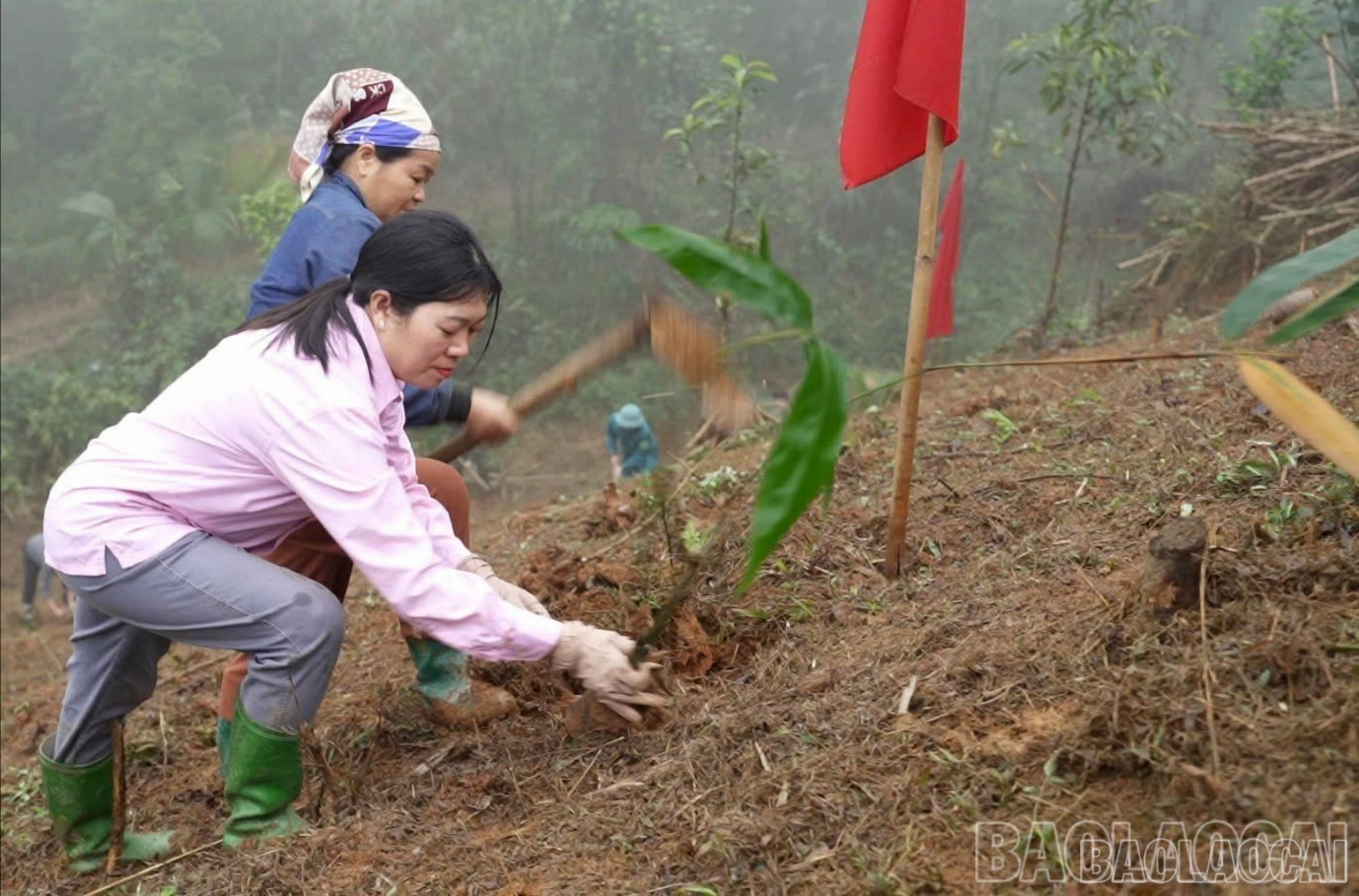
The people of Luong Thinh commune enthusiastically participated in planting Bat Do bamboo shoots.
Furthermore, the financial aspect has been carefully considered. Through coordination between the finance sector and credit institutions, preferential loan sources for forest economic development are being unlocked, providing local people with additional resources to purchase seedlings and fertilizers. This is the foundation for Luong Thinh commune to realize its goal of exceeding 1,000 hectares of bamboo and rattan by 2030, as planned.
From the newly sprouted bamboo shoots in the challenging soil of Luong Thinh, a prosperous future is gradually emerging. The Party Committee's resolution is no longer just on paper but has taken deep root in the will and aspirations of the people. The consensus between the Party's will and the people's aspirations, along with timely and effective support from specialized departments and agencies, is a crucial driving force promoting the development of Bat Do bamboo shoots into a key economic crop, contributing to changing the face of the Lao Cai highlands in the new era.
Source: https://baolaocai.vn/tre-mang-bat-do-ben-re-tren-dat-kho-luong-thinh-post894442.html




![[Photo] The General Secretary, President and his wife lay flowers at the Ho Chi Minh Monument in Manila.](https://vphoto.vietnam.vn/thumb/1200x675/vietnam/resource/IMAGE/2026/05/31/1780219759477_anh-man-hinh-2026-05-31-luc-16-29-07.png)







![[Video] Sunset at Lap An Lagoon – Where the sun sets over the fishing nets](https://vphoto.vietnam.vn/thumb/340x192/vietnam/resource/IMAGE/2026/05/31/1780192137701_beach-landscape-sea-water-nature-grass-745871-pxhere-com.jpeg)



















































Comment (0)