

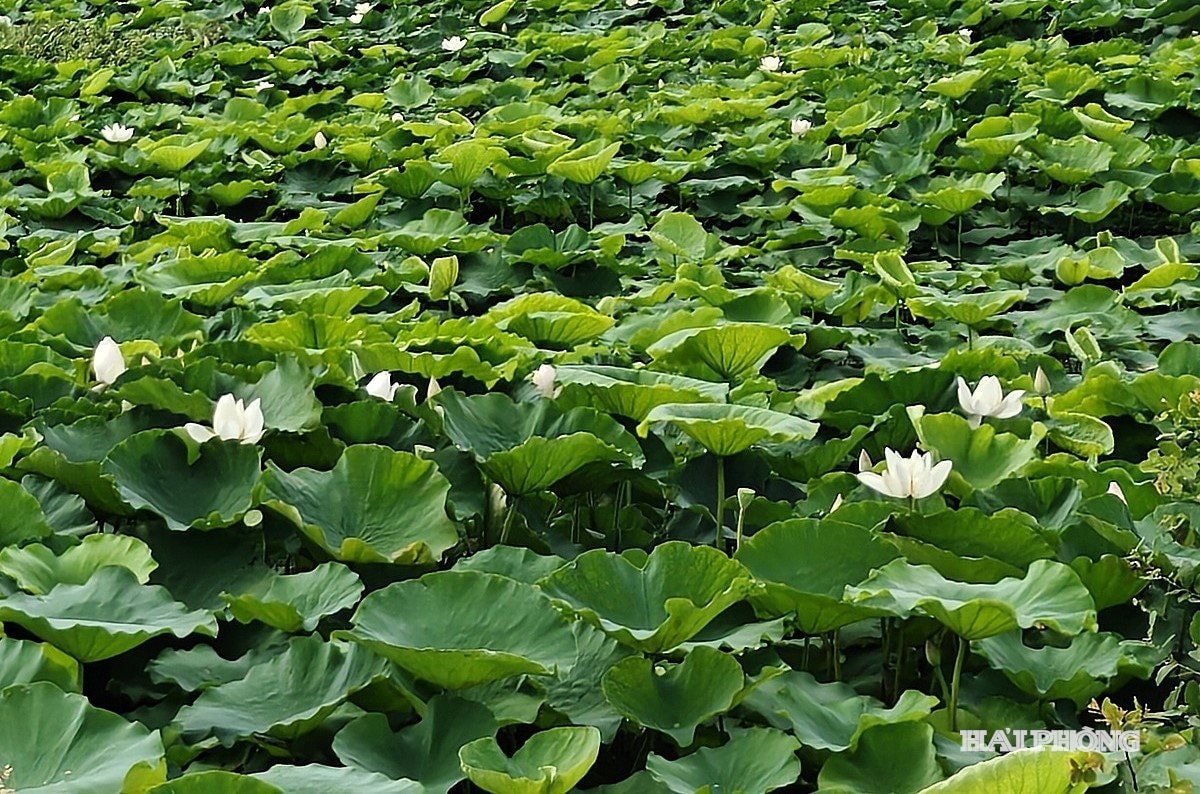
Transform barren land into lotus ponds.
Previously, farmers in Kien Thuy commune faced difficulties with low-lying, frequently flooded land. However, since switching to lotus cultivation, their agricultural production mindset has changed, leading to a more effective approach.
Ms. Ngo Thi Nham and Mr. Vu Van Doan from Van Hoa village are pioneers in lotus cultivation. In 2014, recognizing the potential of abandoned low-lying land, they leased it to grow lotus, diversifying the varieties such as soft lotus, tuber lotus, sweet lotus, and Quan Am lotus.
Ms. Ngo Thi Nham, from Vu Doan Cooperative, said that the lotus harvesting season lasts from April to the end of the year, allowing for the harvesting of many parts of the lotus plant, from flowers, stems, tubers to leaves. Her family cultivates lotus on an area of 5.3 hectares, combining lotus cultivation with fish farming, bringing in high profits, 2-3 times higher than rice cultivation.
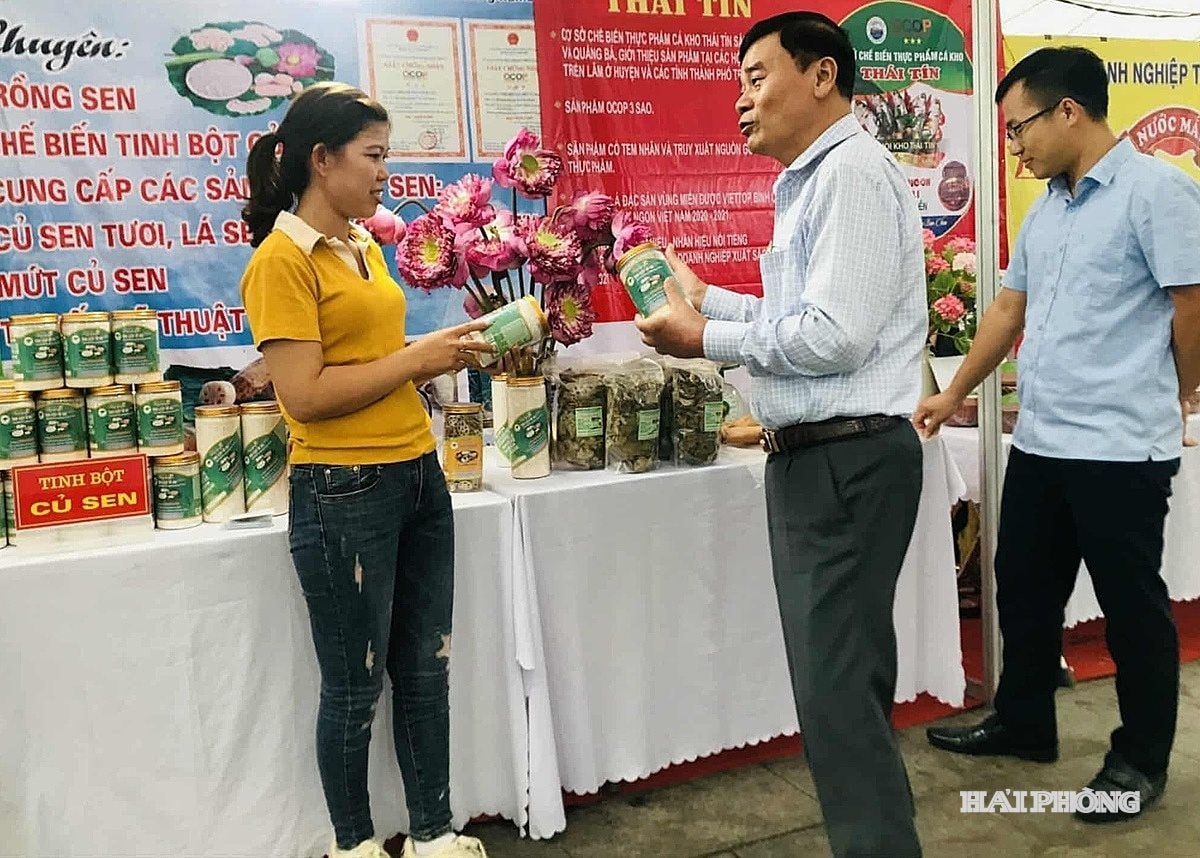
Not only does she harvest fresh produce, but Ms. Nham's family also learns processing techniques, creating many valuable products such as lotus root starch, lotus root tea, dried lotus leaves, etc.
The lotus root starch produced by Vu Doan Cooperative has a retail price of approximately 700,000 VND/kg and has been recognized as a 3-star OCOP product since 2022, opening up opportunities to enhance brand value and expand the market.
During harvest season, the Vu Doan Cooperative harvests an average of 100 kg of fresh lotus roots and 500-1,000 lotus flowers per day. Each year, the cooperative supplies approximately 25 tons of fresh lotus roots to the market, generating 500 million VND in revenue. The products are not only sold in Hai Phong but are also transported by traders to many provinces and cities, especially in the Central region.
To exploit and enhance the value of the lotus plant, the Huu Bang Lotus Production, Business and Service Cooperative has researched and invested in equipment to produce processed lotus products. Mr. Nguyen Duy Thao, Deputy Director of the cooperative, said that the unit's predecessor was a model of growing lotus for tubers with high yields and processing them. Currently, the cooperative also links with and guides farmers on cultivation techniques, ensuring a safe, sustainable, and VietGAP-certified source of raw materials.
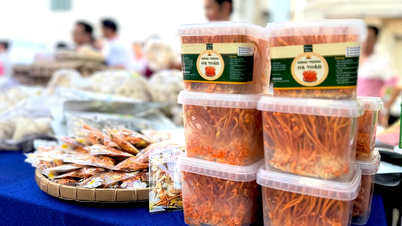
The cooperative invests in specialized machinery for its production process, ensuring that its products meet food safety and hygiene standards while preserving the flavor and valuable medicinal properties of the lotus plant. Besides its main products such as lotus starch, lotus heart tea, lotus jam, lotus flowers, lotus stems, and fresh and dried lotus roots, the cooperative also plans to produce lotus tea in tea bags and offer photography services during the lotus blooming season.
Multi-value exploitation, sustainable development

The lotus plant is not only well-suited to the low-lying soil conditions in Kien Thuy but also brings high economic value. Fresh lotus products are easily marketable and command high prices.
The average retail price of lotus stems is around 60,000 VND/kg, lotus flowers 60,000 VND/dozen, and fresh lotus roots 35,000 VND/kg. The ability to fully utilize its potential and its stable economic value have made the lotus plant a high-value crop for farmers in Kien Thuy.
Farmers make the most of all parts of the lotus plant: fresh lotus flowers are sold for display and tea making; lotus seeds (lotus pods) are a commercially valuable product; lotus leaves are dried for tea or food wrapping; and lotus stems and tubers are supplied as clean food to restaurants and kitchens.
Mr. Nguyen Duy Thao stated that the cooperative will actively participate in trade promotion programs, proactively connect with partners to bring products into supermarket and shopping mall channels such as Aeon Mall, Go! Hai Phong… and list products on e-commerce platforms such as Lazada, Tiki…
Integrating freshwater fish such as grass carp and common carp into lotus ponds helps utilize leftover food and the natural environment, increasing income from fish and reducing pests and diseases affecting lotus plants. Actively implementing high-yield lotus cultivation for tubers and researching advanced processing methods helps elevate the value of the commune's distinctive agricultural products.
According to information from the Economic Department of Kien Thuy commune, there are currently 110 hectares of lotus cultivation in the commune, yielding a profit of 100-150 million VND/hectare/year. Vu Anh Duong, Head of the Economic Department of Kien Thuy commune, said that the lotus cultivation and fish farming model not only helps farmers get rich but also solves the problem of abandoned land. The vast lotus ponds in Kien Thuy have become an ideal destination for tourists to visit and take photos during the flowering season.
The commune government has implemented many practical solutions such as supporting land consolidation and assisting farmers in leasing abandoned land to grow lotus. The Women's Union and functional departments of the commune have coordinated to open technical training classes and help people access preferential loan sources.
THU HANGSource: https://baohaiphong.vn/sen-ben-re-tren-vung-dat-kho-543587.html













































































Comment (0)