


Duc Giang General Hospital is the first hospital to implement the transportation of emergency medications and test samples using unmanned aerial vehicles (drones) between hospitals and health centers, enabling health centers to transport medications, emergency equipment, and test samples quickly, significantly shortening transportation time.
When people think of health centers, many are still familiar with services like vaccinations, epidemic control, or simply measuring blood pressure and dispensing medication.
However, many new models are being implemented to help upgrade primary healthcare, transforming it into a true first-line medical facility.
Specialized health stations "act as the final line of care".
Many years ago, the picture of primary healthcare was quite bleak. To change that situation, the health sector clearly defined its goal: for primary healthcare to become stronger, there must be genuine collaboration with higher-level healthcare facilities.
Hanoi has begun implementing a model of closely linking commune and ward health stations with central and city-level hospitals. In just the first few days of 2026, Hanoi launched a series of comprehensive cooperation models between hospitals and health stations in the area.
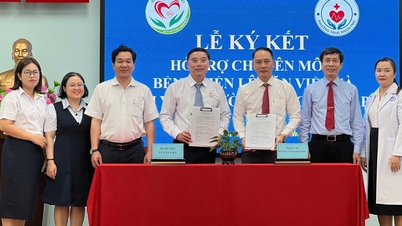
Recently, Hanoi Medical University Hospital and Vinh Hung Ward Health Station announced a comprehensive cooperation agreement. Prior to this, the health station had been under construction for four years but had virtually no patients. This comprehensive cooperation with Hanoi Medical University Hospital has enabled the health facility to become operational.
Under this model, the health station receives comprehensive support in terms of personnel, equipment, 24/7 emergency services, immunization, chronic disease management, and health education and communication. Residents have access to high-quality healthcare services right where they live, with modern equipment similar to that found at the University Medical Center.
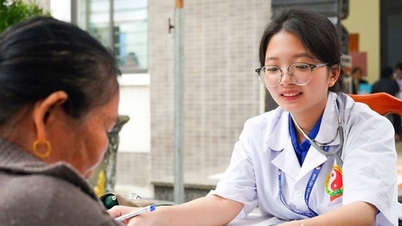
Previously, Ms. Do Thi Lanh (70 years old, Vinh Hung ward) had to go to general or specialized hospitals in Hanoi to have her ear, nose, and throat examined. Now, these procedures can be performed right at the health station near her home.
Ms. Lanh shared that now the health station has doctors from higher-level hospitals, making it convenient to travel to and from the station. "For elderly people like us, going for check-ups and tests is very difficult. Now, we can still get examinations near our homes, just like at central hospitals, and the people are very happy," she said.
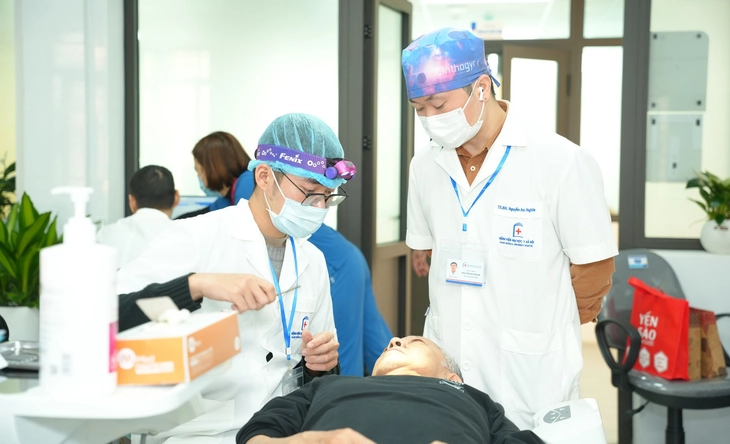
Residents receive medical examinations from doctors of Hanoi Medical University Hospital right at the Vinh Hung Ward Health Station, Hanoi - Photo: M. PHUC
A turning point in revival
Speaking to Tuoi Tre newspaper, Mr. Nguyen Lan Hieu, Director of Hanoi Medical University Hospital, assessed the cooperation as a turning point marking the "revival" of grassroots health stations. The difference of the model is that doctors from central hospitals directly and regularly examine and treat patients at the stations, instead of just providing short-term support in a sporadic manner.
"For the first time, a central-level hospital has built a medical examination and treatment facility right in a commune or ward. People are directed to a specific area, and if a complex medical condition is detected, there are professors, leading doctors, and modern equipment available right at the local health station, eliminating the need to go to the hospital and wait in line," Mr. Hieu said.
Meanwhile, in Binh Minh commune (Hanoi), Ha Dong General Hospital and Binh Minh Commune Health Station have also signed an agreement for comprehensive professional support. The Ha Dong - Binh Minh clinic model follows the "4-in-1" principle: high-quality personnel on-site, on-site examination, on-site paraclinical services, and on-site medication dispensing, helping people access many specialized services right in their local area.
Ha Dong General Hospital and Binh Minh Commune Health Station are collaborating to organize specialized clinics right at the station, including: internal medicine, surgery, obstetrics, ophthalmology, ENT, dentistry, ultrasound and electrocardiography, and a sample collection room for laboratory testing.
According to Le Hoang Tu, Deputy Director of Ha Dong General Hospital, the coordination between the hospital and the health station not only provides professional support and human resource training, but also brings doctors, techniques, and procedures from the hospital to the grassroots level, helping people receive high-quality medical examination and treatment right in their locality, reducing pressure on higher-level facilities and improving the effectiveness of primary healthcare.
In Phu Thuong ward, the health station, in collaboration with Saint Paul General Hospital, is piloting the 3S (Saint Paul Support System of Primary Health) model for primary healthcare.
Saint Paul Hospital also provides comprehensive support to the health station in terms of personnel and equipment, helping people access high-quality healthcare early, reducing travel costs, detecting diseases early, and managing health more effectively.
Health Station 4.0
In addition to models linking with central-level hospitals, Hanoi is also implementing many innovative approaches. In a different direction, Bo De and Long Bien wards are the first two localities in the capital to implement the 4.0 health station model with the support of Duc Giang General Hospital.
Health centers are implementing a comprehensive range of technological solutions for scheduling appointments, electronic patient registration; ordering and delivering clinical test results via computer systems; and data exchange between health center management software and hospital systems and other shared platforms.
Mr. Do Dinh Tung, Director of Duc Giang General Hospital, said that with this model, health stations receive comprehensive support. People can easily look up their medical history and track test results online. Medical staff at the grassroots level are supported with remote consultations, electronic medical record management, and accurate and transparent assessment and payment of health insurance costs.
Each commune or ward should have at least one hospital providing support.
Speaking to Tuoi Tre newspaper, Mr. Nguyen Trong Dien, Director of the Hanoi Department of Health, said that the Hanoi health sector is aiming for a strategy where each commune and ward receives support from at least one hospital. With more than 120 public and private hospitals, the Hanoi Department of Health leadership believes the capital city has many advantages to implement this model on a large scale.
Mr. Dien stated that the focus in the coming period will be on upgrading grassroots healthcare, managing nationwide health records, effectively controlling non-communicable diseases, building a large healthcare data warehouse, ensuring interoperability across the entire system, and connecting with VNeID.
Simultaneously, efforts will be made to improve pre-hospital emergency care and strengthen health education and communication, with the launch of the official website "Capital Health" expected in the first quarter of 2026.
Source: https://tuoitre.vn/tram-y-te-lot-xac-20260122084547794.htm

































































































Comment (0)