My baby is over a month old and has a wheezing sound when breathing, like a soft snoring sound, sometimes with a squealing sound while feeding and sleeping. Does this indicate a health problem? (Truc Quynh, Lam Dong )
Reply:
Wheezing in infants while sleeping and feeding can be a warning sign of respiratory problems. In most cases, it's due to bacterial infections causing bronchial constriction, swelling, and edema, with excess mucus buildup and blockage of the airways or bronchi. As a result, the baby has difficulty breathing, manifested by irregular breathing and a wheezing sound similar to a soft snoring.
This could also be a sign of bronchiolitis – a lower respiratory tract infection, mainly caused by viruses, that often occurs during seasonal changes or when the weather turns cold. The disease causes the child's body to produce more phlegm and mucus, leading to airway obstruction.
Exposure to allergens, dust, and tobacco smoke can also cause phlegm and mucus to be produced. Infants cannot clear their throats as effectively as adults, so phlegm and mucus accumulate, leading to airway obstruction.
In cases of gastroesophageal reflux, babies may also inhale small amounts of fluid into their lungs, causing irritation and swelling of the respiratory tract, leading to difficulty breathing. Additionally, congenital abnormalities of the laryngeal cartilage, foreign bodies in the respiratory tract, acute laryngobronchitis, acute tonsillitis, cardiovascular diseases, and lung tumors can also cause wheezing in babies.



If left undetected and untreated, this condition can be dangerous, potentially leading to sleep apnea. Therefore, parents should take their children to the hospital for early examination and treatment.
In mild cases, doctors recommend home treatment by ensuring the child receives sufficient breast milk and increasing daily feedings to replenish fluids. Parents should consult a doctor before using any oral rehydration solutions for infants. Parents should use a nasal aspirator and saline solution to clean the child's nose and remove mucus from the respiratory tract as directed by the doctor. Medications should be used at the correct dosage and according to the prescribed schedule.
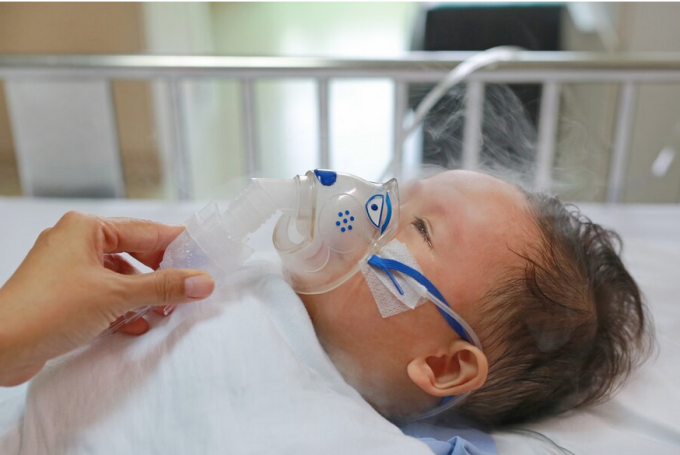
Children with severe wheezing need oxygen via a mask. (Illustration: Freepik )
To properly care for children, parents need to maintain a clean living environment, avoiding dust, mold, cigarette smoke, and ensuring the air humidity is neither too high nor too low; keep them warm in cold weather, especially the neck, chest, and nose. Avoid directing air conditioners or fans directly at the child, and prevent contact with people exhibiting respiratory symptoms and crowded public places.
Parents should take their children to the hospital for a follow-up examination if wheezing persists. Children with any of the following severe symptoms, such as vomiting, high fever, difficulty breathing, chest retraction during breathing, cyanosis, rapid breathing, or sudden cessation of breathing, need to be taken to the hospital immediately.



Dr. Ha Thi Nga
Neonatal Center, Tam Anh General Hospital , Hanoi
| Readers can submit questions about childhood illnesses here to receive answers from doctors. |
Source link