

This positive growth momentum not only demonstrates a sustainable recovery trend but also expands the scope for the Capital to accelerate towards achieving the socio -economic development goals for the entire year of 2026.
Positive signs
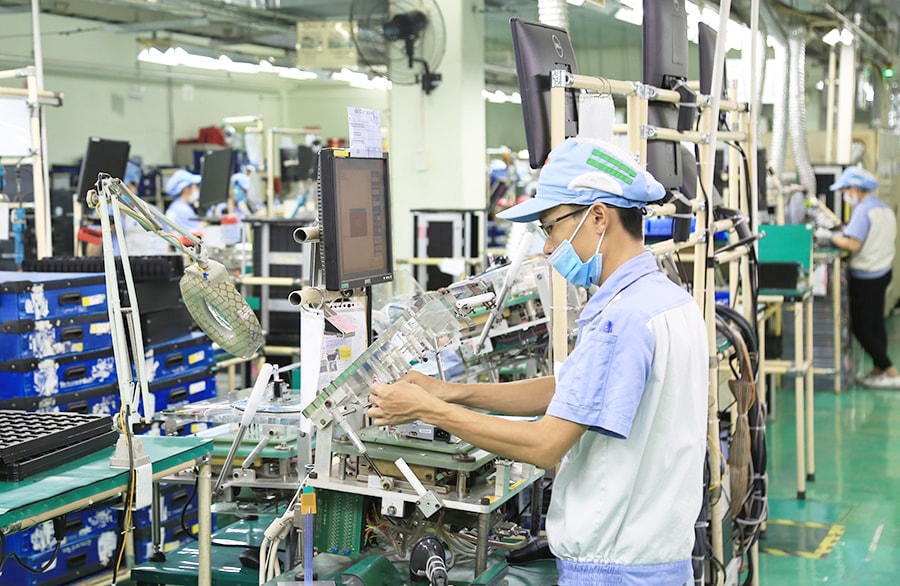
According to data from the Hanoi City Statistics Department, the Consumer Price Index (CPI) in January 2026 increased by only 0.07% compared to the previous month. Inflation continues to be controlled at a low level, creating favorable conditions for policy management and stimulating consumption in the following months. Total retail sales of goods and consumer service revenue are estimated at VND 86.4 trillion, an increase of 0.3% compared to the previous month and a 10.5% increase compared to the same period in 2025.
Attracting investment continues to be a bright spot, with total foreign direct investment (FDI) reaching US$102 million in January 2026, affirming Hanoi's attractiveness as a destination for foreign capital. Alongside this, industrial production maintained stable growth, with the Industrial Production Index (IIP) increasing by 3.9% compared to the previous month and by 24% compared to January 2025.
Total state budget revenue in the area in January 2026 is estimated at 52.2 trillion VND, reaching 8% of the projected target and 55.8% compared to the same period in 2025. This result demonstrates the effectiveness of budget revenue management and reflects the positive recovery of economic activities, creating a stable and sustainable source of revenue for the city.
Experts predict that, with a positive foundation laid in the first month of the year, Hanoi's economy is likely to maintain high growth in 2026. The synergy of factors such as domestic consumption, public investment, FDI, and the recovery of industrial production is expected to create new impetus for the capital's growth.

Take advantage of the opportunity to achieve your goals sooner.
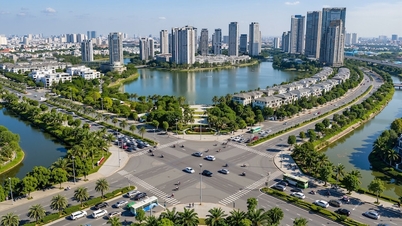
Hanoi aims for a Gross Regional Domestic Product (GRDP) growth rate of over 11% in 2026, higher than the national average. This is an ambitious but achievable goal, based on its advantages of a large economic scale, high-quality human resources, and an increasingly完善 infrastructure system.
To realize the above objective, the three pillars of growth —industry and construction , trade and services, and the knowledge economy—play a crucial role. Among these, high-quality services and the digital economy are expected to increase their share, driving the shift in GRDP structure towards modernization.
According to Dr. Nguyen Minh Phong, a member of the Economic Advisory Council of the Central Committee of the Vietnam Fatherland Front, Hanoi's economy in 2026 faces many positive prospects. A key driver of growth in 2026 comes from infrastructure development investment. Resolution No. 258/2025/QH15 of the National Assembly on piloting special mechanisms and policies for large projects in Hanoi is considered a breakthrough in institutional reform, contributing to resolving procedural obstacles, shortening approval times, and increasing the proactive role of local authorities.
Furthermore, Resolution No. 85/2025/NQ-HĐND dated December 13, 2025, of the Hanoi City People's Council, which stipulates the content, documents, conditions, criteria, order, and procedures for the preparation, appraisal, and approval of investment policies, as well as the adjustment of investment policy decisions for large and important projects in the capital city, has established a clear legal framework for the entire project process, from proposal to implementation. Accelerating key transportation projects, ring roads, regional connectivity infrastructure, digital infrastructure, and smart cities is expected to create a strong ripple effect across many sectors and fields. Public investment will continue to be a "lever" to help the capital city's economy accelerate in 2026.
The service sector continues to be identified as the main growth pillar of Hanoi. With advantages in market size, high-quality human resources, and a diverse service ecosystem, sectors such as finance and banking, trade, logistics, education, high-quality healthcare, and tourism are expected to experience sustainable recovery in 2026.
Another key point is the selective FDI attraction strategy, prioritizing high-tech, environmentally friendly projects with the potential to link with domestic businesses. Hanoi aims to attract billions of USD in FDI in 2026, focusing on information technology, research and development, smart manufacturing, and financial services. Improving the quality of capital flows will contribute to shifting the economic structure towards modernization and sustainability.
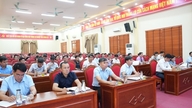
Hanoi is gradually asserting its role as the national center for innovation and the digital economy. In 2026, the city will continue to promote digital transformation in state management, support businesses in applying new technologies, and develop a startup ecosystem. The digital economy, creative industries, and artificial intelligence are expected to become long-term growth drivers, contributing to improved productivity and competitiveness.
It is evident that Hanoi's economic growth prospects for 2026 are positive, with the convergence of many favorable factors including a stable macroeconomic foundation, promising initial results, and a clear development strategy. If opportunities are seized effectively, the capital city has the potential to achieve high growth targets, continuing to play the role of the economic engine of the Northern region and the entire country.
Source: https://hanoimoi.vn/trien-vong-kinh-te-thu-do-nam-2026-tang-toc-duy-tri-da-tang-truong-cao-734242.html




















































![[Video] Sunset at Lap An Lagoon – Where the sun sets over the fishing nets](https://vphoto.vietnam.vn/thumb/1200x675/vietnam/resource/IMAGE/2026/05/31/1780192137701_beach-landscape-sea-water-nature-grass-745871-pxhere-com.jpeg)
































Comment (0)