

In recent years, the province's agricultural sector has faced numerous challenges due to the impact of climate change. Specifically, rice production has seen a significant reduction in cultivated land, increased droughts and pest infestations, and increased waste and emissions, putting pressure on the environment. This reality demands significant efforts to promote greening of agricultural land, ensure food security, and provide sustainable income for farmers.
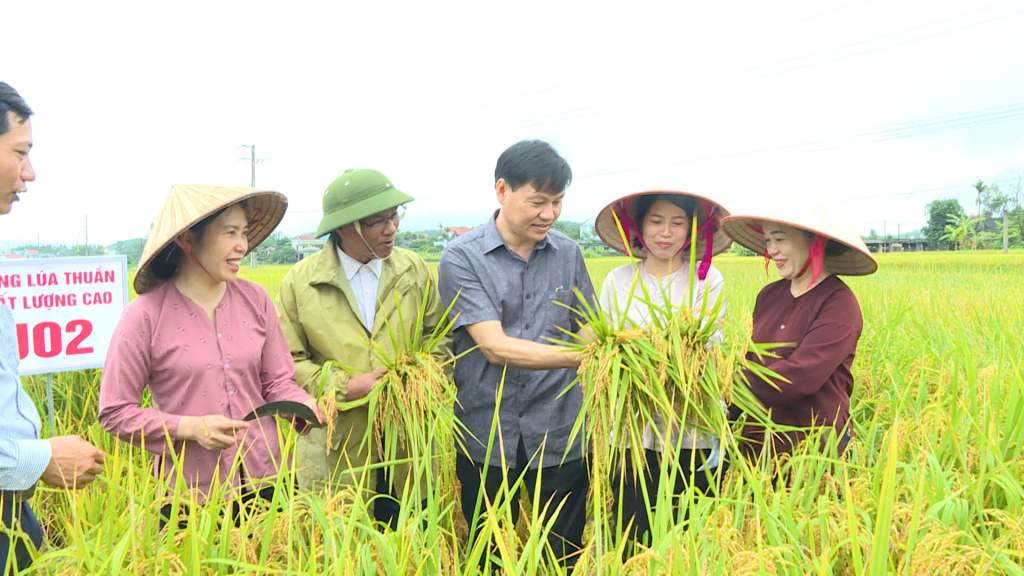
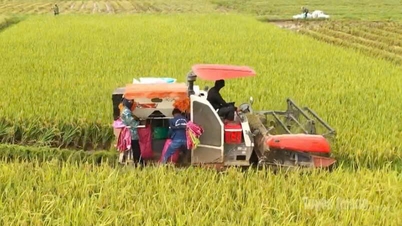
Rice production in Quang Ninh province has undergone significant changes in recent years due to a shift in crop varieties. High-quality rice is gradually replacing hybrid rice, playing a dominant role in the fields. This direction helps improve production efficiency, meet diverse consumer demands, and contribute to the formation of many high-quality rice production areas.
Recently, the Department of Agriculture and Rural Development has collaborated with several localities to implement a trial planting model of the high-quality Japonica (J02) rice variety from Japan. Specifically, in 2022, the J02 rice production model was implemented in Hai Ha, Tien Yen, and Mong Cai provinces with an area of 55 hectares. In 2023, pilot planting was conducted in Binh Lieu, Ba Che, and Dam Ha districts. The results showed that the rice grew and developed well, with a growth period of 130-145 days; the stalks were strong, the grain-to-panicle ratio was high, the grain weight was large, the rice grains were round, rich in nutrients, and met export standards.
In the spring-summer crop season of 2024, Duong Hoa commune (Hai Ha district) planted 50 hectares of J02 rice variety according to VietGAP standards. Households proactively improved the soil, applied fertilizer appropriately, and implemented good care measures, resulting in an average yield of 63 quintals/hectare. Profits reached nearly 30 million VND/hectare, higher than other high-quality rice varieties grown locally. The price of J02 rice at harvest time was approximately 24,000 VND/kg, and it was well-received by the market.
Mr. Pham Thanh Hai, Chairman of the People's Committee of Duong Hoa commune, said: In 2022, the J02 rice variety was introduced for production on an initial area of 25 hectares. This rice variety has good quality and yield, and is suitable for the soil conditions. The district will continue to expand the area planted with J02 rice in the commune.
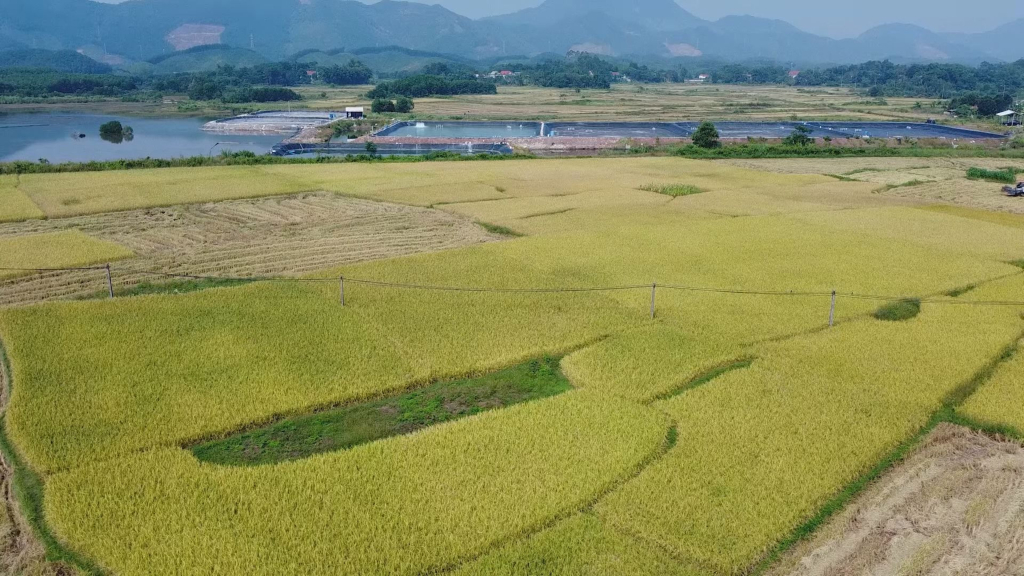
Besides researching the conversion of high-quality rice varieties, the application of advanced cultivation and care techniques to reduce greenhouse gas emissions is also a focus. According to experts, the main source of greenhouse gas emissions from rice cultivation is CH4 (methane), produced by the decomposition of organic matter under anaerobic conditions when rice fields are flooded with water. In addition, a significant amount of agricultural by-products such as straw after harvest being burned directly in the fields, fertilizer loss due to lack of plant absorption, and chemical pesticide residue clinging to packaging after use also increase greenhouse gas emissions and pose a risk of water and soil pollution.
Expanding the application of alternating wet and dry irrigation technology and improved rice cultivation practices, such as the "3 reductions, 3 increases," "1 must, 5 reductions," and mid-season water drainage in wet rice cultivation, are considered effective solutions. In Tien Yen district, six communes—Dong Hai, Dong Ngu, Tien Lang, Hai Lang, Dong Rui, and Yen Than—have applied advanced, water-saving irrigation techniques to their main crop, rice. The advanced cultivation method involves alternating wet and dry irrigation. The percentage of rice-growing area in these six communes using advanced, water-saving irrigation is 1,145/2,617.7 hectares (43.74%). Of these, Dong Ngu commune has a total area of 300/683 hectares (43.93%) applying advanced, water-saving cultivation methods to its main crop.
Mr. Ngo Tat Thang, Deputy Director of the Department of Agriculture and Rural Development, said: "In implementing the Government 's strategy on reducing greenhouse gas emissions, the provincial agricultural sector is proactively reviewing key production areas including crop cultivation and livestock farming. The goal by 2030 is to focus solely on high-quality rice varieties, along with implementing low-emission rice cultivation in the eastern part of the province. Based on the assessment of rice yields, we will continue to review cultivated land area, irrigation systems, soil nutrient quality, and farming practices to develop a low-emission rice cultivation project. We expect to introduce sustainable rice cultivation and production methods by 2027."
Currently, localities are continuing to strengthen resources to support investment in improving infrastructure, intensifying propaganda to the people about the benefits of green and sustainable agricultural production, and supporting the transfer of scientific and technical advancements to the people. This contributes to increasing the production value per unit area of agricultural land, gradually overcoming the shortcomings in the province's current rice production, such as the continued use of chemicals for weeding and fertilizing, large areas of abandoned land, inefficient water use, high sowing density, and improper straw disposal.
Source

















































Comment (0)