


Resubmission of the Ho Chi Minh City – Moc Bai Expressway PPP Project worth VND 19,617 billion.
This is the second proposal in the past month requesting approval of the investment policy for the Ho Chi Minh City – Moc Bai Expressway construction project (phase 1) under the PPP method.
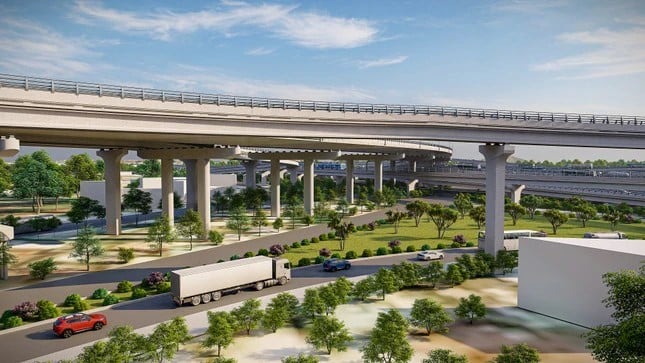 |
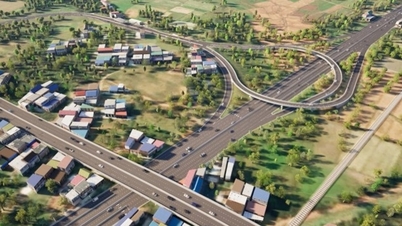
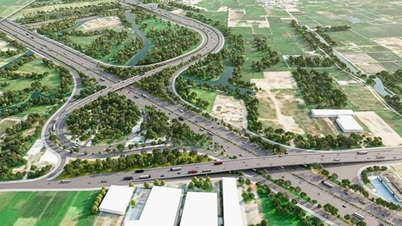
| Illustrative image. |
The People's Committee of Ho Chi Minh City has just submitted Document No. 3447/TTr – UBND requesting the Prime Minister to approve the investment policy for the Ho Chi Minh City – Moc Bai expressway construction project (phase 1) under the PPP method, specifically a BOT contract.
Eligible for submission and approval.


Mr. Phan Van Mai, Chairman of the People's Committee of Ho Chi Minh City, stated that the Pre-feasibility Study Report for the Project and related documents have been explained, clarified, and finalized according to the assessment results of the Inter-ministerial Appraisal Council in Appraisal Report No. 2286/BC-HĐTĐLN dated March 27, 2024; ensuring that it meets the conditions for submission to the Prime Minister for consideration and decision on the investment policy of the Project as prescribed.
This submission replaces Submission No. 3080/TTr-UBND dated June 4, 2024, with similar content, from the People's Committee of Ho Chi Minh City.
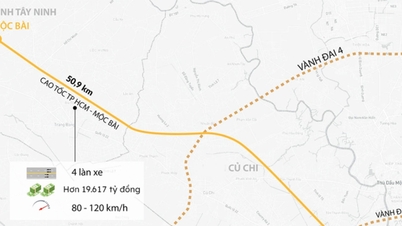
According to the proposal of the Ho Chi Minh City People's Committee, the project's starting point intersects with the Ho Chi Minh City Ring Road 3 in Cu Chi District, Ho Chi Minh City; and its end point connects to National Highway 22 (at kilometer marker 53+850) in Ben Cau District, Tay Ninh Province.
The total length of the route under the Project is approximately 51 km, of which the section through Ho Chi Minh City is about 24.7 km and the section through Tay Ninh province is about 26.3 km.
According to the Road Network Planning for the period 2021-2030, with a vision to 2050, the Ho Chi Minh City - Moc Bai expressway is planned to have 6 lanes, but in Phase 1 of the Project, the road will have 4 lanes, with a roadbed width of 25.5m; land acquisition will be carried out in one go according to the scale of a 6-lane expressway for the entire route.
The route starts from Ho Chi Minh City's Ring Road 3, running nearly parallel to the Trans-Asian Highway (National Highway 22) and approximately 2 to 4 km to the right of National Highway 22 in the direction of travel (towards the North).
The section passing through Ho Chi Minh City to Provincial Road 8, the route turns right to avoid the Dong Du Military Zone (the route is more than 650m from the K75 ammunition depot), then turns left at approximately Km16+000, running parallel to the planned railway and passing through Tay Ninh province.
Within Tay Ninh province, the route goes straight to the Go Dau area (Km38+700); here it turns left at an angle of approximately 370 degrees, intersecting with National Highway 22B at approximately Km41+000, then the route continues to turn left at an angle of approximately 600 degrees, crosses the Vam Co River and intersects with National Highway 22 at Km53+850.
Rest stops along the route (located on both sides) are planned in the Trang Bang town area, Tay Ninh province. The highway construction project only anticipates the location and allocation of land acquisition costs. The construction and operating costs of the rest stops will be funded through public-private partnerships.
The preliminary land requirement for the project is approximately 409.3 hectares; the preliminary total number of affected households is approximately 566. The land clearance scope for the Ho Chi Minh City – Moc Bai Expressway construction project (phase 1) will be carried out in one go, according to the scale of a 6-lane expressway.
The preliminary total investment for the project is VND 19,617 billion, including: construction and equipment costs of VND 9,273 billion; project management costs, investment consulting costs, and other costs (including project preparation costs of approximately VND 45 billion) of VND 695 billion; compensation for land clearance, support, resettlement, and relocation of technical infrastructure (including contingency costs) of VND 6,774 billion; contingency costs for construction volume, equipment, and price fluctuations of VND 1,594 billion; and interest on loans during construction of VND 1,281 billion.
In this project, the State's capital contribution is VND 9,674 billion, accounting for 49.31% of the total investment; the capital contributed by the investor/PPP project enterprise is VND 9,943 billion (including VND 12.45 billion for project preparation costs as stipulated in Clause 1, Article 73 of the PPP Law, which is allocated in advance from the City Budget and will be reimbursed by the selected investor), accounting for 50.69% of the total project investment.
Clarify the risk-sharing mechanism.
 According to calculations, Component Project 1 (BOT) has a net present value (NPV) of approximately VND 157.98 billion (>0); an average internal rate of return (IRR) of approximately 11.08%; an average benefit-cost ratio (B/C) of approximately 1.013 (>1); an estimated payback period of 14 years and 10 months; and an estimated contract term of 16 years and 9 months.
The People's Committee of Ho Chi Minh City has requested the competent authorities to allow the application of a revenue-sharing mechanism for the Ho Chi Minh City – Moc Bai Expressway construction project, as stipulated in Article 82 of the PPP Law, during the operation and exploitation of the project.
Specifically, when actual revenue exceeds 125% of the revenue projected in the financial plan of the PPP project contract, the investor or PPP project enterprise will share 50% of the difference between actual revenue and 125% of the revenue projected in the financial plan with the State.
The revenue sharing is applied after adjusting the prices and fees of public products and services, and adjusting the contract term of PPP projects as stipulated in Articles 50, 51, and 65 of the PPP Law, and after the revenue increase has been audited by the State Audit Office.
When actual revenue falls below 75% of the revenue projected in the financial plan of a PPP project contract, the State will share with the investor/PPP project enterprise 50% of the difference between the 75% revenue projected in the financial plan and the actual revenue.
Revenue sharing is applied when the following conditions are met: changes in relevant planning, policies, and laws resulting in a reduction in revenue; full implementation of measures to adjust prices and fees for public products and services, and to adjust the term of PPP project contracts as stipulated in Articles 50, 51, and 65 of the PPP Law, but the minimum revenue level of 75% has not been ensured; and the revenue reduction has been audited by the State Audit Office.
The funds intended to cover the revenue shortfall for the Ho Chi Minh City – Moc Bai Expressway construction project will be mobilized from the central government's budget reserve.
Also in Report No. 3447, the People's Committee of Ho Chi Minh City continued to propose dividing the Ho Chi Minh City - Moc Bai Expressway construction investment project into 4 component projects.
Component Project 1: Investment in the construction of the Ho Chi Minh City – Moc Bai Expressway (Phase 1) using the PPP method (BOT contract); total investment of VND 10,421 billion (investor capital is VND 9,943 billion, accounting for 95.41%; state budget capital is VND 478 billion, accounting for 4.59%); the People's Committee of Ho Chi Minh City is the competent authority for implementation.
Component Project 2: Investment in the construction of service roads for local residents and overpasses across the expressway; total investment: VND 2,422 billion; investment method: public investment; Ho Chi Minh City People's Committee is the managing agency.
Component Project 3: Compensation, support, and resettlement for the Ho Chi Minh City – Moc Bai expressway section passing through Ho Chi Minh City; total investment is 5,270 billion VND; investment is made through public investment; the People's Committee of Ho Chi Minh City is the managing agency.
Component Project 4: Compensation, support, and resettlement for the Ho Chi Minh City – Moc Bai expressway section through Tay Ninh province; total investment is 1,504 billion VND; investment is made through public investment; the People's Committee of Tay Ninh province is the managing agency.
Regarding implementation, the Ho Chi Minh City People's Committee will publish a notice inviting investor interest surveys for Component Project 1; preside over and coordinate with relevant agencies to prepare the feasibility study reports for Component Project 1, Component Project 2, and Component Project 3; implement the procedures for appraisal and approval of the component projects; and organize the implementation of the Project in accordance with current regulations.
The People's Committee of Tay Ninh province will organize the preparation of the feasibility study report for Component Project 4; and implement the procedures for appraisal and approval of Component Project 4 in accordance with current regulations.
It is understood that the Ho Chi Minh City – Moc Bai expressway, once completed, will fundamentally address the following issues: – Sharing traffic volume on National Highway 22, increasing competitiveness by reducing travel time and increasing the capacity for transporting goods and passengers to and from Ho Chi Minh City; reducing the risk of traffic accidents; increasing tourism attractiveness in the region, and reducing environmental pollution.
Furthermore, upon completion, the Ho Chi Minh City – Moc Bai expressway will connect the Ho Chi Minh City ring roads (Ring Road 3 and Ring Road 4) with Tay Ninh province and continue the future Go Dau – Xa Mat expressway, leveraging the advantages of expressways to develop socio-economic activities, ensure national security and defense; develop land along the route and in the surrounding areas, creating resources for investment and development.
Furthermore, investing in the Ho Chi Minh City – Moc Bai expressway will contribute to completing the road network for the period 2021 – 2030, with a vision to 2050, as approved by the Prime Minister in September 2021.
Currently, National Highway 22 (Trans-Asian Highway) is the only national highway connecting Ho Chi Minh City with the Moc Bai international border gate in Tay Ninh province, serving as an international gateway connecting with ASEAN countries. Surveys in recent years show that the demand for two-way trade between Ho Chi Minh City and Tay Ninh province is increasing rapidly, leading to frequent traffic congestion, affecting the flow of goods and travel, and increasing traffic accidents due to the overloaded National Highway 22 and numerous level crossings. This will hinder socio-economic development not only for the localities through which the project passes but also for the entire Southeast region of Vietnam. 




































































Comment (0)