

Ho Chi Minh City, 11:30 AM on April 10th, The Anh finished his shift, hurriedly ordered a boxed meal, and then, along with four colleagues, headed to the area under the Ba Son bridge to rest during lunchtime.
They brought cardboard sheets to spread on the ground, laid out their rice, and ate together. After 30 minutes, he put on his headphones and browsed social media while his colleagues spread out tarpaulins to lie down and take a nap.
For the past three weeks, this area under the bridge has become a lifesaver for workers like The Anh during the peak of the heatwave in Ho Chi Minh City.
They were employees of the Metro project located 300 meters away. Previously, the workers ate and rested during lunch breaks in a converted container room at the construction site. With the project nearing completion, the area's electricity was cut off, making it impossible to charge phones or plug in fans. Every lunchtime, the hot air blowing in from above and outside turned the container into an "oven," forcing everyone to flee.
"It's spacious here, and because it's next to the river, the breeze is very cool, making it an ideal place to escape the heat for two hours at lunchtime," Thế Anh said.
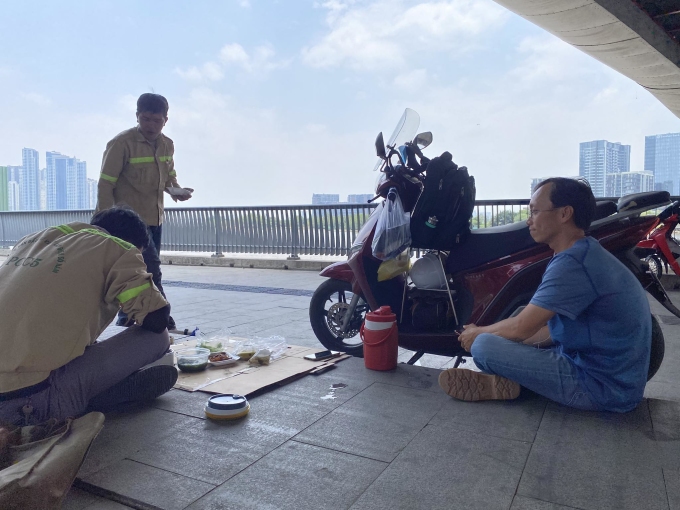
Mr. The Anh (in the blue shirt) takes a break with his colleagues at the foot of Ba Son Bridge, District 1, Ho Chi Minh City. Photo: Ngoc Ngan
The Ba Son Bridge, connecting District 1 and Thu Duc City, has three branches, so the area under the bridge is wide and airy, serving as a resting place for dozens of people, mainly factory workers, delivery drivers, ride-hailing drivers, lottery ticket vendors, and scrap collectors, seeking refuge from the heat. At noon on April 10th, the temperature reached 40 degrees Celsius, and some people brought hammocks, hung them on the railings along the riverbank, and spread out tarpaulins to lie down.
According to a survey by VnExpress , the number of people flocking to underpasses in the city, such as Ba Son (District 1) and Thu Thiem (Thu Duc City), has surged in recent weeks. For nearly two months, the southeastern provinces have experienced a widespread and intense heatwave. In Ho Chi Minh City, the highest temperature reached 35-36 degrees Celsius, with low humidity at 30-40%. The muggy weather lasted from 12 PM to 4 PM. However, actual temperatures outside were recorded as being 2 to 4 degrees higher than the forecast.
According to Mr. Le Dinh Quyet, head of the meteorological forecasting department at the Southern Vietnam Meteorological and Hydrological Station, this year the intense heat has arrived earlier and is more widespread due to the influence of El Nino. Many meteorological and hydrological stations around the world are forecasting that temperatures in the first four months of this year will be 0.7-1.5 degrees Celsius higher than the average of the past 10 years.
According to regulations, a daily maximum air temperature above 37 degrees Celsius is considered hot. Temperatures between 37 and 39 degrees Celsius are considered intensely hot, and temperatures above 39 degrees Celsius are considered exceptionally intense.
In large urban areas like Ho Chi Minh City, the intensity of heat varies. Central areas typically experience higher temperatures due to the combined effects of heat from concrete buildings, metal roofs, heat from factories, restaurants, kitchens, asphalt and concrete roads, and reflections from buildings with many glass windows. Areas with more trees, near rivers and lakes, tend to have lower temperatures, making them suitable places for people to seek shelter.
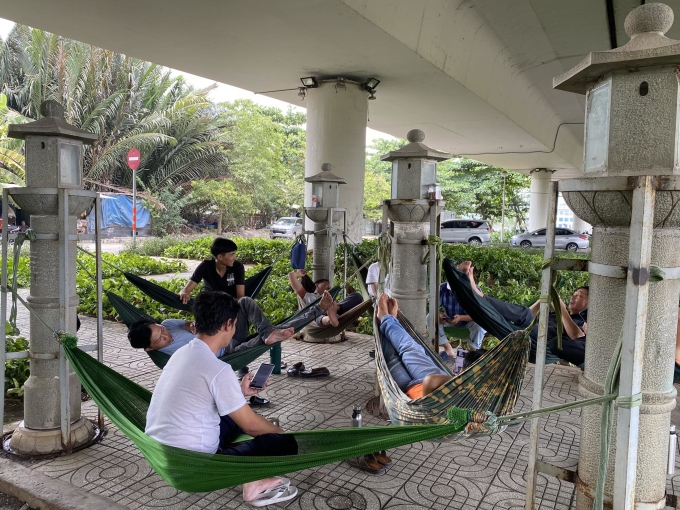
A group of drivers take a break from the heat under the Thu Thiem bridge in Thu Duc City on the afternoon of April 10th. Photo: Ngoc Ngan.
For about two weeks now, Thanh Tung, 37, a ride-hailing taxi driver, has been turning off his app earlier than usual to head to the area under the Thu Thiem bridge in Thu Duc City to find a good spot to rest during lunchtime and escape the heat.
"Anyone who arrives later and finds no place to hang a hammock will have to go to another area," he said. "This area has lots of trees, so it's very cool, and being near the river makes it airy, perfect for escaping the sweltering heat."
Tung has six friends, all drivers, whom he met while taking their lunch breaks in the same area under the bridge. They arranged to order lunch together and brought hammocks to hang on the stone pillars for a nap.
He said this was an ideal location because it was much cheaper than going to a cafe, which costs about 30,000-40,000 VND per visit. Every day, Tung earns about 250,000 VND driving his car, and he saves money by carrying a thermos of iced water and taking a lunch break under the bridge.
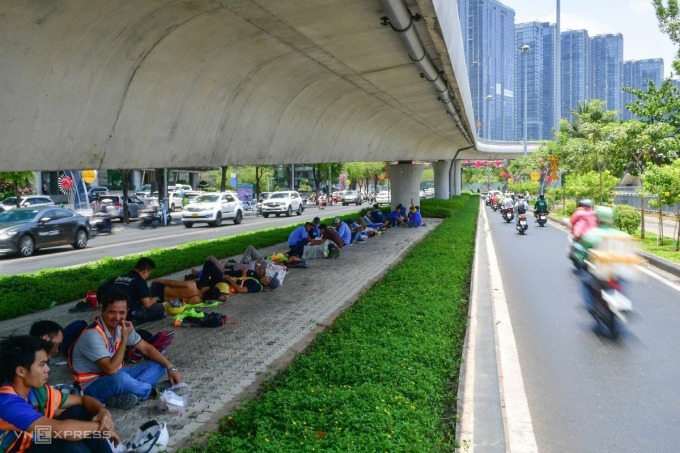
During their lunch break, dozens of workers eat and sleep under the Ba Son bridge, on Ton Duc Thang street, District 1. Photo: Quynh Tran
Mr. and Mrs. Van Tung, 35 years old, had a similar reason. On the afternoon of April 10th, they picked up their two children from school in Binh Thanh District, and the whole family went to the area under the Ba Son bridge.
They are self-employed workers, renting a house in Binh Duong. Every day, Tung's wife wakes up early to cook rice, packs food onto her motorbike, travels 30 km to take the children to school, and then goes to work. Around 11:15 AM, he takes his family to the area under the bridge, spreads out a raincoat, and they have their meal.
Tung recounted that they used to have a shop at Kim Bien Market in District 5, but it closed down due to poor business. For nearly a year and a half, facing financial difficulties, he chose to spend his lunch breaks under the Ba Son bridge.
"It's convenient and economical," he explained. "After eating, we clean up. Everyone here is polite, keeps things quiet and clean, and it's safe, so there's no theft." Around 1 PM, those taking their lunch break in this area disperse and resume work.
Meanwhile, Tung's wife was serving rice to their son, tying up their daughter's hair, and urging them to eat quickly.
"I'm taking a quick nap so I won't feel sleepy in class this afternoon," she said.
Ngoc Ngan
Source


![[Photo] General Secretary and President To Lam presides over the meeting to approve the draft report on the results of the second inspection by the Politburo of the Standing Committee of the Hanoi City Party Committee.](https://vphoto.vietnam.vn/thumb/1200x675/vietnam/resource/IMAGE/2026/05/26/1779789811432_a2-bnd-4430-9620-jpg.webp)




































































Comment (0)