

 |
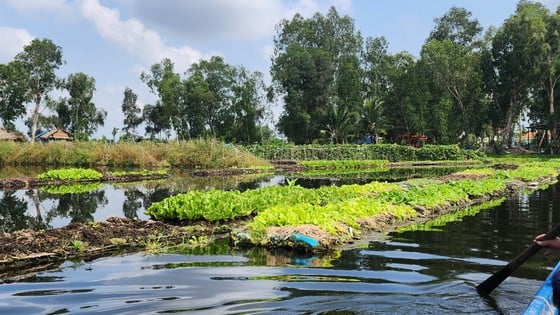
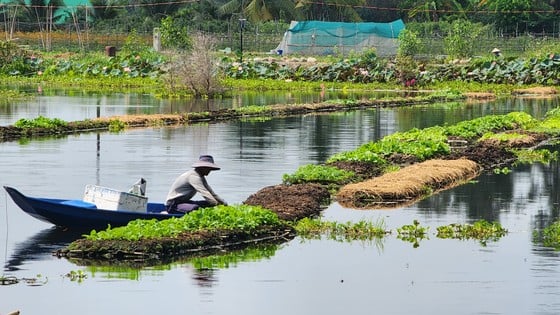
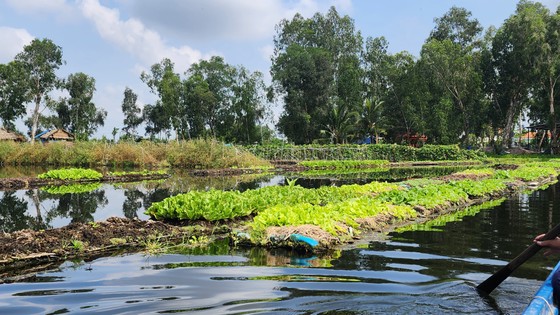
Hundreds of floating vegetable rafts on the water |
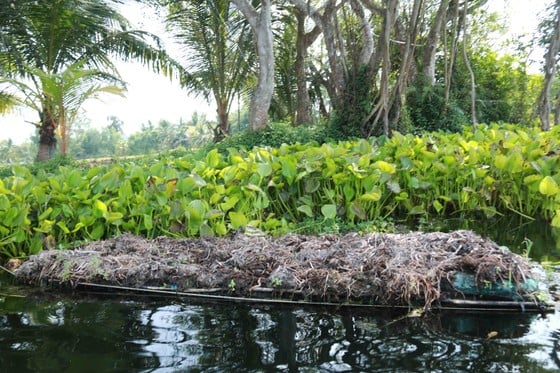
Making a raft from old plastic bottles
Growing vegetables on water – a rather unusual model in agricultural production and also the only one in Long An province that Mr. Nguyen Van Dac has successfully implemented. Mr. Dac said that he really likes organic farming but lacks land, while the vast expanse of water allows him to utilize this space by designing floating rafts to grow clean vegetables.
 | ||
|
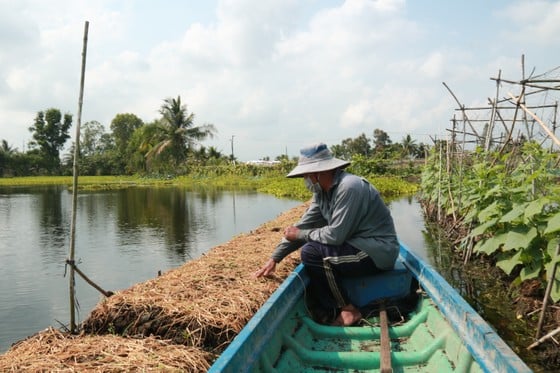
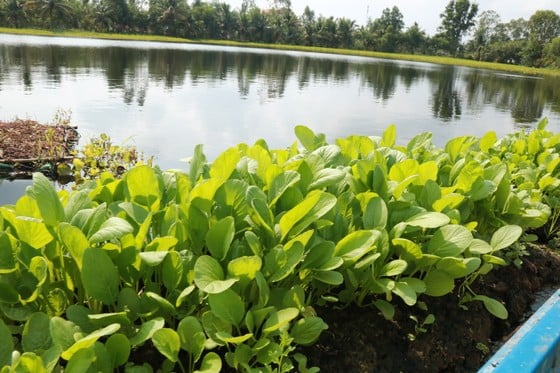
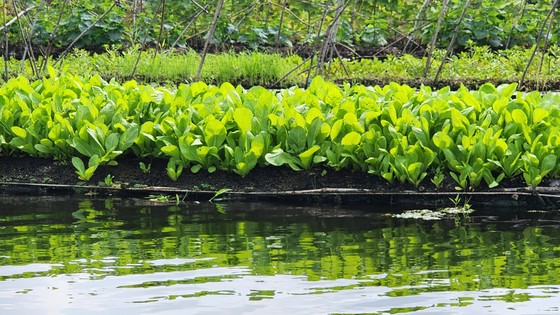
To do this, Mr. Dac collected plastic bottles, wrapped them in netting, and used bamboo frames to create floating rafts measuring 1 meter wide and 3 meters long. These rafts were connected to each other by cables and tied to the shore. Simultaneously, he collected water hyacinths from the lake, dried them, and mixed them with organic fertilizer and straw. He then piled this mixture onto the rafts, allowing him to sow seeds and grow vegetables.
 |
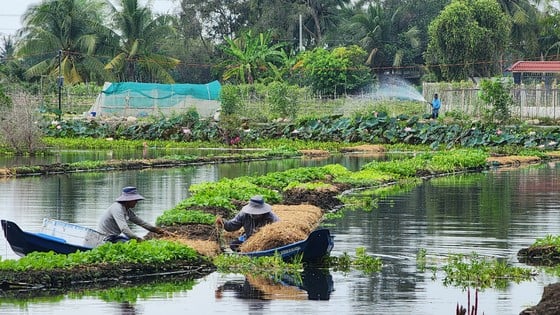 |
Prepare the fresh vegetable rafts. |
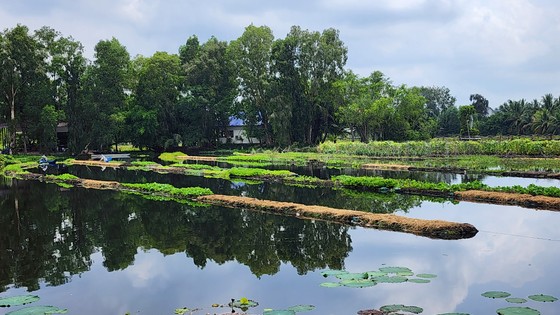
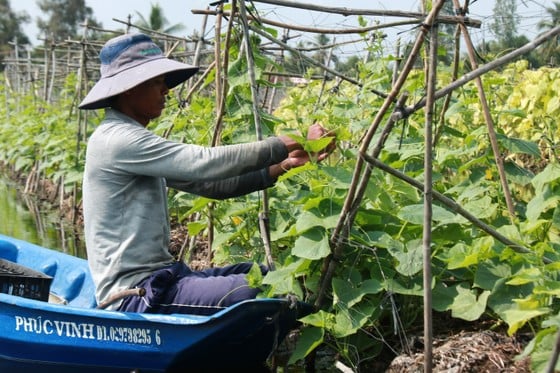
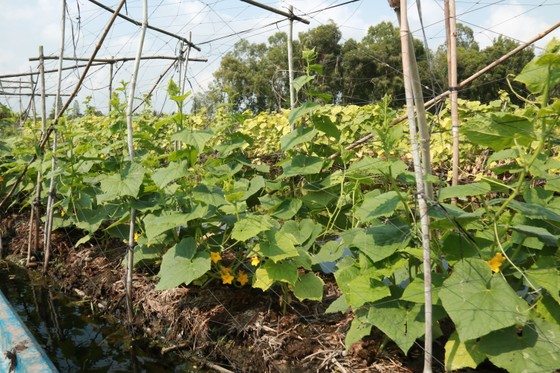
Over the past three years, Mr. Dac has owned nearly 400 floating rafts of aquatic vegetables covering an area of approximately 3000m² of water surface. Each day, he harvests around 300-400 kg of vegetables: gourds, pumpkins, cucumbers, tomatoes, bitter melons, herbs, and various green vegetables, selling them for 40,000 VND/kg or more, depending on the type.
According to Mr. Dac, achieving today's success required a great deal of time, sweat, and effort. As for the money, it's immeasurable, because he was determined to succeed, so if he failed in one attempt, he would simply invest in another.
 |
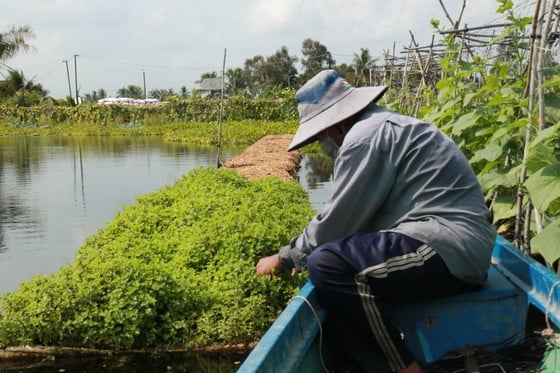 |
Vegetable care |
“Growing vegetables on water is only difficult at the beginning. After many failures, I learned a lot of lessons and found it much easier than growing them on land. The vegetables are isolated, reducing pests by over 80%, and there's no need for watering because the roots and stems of the water hyacinth draw water from below. The high humidity makes the vegetables crisp and sweet, and the harvesting time is shorter. For example, leafy greens like cabbage can be harvested in just over 10 days, about a week shorter than growing them on land," Mr. Dac said.
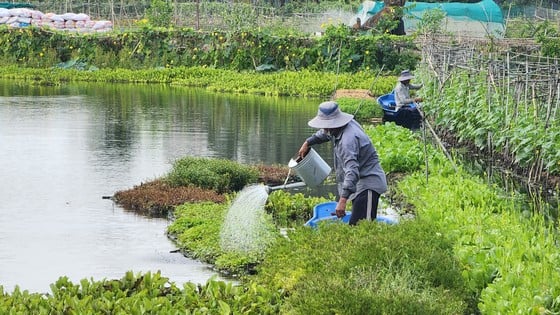 | ||
|
Currently, I have successfully grown Da Lat lettuce. I will research expanding the cultivation of more Da Lat vegetable varieties that were previously only grown in Da Lat. In addition, I will develop clean straw mushroom cultivation because I recently discovered that straw mushrooms have appeared naturally through the composting process. At the same time, on the remaining 5 hectares of water surface, I will collect all the water hyacinth to use as fertilizer and implement the cultivation of clean vegetables covering the entire water surface. These vegetables are certified, so I only worry about not having enough to sell, not about having unsold produce,” Mr. Dac said.
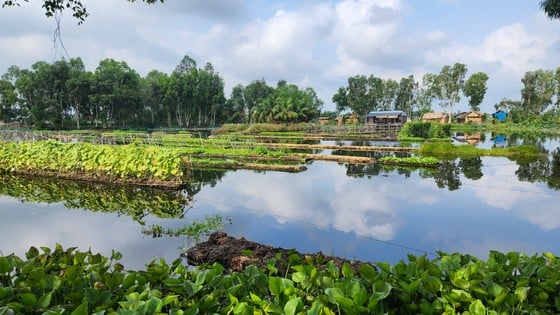 |
Preserving the natural ecosystem in the floating vegetable farm. |
Preserve the natural ecosystem.
On the way to Mr. Dac's vegetable farm, the scenery is kept pristine, with only a light layer of crushed stone to reduce muddy conditions during rain. The area around the lake is planted with colorful flowers to repel insects. Flowers and weeds that attract pests are left intact.
Beneath the lake's edge, lotus and water lilies bloom profusely. Small boats and canoes, gently paddled by workers, glide around the vegetable rafts, carrying out planting and tending tasks amidst the gentle breeze and chirping birds.
 |
 |
Many different kinds of vegetables are grown on rafts. |
On the small boat that took us on a tour of his creation, Mr. Dac confided that, with all his heart, he strives to preserve this place as a natural ecological zone. At night, unless absolutely necessary, he doesn't turn on the lights to prevent birds from returning to roost, and even for pest control, the workers only use flashlights.
 |
 |
The discarded vegetables will serve as food for the fish. |
In addition, fish are raised in the lake. The fish here are vegetarians, meaning all the floating vegetables are used as food; absolutely no industrial feed or other artificial food is used. Therefore, not only do the vegetables have a uniquely delicious flavor, but the fish meat is also unusually firm and tasty.
The small boat pulled alongside the raft of cherry tomatoes swaying on the water's surface. Mr. Dac picked some ripe red tomatoes and offered them to us to try. He assured us that the vegetables were pesticide-free, completely clean, and only needed a quick wipe to remove any dust before being ready to eat.
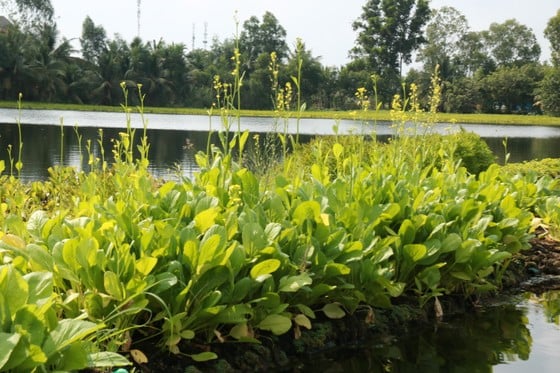 |
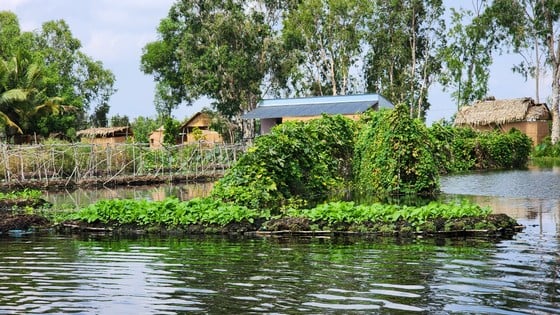
The rafts of lush green vegetables |
Despite the scorching sun, floating on the lake's surface, we felt quite cool, savoring juicy, crisp tomatoes with a sweet and slightly sour taste while listening to Mr. Dac share his story.
“In the future, besides expanding the area of the floating vegetable gardens, I still have the idea of developing this place into a green, clean, and beautiful ecological zone to serve people, students, and researchers about clean agriculture as well as this floating aquatic garden model. At the same time, I will organize meals using the products available at the farm. However, I am currently the only one running this model, so it will take time to prepare everything to ensure safety and stable employment,” Mr. Dac said.
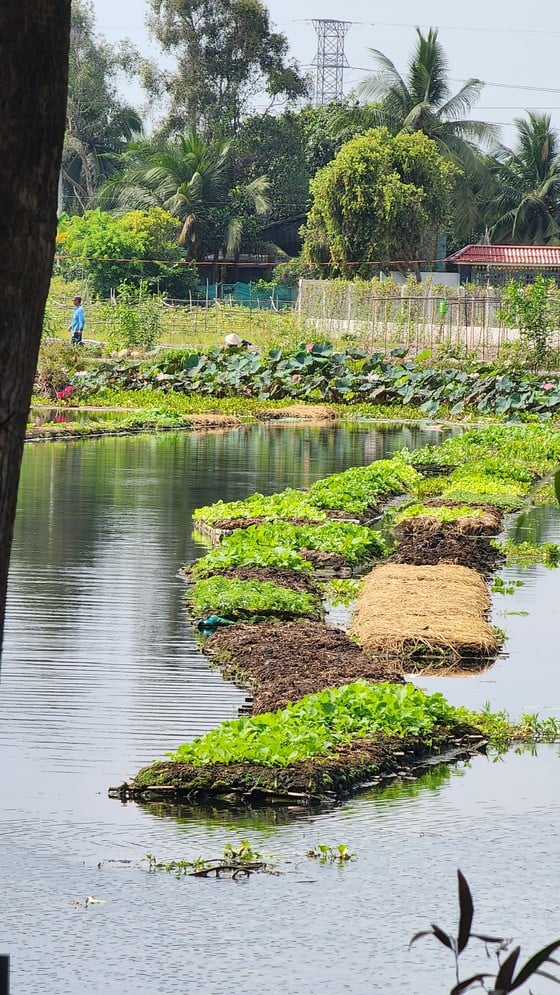 |
The vegetable rafts are secured to the shore with cables. |
According to Mr. Nguyen Thanh Truyen, Director of the Department of Agriculture and Rural Development of Long An province, the model of growing vegetables on floating rafts by Mr. Nguyen Van Dac, although newly implemented, has initially yielded high efficiency. Consumers now have an additional source of clean vegetables for their family meals.
 |
Based on this model, authorities encourage people to utilize previously excavated water pits or low-lying areas that are flooded year-round to create rafts for growing clean vegetables, thereby improving family meals and increasing income. However, people must carefully research and ensure safety during implementation. Simultaneously, they should connect with supermarkets and distributors to find outlets for their products.
Source
![[Photo] General Secretary and President To Lam presides over a working session with the Central Policy and Strategy Committee on the development of the materials industry.](https://vphoto.vietnam.vn/thumb/1200x675/vietnam/resource/IMAGE/2026/05/21/1779359935432_a3-bnd-3129-1412-jpg.webp)




















































Comment (0)