

The ever-increasing global population has led to a constant rise in food demand, resulting in a corresponding increase in the need for protein in animal feed. China, in particular, is facing a severe protein shortage.
Despite being the world leader in pork production and aquaculture for many years, China remains heavily reliant on imported soybeans for animal feed, with annual imports of around 100 million tons and a dependence rate exceeding 80%.
Therefore, developing methods for producing high-quality proteins quickly and efficiently is crucial. And the most promising solution lies in synthetic biotechnology.
There are several pathways to synthesizing biological proteins. The simplest is to convert by-products from the food and agricultural industries, such as corn liquor, distilled grains, and straw, into higher-value protein products through microbial transformation.
However, the supply and quality of these by-products are inconsistent, making industrial production difficult.
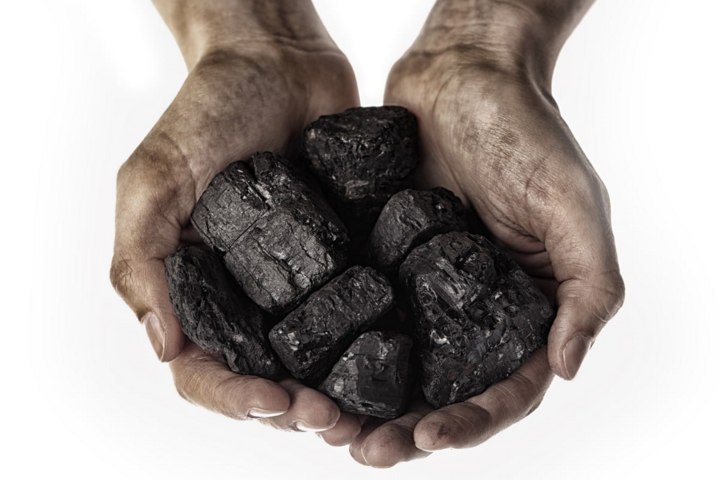
Chinese scientists have found a low-cost method to convert coal into protein for use in animal feed. (Image: Shutterstock)
Another notable approach involves industrial fermentation processes using chemicals to generate energy, employing methanol, a cheaply derived substance from coal.
This is what scientists from the Tianjin Institute of Industrial Biotechnology under the Chinese Academy of Sciences (CAS), led by Professor Wu Xin, are researching.
“Coal, with global reserves of approximately 107 trillion tons, can be converted into methanol through coal gasification. Methanol mixes well with water, offering high efficiency in fermentation compared to gas and eliminating the need for specialized fermentation equipment,” Professor Wu wrote in an article published in the China Science Bulletin.
His team has now developed a technology to produce proteins at a lower cost than traditional protein biosynthesis. These findings were published in the international journal Biotechnology for Biofuels and Bioproducts, peer-reviewed on November 17, 2023.
“Research on the synthesis of cellular proteins from methanol began in the 1980s, focusing primarily on strain selection and optimization of the production process. However, due to high costs, methanol-synthesized protein products cannot compete with soy proteins and have not been produced on a large scale,” Professor Wu introduced in the paper.
To solve the problem, his team collected more than 20,000 yeast samples from vineyards, forests, and swamps across China. From those samples, they identified strains capable of efficiently utilizing different sugars and alcohols as carbon sources, including the yeast strain Pichia pastoris.
Subsequently, by removing specific genes in the wild-type Pichia pastoris strain, they created a yeast strain with methanol tolerance and significantly enhanced metabolic efficiency. This technique has greatly advanced the goal of converting methanol into protein.
“The researchers achieved dry cell weight and crude protein content of 120 g/liter and 67.2%, respectively, with their modified Pichia pastoris. And the methanol-to-protein conversion efficiency reached 92% of the theoretical value,” the report on the CAS website stated.
The high conversion rate makes this protein production method very attractive from an economic standpoint.
Professor Wu stated in the paper: “It doesn’t require arable land, is unaffected by seasons and climate, and is thousands of times more efficient than traditional fermentation methods. Furthermore, the protein content in the microorganisms ranges from 40 to 85%, significantly higher than that of natural plants.”
This protein also contains a full range of amino acids, vitamins, inorganic salts, fats, and carbohydrates, allowing it to partially replace fishmeal, soy, meat, and skim milk powder in a variety of applications.
The research team has begun industrial-scale research deployments, producing thousands of tons of methanol protein for animal feed. The specific partner has not been disclosed.
Microbial proteins are highly nutritious and free of allergens found in soy proteins, making them an excellent source of protein. However, only a limited number of products are currently available on the market.
The American company KnipBio used genetically modified strains to produce KnipBio Meal, a high-quality feed protein comparable to fishmeal, from methanol. The product received safety approval from the U.S. Food and Drug Administration (FDA).
Hua Yu (Source: SCMP)
Source
![[Photo] General Secretary and President To Lam presides over a working session with the Central Policy and Strategy Committee on the development of the materials industry.](https://vphoto.vietnam.vn/thumb/1200x675/vietnam/resource/IMAGE/2026/05/21/1779359935432_a3-bnd-3129-1412-jpg.webp)



![[Photo] National Assembly Chairman Tran Thanh Man working with the Standing Committee of the Law and Justice Committee](https://vphoto.vietnam.vn/thumb/1200x675/vietnam/resource/IMAGE/2026/05/21/1779378929214_ndo_br_1-4610-jpg.webp)




























































































Comment (0)