

The world is entering a period of profound geopolitical and global economic transformation. Technological competition, climate change, and shifting supply chains create fierce challenges, but at the same time, they open "windows of opportunity" for responsive nations.
Vietnam, with its flexible foreign policy, cooperative spirit, and strategic geostrategic position at the heart of Southeast Asia, has a historic opportunity to break through if it knows how to move in the right direction.

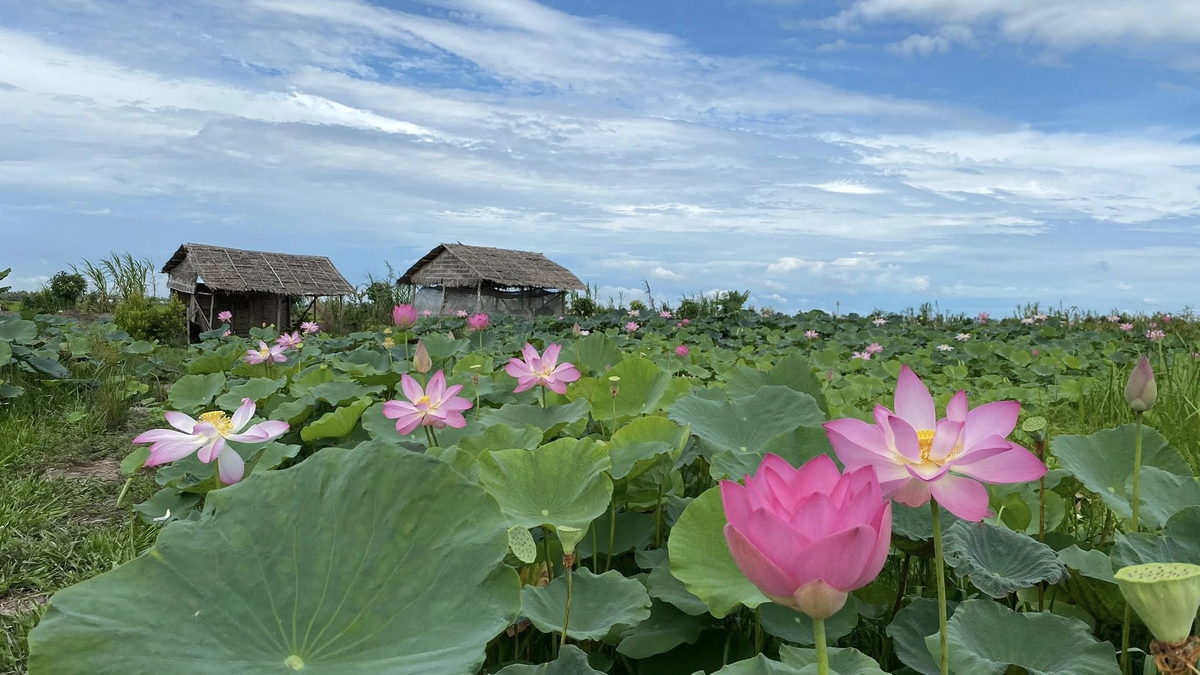
If Vietnam relies on its internal strengths, it can absolutely break through and transform into a modern, self-reliant, knowledge-based economy . Photo: Nguyen Hue
Mindful thinking: Building a solid foundation from within.
In the context of global uncertainty, Vietnam needs a sober and proactive strategic mindset. The immediate priority is maintaining socio-economic stability; in the medium and long term, it is crucial to build a sustainable foundation of internal strength from existing advantages, at a reasonable cost and with high efficiency.
The question is: Where should Vietnam begin?
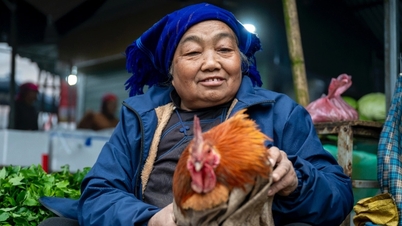
The first answer is agriculture, which provides livelihoods for over 60% of the population, but the full answer is smart agriculture.
Vietnam possesses significant advantages: vast arable land, diverse climate, and abundant products, ranking among the world's leading exporters of rice, coffee, cashew nuts, pepper, and seafood. However, Vietnam still faces several bottlenecks that need addressing, such as polluted and poorly maintained soil; a lack of systematic research on plant varieties, especially cashew nuts and pepper; and, most notably, increasingly severe climate change.
Located just a few dozen kilometers from Vietnam, Cambodia has invested in new cashew varieties that yield superior productivity. Meanwhile, Vietnam – the leading cashew exporting country – still lacks a systematic research foundation in cashew varieties.
If Vietnam doesn't change quickly, it will lose its advantage right on home ground.
Digital technology: The key to enhancing the value of agricultural products.
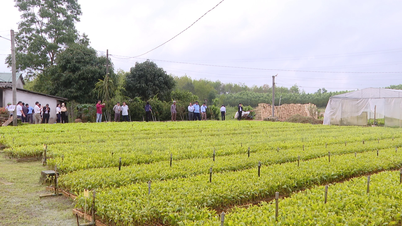
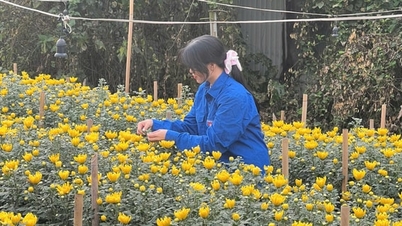
Integrating digital technologies such as IoT, AI, and blockchain can transform traditional agriculture into smart agriculture, significantly increasing its value: In Lam Dong, greenhouse technology and drip irrigation help increase fruit and vegetable yields by up to 40%. In the Mekong Delta, smart sensors save 20% of water, 30% of fertilizer, and increase rice yields by 12-15%.
Meanwhile, blockchain technology enables transparent traceability, expands high-end export markets, and increases product value by 20%.
It is estimated that if agricultural productivity increases steadily by 10% annually and the spillover effect is modest at 1.7 times, Vietnam's GDP growth could increase from the current 7% to nearly 10% within 3-5 years.
High technology: The driving force paving the way for the knowledge economy.
Smart agriculture is inseparable from high technology – an area where Vietnam is gradually asserting its position.
In 2024, information technology accounted for approximately 14% of Vietnam's GDP, with software exports reaching $7 billion. Vietnam has 70% of its population under 35 years old, a strong mathematical foundation, and a rapid pace of technology adoption.
AI analyzes land, water, and climate data to optimize production. Drones help reduce pesticide use by 50%. Big data and cloud computing build real-time supply chains.
Technological advantages not only modernize agriculture but also open the door for Vietnam to enter a knowledge-based and high-value-added services economy.
Building a value-sharing ecosystem: A necessary condition for success.
However, smart agriculture and high technology are only necessary conditions. The sufficient condition for success is to build a value-sharing ecosystem, a comprehensive and integrated system encompassing land, seeds, techniques, technology, training, finance, output, and policies.
High-quality land and seeds, combined with biotechnology and sustainable management, form the foundation. Smart agricultural technologies (IoT, AI, blockchain) enhance productivity and connect markets. A digitized workforce operates the technology efficiently. Flexible financing (preferential loans, investment funds) supports innovation. Stable output is ensured through a digitized supply chain. Government policies connect farmers, businesses, and startups, promoting cooperation and ensuring sustainable development and high value.
Vietnam needs to strongly promote high-tech agricultural zones and innovation incubators, while also training farmers in digital skills and creating an open legal framework for new business models.
Only when there is a value-sharing ecosystem can innovation truly flourish and spread throughout the entire economy.
Vietnam: Leveraging the power of deep processing and exporting specialty products.
Besides modernizing agriculture, Vietnam needs to strongly develop its food processing industry – a key factor in creating sustainable added value.
Establishing advanced processing research centers in the Red River Delta and the Mekong Delta is a strategic step that will help Vietnam not only export raw agricultural products but also high-quality processed foods.
Nafoods and Vinamit are two of many successful examples of companies.
Nafoods is a pioneer in the deep processing of Vietnamese agricultural products. With passion fruit as its main product, Nafoods has invested in modern technology to produce concentrated juice and processed products that meet export standards to more than 70 countries, including demanding markets such as the EU and the US.
Vinamit Company is a well-known brand specializing in dried and freeze-dried fruit products, exporting to over 20 countries, including demanding markets such as the US, Japan, and South Korea. The company has established a clean fruit sourcing area and applies modern processing technology.
The success of Nafoods, Vinamit, and many other companies such as GC Food, Dong Giao, ADC, etc., demonstrates the enormous potential of deep processing strategies and building Vietnamese brands on the global food map.
Choosing the future: A path to independence and self-reliance.
Vietnam is at a historical crossroads: ahead lies a world of uncertainty, behind lies the lesson of decades of dependent development.
If Vietnam wisely focuses on developing its internal strengths – with smart agriculture, high technology, deep processing, and a value-sharing ecosystem – it can absolutely break through and transform into a modern, self-reliant, knowledge-based economy.
Agriculture played an extremely important role in the early stages of development in many countries such as South Korea, Taiwan, Japan, Australia, the United States, the Netherlands, Denmark, etc.
This is no longer a distant dream. This is a feasible path if we are determined enough and take action.
Economist Tran Si Chuong was a co-author (along with Professor James Riedel, Johns Hopkins University) of the World Bank's first report (WB/IFC, 1997), assessing the potential for the development of Vietnam's private sector and proposing several policies for national industrialization. He has over 30 years of experience advising on economic and business development strategies in the United States and for a number of businesses in Asia, including domestic and multinational corporations investing in Vietnam. Mr. Tran Si Chuong previously served as a Senior Advisor on Monetary and Economic Policy to the U.S. House Banking Committee in Washington, D.C., and also as a Congressional Assistant on Foreign Trade and Diplomatic Affairs. |
* This article includes contributions from Professor Dr. Nguyen Quoc Vong (Agroforestry Biology - RMIT University and Gosford Institute of Agriculture - Australia), and Ms. Nguyen Thi Thanh Thuc - General Director of AutoAgri Technology Joint Stock Company.
Vietnamnet.vn
Source: https://vietnamnet.vn/truoc-buoc-ngoat-lich-su-dot-pha-tu-noi-luc-2396856.html


![[Photo] Young people of the Dong Thap Border Guard actively participate in "March Border Month" activities.](https://vphoto.vietnam.vn/thumb/1200x675/vietnam/resource/IMAGE/2026/03/23/1774248483508_ndo_tl_dt3-jpg.webp)




















































































Comment (0)