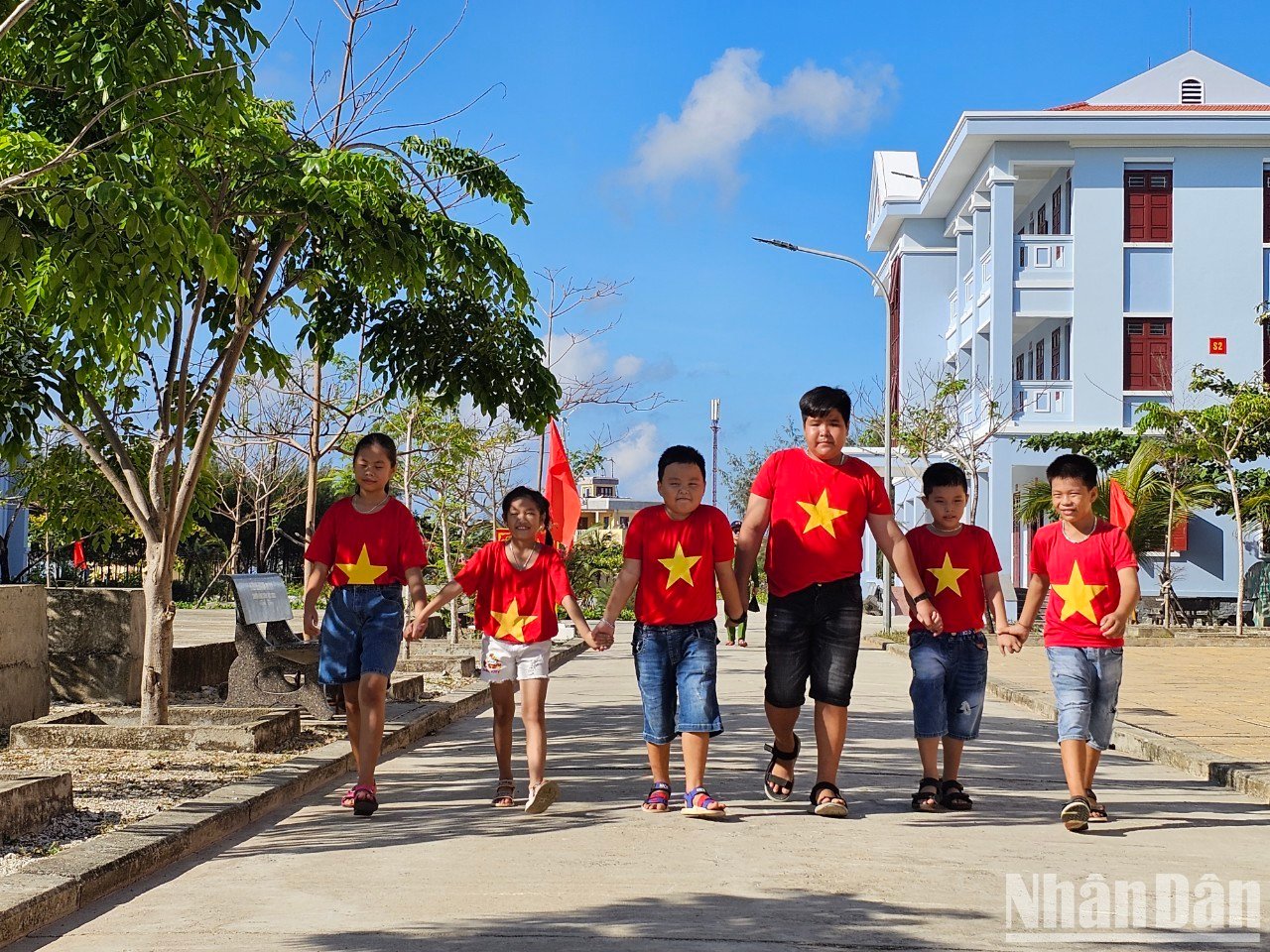
NDO - Many people, having dedicated their lives to the islands for many years, despite the hardships and harsh weather, have sought opportunities to stay, not wanting to return to the mainland. If anyone returns to Truong Sa Island a few times, they may still encounter the familiar faces of the people who move to a new island every few years, but always with warm, radiant smiles...
Hospitable people
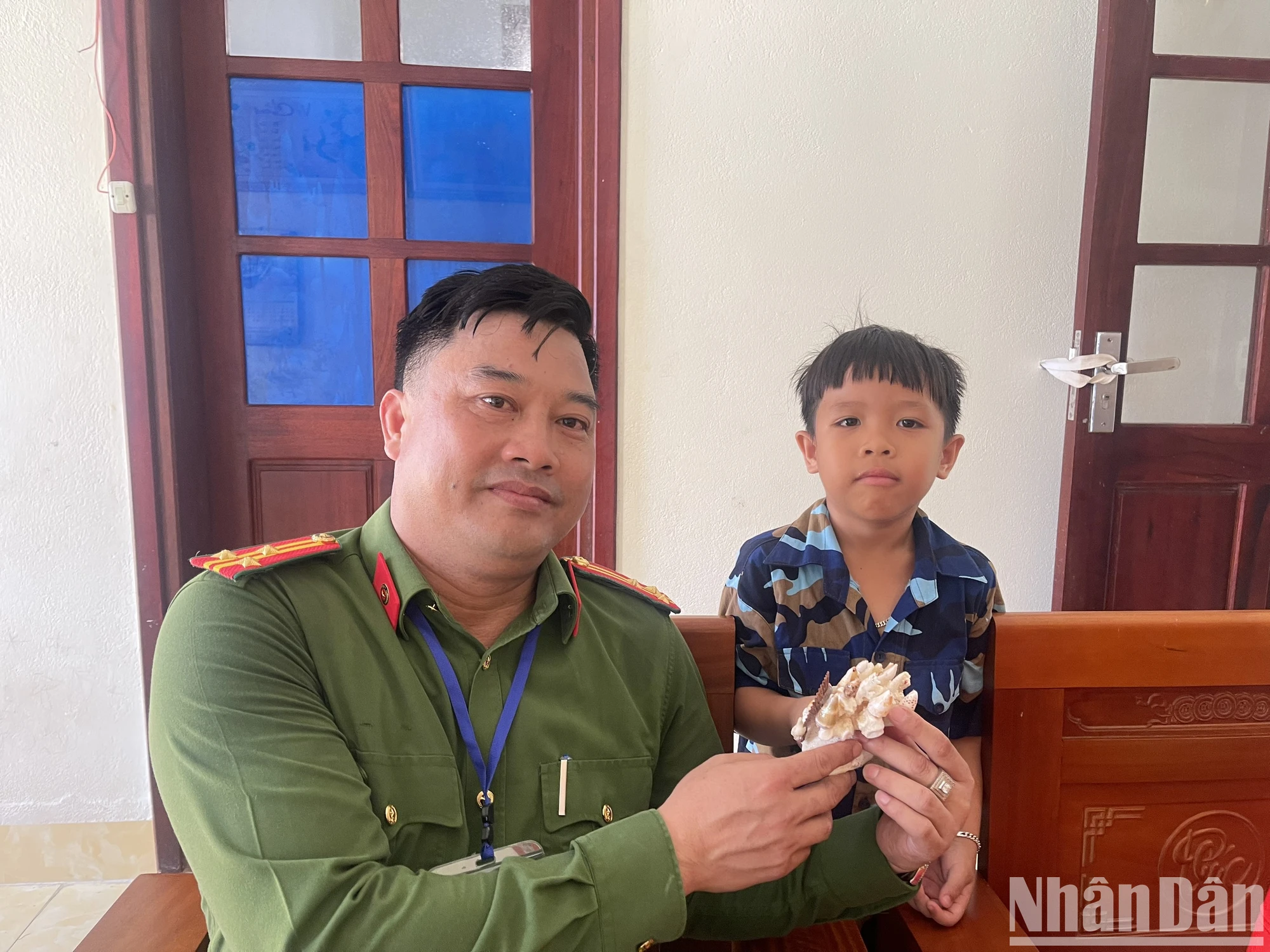
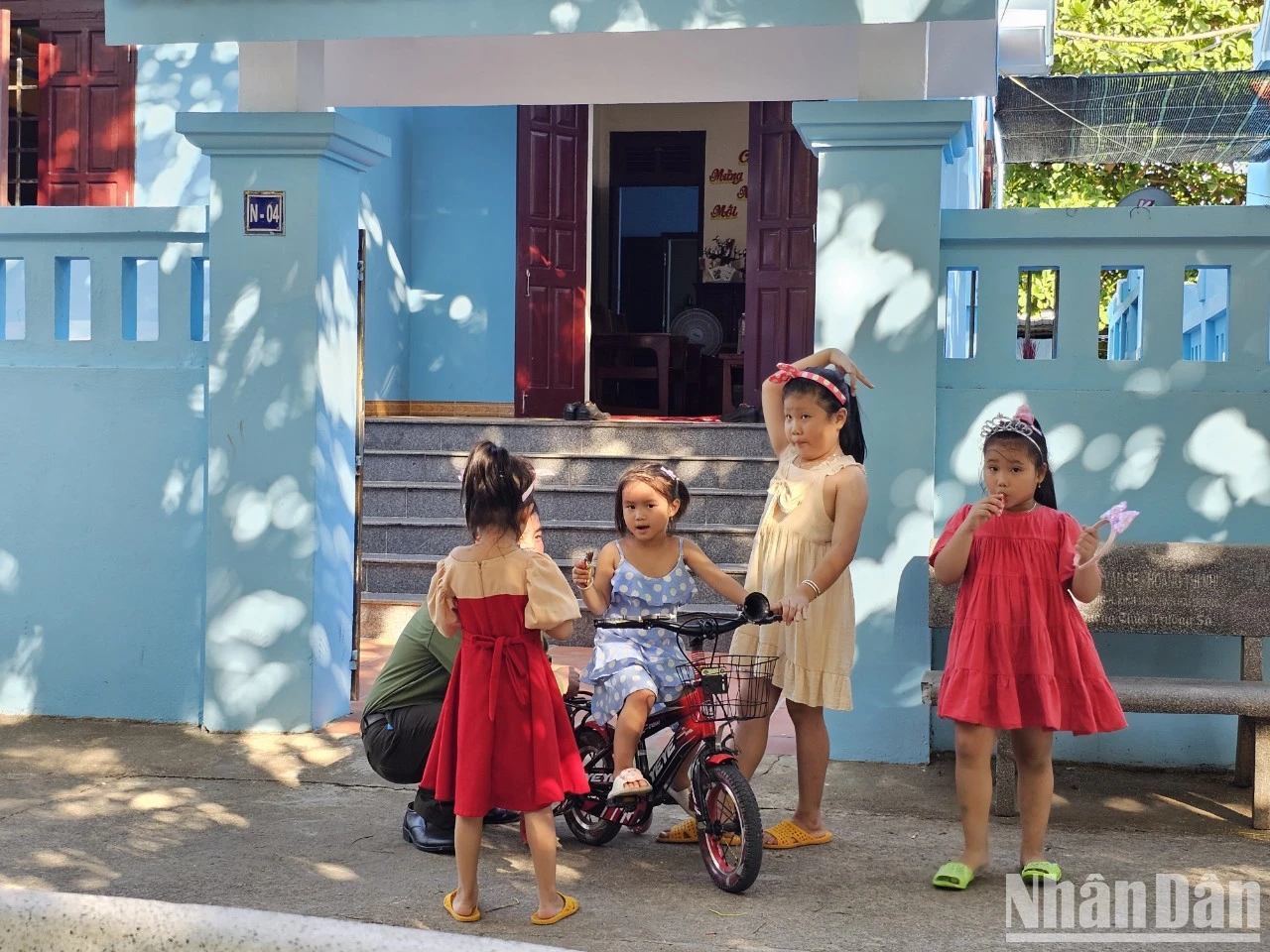
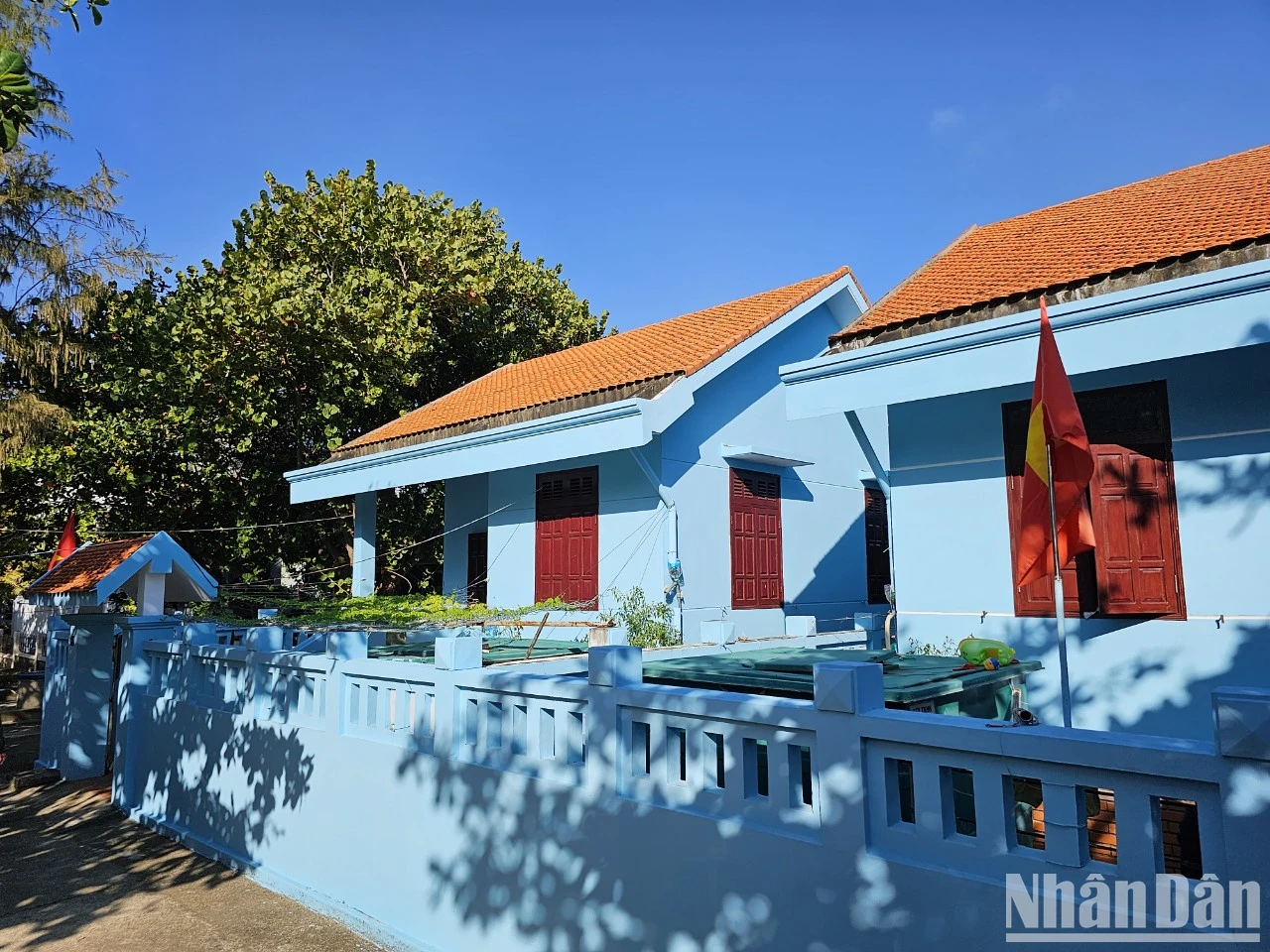
Seven-year-old Nguyen Thanh Phong quickly ran into the kitchen, stealthily bringing souvenirs to give to visitors. In Da Tay A, visitors only come seasonally, either during the calm months of April and May or during Tet (Lunar New Year), so the children are very enthusiastic in welcoming guests. Phong is quiet, only smiling slightly, but his strong smile, with skin tanned by the elements, makes those who set foot on this small island love the children even more. The houses of the people in Truong Sa district are built solidly and spaciously, despite the harsh weather. Under the cool shade of the banyan trees, the children still chatter together every day, nurturing their childhood with songs about the sea and poems about maritime
sovereignty . They always look up at the soldiers' guard posts with an instinctive admiration. With a cheerful expression, little Thai Thanh Truc (daughter of Ms. Vi Thu Trang) brought out seashells as gifts for the aunts and uncles, smiling shyly and saying, "I really enjoy helping my mother make these souvenirs. I hope that the aunts and uncles who come to the island will always receive special affection from us."
The hospitable boy presented a precious gift from the islands to the members of the delegation.
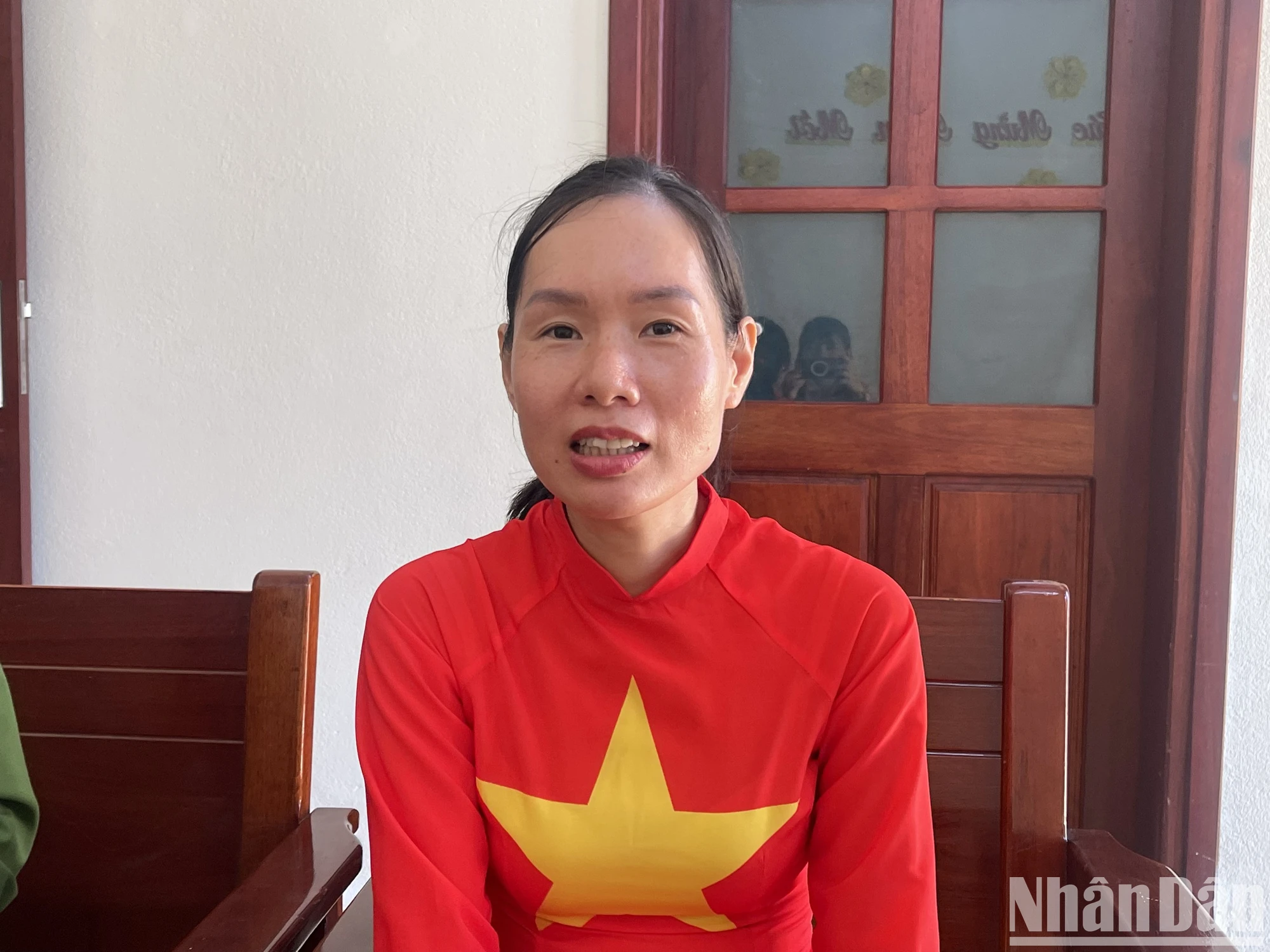
It wasn't just hope anymore, but genuine affection that made us reluctant to leave. Trang's house was very tidy. This 42-year-old woman had enough experience with life on the island, so every time a delegation visited, Trang meticulously prepared refreshing drinks and souvenirs to please her guests. "Since the beginning of April, many delegations have visited the island. Here, we lack nothing, only affection to help the young soldiers gradually get used to the way of life, to the sadness of being away from family and friends. Everyone here has become like family to each other," Trang recounted.
Ms. Vi Thu Trang has lived on the islands of the Truong Sa Archipelago for over 6 years.
Having lived on Song Tu Tay Island for many years, Vi Thu Trang felt deeply connected to the remote island. She discussed it with her husband, Thai Minh Khang, and decided to stay, but this time, their destination was Da Tay A Island. On the day they received their new home, instead of the initial surprise of many new residents, Trang quickly set about establishing her new life on the island. Accustomed to the harsh weather and the life of assisting soldiers far from home, the women here always engage in activities with the soldiers to alleviate their homesickness. Then, Trang showed us photos of the activities she organized – cultural exchanges, tree planting campaigns on the island, cooking tea and baking cakes to share with the young soldiers on weekends.
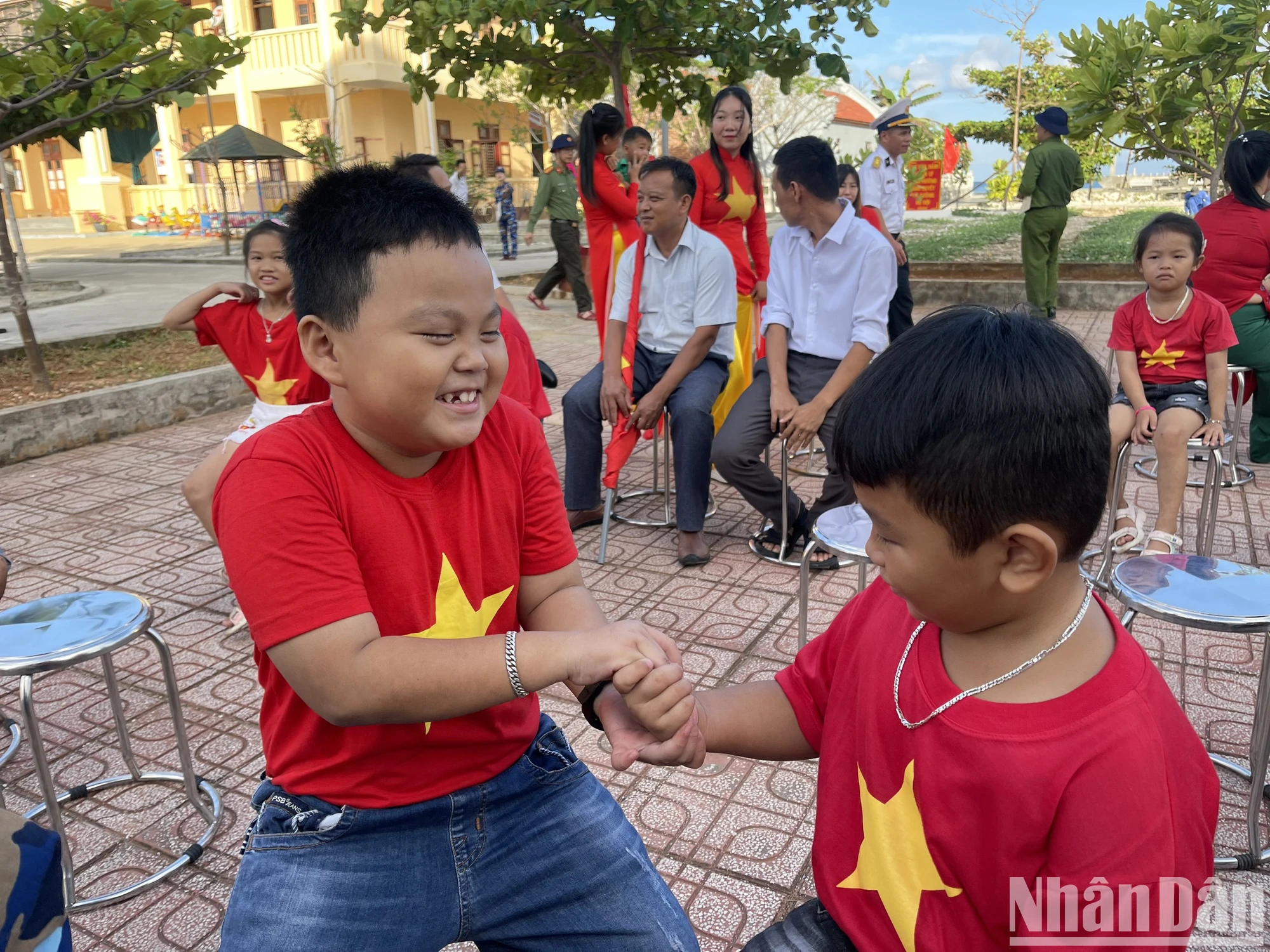
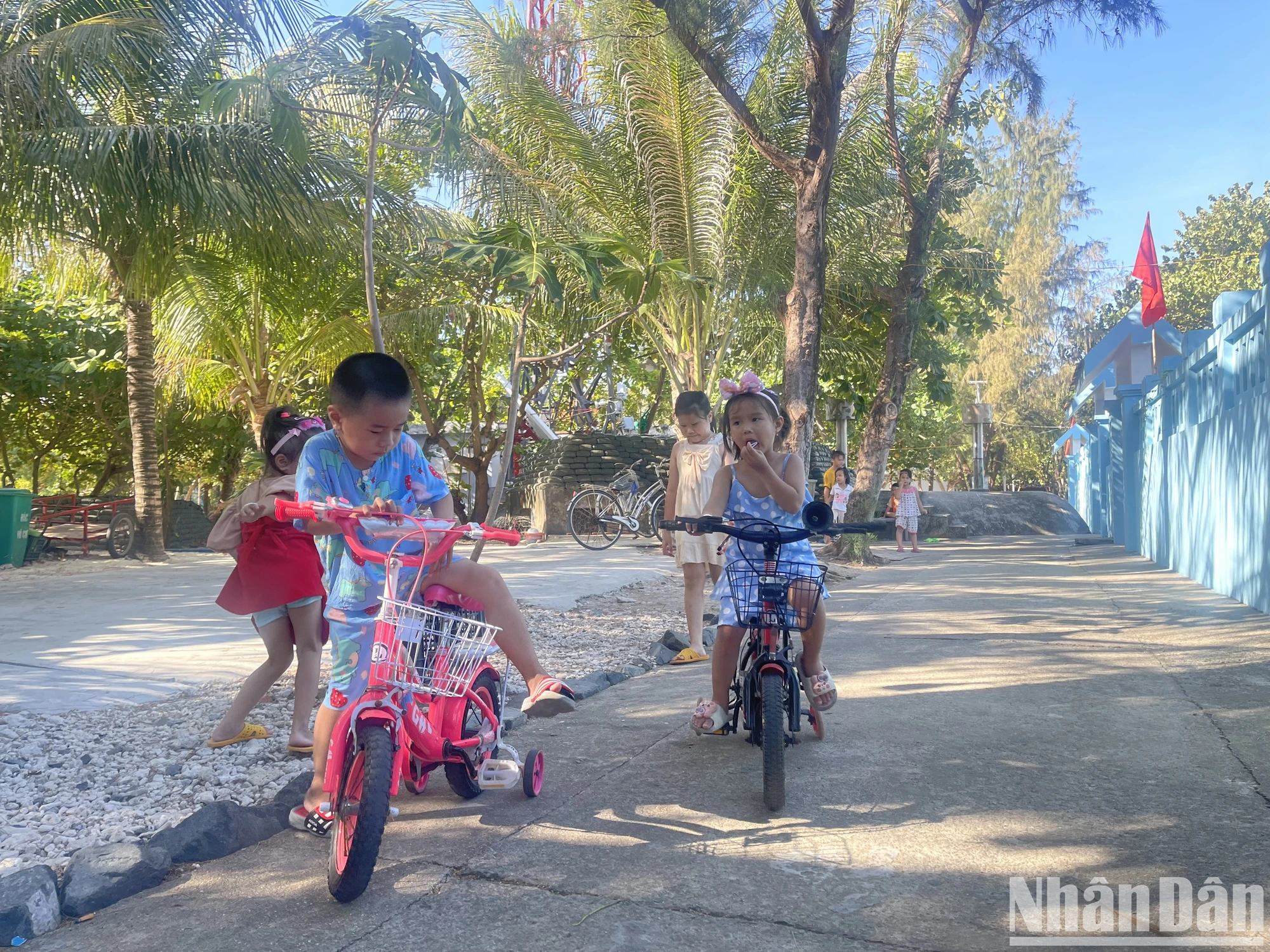
The hospitable boys and girls on Da Tay A Island.
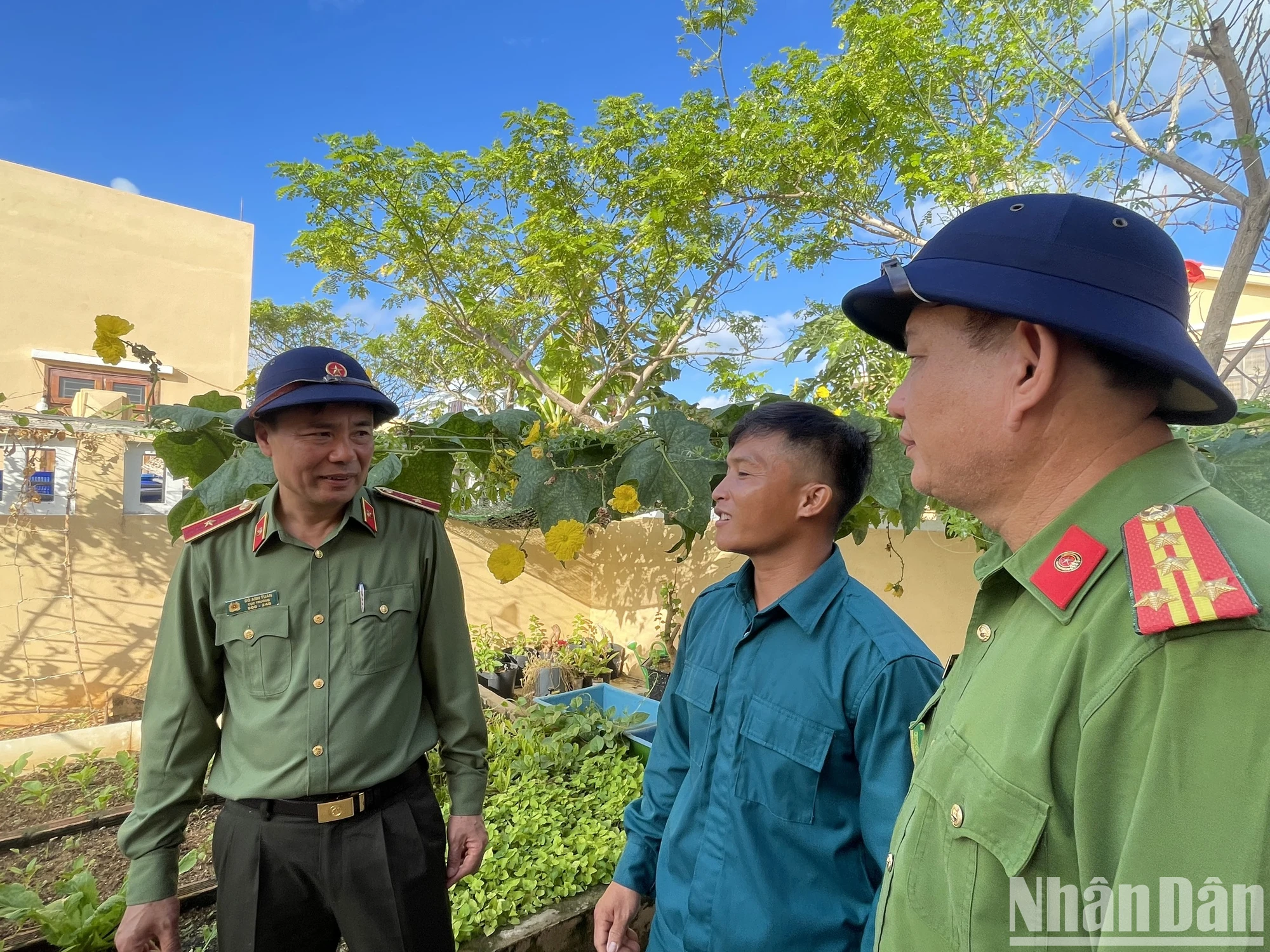
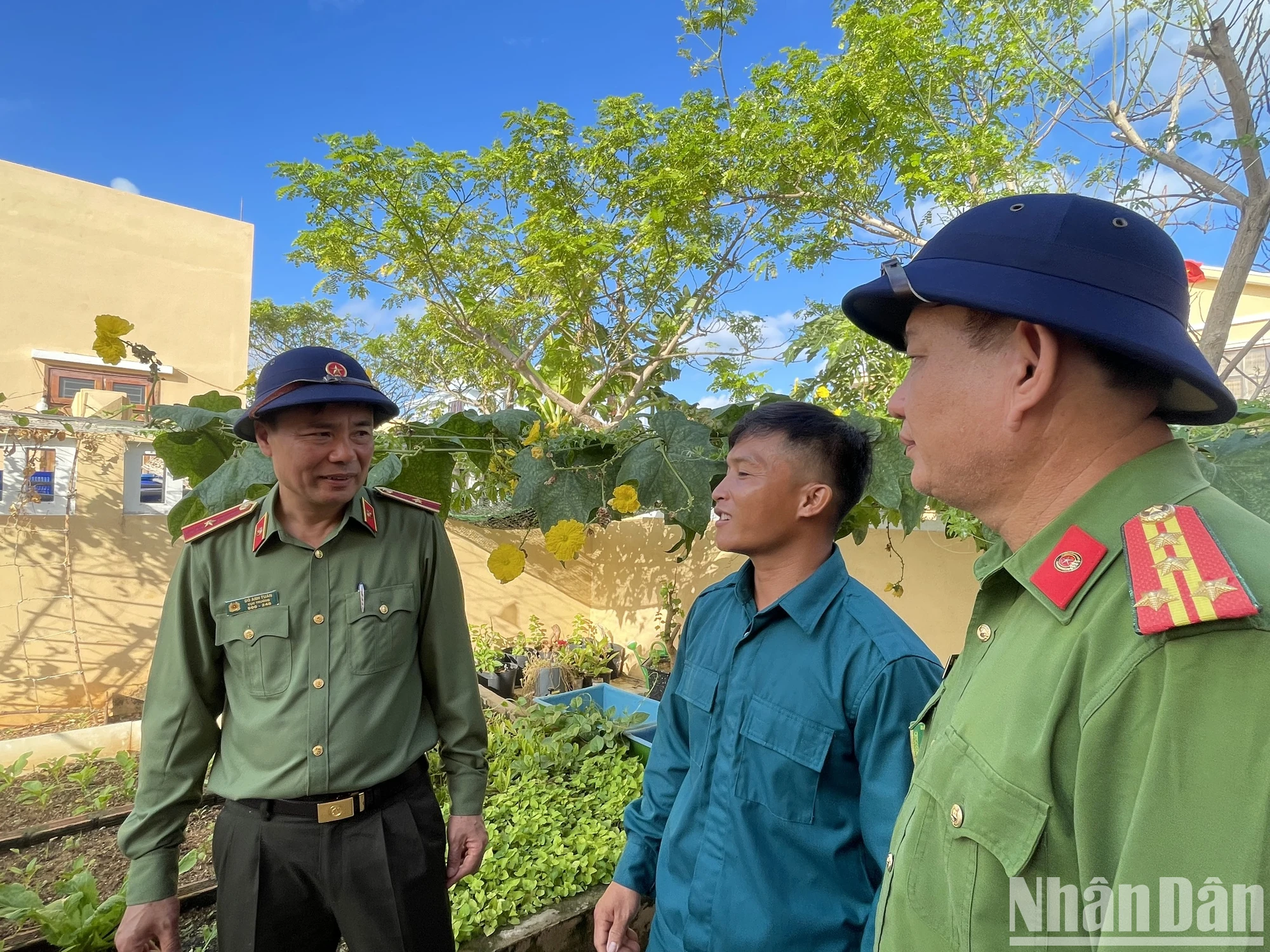
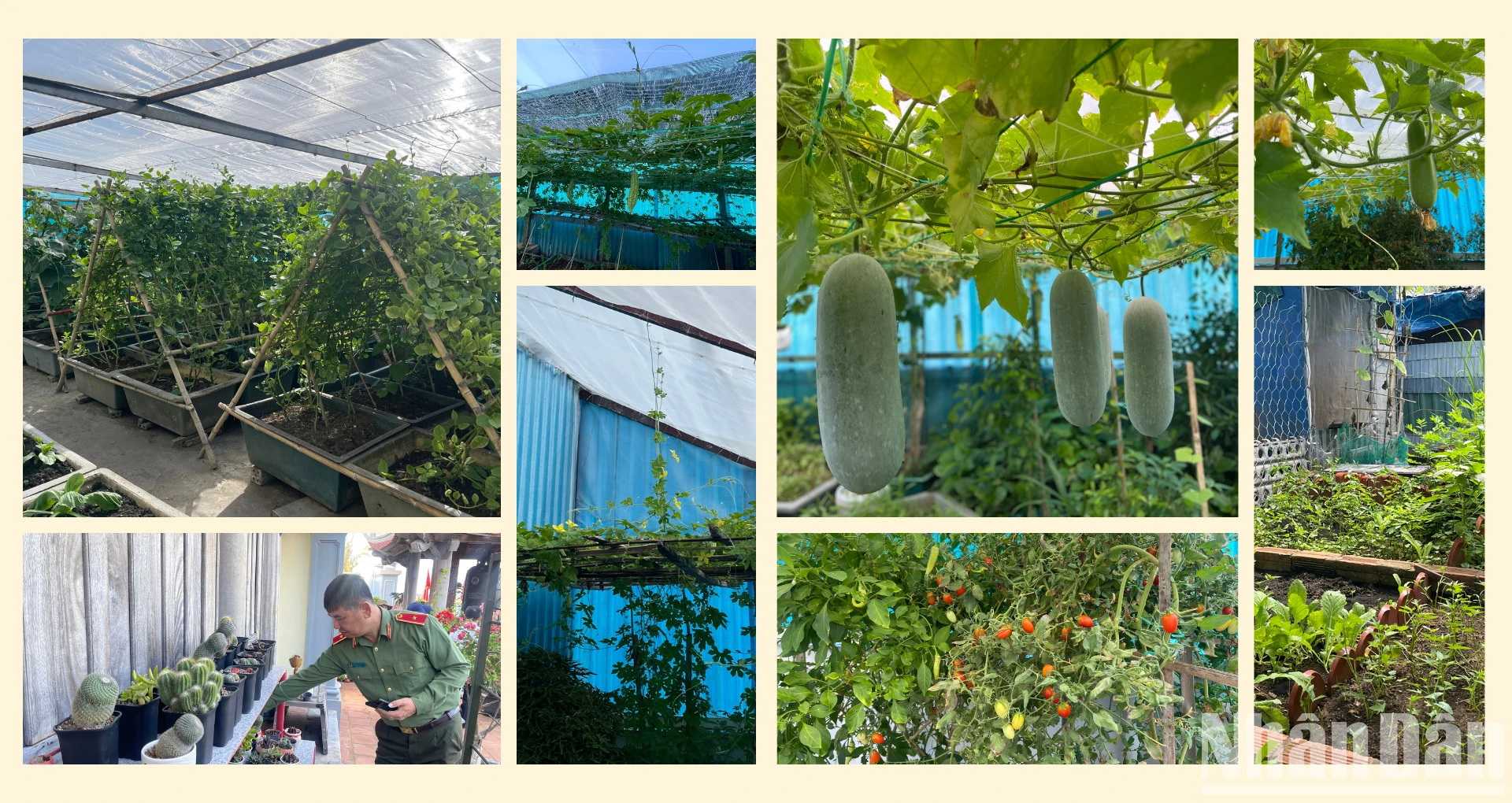
Initially, many households were unfamiliar with growing vegetables, so every afternoon they would follow the soldiers to their vegetable gardens to learn. When the vegetables grew so lush and abundant in their yards that they couldn't eat them all, the families would share them with the soldiers on the island. They maximized water and electricity savings, so everything on the island had to be carefully planned. All the water used for washing vegetables and rinsing rice was collected to water the plants. During the dry season, like April, the women would gather leaves from storm-resistant trees, chop them up, and use the resulting liquid to water the plants, ensuring they thrived and the roots were cool, helping them cope with the harsh, arid conditions of the island. To ensure the vegetables and fruits adapted to island life and didn't wither, the women shared tips from the soldiers: in the morning, they would wash each leaf individually and spray a thin layer of water to remove the salty sea air before watering in the evening. On Sinh Ton Island, the lush green vegetable garden is enclosed on a large scale at the far end of the island to minimize the impact of the weather on the vegetables. There are small wells on the island, which provide enough fresh water for the residents' daily needs.
 |
|
The lush green vegetable garden is cultivated by the island's residents themselves.
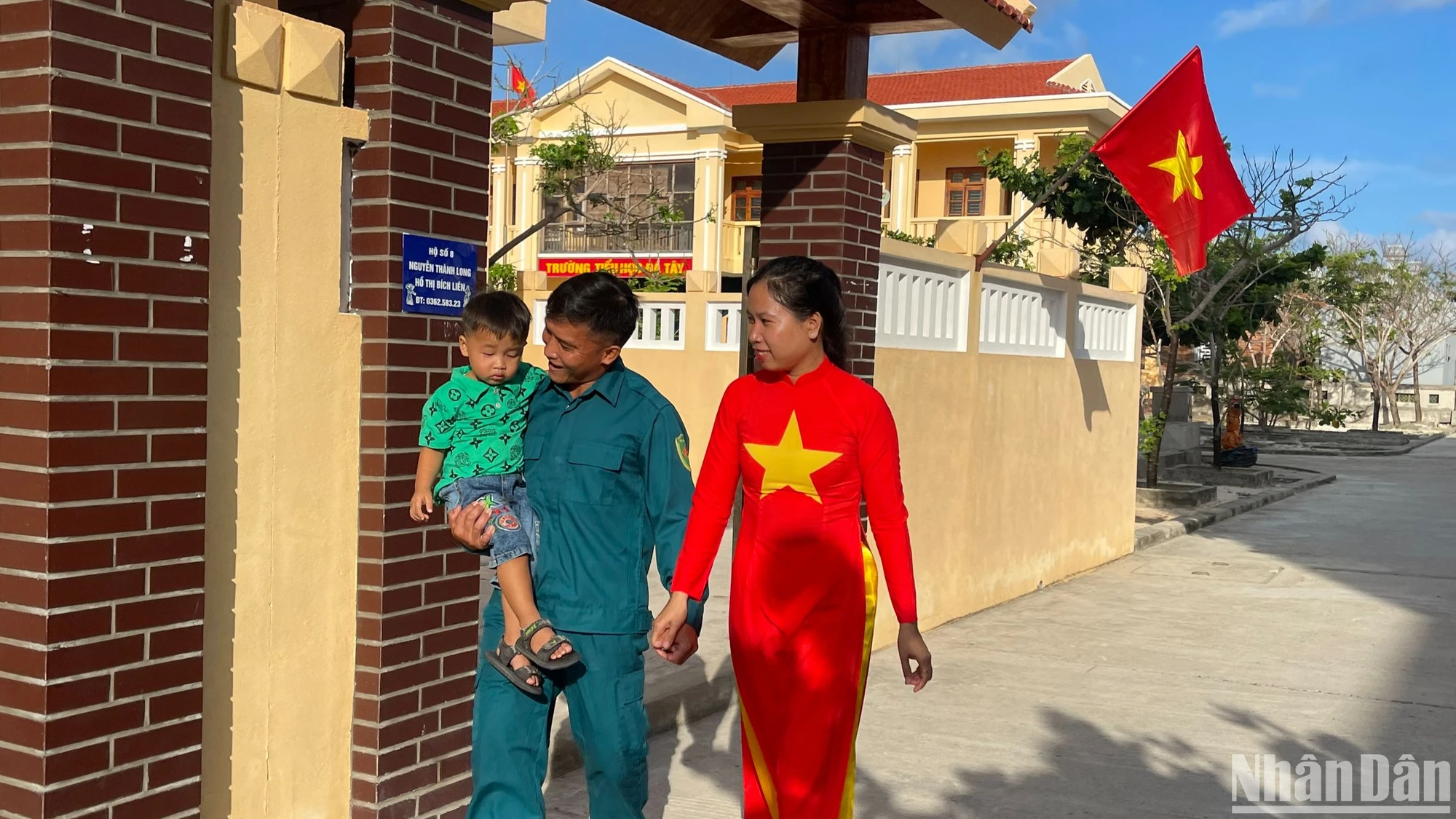
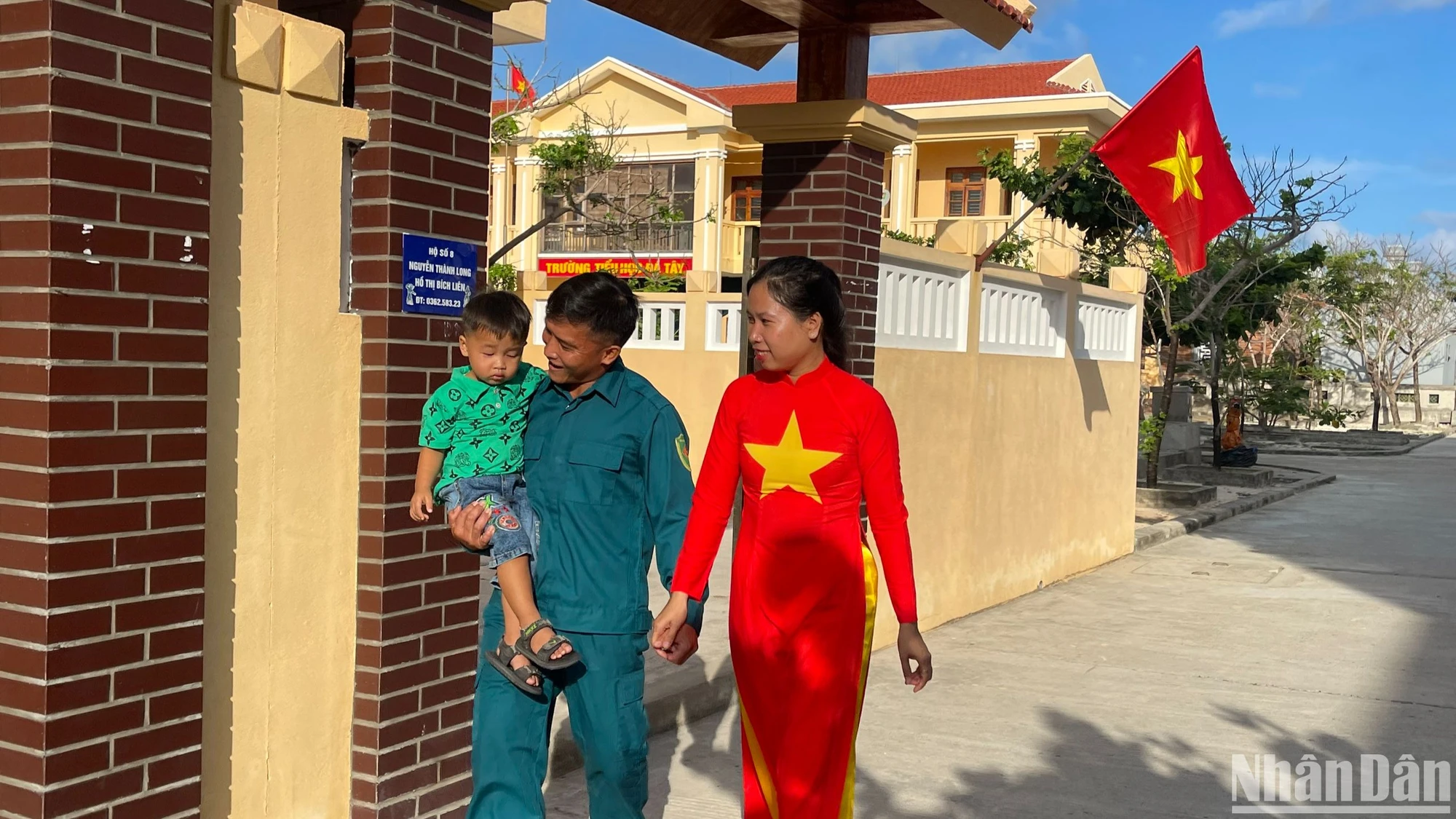
“We want to be useful citizens on the island.” Next to Ms. Vi Thu Trang's house, the home of Ms. Ho Thi Bich Lien, 32, and her husband Nguyen Thanh Long, 33, is also bustling with visitors. Having brought their two children – the older one in second grade and the younger one under two – to the island to build a life nearly a year ago, Lien and Long are new citizens of this small island. Therefore, the couple were initially quite unfamiliar with everything, from adapting to island life to creating a vibrant atmosphere in their new home with neatly planted vegetable beds. Lien recounts that although the weather here is harsh, everyone strives to overcome difficulties. Every two months, ships bring supplies from the mainland, and families are provided with all necessary goods. Fresh produce is always available whenever fishermen come ashore. At first, unfamiliar with growing vegetables, every plant they planted with withered. With the help of the young soldiers, after many incidents of damaged seedlings, Lien finally learned how to grow vegetables to be self-sufficient.
 |
|
Ms. Ho Thi Bich Lien, 32 years old, and her husband, Nguyen Thanh Long, 33 years old, reside on Da Tay A Island.
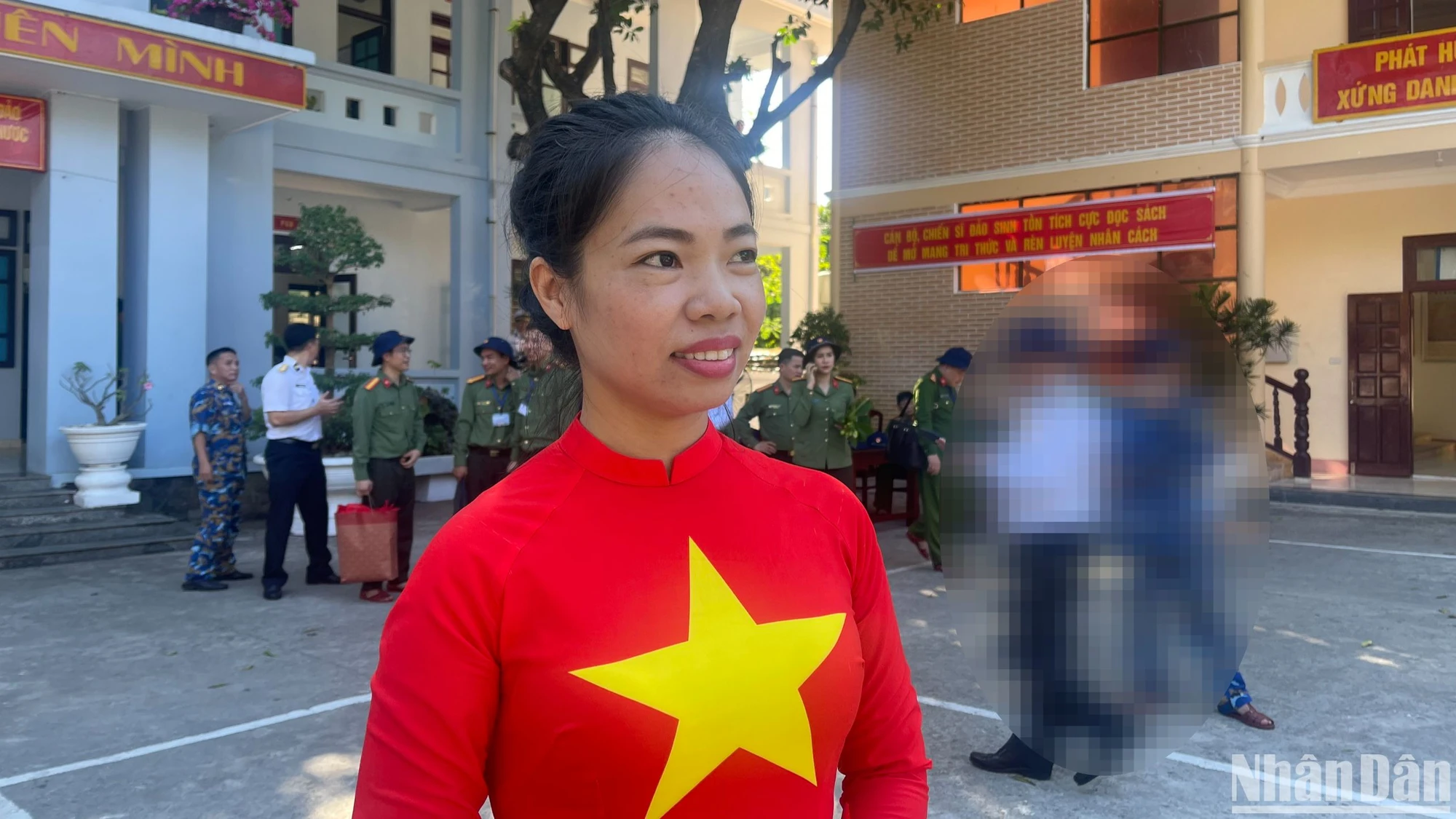
Her husband served in the army from 2012-2014, they were married for nine years, and after registering, it was her turn to be deployed to the island. “I’ve only been here for almost a year, but I already feel very attached. If possible, I would like to stay here long-term,” Lien confided. Every day, besides taking her children to school, she tries to watch educational channels on TV to support her children, especially in English. As a habit during April and May, when visiting delegations arrive, from 5 a.m., Ms. Tran Thi Thu Huyen (born in 1991), resident of house number 7, Sinh Ton island commune, Truong Sa district,
Khanh Hoa province, and her fellow women prepare traditional ao dai dresses to welcome the delegations. Each day, they present unique cultural performances to welcome the delegations.
I've only been here for almost a year, but I've already felt very attached. If possible, I'd like to stay here long-term. Ho Thi Bich Lien
Growing up in Nam Dinh, and then moving to Nha Trang with her husband, a naval officer, Huyen and her husband promised each other that they would soon live in the Truong Sa archipelago. "We want to be useful citizens on the island," Huyen confided. Just a few years later, their dream came true. Huyen's husband also took on the role of head of the militia in Sinh Ton commune.
Huyen shared: "Survival Island is my second home."
Having lived in Sinh Ton commune for almost a year, Huyen's life has truly left many lasting impressions. "At first, life was a bit strange, but with the experience passed down from many families and the help of the officers and soldiers on the island, we've adapted," Huyen said with a smile, then added, "Sinh Ton Island is my second home." Then, before the welcoming cultural performance, Huyen took me to see the lush green garden that her family and other residents have planted behind the commune's office. The garden was built many years ago by the local government and soldiers on Sinh Ton Island, with mesh shelters to protect the plants from the harsh weather conditions. To help the plants thrive during droughts and when water is limited, Huyen and her fellow residents chop up leaves to create fertilizer and retain soil moisture.
Lush green vegetable gardens on Truong Sa Island, Da Tay A, Sinh Ton...
Every day, the residents here not only take care of their families and children but are also ready to join hands with officers and soldiers to protect the homeland's sea and islands. In addition to growing vegetables like water spinach, jute mallow, and gourds, Ms. Huyen also skillfully raises chickens, geese, and ducks to provide fresh food and eggs to enhance her children's daily nutrition.
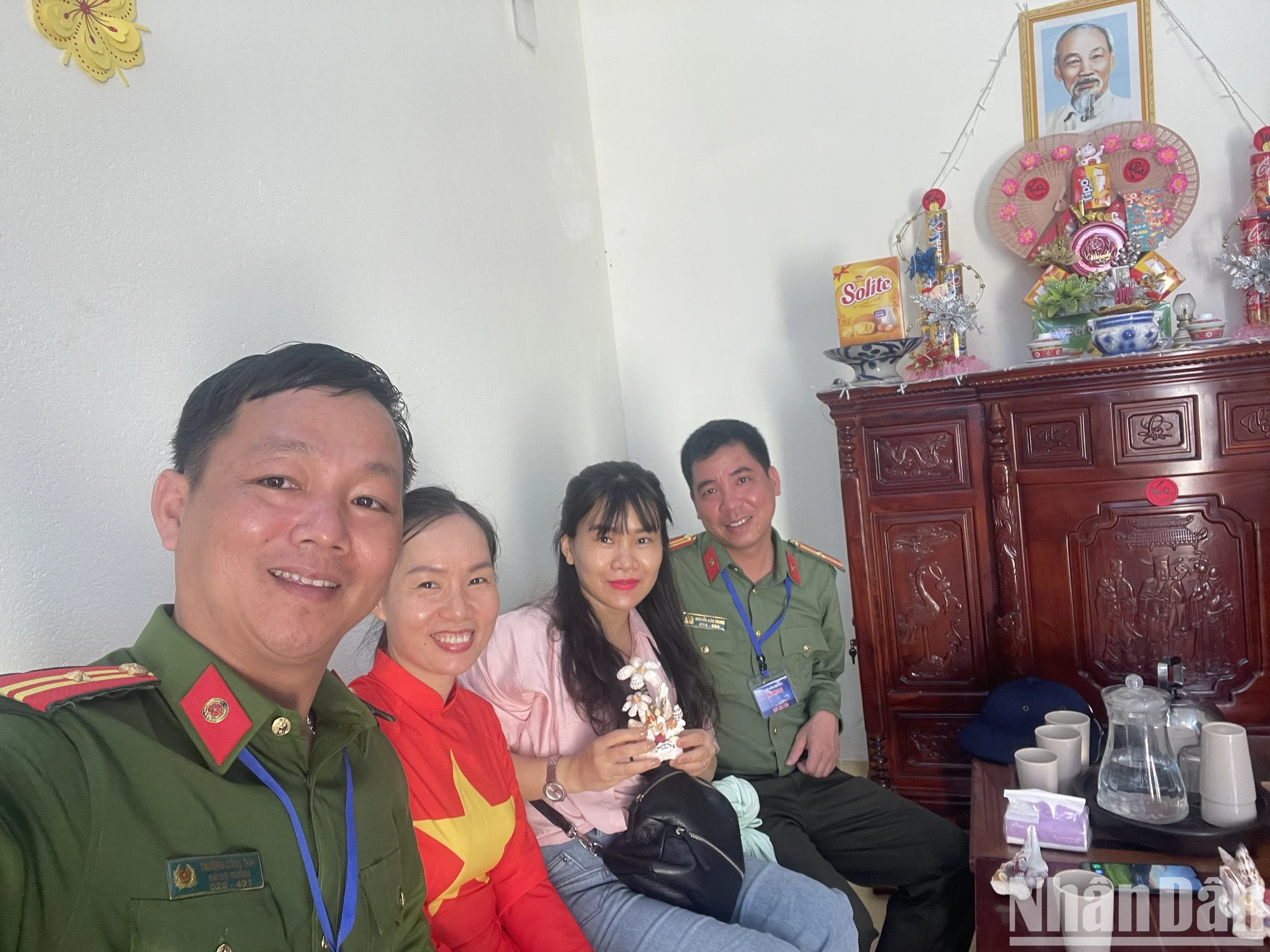
Special gifts from the sea and islands: On the TV shelves of the households on Truong Sa Island, what impresses any visiting delegation are the souvenirs engraved with the words "Truong Sa," "Song Tu," "Da Tay A," etc., meticulously crafted from seashells and snails collected along the coast. Vi Thu Trang recounts that every day, the women in the commune encourage each other to exercise and collect beautiful shells to create unique works of art to give to guests.
Survival Island is my second home. Tran Thi Thu Huyen
Each product takes Trang an hour to complete. The crafting itself isn't difficult; it just requires meticulousness. The challenge lies in coming up with unique and different ideas. Then, looking at her two adorable children, she smiled and said, "They grew up on the islands, so they're strong and very disciplined. We told them that coming here is an honor and a source of pride. Here, seeing the soldiers, they learn about their way of life and their disciplined demeanor, so they are very well-behaved, disciplined, and polite," Trang recounted.
Ms. Vi Thu Trang warmly welcomed guests and presented them with gifts that she and her daughter had made themselves.
On Sinh Ton Island, in addition to their daily family duties, the women hold a weekly evening meeting to exchange life experiences and discuss successful models and practices. During their free time, Ms. Tran Thi Thu Huyen (household number 7, Sinh Ton Island commune, Truong Sa district, Khanh Hoa province) and other women take advantage of the time to embroider pre-printed pictures of Barringtonia flowers sent from the mainland. “If I’m lucky enough to have the picture finished in time for a visit from a delegation, I’ll give it as a souvenir,” Ms. Huyen shared. Furthermore, the women on the island also collect seashells and make unique souvenirs from the sea to give to tourists. Barringtonia saplings grown in empty milk cartons, metal containers, etc., also become precious gifts for visitors during this season. As the only pregnant woman on Truong Sa Island, Ms. Le Thi Hoai Tram (born in 1988) is just about two months away from going ashore to give birth. Her eldest son is only 2 years old but has become the center of attention on the island because he is very cute and speaks very fluently. Thanks to the special care from
the medical staff on Truong Sa Island and the frequent visits from visiting delegations, Tram said she felt very secure during her pregnancy, as she received regular check-ups and care at the Truong Sa District Medical Center and from the mainland.
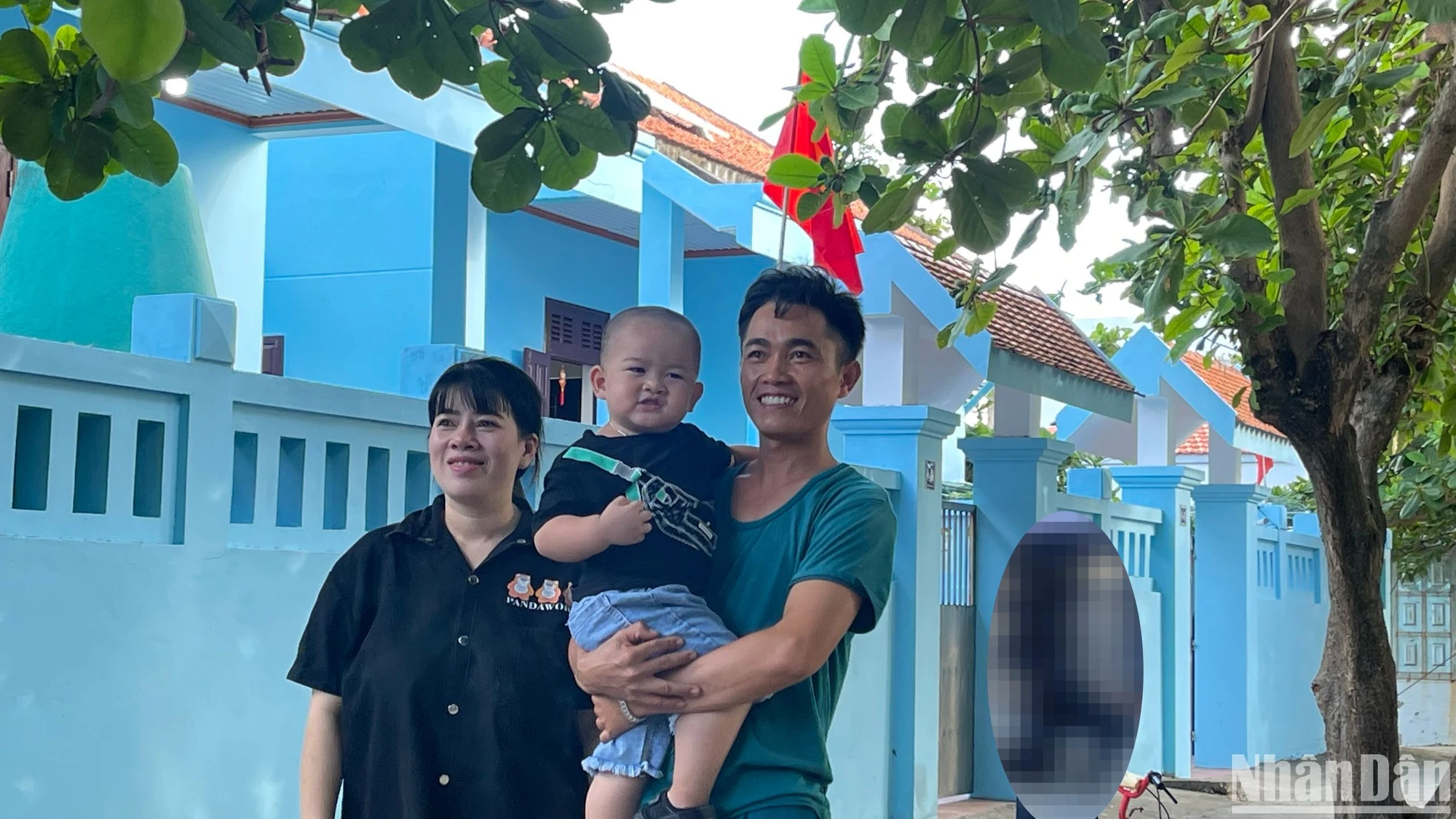
The family of Ms. Le Thi Hoai Tram.
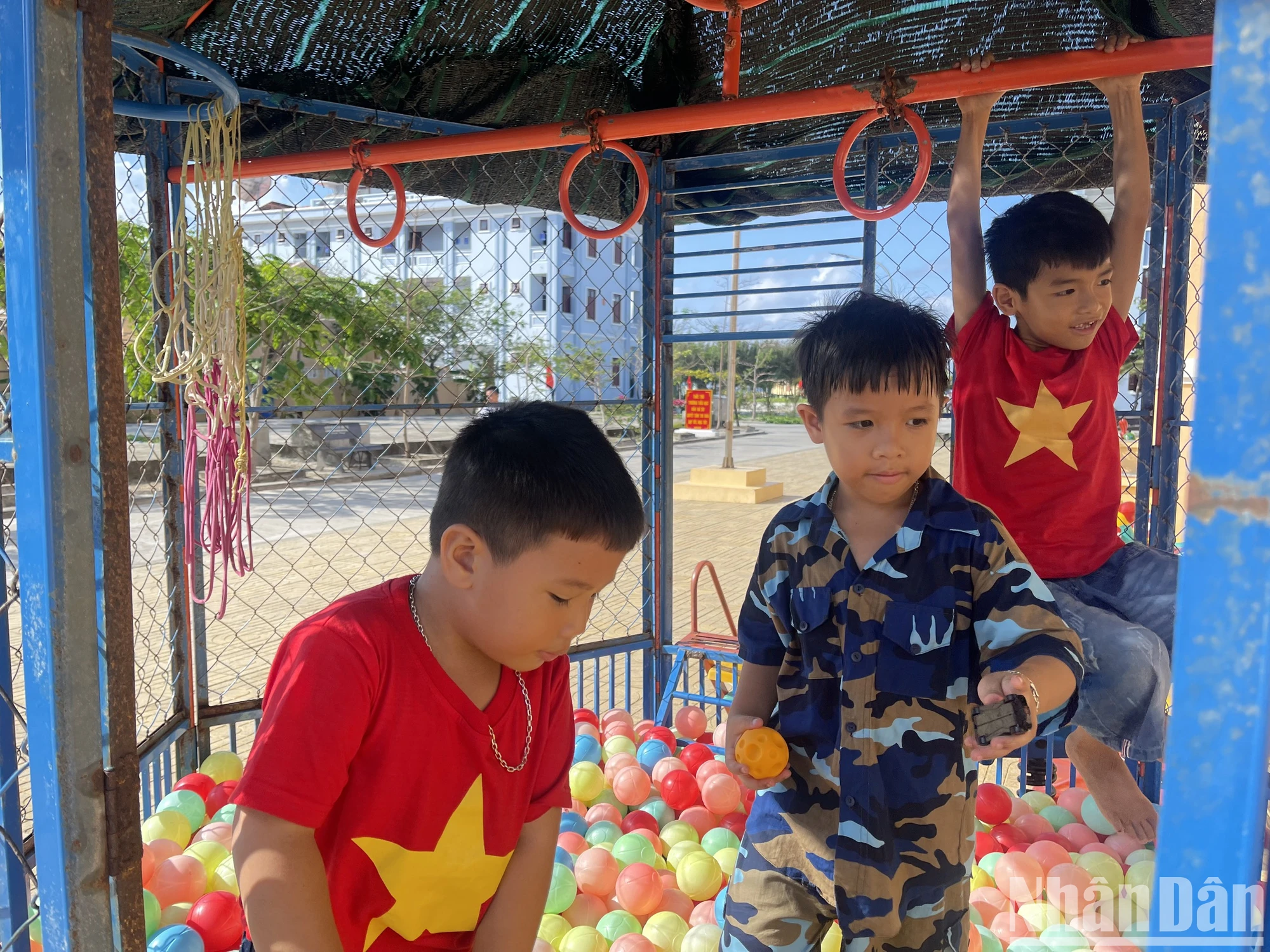
On the islands, life becomes vibrant with the sounds of family life and children. During holidays and festivals, the women and children sing and dance together, helping the soldiers ease their homesickness. Each household forms a bond with a unit on the island; on birthdays, the women make cakes, jellies, and sweet soups to offer to the units, warming the hearts of the soldiers who have no family support. In the late afternoon, by the gate of Truong Sa town, where dozens of fishing boats are regularly anchored, families gather under the shade of banyan trees, chatting lively, drinking cool black bean tea, and eating freshly cooled jelly... Children run, jump, and laugh peacefully on the pier, sharing delicious cakes and rare toys found on the island, given to them by the women and men. Looking at the children, Ms. Tram's husband smiled brightly and said, "Back on the mainland, children suffered from coughs, measles, and many other illnesses. But since coming to the island, the climate is wonderful, so the children get sick less often."
 |
|
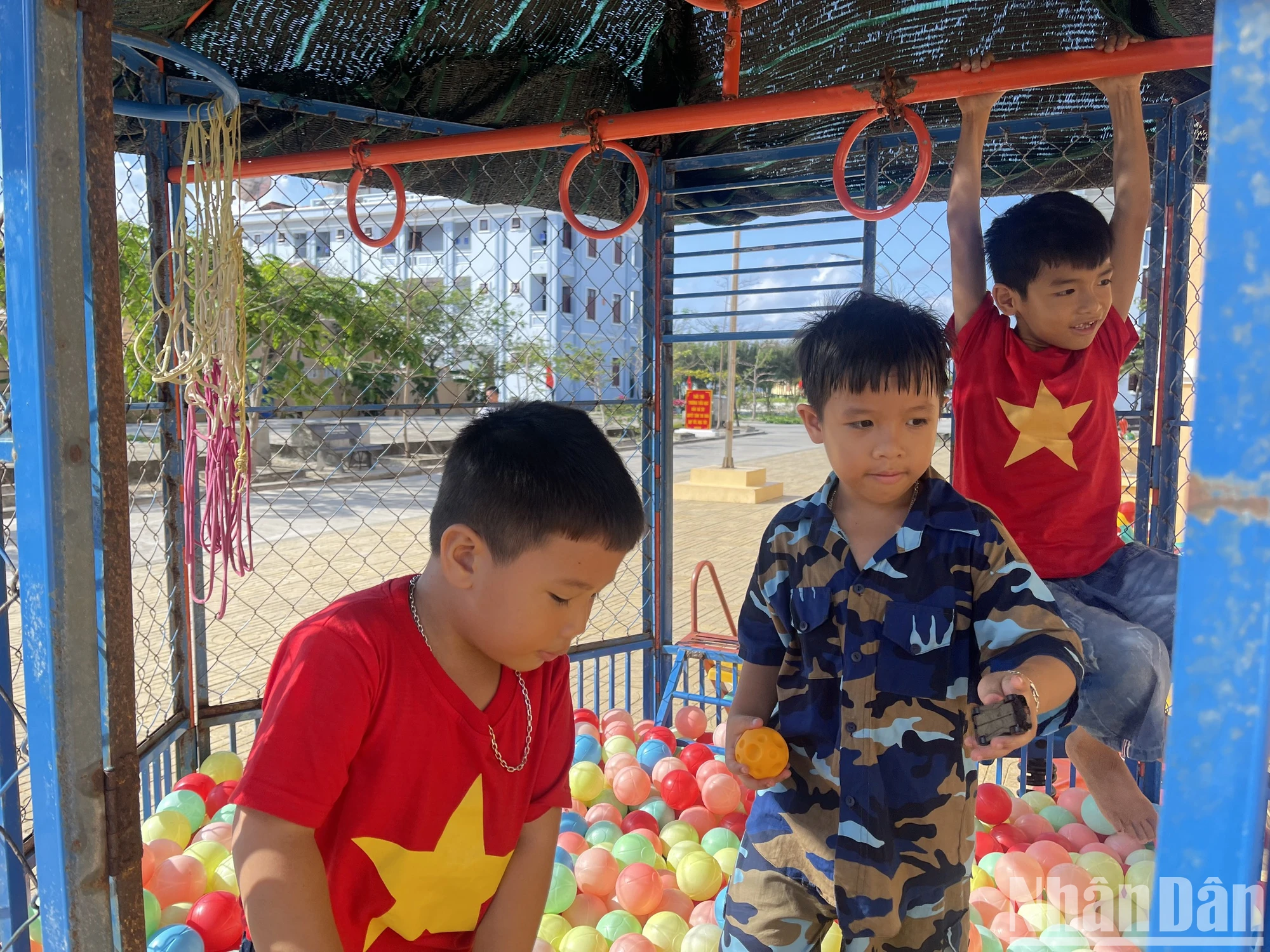
The children who grow up here always have a deep love for the sea and islands.
The Truong Sa Islands, where I had the opportunity to set foot, were warmly welcomed by the soldiers and civilians on the islands, further strengthening our faith in those who love the sea and islands and are ready to dedicate themselves to the homeland. I will never forget the radiant smile of Ms. Dang Thi Bau (Ninh Hoa, Nha Trang), shyly saying to her husband, a soldier who had completed his
military service, "Life on the island is more joyful and cooler." Nor will I forget the tight, lingering handshakes as night fell on Truong Sa Island when we had to leave the ship to continue our journey to the offshore platform. They stood at the pier singing, waving, and flashing their phones to bid us farewell until the silhouette of the KN390 ship disappeared into the distance, leaving only a faint light on the sea…
The children on Truong Sa Island.
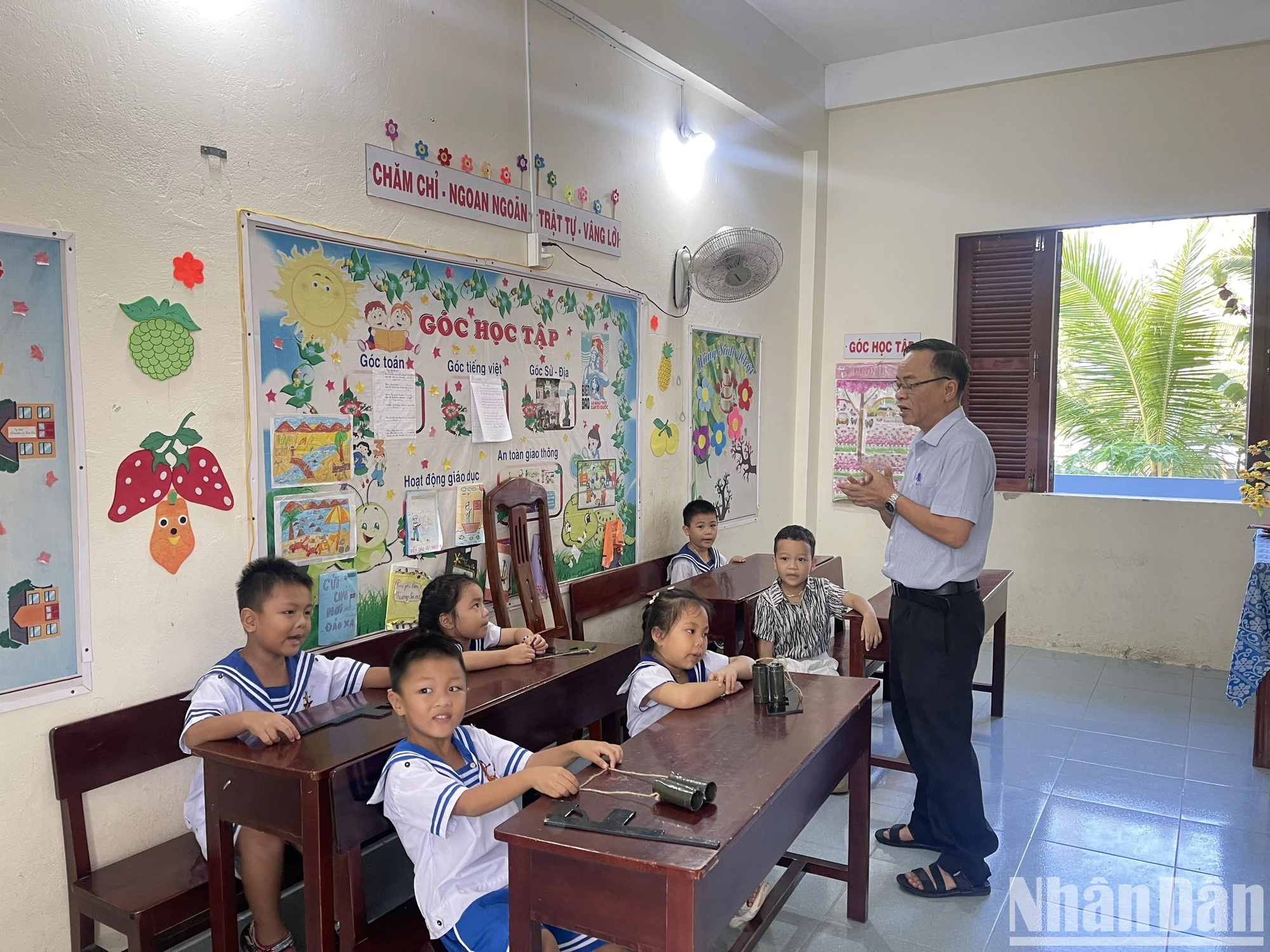
Preschool children on Sinh Ton Island.
A peaceful childhood by the harbor bridge of Truong Sa town.
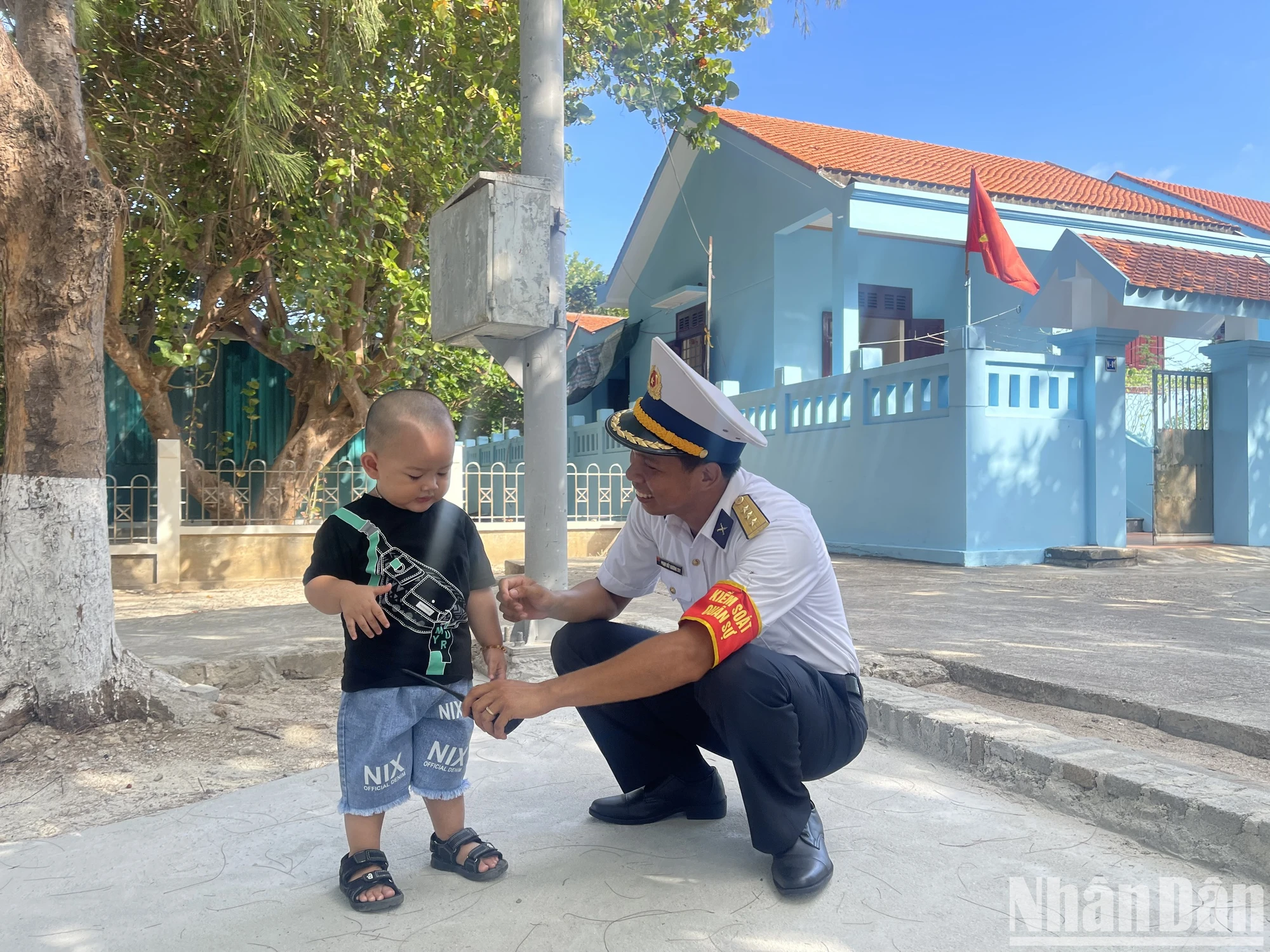
Le Thi Hoai Tram's son is only 2 years old, but he speaks very fluently and always brings joy to the soldiers here, easing their homesickness.
Houses surrounded by lush green vegetable gardens on Truong Sa Island.
Thien Lam - Nhandan.vn
Source: https://nhandan.vn/truong-sa-noi-trai-tim-o-lai-post808948.html





















![[Video] Weather forecast for tonight and tomorrow, May 25, 2026: Widespread heatwave intensifies in Northern and Central Vietnam.](https://vphoto.vietnam.vn/thumb/402x226/vietnam/resource/IMAGE/2026/05/24/1779627756334_thumb-dem-png.webp)


































































Comment (0)