

Illustration: Tran Thang |

Grandpa's attic was filled with the smell of dust and memories. Mai, her hair tied up high, her T-shirt stained, carefully flipped through the clutter left behind by her grandfather. He was a veteran of the war against America, who had left her less than a month ago, leaving an unnamed void. In her memory, he was a man of few words, with deep eyes, often sitting by a cup of tea, looking out at the overgrown garden behind the house. That garden was now overgrown with weeds and a few scrawny saplings.
Mai was like a sleepwalker, not knowing what she was searching for. A fragment of memory? The warmth of her grandfather? Or a way to understand the man she loved but never truly understood?
Flipping through a stack of old books and newspapers, she discovered a rusty tin box, its edges loose as if gnawed away by time. Inside were yellowed letters, thin and fragile, and one letter that stood out, its handwriting illegible and faded. The words read: To Minh, my friend. Mai's breathing slowed. The pungent smell of old paper, mixed with a hint of musty incense, rushed into her nostrils, transporting her to a distant realm of memories.
She sat down on the floor, her hands trembling as she opened the letter. The words appeared like a gateway back to the time when Uncle Ba was a young soldier, facing the harsh realities of war. “Minh, another night of torrential jungle rain. The cold is biting. The incessant whistling of bullets is like a snarling demon around us…”
She pictured him with a youthful face, writing letters under the dim light of a small flashlight amidst the sounds of bombs and gunfire. The letters recounted hardships, sleepless nights on marches, but interspersed with warm camaraderie. “Do you remember that time we were starving, with only a handful of cold rice hidden in our pockets, and you shared it with me? Or those guard shifts, when we talked about our homeland, about the day of peace …”
Mai froze when the letter turned to utter despair. “And then, that terrible day came. An explosion ripped through the air, you fell right before my eyes… Your blood stained everything red… Minh! If only I could have done something…” The handwriting was messy, soaked with tears. Mai felt a lump in her throat.
Tears streamed down her face, smudging the faded letters on the page. Her grandfather, the quiet man by the porch, was so profound. She wept, not only for him, but also for Minh—his beloved friend who had fallen, leaving him with an unending sense of guilt.
The letter also revealed a simple dream. “You said that when peace comes, we’ll go back to our hometown, build a small house, with a garden full of roses, daisies, and fruit trees. You’ll teach your children to fish, and I’ll teach my grandchildren to plant trees…” But the last line was an unfinished self-reflection. “I’m still alive, Minh. With scars not only on my skin but also in my heart. I’m going back to our hometown, but I can’t fulfill our dream yet…”
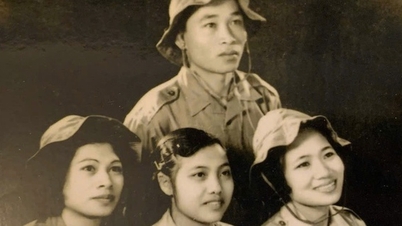
Mai flipped through the papers and found an old photograph: two young men in military uniforms smiling brightly at the edge of the forest. One was Mr. Ba, the other was probably Mr. Minh, with his mischievous smile and sparkling eyes. She also found a small notebook where he had written notes about his dream garden.
A line read: "Minh likes chrysanthemums because they are as simple as my mother back home." Mai smiled, but her heart ached. In the notebook, there was also a page about the first days back home. "My hometown is still there, even though there are many people, I still feel something is missing. I want to plant trees, but every time I pick up a hoe, I remember you... I want to tell stories, but every time I try, my throat feels choked..." Mai sensed his profound loneliness, and felt her heart beat faster, as if connected to the rhythm of another generation.
At the end of the attic, she found a small, carefully locked wooden chest. The key was rusty but still worked. Inside was another letter, written in more meticulous handwriting, addressed to a woman named Lien, later learned to be Minh's wife. “My dear Lien, I’m back. But I’m no longer your Minh. I’ve brought many things you can’t understand. I’m afraid of causing you suffering…” It was an unsent love letter. Mai realized this was a letter Mr. Ba had written on behalf of Minh, addressed to his friend’s lover. It included an address and an apology on behalf of his deceased friend.
She stepped out into the garden, her heart in turmoil. The hectic life of office work, the pressure of promotion, the hurried coffee meetings—all of it made her hesitate. Would she have time for this distant dream? One afternoon, she received an email from her boss, informing her that she would be transferring to a larger city after downsizing. A great opportunity, but it also meant leaving behind her home, her garden, and her grandfather's memories. Mai sat on the porch, gazing at the dilapidated garden, feeling lost between two worlds : the modern and the past.
She went back up to the attic, this time finding another diary entry, written in faded pencil: “April 3rd. I tried to plant an orange tree, but it died after two days. I don’t know what to do. I only know how to hold a gun, but I don’t know…” The following lines became increasingly brief. “July 15th. I dreamt of Minh last night. He told me not to give up. But I’m so tired.” Mai read, and tears welled up again. She understood that he had always been tormented by himself, by his unfulfilled dreams and aspirations.
Mrs. Lan, a neighbor, encountered Mai. “Your grandfather, Mr. Ba, was very quiet when he first came back. But I know he was in pain. Minh was a close friend, like a brother. He often went to the garden, wanting to plant trees, but he was too weak. Once, he told me that Minh wanted that garden for children to play in.” Mrs. Lan added, “He once searched for Minh’s grave. He went everywhere, asking everyone, but no one knew. Then he came back and said to me: ‘I will create this garden, and Minh will live in it.’” Mrs. Lan’s words awakened Mai. She thought about her grandfather, about the days he returned from the war, carrying scars and pain.
Mrs. Lan led her to a corner of the garden where there was a small rock: “He placed this rock, saying it was a symbolic tomb for Minh. Every year on the anniversary of Minh’s death, he comes here and sits all day.” Mai knelt down and touched the rock. She felt a deep connection, as if Mr. Ba was whispering to her: “Help me, my child!”
Searching the attic once more, she found a badge with a note from a comrade: "Dad, you must live, for Minh, for our dream." She also found another small notebook, listing the types of plants Minh liked: "Yellow chrysanthemums, red roses, orange trees, guava trees, jackfruit trees. Minh said the sweetest jackfruit is the one from our hometown." That night, Mai lay in her father's old room, listening to the wind blowing through the deserted garden. She dreamed of her father and Minh, laughing and talking in the flower-filled garden.
Mai decided to call her boss, explaining that she needed time to deal with family matters. Her boss wasn't pleased, but Mai didn't regret it. She picked up a hoe, tilled the soil, and pulled weeds, her hands calloused. Each stroke of the hoe was a whisper: "I can do it, Grandpa." She bought seeds for roses, daisies, apple trees, mangoes, guavas, and a jackfruit tree. She meticulously planted and watered them. When she was tired, she sat by the soil, wondering what she was doing all this for. But one morning, she saw a small bird building a nest on a dry branch, and a daisy blooming early, bright yellow in the sun. Mai smiled, feeling Grandpa there whispering that everything would be alright.
She invited a few neighborhood children to help. They eagerly sowed seeds, watered the plants, and laughed joyfully. A little girl, Mrs. Lan's granddaughter, asked, "Aunt Mai, why do you plant so many flowers?" Mai told them about Mr. Ba, about Mr. Minh, about her dream garden. The children listened, their eyes wide. One boy said, "So Mr. Minh lives in this garden too?" Mai nodded, "Yes, he lives in each flower, each sweet fruit." The garden became a place of connection, not only with the past, but also with the future.
Thanks to Mrs. Lan, she found the address and called Mrs. Lien, the woman in the letter, now over seventy years old. Her voice trembled: “Minh… I waited for him my whole life. I know he… but my heart still longs for him.” Mrs. Lien visited the garden, sat by a rock, and told Mai about her first love: “Minh promised to plant a chrysanthemum garden for me. Now that I have a grandchild, that promise has been fulfilled.”
After the conversation, Mai sent Mr. Minh's family a photo of the garden and a copy of the letter. A week later, a middle-aged woman, claiming to be Mr. Minh's daughter, visited the garden with her grandson. She spoke about her father, who loved chrysanthemums and dreamed of a garden for his children and grandchildren. “My father passed away when I was young, but my mother said he always talked about his friend named Ba, and about the garden they both dreamed of.” She held Mai's hand, tears streaming down her face: “Thank you, for keeping my father's dream alive.” Her grandson, about ten years old, asked: “Auntie, can I help you plant some trees? I want Grandpa to live forever in this garden.” Mai hugged the boy, feeling an invisible thread connecting her to Mr. Minh, to Mr. Ba, and to an entire generation.
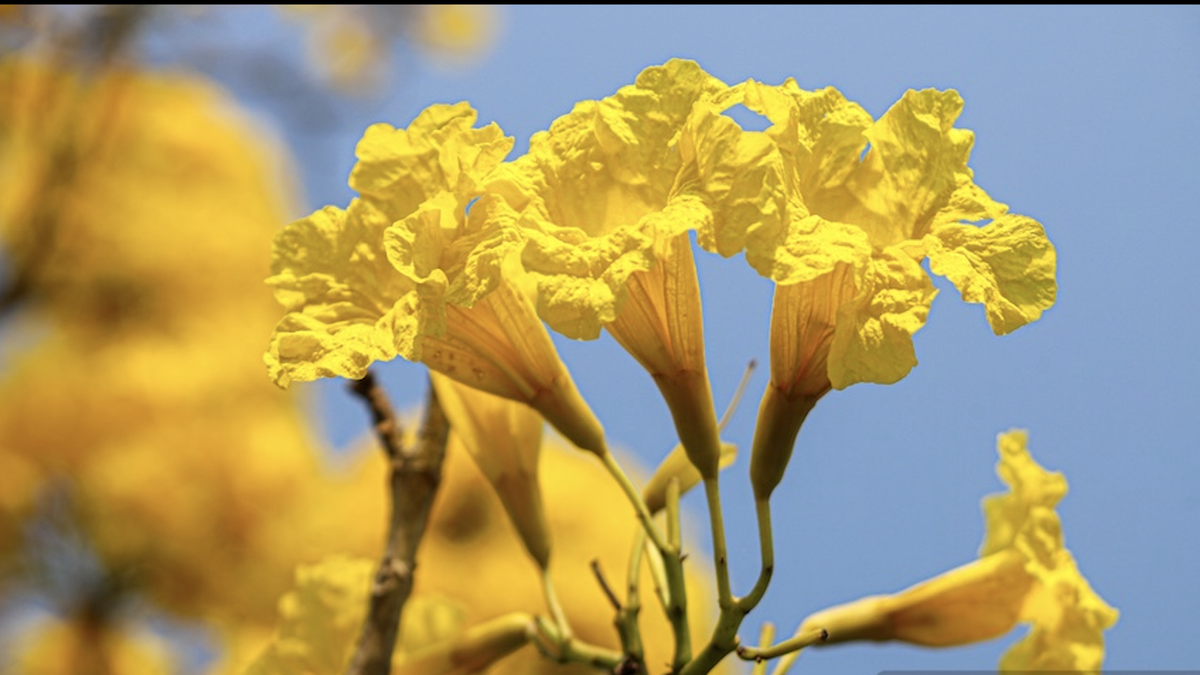
The garden is now a living legacy. Crimson roses, vibrant yellow chrysanthemums, and jackfruit trees laden with fruit. Standing amidst the blossoming flowers and fruit, Mai feels a profound sense of peace. The afternoon sun casts a golden glow, birds chirp merrily, and children's laughter rings out. She smiles, her heart lightened. The unfulfilled dreams of her grandfather, Mr. Ba, and Mr. Minh have now blossomed, a reminder that peace is the seeds of life, the petals of flowers, and the threads that connect generations. The garden is not just a place to plant trees, but a place to cultivate hope, a place to heal the wounds of time—a place where love is passed down through each season of blooming flowers.
LE QUANG HUY
Source: https://baovinhlong.com.vn/van-hoa-giai-tri/tac-gia-tac-pham/202507/truyen-ngan-khu-vuon-mo-uoc-8320864/
![[Photo] Prime Minister Pham Minh Chinh receives the Chinese Ambassador to Vietnam](https://vphoto.vietnam.vn/thumb/1200x675/vietnam/resource/IMAGE/2026/04/05/1775397481797_ndo_br_dsc-5512-jpg.webp)
















































Comment (0)