The first building blocks of multi-level transportation.
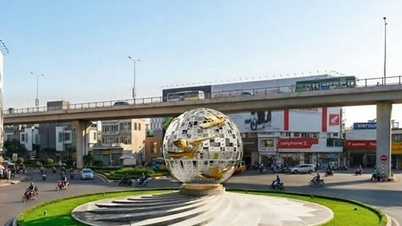
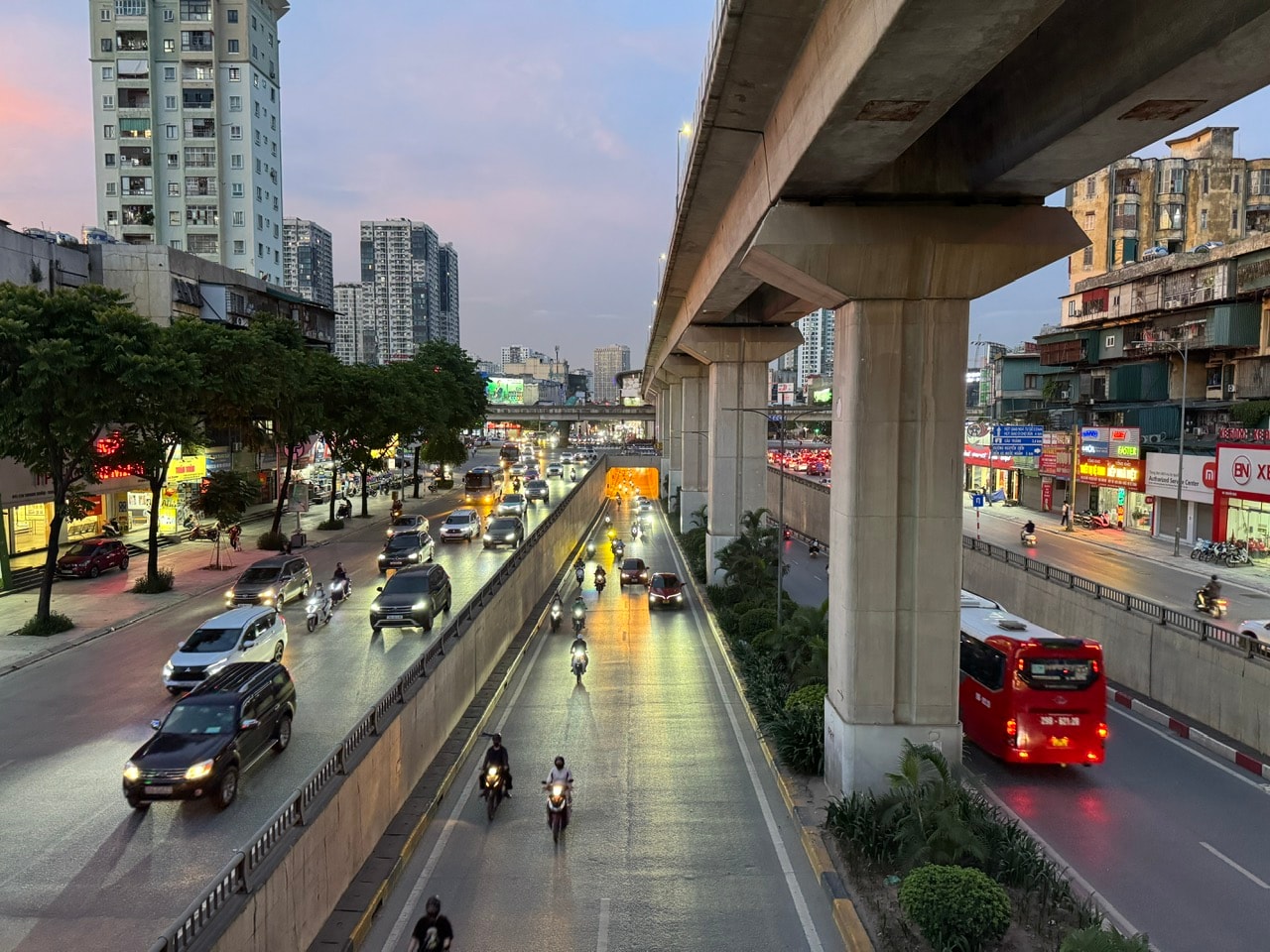
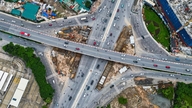
Amidst the bustling traffic at the Nguyen Trai - Khuat Duy Tien - Nguyen Xien intersection, the Thanh Xuan underpass maintains a continuous flow of vehicles in the direction of Nguyen Trai - National Highway 6. After nearly a decade of operation, this structure has become one of the clearest examples of the effectiveness of multi-tiered traffic management.
According to Mr. Dang Van Luyen, Deputy Director of the Hanoi Construction and Transportation Joint Stock Company No. 2, Branch No. 21, Bridge and Road Enterprise No. 21, the Thanh Xuan underpass plays a crucial role in the four-level interchange complex comprising elevated roads, ground-level roads, urban railway, and an underpass. The commissioning of the project has helped to separate traffic flow from the Nguyen Trai - National Highway 6 direction away from the intersection area, significantly reducing traffic pressure at the southwestern gateway of the city.
In addition to improving traffic flow, the project has demonstrated stable operation under high traffic volume conditions. According to the management unit, after approximately 10 years of operation, no cases of flooding affecting the tunnel's operation have been recorded. This result is thanks to the drainage, ventilation, lighting systems and regular maintenance.
Based on the operation of existing underpasses, many experts believe that Hanoi is gradually developing a multi-tiered transportation development mindset, instead of just expanding surface infrastructure as in the past.
Mr. Luong Duc Thang, Deputy Head of the Urban Transport Infrastructure Department (Hanoi Department of Construction), said that multi-level transport is still a relatively new concept in Vietnam. However, in the context of increasingly limited urban land, exploiting underground space is an inevitable trend for large cities.
According to Mr. Thang, Hanoi's development orientation is not limited to building individual underpasses but aims to create a system of underground spaces serving public transportation and technical infrastructure. This includes urban railway stations, underground pedestrian walkways, underground parking lots, and commercial and service facilities beneath the surface.

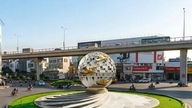
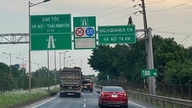
Notably, the city is prioritizing the development of underground spaces at major transportation hubs following the TOD (Transit-Oriented Development) model, particularly in the city center and along urban railway lines. This is seen as a way to improve land use efficiency while creating more space for urban development in a context of increasingly limited land resources.
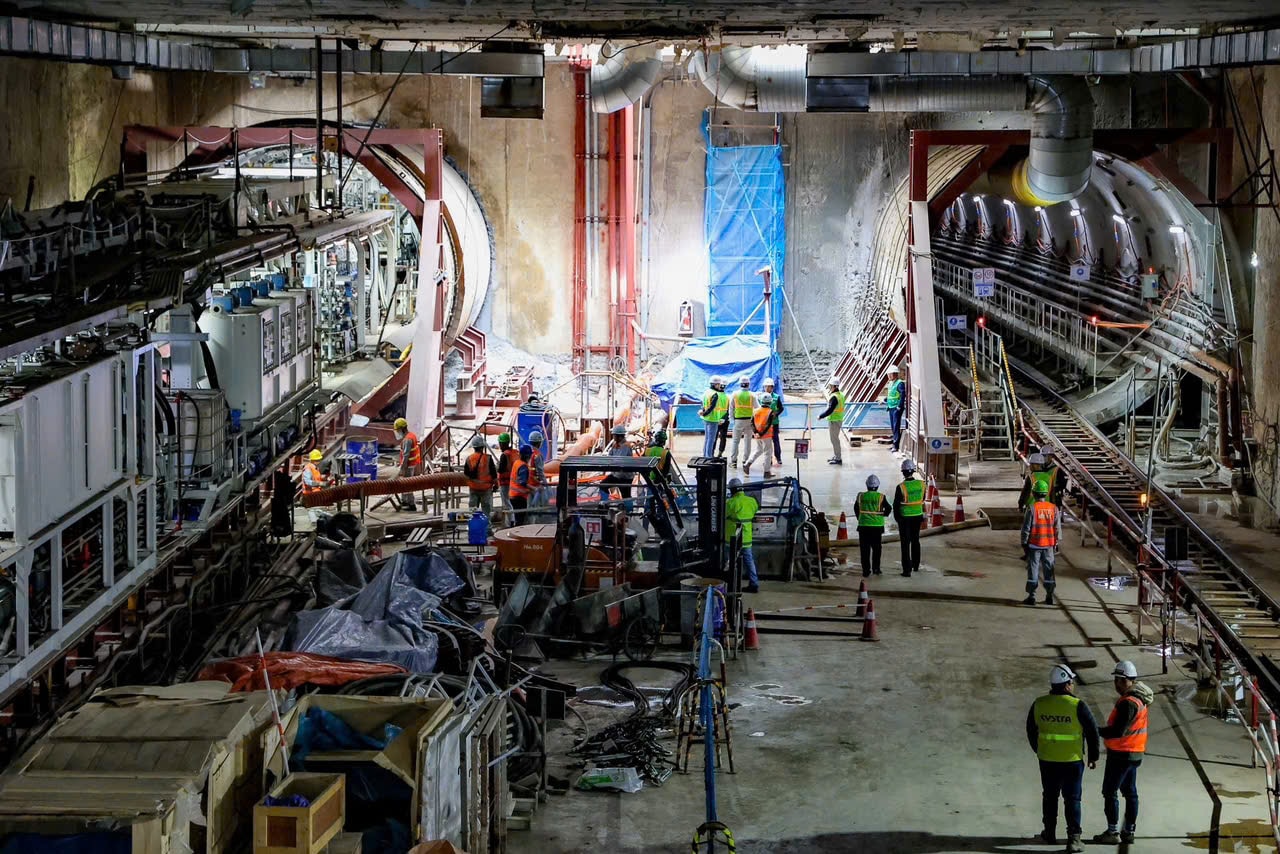
Underground spaces and new development opportunities in Hanoi.
From the perspective of infrastructure planning and development, Associate Professor Pham Hoang Kien, Head of the Department of Bridge and Road Design Automation, Faculty of Civil Engineering, University of Transport and Communications, believes that Hanoi has begun to transition from a flat transportation model to a multi-layered transportation model.
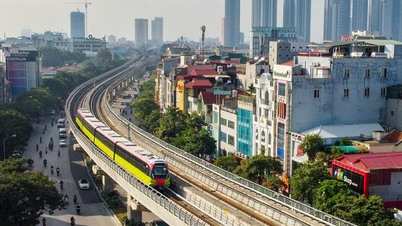
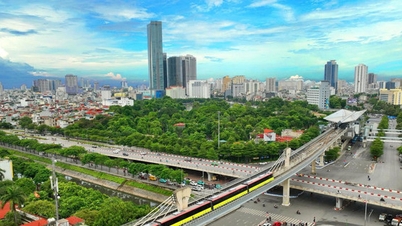
According to Associate Professor Pham Hoang Kien, Hanoi's elevated transportation system is gradually taking shape with the elevated sections of Ring Road 2, Ring Road 3, and urban railway lines. This system contributes to separating inter-provincial traffic from the inner city, reducing pressure on the existing street network. Meanwhile, ground-level transportation still handles about 80% of people's travel needs.
Regarding underground space, Hanoi is only in the early stages of development. Besides several existing road underpasses, the city is currently constructing an underground section of the Nhon - Hanoi Station urban railway line. However, forming a comprehensive and interconnected underground transportation system still requires significant time and investment.
Assessing Hanoi's position in the regional transportation infrastructure development landscape, Associate Professor Pham Hoang Kien believes that the capital city has overcome the slow development phase and is gradually approaching the group of cities with average infrastructure. However, the gap with leading cities like Tokyo, Seoul, or Singapore remains quite large.
According to this expert, one of the reasons why underground space is becoming increasingly important is because there is not much room left for developing surface infrastructure. Expanding roads often entails major challenges in terms of land acquisition, resettlement, and impacts on people's lives. Meanwhile, underground infrastructure can significantly reduce these pressures.
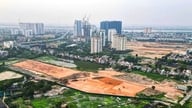

Underground spaces not only serve transportation purposes but also help restructure urban land use. An underground parking lot can allow the space above ground to become a park, plaza, or public area. Underground urban railway lines also contribute to freeing up surface land, improving the quality of life and increasing the efficiency of urban land use.
Drawing on the experiences of many countries, Mr. Luong Duc Thang believes that the development of underground spaces should be placed within the overall urban development strategy, with urban rail playing a central role. Around the stations, a system of parking lots, commercial centers, technical facilities, and underground service spaces will gradually be formed to create a synchronized infrastructure network.
According to experts, the development of a multi-tiered transportation system in Hanoi will not happen overnight. However, from the existing and operational underpasses, along with the gradually improving urban railway network, a new transportation structure is slowly taking shape. When underground space planning is implemented synchronously with transportation and urban development planning, Hanoi will have more room to address land availability issues, reduce infrastructure pressure, and improve the quality of life for its residents in the coming decades.
Source: https://hanoimoi.vn/tu-ham-chui-den-do-thi-da-tang-1160431.html

![[Photo] General Secretary and President To Lam attends the 13th National Congress of the Ho Chi Minh Communist Youth Union](https://vphoto.vietnam.vn/thumb/1200x675/vietnam/resource/IMAGE/2026/06/25/1782356968989_ndo_br_1-jpg.webp)

![[Photo] General Secretary and President To Lam receives Palestinian Ambassador Saadi Salama](https://vphoto.vietnam.vn/thumb/1200x675/vietnam/resource/IMAGE/2026/06/25/1782365384740_a1-bnd-9423-8322-jpg.webp)
![[Image] Schools organize meetings and introduce teaching models to students admitted to grade 10.](https://vphoto.vietnam.vn/thumb/1200x675/vietnam/resource/IMAGE/2026/06/25/1782368077271_ndo_br_z7970052192242-1ec8daeb77a6eed1a4e9f58c564ddd3e-jpg.webp)