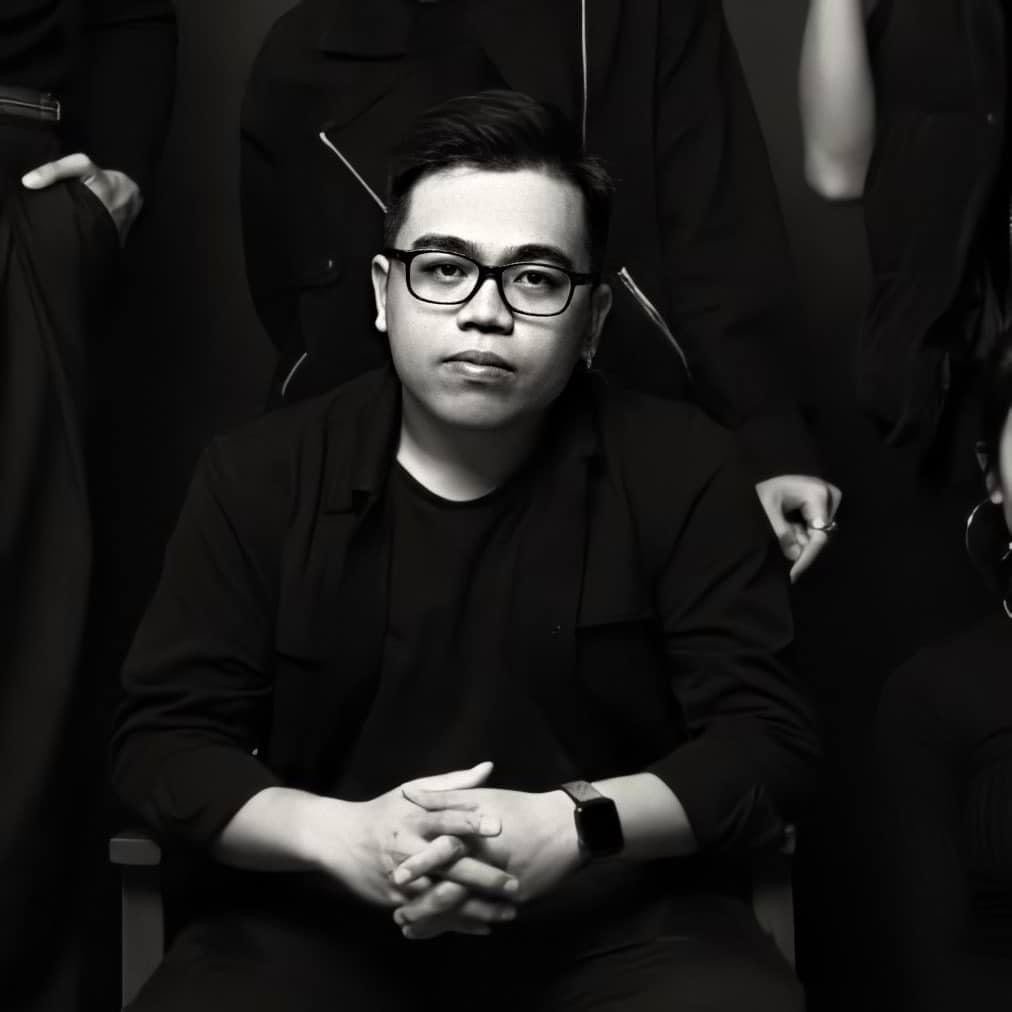
Director Kawaii Tuan Anh.
The total number of Kawaii's videos has garnered 2 billion views on YouTube. He has also won numerous awards, including the Wechoice Awards 2017, the Dedication Music Awards 2018, the Green Wave Awards 2020, and is a prominent figure selected by Forbes Vietnam. On March 14th, Ka-waii Tuan Anh released his music documentary "We Are Vietnamese" with special and limited screenings.
Director Kawaii Tuan Anh shares the methods and approaches to creating top-trending music videos in Vietnam that are widely accepted by the international audience.
- The music documentary "We Are Vietnamese" is an important step in positioning myself in today's incredibly vibrant entertainment market. I'm also continuing to develop new scripts so that I can release more works soon.
Through a series of music videos featuring many prominent names mentioned above, what did you do to not only lead trends but also create new ones?
- I'm not trying to create trends; I believe in the story and the characters, I believe in the artists I'm collaborating with, and we all work seriously together, and luckily we've been able to share that with the audience. For me, creating entertainment isn't just about entertaining someone; it's also about moments of understanding and sharing with someone when they see and hear the author's voice through the work.
Looking at the music videos that Kawaii has made, it seems that you often want to include a story or an issue to convey an idea, in addition to the lyrics and music?
- For me, the visual aspect of a music video always aims to clarify the message and emotions of the song. I will choose stories that help highlight the emotions of the song, that's my top priority. Then I apply filmmaking techniques to arrange the narrative structure and select interesting plot points.
Once I have a story that fits the song, I begin to respect the character's world , delve into the details, and write each shot in advance to control the duration, connect with the song, and try to convey the character's emotions to the audience. At the same time, both the visuals and the music will create a shared feeling for the audience.
With a single song, there can be many interpretations and different stories that could be appropriate. The important thing for a music video creator is to see as many avenues of development as possible and choose the best approach to highlight the emotions of that particular song.
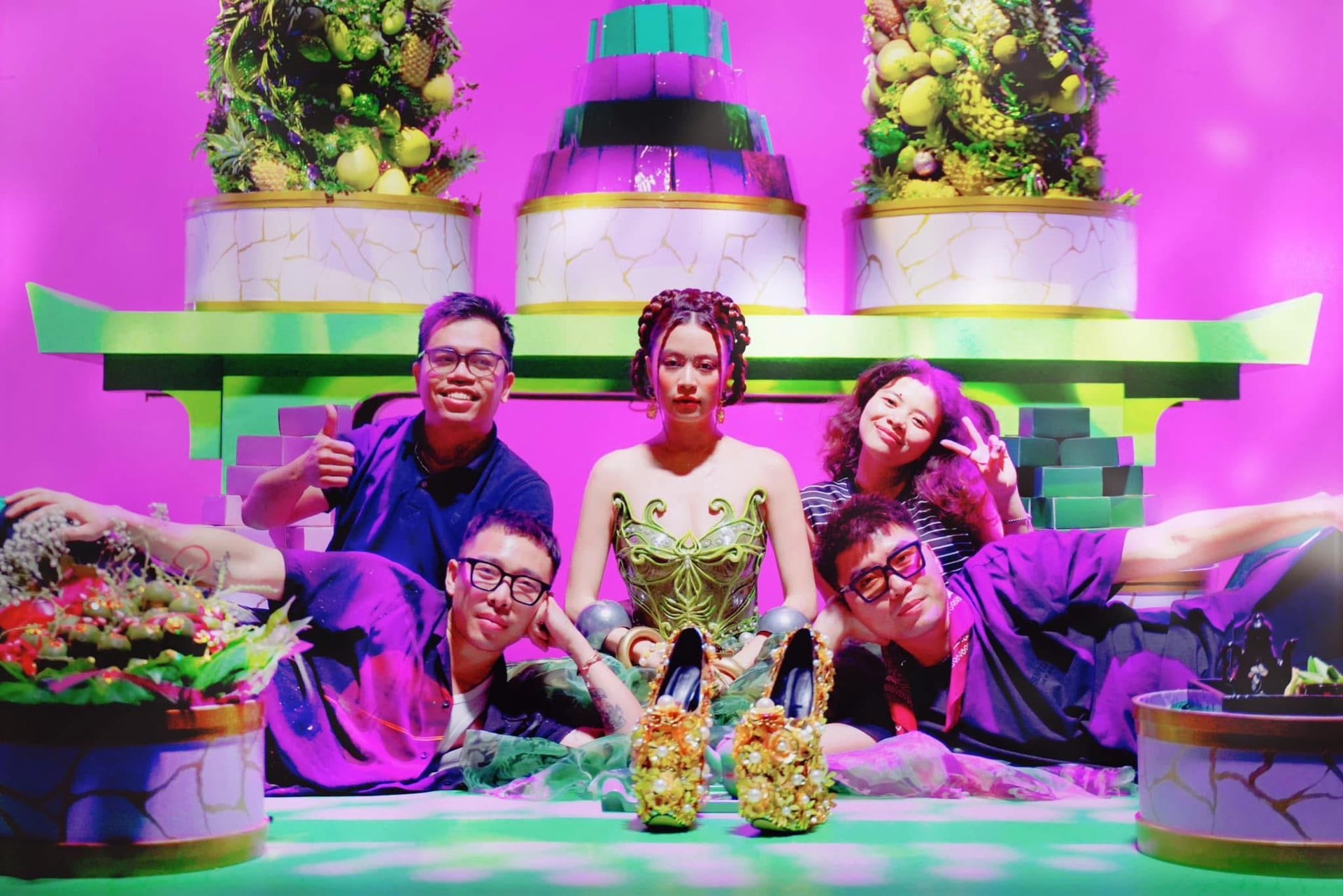
Director Kawaii Tuan Anh and his team produced the music video "Ha Phom".
It seems you frequently use advanced modern special effects in your music videos. What are your thoughts on this, Kawaii?
- When I first started my career, I was very interested in the quality of international music videos. I watched a lot and realized the biggest difference compared to domestic music videos at that time was their extensive use of high-end special effects. With my knowledge and team, I took my dream of bringing special effects to Vietnamese music videos very seriously. At the end of 2013, my first music video, "This Love" by singer Thao Trang, was released with many special effects segments. In 2014, I made the music video "On And On" for singer Phuong Vy and Antoneus Maximus, with the entire video featuring special effects in 4K resolution. At that time, it was selected for broadcast by Asian music channels, but unfortunately, it didn't spread widely in Vietnam. I patiently worked on many subsequent projects until I completely shifted towards telling emotionally resonant stories, and only then did I gain recognition from the audience. I realized that emotion is what truly touches Vietnamese audiences; no matter how innovative the techniques, they must serve the soul of the work. Gradually, I realized that I could continue incorporating special effects into music videos in a different way, one that was more emotional and subtle. Sometimes, the success of the team lies in the fact that the audience doesn't need to realize it's special effects.
Currently, I have also opened a special effects production studio, which serves both as a place to continue pursuing my ambitions in filmmaking and to create a platform for young people to access a professional special effects production environment, as well as a way to strengthen cooperation with film production companies around the world.
According to Kawaii, what are the key elements that make a high-quality music video attractive to a large audience?
Currently, Vietnamese music has made remarkable progress, with more genres emerging, production quality comparable to other countries in the region, some projects gaining international recognition, and many new jobs appearing among young people, most notably the role of Music Producer… All these successes in the music industry have led to profound changes in the music video market. Consequently, the differentiation in quality is becoming increasingly evident.
It requires a great deal of synergy, encompassing music, filming techniques, storytelling and message, artistic style, and even fashion and choreography… all of which need careful investment to create a project that has a strong impact. A high-quality music video today can be filmed with a phone, not solely dependent on investing in one specific element, but usually encompassing all aspects. Because Vietnamese audiences are constantly exposed to international productions, their expectations are increasingly approaching international quality. I believe this is also the driving force for all artists to be responsible, progressive, and constantly developing.
How can you convince a singer to agree to do things your own creative way?
- When starting the creative process for a project, I usually look back at the artist's previous work and research their audience to understand what they like and what they expect.
Some artists come to me with ideas in advance, and my team and I then develop them. In other projects, the artists already understand my personal style, so they trust me with the responsibility of conceptualizing and developing the script. I think singers trust me because I always focus on the audience experience when creating a music video, and I do it with my personal style in terms of film production. I want to use my abilities to contribute to creating a quality product for the artist's audience. Balancing the common goal with my unique creative personality is my way of persuading those who place their trust in me.
As a young director who has achieved early success, how have you conveyed your professional skills, passion, and clearly defined goals to your young colleagues?
- Throughout my journey of practicing and appreciating filmmaking, I've learned that self-awareness is just as important as professional knowledge. When you can answer questions like "Who am I?", "Who am I doing this for?", and "What is the purpose of this?", you'll easily understand how to approach it and what kind of knowledge to apply. Everything becomes easier if you clearly understand your goals, those of your collaborators, and the work itself from the very beginning. Ensuring a clear understanding of goals, direction, and possessing sufficient professional knowledge is the responsibility of any creative professional when embarking on a project.
I share this reflection with my colleagues and newcomers in the hope that it will support purposeful creative thinking. I believe it is broad enough not to impose a different mindset, but clear enough to achieve high work efficiency.
Based on your years of experience, what are your general observations about the tastes of today's youth?
- For me, there's always a close correlation between artists and audiences in the process of shaping public taste. Even the most dedicated artists can't be sure that their next creation will become a new trend. Audiences, too, can't be certain of the surprising new creations artists are secretly working on, while they may still be enjoying previously released works. So, do artists create new tastes for the audience, or does the audience guide artists according to their desires? I always believe in the relativity of this. Talented artists are always aware of leading trends, diligently working to create new creative value, while audiences will selectively support good ideas. When artists create better works, audience tastes become more demanding, and conversely, when audiences demand high-quality works, artists are even more motivated to create.
This has happened at an unprecedented pace in Vietnam over the past decade. Subsequent generations of younger audiences have easier access to all forms of entertainment than ever before, and their standards of appreciation have significantly improved. At the same time, new generations of artists have emerged and made significant contributions to this flow with high-quality products. The entertainment and film industry is undergoing a powerful transformation, enhancing Vietnam's cultural value on the world map. I believe that younger generations of artists and audiences will deepen their understanding of taste and move closer to the prevailing tastes on a larger scale—regional or even global.
Music products are clearly having a significant influence on the mindset and lifestyles of young people.
- For me, this isn't something that's only just now. The value of music, film, or art in general lies in connecting with the human soul. Perhaps the difference from Generation Z onwards is that their views on freedom and equality in life have significantly improved; they are also the generation that values respect for diversity. This is a driving force for artists' creativity, but as analyzed above, artists also need to take responsibility for their creations and their audience.
Aware of this, what message does Kawaii hope to convey through her music?
- After creating many well-received products, I realized that I'm well-suited to themes like love, family affection, and national culture. Focusing on these content areas, my team and I constantly strive to learn more and acquire new knowledge and skills to continue creating even more high-quality products. I see my mission in this profession and for my audience as sharing emotions. Through the language of the genre, meticulously crafted visuals, and advanced post-production techniques, what I always hope to share is emotion—whether it's gratitude towards my parents, comfort after a sad love story, or, on a larger scale, pride in the cultural values of our nation.
This is evident when watching a series of music videos you've made, most notably "See Tình". Together with singer Hoàng Thuỳ Linh, how did you and your team discuss and skillfully incorporate the beauty of ethnic and local culture into the music?
Culture is a broad concept and a source of pride for every nation and people. It is a shared pride that needs to be continuously practiced to preserve and develop.
I am proud to be Vietnamese, and to the best of my ability, I always want to contribute to conveying our culture to the public and introducing it to other places. Since my student days, I have been fascinated by special effects and delved into modern technologies. I realized that perhaps the best way to do this is to use modern expression to convey the traditional and unique values of Vietnam. I believe in and pursue this philosophy in most of my work.
Working with singer Hoang Thuy Linh further fueled that belief. With "See Love," I boldly proposed conveying the culture of the Southwestern region of Vietnam, where I was born and have a certain understanding of that area. For the general audience, the story of the mermaid is probably too familiar, but in "See Love," it's a mermaid in the Hau River, with floating houses above, brick kilns on both sides of the river recreated in 2D animation, a colorful floating market recreated in 3D animation, and a costume shaped from nine dragons symbolizing the Nine Dragons… so many details are incorporated throughout the few minutes of the music video, coupled with the youthful and lovely music, "See Love" has spread worldwide.
When traveling abroad, I saw them playing that music video so often, saw their singers performing in Vietnamese in restaurants, and the feeling of pride was indescribable. That was the moment I realized I needed to keep striving to have more moments of such pride, not just for myself, but because it was the feeling of pride in being Vietnamese.
Having interacted with Kawaii, I can see that you have a deep sense of national pride. For you, is that the foundation for conveying that spirit in your musical works?
- Certainly, in any job, sincerity is always one of the important factors leading to success. Especially in film, you need to feel, listen, understand, and convey as sincerely as possible so that viewers can feel what you want to say. When I started, I didn't focus on cultural themes because people like to watch them. I looked for prominent emotions within myself, selecting the deepest feelings to confidently express to the audience. Luckily, I found national pride emerging; I love national culture and art, and I felt small, that I still didn't know enough, which made me even more excited and curious to learn more. The journey of completing each project is also a time when I learn more, understand more, and it becomes more and more fascinating. It's a journey encompassing many emotions of discovery, enlightenment, and pride.
How do you reconcile traditional culture with modern life, where tastes are constantly changing?
Depending on the nature of each project, the creator needs to choose the best way to express the beauty of the culture, whether it's accurately recreating that beauty or stylizing it in a new form while still preserving its original value. To do that, I always try to thoroughly understand the beauty from its origins, then look back at the goals and spirit of the project I'm working on to find a suitable way to express it. I believe that creators exploring cultural themes must preserve the core essence of that culture; with a clear understanding, no matter the method of expression, the culture will still appear accurate and beautiful, just like its original value.
Kawaii also regularly learns and updates herself on information related to the profession, as well as new tools, props, equipment, and trends in music.
- For me, life experience is the most important thing, and expressing it to the public in a way that is both professional and engaging is the hardest thing to learn. Technical knowledge is easier to access and update. Before each project, each stage in my career, I need to ask myself what I want to share with the audience. With inner confidence, I have the motivation to explore and discover new technologies, techniques, and methods to convey that message in a more interesting and easier way.
To learn about the soul, I need to cultivate sensitivity to the things that happen in my own life and the lives of my loved ones. To learn about technology, I will attend classes, learn from those who are more skilled in each field, learn from the internet, from colleagues, or from other products around the world.
What are your plans and aspirations for the near future?
- This year, I'm also focusing on developing my visual effects company. Contributing to the film industry in this area is also a dream of mine. Many young people are pursuing this field, and with my experience and sense of responsibility, I want to become a bridge, providing opportunities for young people to pursue this career and, conversely, supplying high-quality human resources to the Vietnamese visual effects industry.
Thank you for your sincere sharing, and I wish you continued success in your chosen path and passion!
Source: https://daidoanket.vn/dao-dien-kawaii-tuan-anh-tu-hao-voi-cac-gia-tri-van-hoa-dan-toc-10301790.html


![[Photo] General Secretary and President To Lam presides over the meeting to approve the draft report on the results of the second inspection by the Politburo of the Standing Committee of the Hanoi City Party Committee.](https://vphoto.vietnam.vn/thumb/1200x675/vietnam/resource/IMAGE/2026/05/26/1779789811432_a2-bnd-4430-9620-jpg.webp)




![[Video] Survey of environmental protection work in industrial zones in Phu Tho](https://vphoto.vietnam.vn/thumb/402x226/vietnam/resource/IMAGE/2026/05/26/1779809612577_khao-sat-jpg.webp)























































Comment (0)