


Memories of a collecting trip
I remember in my first year of university in the 1980s, our group of about a dozen students went to An Nhon (Binh Dinh province) to do fieldwork, collecting folklore for the department and the province. We stayed with several kind families, self-sufficient, and every day we split up and went in different directions, visiting villages and hamlets to meet people, especially the elderly, to learn, gather, record, and compare different versions. Looking back now, I realize that the collecting activities back then were simple, "just for fun," but their value and significance were immense.
Binh Dinh is renowned for its rich and diverse collection of folk tales, songs, proverbs, chants, and rhymes. Through collecting, listening to stories, and hearing explanations, especially about the production, daily life, and struggles of this land where the multifaceted musical instruments and intellectual treasure trove originated, one can fully understand and appreciate its beauty.

-Binh Dinh has the Vong Phu mountain.
There is Thi Nai Lagoon, and there is the Green Island.
I'll go back to Binh Dinh with you.
I got to eat pumpkin soup cooked in coconut milk.
- He went back to Dap Da, Go Gang
Let me spin the thread alone under the moonlight.
- Tell the source when you get back.
Young jackfruit is sent down, flying fish is sent up.
When I was little, the lullaby my mother sang to me was:
Tell the people back home to go tell the source (nẫu).
Young jackfruit is sent down, flying fish is sent up.
...
It was during that trip that I first learned about authentic Bau Da rice wine. It was when I went to investigate the very hometown of this "magical" drink, Nhon Loc. A family treated me to their first batch of rice wine, still in the distillation process. While Mr. Nhan took a sip of the hot wine, he let out a sigh, but for some reason, he couldn't quite place his words – perhaps he hadn't yet thought of how delicious it was. After that sip, I felt like I'd been electrocuted, my whole body burning up.
Oh, this liquor isn't strong, not too spicy, light as a breeze, easy to gulp down in one go. But this pure, distilled liquid tingles the body wherever it goes, from mouth to throat to stomach, surprisingly quickly, leaving the head feeling light and indescribably euphoric. Yet the intoxication passes quickly; the drinker doesn't experience headaches, aches, or thirst, only a lingering feeling of pure delight and satisfaction. It's no exaggeration to say that the Tay Son rebels ate rice rolls and rice paper rolls while drinking Bau Da liquor, marching swiftly, defeating 200,000 Qing troops in a flash, supporting the Le dynasty and overthrowing the Trinh dynasty, and crushing the Siamese ambitions at Rach Gam-Xoai Mut.
Sadly, counterfeit Bau Da rice wine has become widespread. Recently, however, it's gratifying that in its plan to develop traditional crafts and products for tourism , Binh Dinh province is determined to restore the original, authentic, and pure Bau Da rice wine of the past.
We also discovered that the rural area of An Nhon is very devoutly Buddhist. There are many temples, with monks and nuns, some practicing Buddhism at home, working in the fields during the day and chanting Buddhist scriptures at night, observing vegetarianism on the 15th day of the lunar month. Every temple has volunteers who help with tasks like lighting incense, sweeping, and cleaning. It is also in this area that famous martial arts novels by the renowned writer Jin Yong, such as *The Legend of the Condor Heroes*, *The Return of the Condor Heroes*, *The Deer and the Cauldron*, and *The Heaven Sword and Dragon Saber*, were translated and published before 1975 by a very famous translator, Mong Binh Son. The author's Chinese pen name comes from the place name of his hometown: An Mo Mountain, currently located in Nhon Tan commune, An Nhon town, etc.
Getting carried away with the song...
Now, returning to the folk verse, "Whoever goes back, tell the people in the upstream region/Send down young jackfruit and send up flying fish," there are a few points the author notes. Phonetically, the pronunciation in Binh Dinh (or Phu Yen, both in the same region) is "gởi" (send), not "gửi" (send). Furthermore, Binh Dinh actually has mountainous terrain, plains, and islands. "Nậu nguồn"—people living in the upstream region, high up and far away—doesn't necessarily have to be in another province or region. For example, An Lao, Hoai An, Van Canh, and Vinh Thanh in Binh Dinh can all be considered upstream regions.
However, in terms of administrative boundaries and geographical features, the upper Tây Sơn region is clearly superior to the lower Tây Sơn region. Furthermore, because these two areas were once vast and separated by the long and treacherous An Khê pass, one was the long-standing home of the Jrai and Bahnar ethnic groups, while the other was the dwelling place of the Kinh people of Bình Định.
So what about the "products" of the exchange agreement (or "gifts" exchanged): young jackfruit from the highlands, flying fish from the lowlands? First, these are simple, inexpensive items. Flying fish isn't a high-end delicacy. Young jackfruit certainly isn't, and it's not something found only in distant, highland regions. So clearly, the agreement, the message: "Remember, if you send young jackfruit down, I'll send flying fish up," is just an excuse; the deeper meaning lies in the affection hidden within. So what kind of affection is this?
Is this a reflection of the human connection between the mountains and the plains, the source and the lowlands? This interpretation, this layer of meaning, cannot be denied. But the distant, nameless, and addressless message, yet so heartfelt and full of longing: "Tell the people in the highlands who return home" seems to be addressed to a specific person, a man or a woman. The seemingly vague and distant message to "the people in the highlands" is actually discreet and subtle, likely stemming from a woman's psychology. I suspect this is a message of affection from a girl from the lowlands to a boy from the highlands, the source region. Is this interpretation subjective, or am I being swayed by the folk song's sentiments?
So, does this folk song mention any culinary custom: young jackfruit cooked with flying fish? Of course it does. Because why send/exchange something else, but flying fish with young jackfruit? Surely flying fish must be cooked with young jackfruit to be delicious and appealing? Simply put, with just 14 words, the folk song fully reflects a rustic dish, a long-standing culinary experience and custom, as well as the love of labor of the people of this region.

To be honest, as someone from Binh Dinh, even though I spent most of my time working in Gia Lai, I, like many people from my hometown, am quite familiar with flying fish and young jackfruit. This is the peak season for flying fish. From spring until April or May, flying fish are abundant along the central coast. These fish are plump, elongated, 25-30cm long, with long fins and tails that can propel them dozens of meters across the sea. I witnessed this firsthand during a trip to Truong Sa. Every time the ship stopped and dropped anchor at sunset, after meals, the journalists would gather around the stern of the naval vessel to watch the soldiers turn on their lights and net the flying fish for bait.
In the darkness, when the high-powered lights are switched on, the flying fish, attracted by the light, leap frantically to the surface of the water, easily falling into the traps set up. Only the flesh on the sides of the fish is used as bait. When asked why they don't take the whole fish, the other parts of the flesh are used instead. The explanation given is that the flesh on the sides of the flying fish has the strongest phosphorescent silver sheen, visible even hundreds of meters underwater. Still not entirely satisfied, I accepted this explanation.
Speaking of this type of fish, it has long been a part of the cuisine in my hometown. Actually, people in my hometown don't highly value flying fish. It has a lot of meat, but its quality isn't particularly outstanding. In particular, it's quite picky about cooking techniques. If the technique isn't "skillful," the finished product won't be satisfactory and will be less appealing. Furthermore, many people are allergic to this fish, experiencing unpleasant itching. It's rarely eaten, but if my mother buys it, she usually braises it with turmeric, coconut milk until it thickens, or braises it sweetly like soup.
Young jackfruit is very familiar; Binh Dinh province has many jackfruit trees, my family had several around the garden, with both wet and dry jackfruit. Even now, I still have burn marks on my feet from stepping on hot ashes to get salt to dip the jackfruit seeds in when I was a child. A life lesson: don't mistake ashes for fire!
Not to mention jackfruit seeds, a snack that every village child knows. From young to ripe, almost all jackfruit is used, either eaten or as a vegetable in salads. My wife occasionally buys a box of young jackfruit salad mixed with crushed peanuts. Oh, it's been a long time since I've had the chance to enjoy boiled cassava bread (fresh cassava root is grated to make the outer crust, with a filling of cooked jackfruit seeds mixed with fish sauce, salt, onions, and pepper). An unbelievably delicious dish from the war years and the difficult years of collectivization…
Young jackfruit cooked with barracuda. It's a dish my mother used to make. After buying the barracuda, she cleaned it, drained it, marinated it with fish sauce, salt, spices, and finely ground turmeric for a while, or lightly grilled it over charcoal until the skin was slightly charred before braising it. For a better flavor, my mother would sauté some onions in a little oil or lard before adding the fish to the pot. After a while, when the aroma was released, she would add the young jackfruit, mix well, and cover the pot to braise for several tens of minutes before removing it from the stove.
Furthermore, using similar ingredients and spices, but when braised in an earthenware pot with a touch of coconut milk, the dish truly deserves the title of a gourmet delicacy. Whether braised to a moderate or slightly saltier taste, it's irresistibly delicious with rice. I'm not an expert, so I'll leave it to the experts to analyze and explain this delicious combination that is both "logical" and unique.
To elaborate a bit, how did unripe jackfruit and flying fish enter folk songs? A dish that's almost too ordinary. Two gifts exchanged that aren't particularly valuable. But combined, they become profoundly luminous, encompassing both soul and intellect, full of empathy, understanding, and affection. Could it be that someone (you, your friend) is the one making the vow of eternal love? It took hundreds of years, or even longer, for folklore to distill these experiences into a deep, enduring bond of affection, with pairs of "categories" that cannot be replaced or separated: unripe jackfruit and flying fish, down and up, affectionate messages, sincere promises.
I suddenly realized: how long has it been since I last enjoyed a dish from my hometown? I've struggled to make a living, wandered far and wide, endured hardships that seemed to lead to ruin, and traveled to far-flung places – I've tasted countless dishes, yet… Life has changed, and those old dishes only remain in my memories. The same ingredients, the same young jackfruit, the same mackerel, but the cooking methods are no longer the same; the level of culinary expertise is different now, etc… I try to explain it, I understand, but I'm not satisfied or at peace.
"The 'scholar' has arrived."
Old people live on memories. That's how I am. Remembering the simple dishes of the past means remembering my hometown, remembering my mother who is no longer here, and remembering old, familiar stories that are hard to fade away...
At this time, I am preparing to retire, and my colleagues are preparing to embark on a new journey. They are a little anxious, their moods fluctuating with the merger, relocation, family, and work. Then there's the naming of the new province and communes. But above all, everyone supports the grand initiative, for a new era, new opportunities. Everything is difficult at the beginning. A good start leads to a good finish. After hardship comes sweetness. This is a rule that the ancients have summarized, along with the lesson of optimism. It's not an exaggeration to say that the scholars already have it, it's already there!
Gia Lai is now home to more than 40 ethnic groups. The majority of Gia Lai people come from Binh Dinh, Phu Yen (both part of the Nẫu region), Quang Ngai, Quang Nam… It's not surprising that Gia Lai is merged with Binh Dinh.
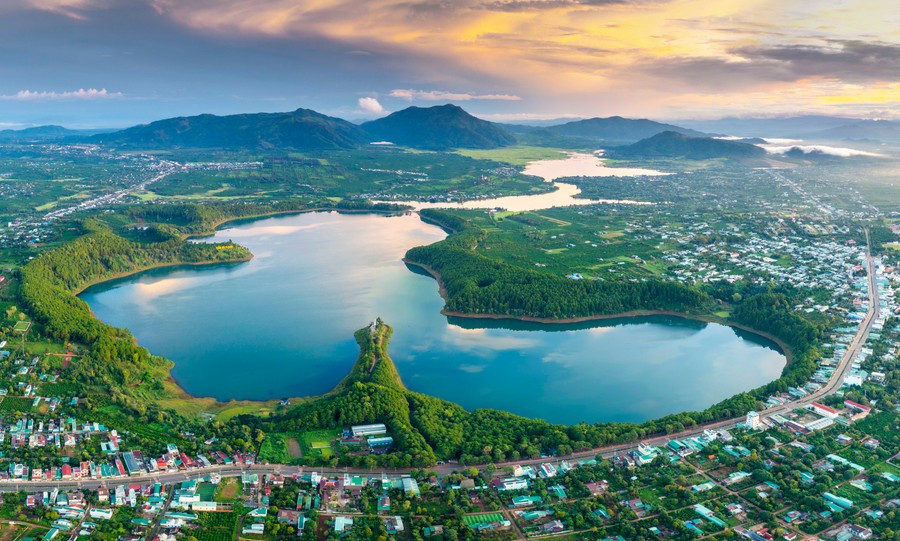
In the past, Gia Lai and Binh Dinh had a close relationship. Gia Lai is the homeland of the Jrai and Bahnar people, and throughout history, it has been marked by a strong connection and close ties with the people of Binh Dinh.
Researchers point out that the indigenous peoples of Gia Lai and the Kinh and Bahnar people of Binh Dinh have long-standing cultural ties and trade relations. Binh Dinh and Gia Lai are adjacent, so interaction, business relations, and the exchange of products, goods, rice, salt, gongs, and jars are natural. Some areas of Gia Lai became administrative units of Binh Dinh in the past. The first Kinh people to settle in Gia Lai are also confirmed to have originated from Binh Dinh. The An Khe region of Gia Lai, formerly known as the upper Tay Son region, is located below the An Khe pass in Binh Dinh province, which is the lower Tay Son region. The glorious history of Gia Lai, Binh Dinh, and the nation under the Tay Son dynasty cannot be separated from the roles of the three brothers Nguyen Nhac, Nguyen Lu, and Nguyen Hue.
The close-knit brotherly and neighborly bond, sharing both joys and sorrows, has deepened and been further strengthened during the revolutionary and periods of construction and development. There are many other reasons to affirm the strong and inseparable fraternal relationship between Gia Lai and Binh Dinh, especially in the light of the new era.
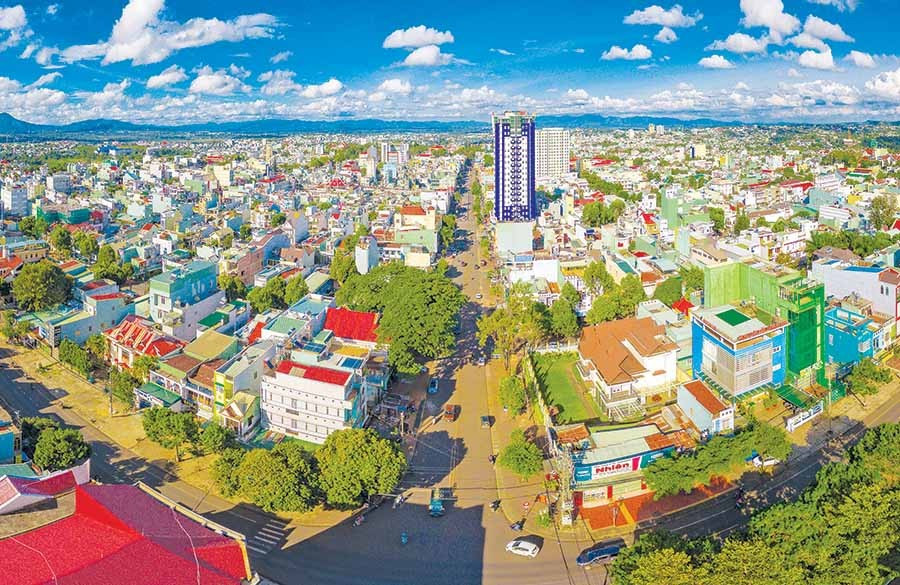
In reality, life is never perfect; everything has its advantages and disadvantages. This time, the Central Committee is undertaking a major undertaking, one that will take place once in a hundred years. While precedents exist, they don't fully reflect the difficulties and obstacles. However, the realities of the revolution demand it; there can be no hesitation or missed opportunity. Therefore, we must be determined to do it, to do it successfully. We must do it with the highest political resolve, as if embarking on a revolution, without considering turning back.
It existed in the past, and is clearer now. For the future and the greater goal. Let's join hands and contribute our small part to the new journey of Gia Lai-Binh Dinh. So that the song of yesteryear may endure and be even more profound and heartfelt!

Merger of Gia Lai and Binh Dinh: One new province, two strengths, many expectations.

Binh Dinh issues urgent directive regarding expressway connecting with Gia Lai.
The merger of Gia Lai and Binh Dinh into Gia Lai province is planned.
Source: https://baogialai.com.vn/tu-trong-cau-ca-nghia-tinh-post321088.html
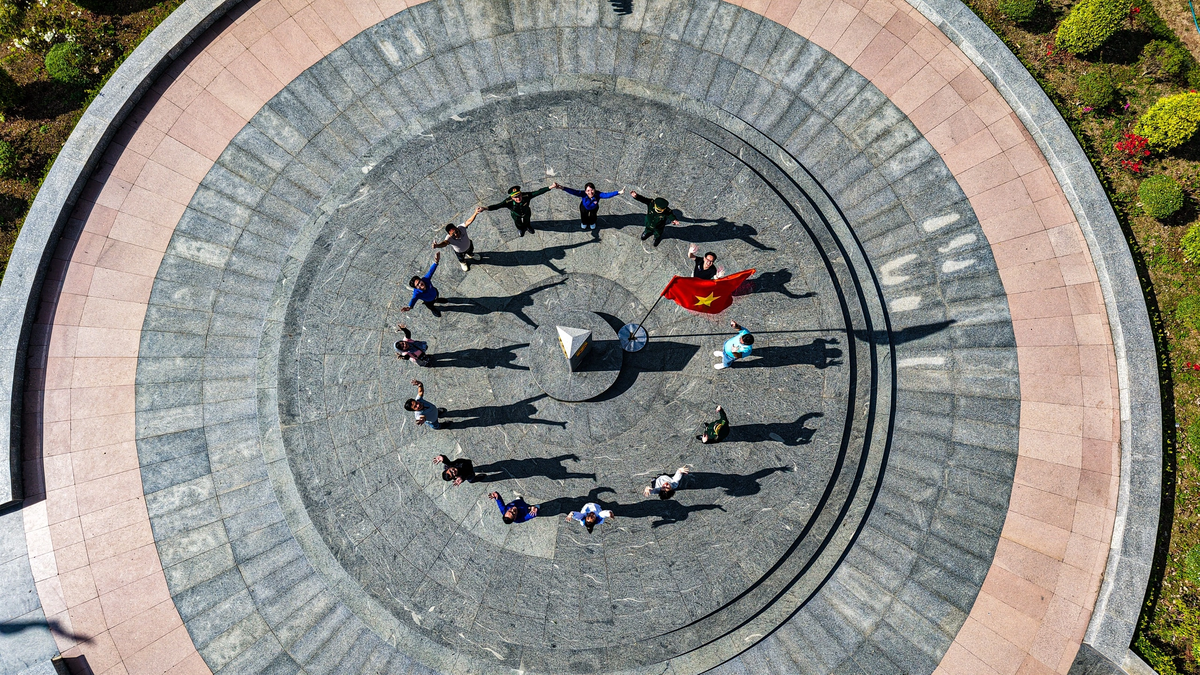


![[Photo] General Secretary To Lam presides over a meeting with the Editorial Teams to summarize 100 years of the Party's leadership of the Vietnamese revolution and 40 years of implementing the National Construction Program.](https://vphoto.vietnam.vn/thumb/1200x675/vietnam/resource/IMAGE/2026/03/04/1772601288977_a1-bnd-8134-7576-jpg.webp)

















































Comment (0)