This development shows that although the US and Israel achieved some results, they essentially failed to achieve their core strategic goals, which were to inflict significant damage on and subdue Iran. The US and Israel did not achieve their goal of a quick victory, but were forced to shift to a defensive stance, and were even severely damaged by Iran.
After 100 days, the war has spread throughout the Middle East and the Gulf region, becoming a highly costly armed conflict for all parties involved, posing a threat to the region and the world in every respect. To date, neither side has gained an overwhelming advantage to create a decisive turning point on the battlefield.
A notable fact is that both sides suffered significant losses while simultaneously maintaining the ability to continue the war. Although the US and Iran reached a ceasefire agreement, fighting continued. Both the US and Iran attempted dialogue, but the peace process remained largely deadlocked. Simultaneously, Israel exploited the war to expand its military operations against Hezbollah in Lebanon. The fighting also spread to Arab monarchies in the Gulf region.
In particular, the Strait of Hormuz has become the new focal point of the conflict between the US and Iran. Global energy supplies have been severely affected, and oil prices have risen. Inflation has also increased in many parts of the world. Other wars and armed conflicts around the world, including the conflict between Russia and Ukraine, have been overshadowed by the far-reaching impacts of the situation in the Middle East.


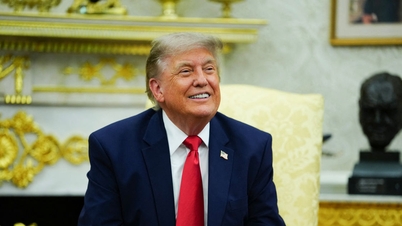
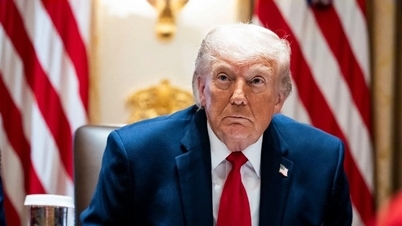
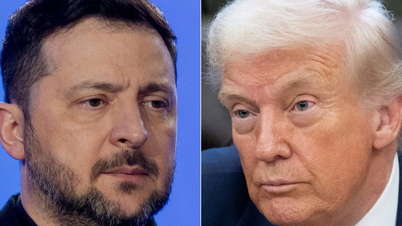
US President Donald Trump has repeatedly asserted that the US has achieved a great victory and accomplished its objectives in this war. In reality, the war has resulted in the deaths of Iran's religious leader Ali Khamenei and many Iranian generals; damaged military and defense capabilities; destroyed a certain extent the technical infrastructure for the missile and nuclear programs; and caused significant economic and financial difficulties.
However, Iran's military response remains significant. Iran's nuclear and missile programs persist. Iran has not collapsed politically, socially, economically, or financially. The US and Israel have failed in their attempts to change the political system in Iran. Furthermore, by playing the Strait of Hormuz, Iran has created a new strategic stalemate for the Trump administration in this conflict.
President Donald Trump made a grave mistake from the outset by overestimating America's military might and underestimating Iran's ability to respond. At the same time, it seems that Donald Trump placed too much faith in America's diplomatic advantage without fully considering Iran's trump cards.
President Donald Trump is currently in a dilemma: he cannot win the war, but ending it is also not easy, while still facing domestic opposition.
In this context, promoting negotiations and seeking a peace agreement with Iran is seen as the most viable option for the Trump administration to avoid the risk of further escalation of conflict.
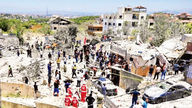

Over the past 100 days, the war has triggered a global energy crisis and inflationary shock. Gulf states are insecure and unstable. The Western bloc is internally fractured. These developments are altering the geopolitical landscape of the world.
Source: https://hanoimoi.vn/tu-tu-tin-den-be-tac-1159606.html
![[Photo] General Secretary and President To Lam attends the Central Public Security Party Committee Conference](https://vphoto.vietnam.vn/thumb/1200x675/vietnam/resource/IMAGE/2026/06/24/1782302063612_a1-bnd-9302-9166-jpg.webp)
![[Photo] Opening Ceremony of the 13th National Congress of the Ho Chi Minh Communist Youth Union](https://vphoto.vietnam.vn/thumb/1200x675/vietnam/resource/IMAGE/2026/06/24/1782286753905_ndo_br_1-8510-jpg.webp)


![[Photo] The 13th National Congress of the Youth Union conducts personnel work.](https://vphoto.vietnam.vn/thumb/1200x675/vietnam/resource/IMAGE/2026/06/24/1782299943080_ndo_br_1-6868-jpg.webp)