These thoughts may not be entirely comprehensive or systematic, but they stem from a desire to contribute to building an education system capable of meeting the city's development needs in the new era.
Educational goals must be aligned with practical realities.
Here's a story that's "on par with the demands of the new era." I remember that as we were preparing to enter the third millennium, a centrally-governed city like Da Nang still set a goal related to universal education: "No illiteracy" - one of the five goals of the "City of Five No's" program. Striving to ensure that no one in a modern city is illiterate is a worthwhile investment, but was investing in this goal in 2000, when Da Nang was about to achieve universal secondary education - essentially "bachelor's degree" for the entire population - still necessary?
Thus, the goal of "Eliminating Illiteracy" was quickly recognized as not/yet "on par" with the reality and potential of Da Nang. By 2009, Da Nang replaced the goal of "Eliminating Illiteracy" with the goal of "No Students Dropping Out of School Due to Economic Reasons". Of course, "not/yet 'on par'" doesn't just mean pursuing unattainable goals, but also initiating and advocating for goals that are beyond reach, even within vision but unattainable.
Da Nang – and not just Da Nang – once reversed course regarding a goal of changing the type of schools. Before the reunification of the country, in southern cities like Da Nang, there were more private high schools than public high schools. After April 1975, Da Nang took over private high schools such as the semi-public Nguyen Cong Tru and private schools like Bo De, Thanh Tam, Phan Thanh Gian, Tay Ho, Tho Nhon… to create a network of high schools operating on state budget alongside public high schools such as Phan Chau Trinh, Dong Giang, Thai Phien, Hoa Vang…
However, in the 1990-1991 school year, three public schools in Da Nang were converted to semi-private schools: Tran Phu, Nguyen Hien, and Ngo Quyen. Then, in the 2007-2008 school year, Tran Phu Semi-Public High School, followed by Nguyen Hien Semi-Public High School and Ngo Quyen Semi-Public High School in the 2008-2009 school year, reverted to the model of partially financially autonomous public schools. Since then, there are virtually no semi-private high schools left in Da Nang.
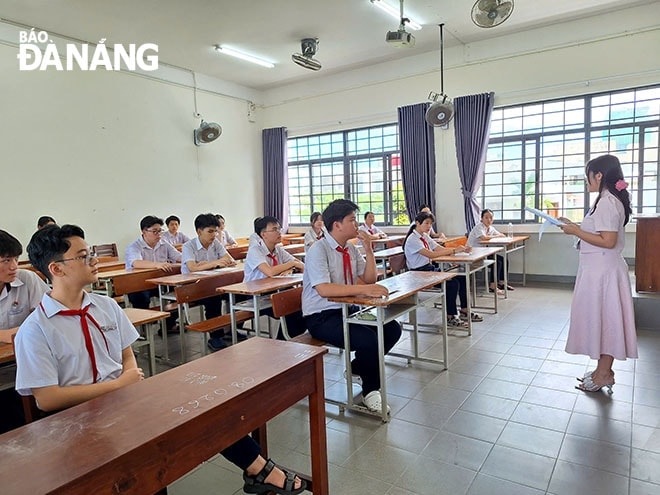
However, the increase in the number of public high schools from the 2010s to the present has not been enough to alleviate the long-standing pressure of enrollment in 10th grade in public high schools in Da Nang before the merger, and it will likely become even more stressful in Da Nang after the merger.
Based on this reality, I would like to propose to the city leaders to urgently direct the education and training sector to review the enrollment needs for 10th grade in public high schools for the 2027-2028 school year and subsequent years, as well as the current status of high school teachers and school facilities/classrooms (of both public and private schools and continuing education centers) in order to promptly develop a plan for building new schools or changing the function of surplus government offices after consolidation, ensuring that the enrollment needs for 10th grade in public high schools for the 2027-2028 school year and subsequent years are met, and ensuring that the 10th grade entrance exams for public high schools "are not a measure to exclude children from attending school," as warned by General Secretary and President To Lam.
More importantly, it is crucial to ensure the achievement of the goal of universal secondary education – a goal considered "on par" with Da Nang's aspirations in the new era. Failure to achieve this goal soon will make it difficult to meet social target number 20, as stated in Appendix I of the City Party Committee's Action Program No. 51-CTr/TU dated March 10, 2026: "By 2030, 50% of people of school age will be enrolled in post-secondary education."


Fostering love for one's homeland through local education and heritage.
Da Nang needs to accelerate the process of providing free textbooks to all students, in accordance with the central government's policy outlined in Resolution No. 71-NQ/TW dated August 22, 2025, of the Politburo on breakthroughs in education and training development. Right from the start of the two-tiered local government model in mid-2025, the People's Committee of Hoa Vang commune launched a shared textbook library model to mobilize resources to provide free textbooks for students, reducing the economic burden on residents and promoting thrift and preventing waste in the community.
The initiative has raised nearly 2 billion VND and donated 91,060 textbooks, which will be placed in the libraries of schools in the commune. This quantity of books is sufficient to provide free access to nearly 7,000 students at all levels in the area starting from the 2026-2027 school year. The City People's Committee should direct several communes and wards to learn from and emulate the model of the shared textbook library in Hoa Vang commune.
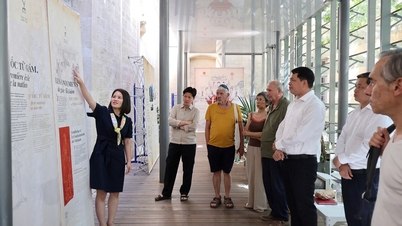
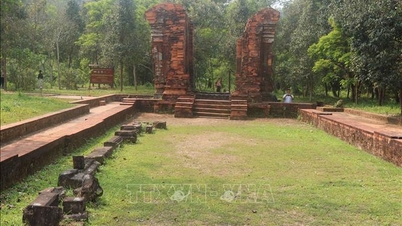
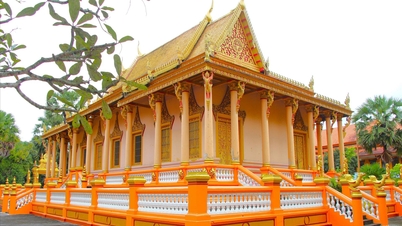
Furthermore, it is also necessary to include information about tangible and intangible cultural heritage with educational value (including heritage that has not been properly ranked, or even not ranked at all) in the city's "Local Education Materials" from grades 1 to 12 according to the 2018 General Education Program. This information (combined with organized field trips to historical sites, even ruins with or without commemorative plaques) will contribute to supplementing students' knowledge beyond the textbooks in the "Connecting Knowledge with Life" series.
Sometimes, simply providing information about the etymology of place names can help students appreciate the heritage passed down from their ancestors. For example, information about the naming of post stations during the Nguyen Dynasty mostly relied on one of the two components of the province name. Quang Nam province, for instance, used the latter component, "Nam," to name seven stations: Nam Chon, Nam O, Nam Gian, Nam Phuoc, Nam Ngoc, Nam Ky, and Nam Van. This helps students appreciate place names more, such as Nam Phuoc, which has become the name of a commune in Da Nang city; and Nam O, which is associated with the intangible cultural heritage of Nam O fish sauce…
School culture stemming from core values.
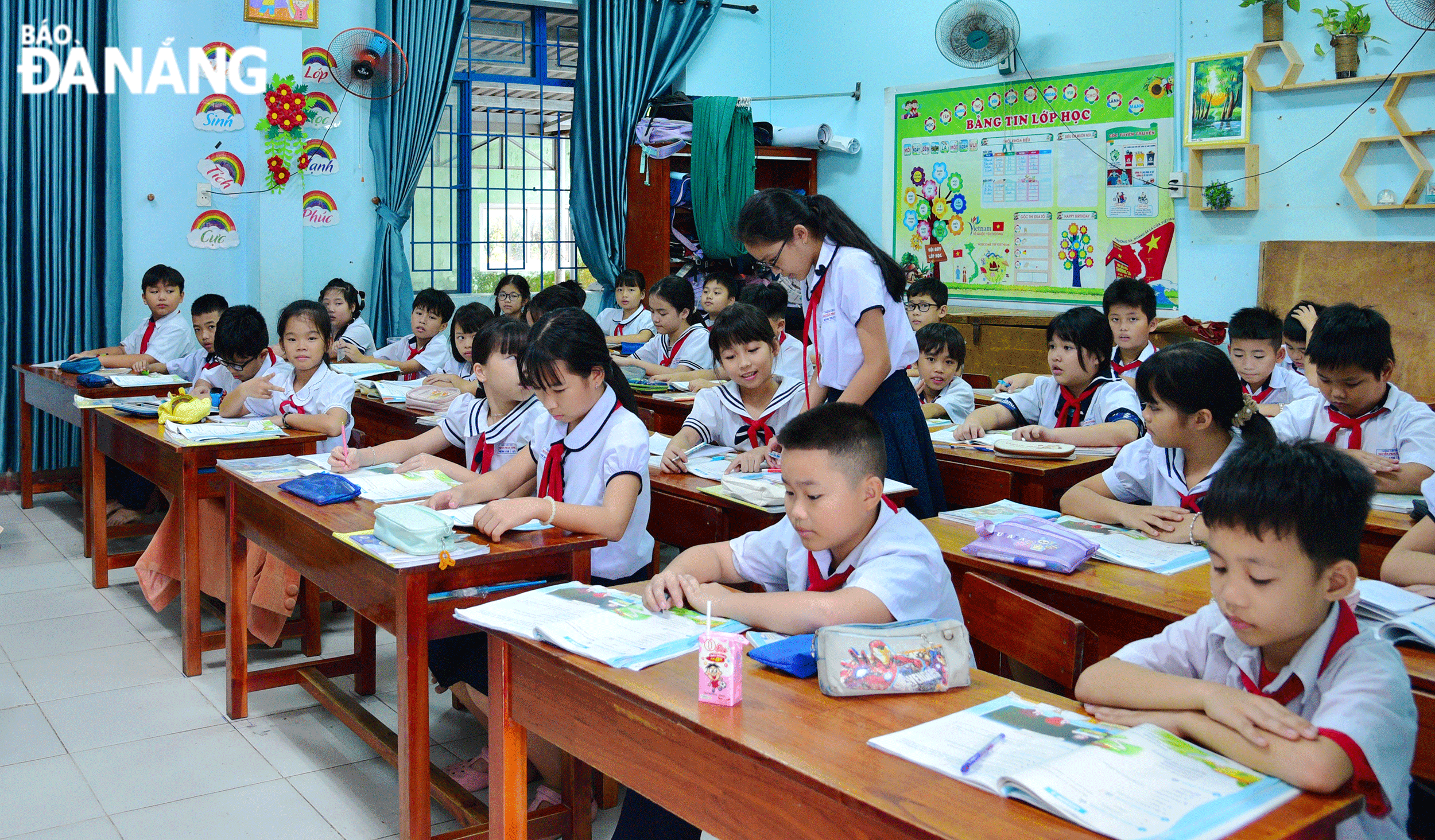
To develop the city's education and training to meet the demands of the new era, I believe it is also essential to pay close attention to school culture.
There are many issues to consider in building school culture, such as valuing the role of families/parents; valuing the exemplary role of school administrators and lecturers/teachers; focusing on building the school brand, considering it an inseparable part of building school culture; and minimizing school violence.
In the school environment, collectivism/cooperation/community spirit and individualism/independence/personal consciousness must be valued equally. In particular, everything must be in the right place – highly collectivist where collectivism is needed, and highly individualistic where individualism is required. It is crucial to avoid situations where collectivism is needed but individualism is required, and vice versa.
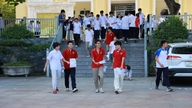


Group discussions/team activities/playing soccer/volleyball/relay races… all require teamwork and a cooperative attitude – there is no room for individualism or self-centeredness. Naturally, this also means that every individual in the team/group/team/pair must strive to excel to the highest possible level of their individual skills/talents in order to contribute to the overall success of the team/group/team/pair…
Meanwhile, the school cultural environment also demands a high degree of individuality and self-identity in certain creative activities such as literature, art, and science and technology; it particularly demands a high degree of individuality and self-identity in the assessment of learning quality, not only in terms of creativity but also, and primarily, the "authenticity" of the assessment product.
Here, products bearing the mark of "collective work" and products "borrowed" or "copied" from others are considered lacking in school culture, and honesty in tests/exams is seen as a top cultural quality in schools, contributing to the overall brand of the school/locality.
In fact, individuality and the ego in the school cultural environment are not only expressed through creative activities and/or through the assessment of learning quality, but are also frequently demonstrated through critical thinking – or, as the people of Quang Nam say, "argumentative" thinking – throughout the teaching-learning/transmission-acquiring of new knowledge, especially in high school and university education.
Source: https://baodanang.vn/tuong-lai-tu-giao-duc-3341185.html

![[Photo] The 13th National Congress of the Youth Union conducts personnel work.](https://vphoto.vietnam.vn/thumb/1200x675/vietnam/resource/IMAGE/2026/06/24/1782299943080_ndo_br_1-6868-jpg.webp)
![[Photo] General Secretary and President To Lam attends the Central Public Security Party Committee Conference](https://vphoto.vietnam.vn/thumb/1200x675/vietnam/resource/IMAGE/2026/06/24/1782302063612_a1-bnd-9302-9166-jpg.webp)
![[Photo] Opening Ceremony of the 13th National Congress of the Ho Chi Minh Communist Youth Union](https://vphoto.vietnam.vn/thumb/1200x675/vietnam/resource/IMAGE/2026/06/24/1782286753905_ndo_br_1-8510-jpg.webp)