The military conflict in the Middle East has caused an unprecedented energy shock with far-reaching global impacts, but it has also spurred countries to build sustainable energy defenses for their economies. The challenge of energy self-sufficiency is now a top priority for many nations, as a key factor in ensuring economic stability and national security.
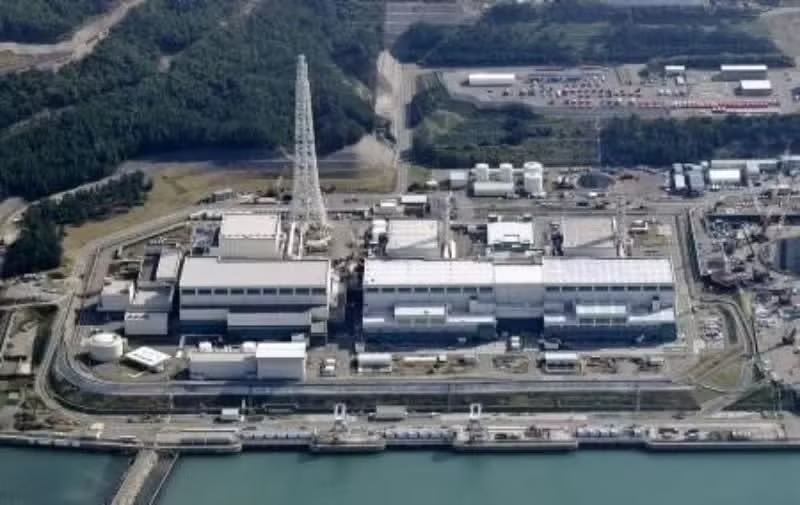
After years of interruption since the Fukushima nuclear plant accident in 2011, nuclear power development has recently returned to the center of Japan's energy policy. The country has just announced plans to build dozens more nuclear reactors, gradually increasing the share of nuclear power in its electricity production to approximately 20% by 2040, double the current level.
Having abandoned nuclear energy in November 1987 following a referendum after the Chernobyl disaster in 1986, Italy has recently reversed its policy. The lower house of parliament has just passed a framework bill on sustainable nuclear energy development, aiming to reduce dependence on external sources.
Along with Japan and Italy, many countries around the world have decided to revive nuclear power and accelerate the development of renewable energy. These steps not only mark the spectacular return of nuclear power after many years of absence and affirm the increasingly important position of renewable energy, but also demonstrate the determination of these countries to achieve energy self-sufficiency.
It is no coincidence that a host of economies, from Asia to Europe, the Americas, Africa, and the Middle East, are urgently adjusting their energy security strategies. The conflict in the Middle East has exposed inherent weaknesses in the global energy system in general and in many countries in particular.



Over-reliance on imported fuel has placed economies in a precarious position and made them vulnerable to geopolitical conflicts. Without self-sufficiency in supply, any fluctuations can quickly lead to shortages, disrupting production chains and creating serious vulnerabilities. The very survival of an economy is therefore dictated by unpredictable variables from the international environment, which are difficult to control.
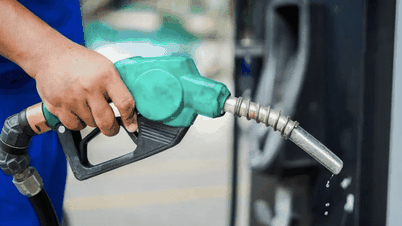
As soon as operations in the Strait of Hormuz, a vital route for transporting significant quantities of oil and liquefied natural gas (LNG), were disrupted, world oil prices immediately skyrocketed, the gas supply chain was broken, and countries dependent on imports were put in a vulnerable position. Faced with this unexpected situation, many countries quickly implemented a series of countermeasures such as capping fuel prices, deploying stabilization funds, and even cutting consumption. However, these were only temporary solutions.
Analysts believe that, in the current context, energy security is not simply about maintaining sufficient electricity at affordable prices, but also about self-sufficiency in supply and the ability to withstand geopolitical fluctuations and unexpected shocks in the global market.
Therefore, building an energy defense line is crucial for economies. The significance of this defense line lies not only in its immediate response to crises, but also in helping the economy remain stable and maintain its functioning even when the global market is turbulent.
In addition to the supply crisis caused by the current conflict in the Middle East, it cannot be ruled out that the world may experience other energy shocks.
Meanwhile, the demand for electricity to fuel economic development is increasing rapidly, especially with the explosive growth of information technology, artificial intelligence (AI), and "green" transportation. The International Energy Agency (IEA) forecasts that global electricity demand will increase by an average of more than 3.5% per year between 2026 and 2030.
To develop AI – a top strategic priority – countries need to secure a massive electricity supply to operate data centers and high-performance computing systems. Therefore, energy is a vital "lifeline," one of the key factors determining the growth rate and competitiveness of economies in the coming years.



The current crisis presents both a challenge and a driving force for countries to accelerate their energy transition, aiming for energy self-sufficiency. In a volatile world, this is a solid line of defense to protect the economy.
Source: https://nhandan.vn/tuyen-phong-thu-cho-nen-kinh-te-post967939.html


![[Photo] Strengthening character and expertise: Intense training for artillery soldiers.](https://vphoto.vietnam.vn/thumb/1200x675/vietnam/resource/IMAGE/2026/06/30/1782815602541_lu-368-1875-4571-jpg.webp)