

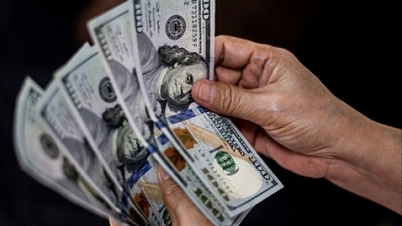
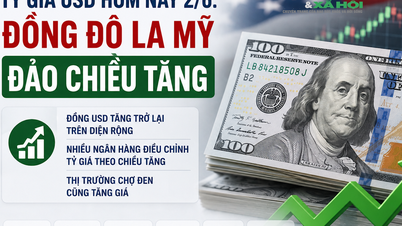
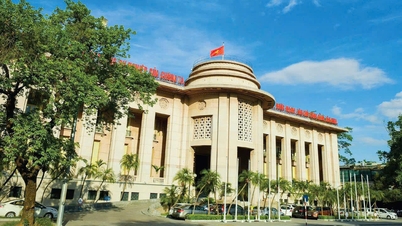
On the morning of June 4th, the State Bank of Vietnam announced the central exchange rate at 25,145 VND/USD, an increase of 4 VND compared to the previous session. With a 5% trading band, commercial banks are allowed to quote exchange rates within the range of 23,888 - 26,402 VND/USD.
Reference exchange rates between the Vietnamese Dong and various foreign currencies at the Department of Foreign Exchange Management:
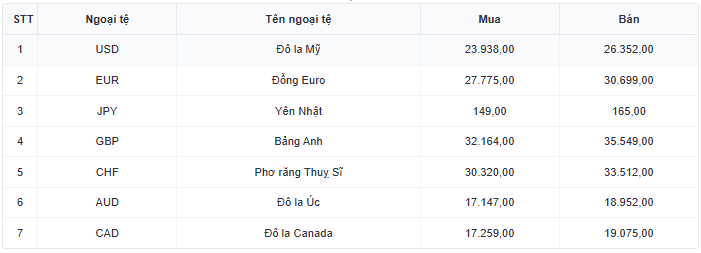
Surveys at commercial banks show that the USD price continues to remain stable and maintain the permitted ceiling.
Specifically, Vietcombank listed the USD at 26,092 - 26,402 VND/USD (buy - sell), an increase of 4 VND in both directions compared to the previous session. BIDV traded at 25,122 - 26,402 VND/USD, a decrease of 6 VND in the buying rate and an increase of 4 VND in the selling rate.

At Techcombank, the USD exchange rate was listed at 26,078 - 26,402 VND/USD, an increase of 12 VND in the buying rate and 4 VND in the selling rate. Meanwhile,ACB announced an exchange rate of 26,130 - 26,402 VND/USD, an increase of 10 VND in the buying rate and 4 VND in the selling rate compared to the previous trading session.
In the free market this morning, the USD traded around 26,380 VND/USD for buying and 26,410 VND/USD for selling, an increase of 80 VND in the buying rate and 90 VND in the selling rate.
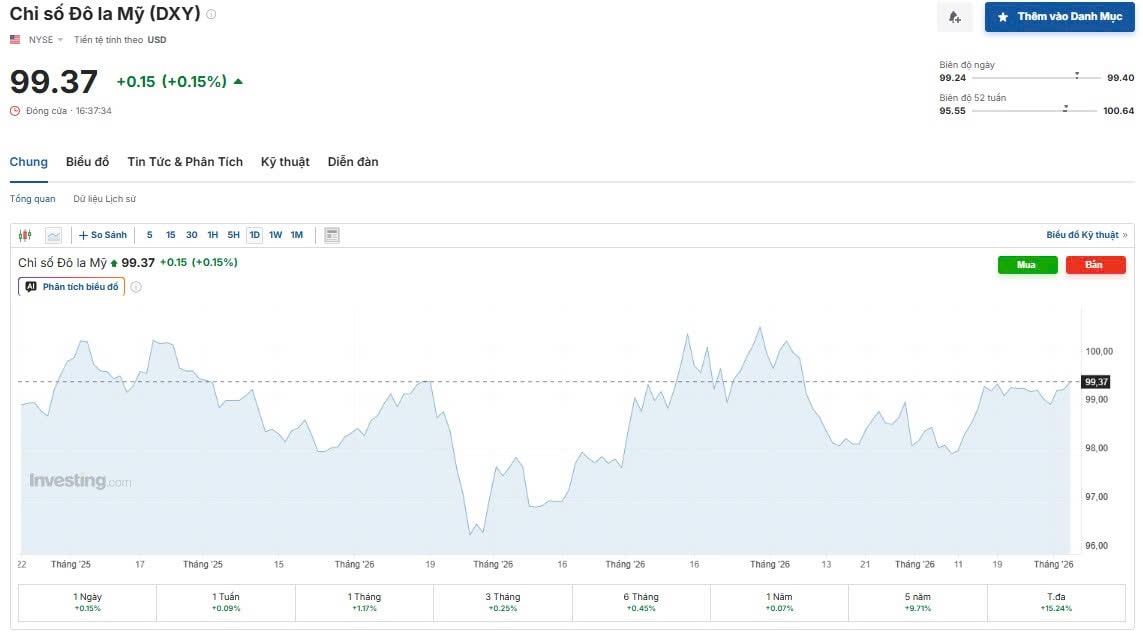
On the international market, the USD Index (DXY) fluctuated around 99.37 points. The US dollar continued its upward trend thanks to positive signals from the US economy and investors' safe-haven sentiment amid rising geopolitical tensions in the Middle East.
Manufacturing activity in the US is showing signs of improvement, while businesses are ramping up inventory due to concerns about supply chain disruptions and trade uncertainty. This contributes to sustained inflationary pressure, leaving the Federal Reserve (FED) with less room to cut interest rates anytime soon. The market is now focusing more on how long the FED will maintain high interest rates rather than when it will begin easing policy.
In addition, the economic outlook for Europe and China remains unfavorable, further increasing the relative advantage of the US dollar against other major currencies, especially the euro.
Beyond economic factors, tensions in the Middle East and rising oil prices are also boosting demand for the US dollar as a safe-haven asset. During periods of instability, money typically flows into US Treasury bonds and the dollar, further supporting the greenback's strength in the short term. However, if energy prices remain high for an extended period and harm US economic growth, the dollar's upward momentum could face new challenges.
Source: https://hanoimoi.vn/ty-gia-ngay-4-6-usd-giu-da-tang-1158926.html


























































![[Video] Sunset at Lap An Lagoon – Where the sun sets over the fishing nets](https://vphoto.vietnam.vn/thumb/1200x675/vietnam/resource/IMAGE/2026/05/31/1780192137701_beach-landscape-sea-water-nature-grass-745871-pxhere-com.jpeg)



































Comment (0)