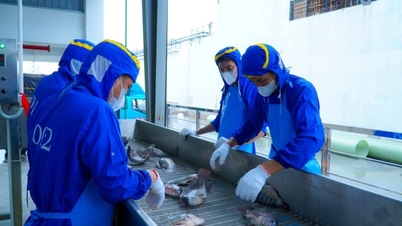
Over the years, the Ministry of Agriculture and Environment (MARD), along with other central and local ministries and agencies, has strengthened supply chain linkages, supporting farmers and cooperatives in connecting with research institutes, universities, and businesses to promote the socialization of seed production. They have encouraged and supported the development of a three-tiered rice seed system, with the participation of many cooperatives, cooperative groups, and individual farmers, contributing to the supply of high-quality rice seeds to meet production requirements.
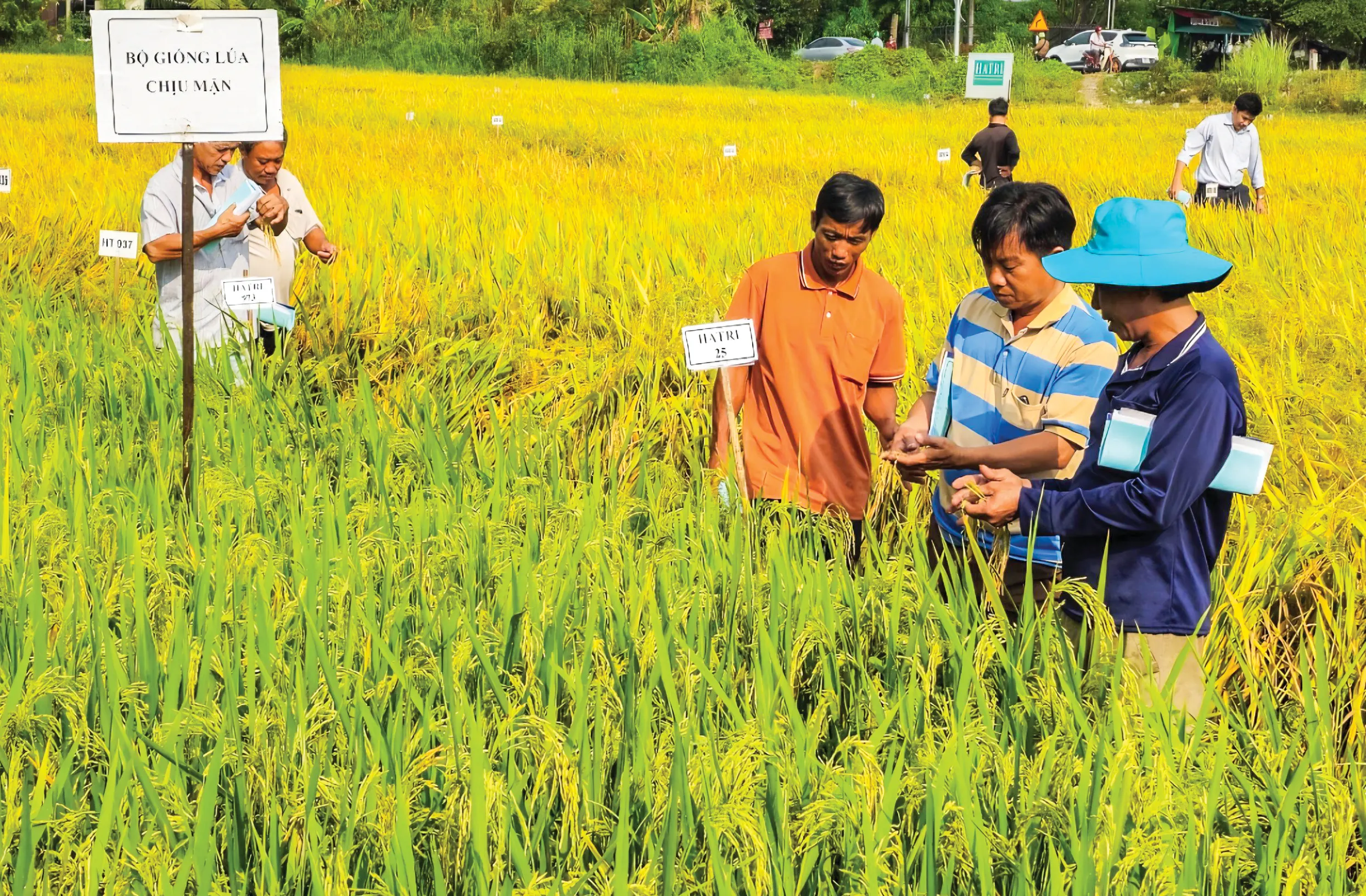
Farmers visit and learn about rice varieties from the Mekong Delta High-Tech Agricultural Research Institute that are being grown as demonstration plots in Thoi An Dong ward, Can Tho city.


According to the Vietnam Seed Trade Association (VSTA), before 2010, most nationally recognized rice varieties were developed using traditional hybridization and artificial mutation methods. Since 2010, biotechnology, cell technology, and genetic engineering have been applied in rice breeding research. As a result, target genes such as those related to quality, pest and disease resistance, salinity, and flooding have been successfully located and transferred into rice lines and varieties.
Currently, the country has over 200 large enterprises, joint ventures, private enterprises, and provincial-level seed production and trading units, as well as more than 20 institutes and universities researching, producing, and trading plant seeds. Large corporations and enterprises such as Vinaseed, ThaiBinh Seed, Loc Troi, etc., utilize modern seed processing machinery and technology systems such as silo drying systems and reversible horizontal tray dryers to ensure seed moisture content meets regulations; automated processing machines with multi-stage screening, filtering, and removal of impurities, underdeveloped, shriveled, and excessively large or small seeds, resulting in clean, uniform seeds that are free from weeds and other differences.
Despite the achievements, the development and application of new technologies in rice seed production still face difficulties. Specifically, seed production costs remain high, and there is still a problem with rice seeds sold on the market that do not meet quality and purity standards. Many farmers still use non-standardized seeds... These are issues that need to be addressed and overcome in the future.
Overcoming challenges to increase production capacity and seed quality.
According to Mr. Tran Xuan Dinh, Vice President and General Secretary of VSTA, currently about 70-75% of the seed volume uses processing technology ranging from moderately advanced to modern, while about 25-30% is still processed manually with inconsistent quality. Notably, there are many distribution channels for rice seeds nationwide (such as agents, agricultural cooperatives, and individual farmers). With the development of information technology and social media, multi-level marketing schemes, online sales, and the creation of misleading videos have emerged, causing losses to rice farmers.
At the "Scientific Solutions Seminar to Improve Rice and Rice Seed Quality" organized by the Vietnam Rice Industry Association in collaboration with VSTA in Can Tho City, many experts and businesses suggested that it is necessary to promote the application of new technologies to improve production capacity and seed quality. In particular, it is crucial to effectively apply digital technology and AI (artificial intelligence) in production management, quality control, and seed purity. Digital and AI technologies should also be applied in guiding breeding and selection plans, as well as in conducting crossbreeding experiments. Furthermore, continued attention should be paid to the application of cell technology and gene technology to create fragrant, high-quality, nutritious, and low-emission rice varieties.
Dr. Tran Ngoc Thach, Director of the Mekong Delta Rice Research Institute, stated that using AI to check the quality and differentiate rice varieties and grains is necessary. This technology is a good direction, supporting rice seed producers and state management agencies in assessing the purity and cleanliness of rice varieties. However, to implement this, a large database is needed. Currently, there are hundreds of rice varieties nationwide, so a process of "training" AI to identify rice grains is necessary. In addition, factors such as seasonality, weather, and processing also affect the shape of rice grains, so these also need to be considered to ensure accurate AI identification.



Rice varieties are one of the crucial inputs in the rice value chain and directly affect rice quality. Mr. Pham Thai Binh, Chairman of the Board of Directors of Trung An High-Tech Agriculture Joint Stock Company, stated: “Applying science and technology and digitalization to rice seed production is essential to ensure seed quality. As a rice exporting company that has been collaborating with farmers in many cooperatives in rice production and consumption, the company always hopes to have access to high-quality, purebred rice seeds for planting. Therefore, we urgently need units and businesses to provide solutions and AI applications to analyze and identify standard, certified rice seeds that are not mixed with other varieties.”
Text and photos: KHANH TRUNG
Source: https://baocantho.com.vn/ung-dung-cong-nghe-nang-cao-chat-luong-lua-giong-a190713.html









![[INFOGRAPHICS] Striving to gradually increase the proportion of workers in the industrial, construction, and service sectors of the economy.](https://vphoto.vietnam.vn/thumb/402x226/vietnam/resource/IMAGE/2026/07/03/1783060190411_1783060090.webp)