From the beginning of the year until the end of May, the ENSO phenomenon remained neutral, but has now shifted to an El Niño state. Forecasts indicate that from June to August, it will continue to maintain strong intensity, with a particularly high probability of a very strong El Niño occurring from October to December 2026 at 63%. In addition, total rainfall from the beginning of the year to mid-June in the Mekong Delta region reached 310 to 34 mm, lower than the multi-year average by 12 to 17%.
In the North Central region, if the hot weather persists, it is estimated that approximately 5,200 to 8,200 hectares of summer-autumn crops in 2026 are at risk of being affected by drought and water shortages, mainly concentrated in Thanh Hoa, Nghe An , and Quang Tri provinces. Due to the likely continuation of the El Nino trend, rainfall in the early months of 2027 in the Central and Southern regions will continue to be deficient, increasing the risk of drought and saltwater intrusion.
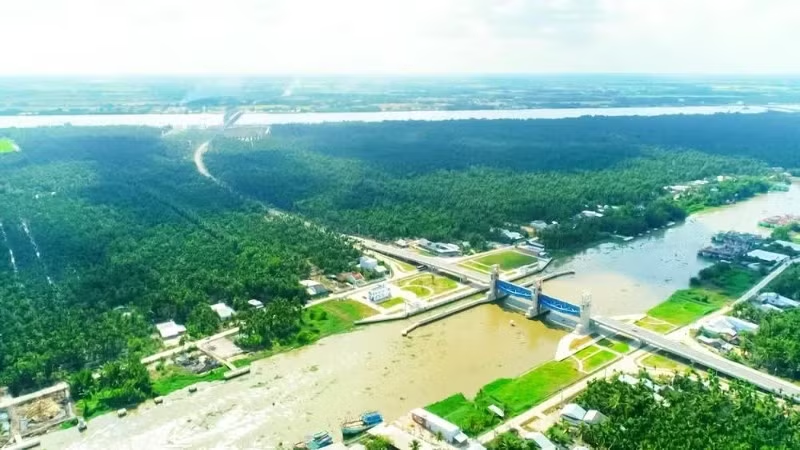
Based on upstream flow, the current state of the irrigation system, and cropping patterns, the Department of Irrigation Works Management and Construction ( Ministry of Agriculture and Environment ) has proposed three main baseline scenarios for saltwater intrusion in the Mekong Delta: average year, low water year, and very low water year.



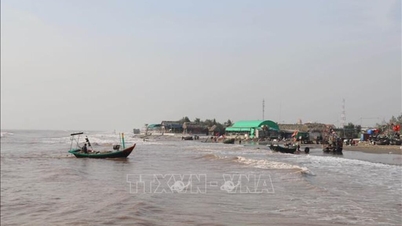
In the event of a strong El Nino influence, there is a risk of a very low water year during the 2026-2027 dry season, with saltwater intrusion in the Mekong River reaching a maximum depth of 58 to 78 km from the 4g/l salinity boundary and in the Vam Co River from 115 to 143 km.
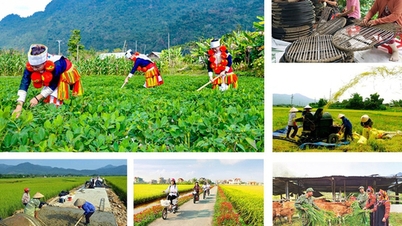
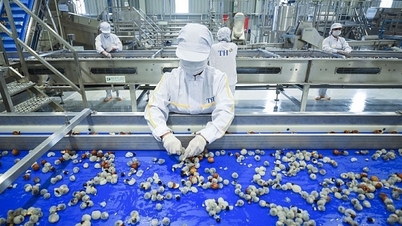
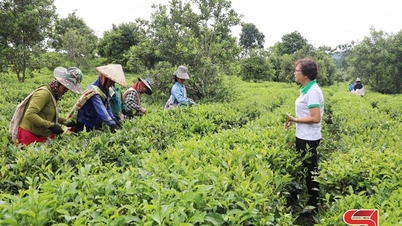
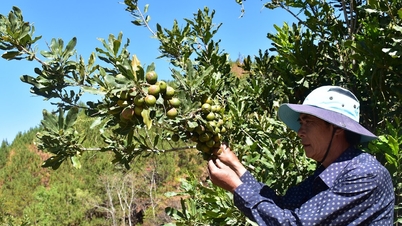
Under this scenario, the risk of saltwater intrusion could affect 180,000 hectares of crops in the Mekong Delta. This is a key agricultural production area of the country, with many crops heavily dependent on water resources. Therefore, proactively responding to drought, water shortages, and saltwater intrusion will help ensure agricultural production and minimize losses.
Localities need to organize agricultural production in accordance with water resource conditions. Areas at risk of drought, water shortage, and saltwater intrusion should be identified based on salinity intrusion scenarios from the dry seasons of 2015-2016, 2019-2020, and 2023-2024, in order to arrange appropriate planting schedules starting from the 2026 summer-autumn crop season.
Relevant units should facilitate and expedite the planting of the 2026-2027 winter-spring rice crop to prepare for the possibility of earlier saltwater intrusion. In addition, it is necessary to review and identify areas with fruit trees and high-value economic crops at risk of being affected, advising people to store water to ensure sufficient water for crops in case of drought or saltwater intrusion, minimizing damage.
Local authorities and residents need to closely monitor meteorological and hydrological forecasts, water resources, and saltwater intrusion information from specialized agencies to implement and adjust production plans. People need to raise awareness of water conservation and efficiency, and proactively implement appropriate response measures.



Source: https://nhandan.vn/ung-pho-xam-nhap-man-trong-mua-kho-post970826.html


![[Photo] General Secretary and President To Lam works with the Party Committee of the Government on the work of preventing and combating storms, floods, extreme natural disasters and climate change.](https://vphoto.vietnam.vn/thumb/1200x675/vietnam/resource/IMAGE/2026/06/29/1782729441945_a1-bnd-0385-9454-jpg.webp)
![[Photo] National Assembly Chairman Tran Thanh Man attends the Conference to announce the Master Plan for Hanoi Capital City with a 100-year vision.](https://vphoto.vietnam.vn/thumb/1200x675/vietnam/resource/IMAGE/2026/06/29/1782709639728_ndo_br_1-jpg.webp)
![[Image] A look back at the capital's preparations for the century-long master plan.](https://vphoto.vietnam.vn/thumb/1200x675/vietnam/resource/IMAGE/2026/06/29/1782750453122_quy-hoach-100-nam-minh-duy-1-2118-jpg.webp)



























![[Video] Weather forecast for June 30, 2026: Increased thunderstorms, significantly reduced heatwave across all three regions.](https://vphoto.vietnam.vn/thumb/402x226/vietnam/resource/IMAGE/2026/06/30/1782774164451_thumb-sang-png.webp)
![[Image] A look back at the capital's preparations for the century-long master plan.](https://vphoto.vietnam.vn/thumb/402x226/vietnam/resource/IMAGE/2026/06/29/1782750453122_quy-hoach-100-nam-minh-duy-1-2118-jpg.webp)







































![[Image] Building an elevated road through the Ma Da forest.](https://vphoto.vietnam.vn/thumb/402x226/vietnam/resource/IMAGE/2026/06/29/1782724737750_anh-man-hinh-2026-06-29-luc-16-18-43.png)