


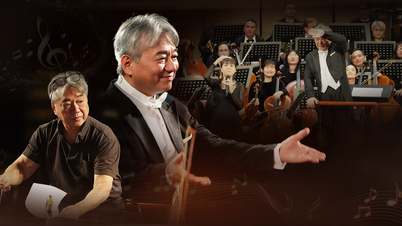
Male and female Quan Ho singers interact with the audience on a boat. Photo courtesy of Doan Cong Vu/VNA.
Entering a new era – an era of deep integration, digital transformation, and global competition – the role of soft power, or culture, has become especially important. Resolution No. 80-NQ/TW of the Politburo on the development of Vietnamese culture was born in this context, affirming a groundbreaking idea: culture is not only a foundation, but must become a driving force for the nation's future.
Culture - from "spirit" to pillar of development
For a long time, culture was often viewed as a secondary sector to economics . Resolution 80 marked a fundamental shift in perception by defining cultural and human development as both a goal, a driving force, and a regulator for the rapid and sustainable development of the country. Culture must precede, guide, and deeply influence development decisions.
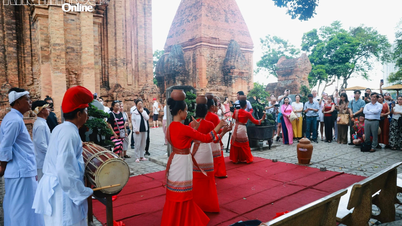
In practice, many localities across the country have risen strongly not only thanks to their economic potential but also to their cultural strength – a soft power that creates lasting prestige, influence, and attractiveness. A prime example is the Quan Ho folk singing of Bac Ninh, which has been preserved, taught, and disseminated in contemporary life, contributing not only to the preservation of the national cultural essence but also affirming the value of Vietnamese culture in the international arena.
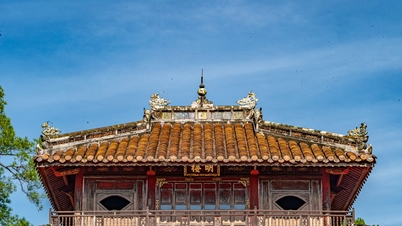
The Hue Imperial Citadel complex and Hue Royal Court Music, when preserved and promoted in conjunction with festivals and tourism activities, have become distinctive cultural brands, contributing to the transformation of the economic structure and enhancing Vietnam's image on the international stage.
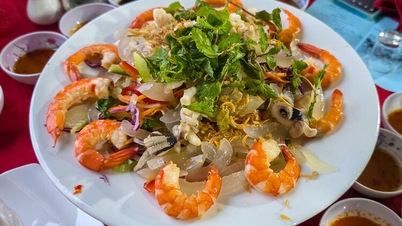
Vietnamese cuisine, with dishes that have become global icons such as pho, bun cha, spring rolls, broken rice, coffee, etc., is increasingly asserting its role as an effective channel of cultural diplomacy, spreading the image of Vietnam and its people to the world.
Looking at the world, many countries are leveraging traditional culture in conjunction with modern technology, while simultaneously promoting the development of creative industries… all of which clearly demonstrate that culture is not only a foundation but also a driving force guiding the future of the nation.
In Vietnam, Resolution 80 stipulates that culture must be placed on par with economics, politics, and society, becoming a pillar of development. This is not only about developing literature and art or preserving heritage, but also about building a well-rounded Vietnamese person; creating a healthy cultural environment from family and school to society and the digital space; and strongly developing cultural industries and the creative economy.
Preserving the national spirit amidst the modern era.
One of the biggest challenges today is how to preserve and promote traditional cultural values in the context of modernization and globalization. The explosion of cross-border digital platforms has both opened up opportunities for cultural promotion and posed the risk of infiltration by offensive foreign elements that erode identity.
Resolution 80 emphasizes the harmonious handling of the relationship between tradition and modernity, national and international, preservation and development. Culture cannot be "confined" to museums, but neither can it be dissolved. Only when culture is alive in contemporary life, created, and continued by generations can it truly have vitality.
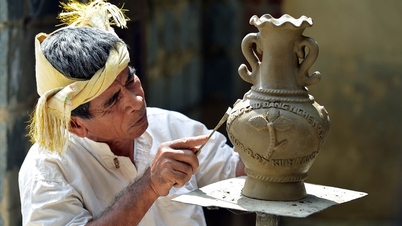
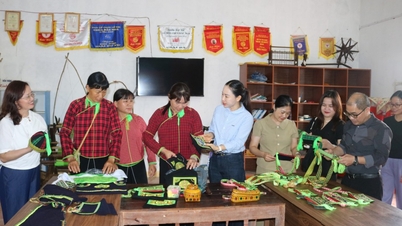
This is clearly demonstrated in the stories of traditional craft villages and OCOP products – places where the essence of folk culture is distilled and also spaces for continuous innovation within the community.
People are at the center, and culture guides the nation's path.
A key highlight of Resolution 80 is the identification of people as the center, subject, goal, and driving force of cultural development. Culture does not exist abstractly but is present in each individual, each behavior, and each social norm of conduct.
The resolution emphasizes the building of national values, cultural values, family values, and the standards of Vietnamese people in the new era. These are the culmination of patriotic traditions, compassion, and loyalty, combined with creativity, responsibility, discipline, and the aspiration for progress.
Resolution 80-NQ/TW is not only a guiding document but also a call to action for the entire society. For culture to truly become a driving force for the nation's future, it requires the synchronized involvement of the entire political system, the creativity of intellectuals, artists, and businesses, and the active participation of every citizen.
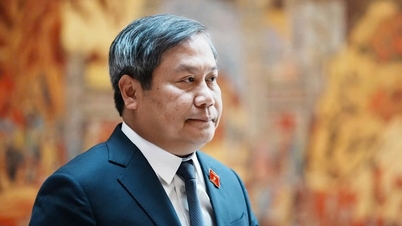
According to Associate Professor, Dr. Nguyen The Ky, Vice Chairman of the Central Theoretical Council: “This is a resolution that constitutes part of the system of important resolutions for the comprehensive and sustainable development of the country that the Politburo has issued and directed to implement decisively in recent times. What I appreciate most is that Resolution 80 continues to affirm the great and immortal thought of President Ho Chi Minh at the First National Cultural Conference in 1946: "Culture must illuminate the path for the nation to follow."
At the same time, the Resolution clearly states: "Vietnamese culture is the crystallization of the nation's finest values in the process of thousands of years of nation-building and national defense; it is an important endogenous resource that nurtures the intellect, soul, spirit, and character of the Vietnamese people"; culture is always an endogenous strength, and cultural values permeate every aspect of social life."
Conservation for development, development for conservation.

Distinguished artisan Nguyen Dang Che (right) introduces hundreds of Dong Ho folk painting documents he has collected. Photo: Thanh Thuong/TTXVN.
Artisan Nguyen Huu Dao from Dong Ho painting village, Thuan Thanh ward (Bac Ninh province), whose family has been involved in folk painting for generations, shared: he is one of the youngest artisans in Dong Ho folk painting village and the son of Meritorious Artisan Nguyen Huu Qua, belonging to the 15th generation of the Nguyen Huu family - one of the two families that still maintain the folk painting craft.
"When I heard that Resolution 80 emphasized preserving heritage in conjunction with development, I was very happy. With the right support policies, Dong Ho paintings can absolutely enter the world, not only as a heritage but also as a cultural product with economic value," shared artisan Nguyen Huu Dao.
According to the artisans, Dong Ho paintings are not only for hanging during Tet (Lunar New Year) but also a way for our ancestors to convey their philosophy of life and moral principles. Each painting tells a story, a lesson. In recent years, the Dong Ho painting craft has faced many difficulties: changing tastes, less interest from young people in the craft, and unstable income. However, the Party and State's recognition of culture as a foundation and an important endogenous resource has brought new hope to the artisans.
Artisan Nguyen Huu Dao hopes that the development of Dong Ho paintings will affirm that culture is the source of inherent strength, and that the nation always knows how to preserve the past and cherish the heritage of its ancestors. All those involved in Dong Ho painting hope to always build, preserve, and develop the beautiful images in the minds of so many people, such as: "Dong Ho paintings of chickens and pigs have fresh, vibrant lines / The national colors shine brightly on the gilded paper."
This is an important undertaking, carrying many meanings and benefits, and simultaneously reflecting the spirit set forth in Resolution 80, especially the principle of "conservation for development, development for conservation".
Cultural industry - a new driving force
Another groundbreaking aspect of Resolution 80 is the strong development of cultural industries, considering them a new growth engine for the economy. The target of cultural industries contributing approximately 7% of GDP by 2030 and about 9% of GDP by 2045 demonstrates a very strong determination.
Film, music, fine arts, design, fashion, cultural tourism, video games, digital content… are all areas where Vietnam has great potential. The key is to have groundbreaking institutions, a transparent creative environment, high-quality human resources, and strong participation from businesses.
Resolution 80 affirms the role of businesses as a crucial driving force in the cultural and creative ecosystem, while emphasizing the social responsibility and humanistic orientation of cultural activities, avoiding purely commercialization tendencies.
In the context of deep international integration, culture has become a "common voice" connecting nations. Resolution 80 aims to enhance the nation's soft power, making Vietnam an attractive destination for regional and global cultural and artistic events.
Establishing more Vietnamese cultural centers abroad, strengthening cultural diplomacy, promoting UNESCO-listed heritage sites, and exporting Vietnamese products linked to cultural stories will contribute to affirming Vietnam's position and image in the new world order.
From artisans quietly preserving their crafts in traditional villages to policymakers, researchers, and cultural managers, everyone is contributing to shaping the face of Vietnamese culture in the new era.
In light of Resolution 80-NQ/TW, Vietnamese culture is placed in its rightful position: not only as a memory of the past but also as a force shaping the future. When culture permeates every decision, every action, and every living space, national identity is preserved, aspirations for development are awakened, and national soft power is disseminated. Developing culture means nurturing people, fostering faith, and forging resilience so that Vietnam can confidently rise, develop rapidly and sustainably, and integrate deeply into the new era.
Source: https://baoangiang.com.vn/van-hoa-suc-manh-dan-dat-tuong-lai-dan-toc-a473632.html
![[Photo] General Secretary and President To Lam works with the Party Committee of the Ministry of Health on the work of Vietnamese traditional medicine.](https://vphoto.vietnam.vn/thumb/1200x675/vietnam/resource/IMAGE/2026/05/20/1779294323718_a1-bnd-2978-3319-jpg.webp)
![[Image] "Journey of Hope" promotes the organ and tissue donation movement in Vietnam.](https://vphoto.vietnam.vn/thumb/1200x675/vietnam/resource/IMAGE/2026/05/20/1779294400833_1-8910-jpg.webp)


















































Comment (0)