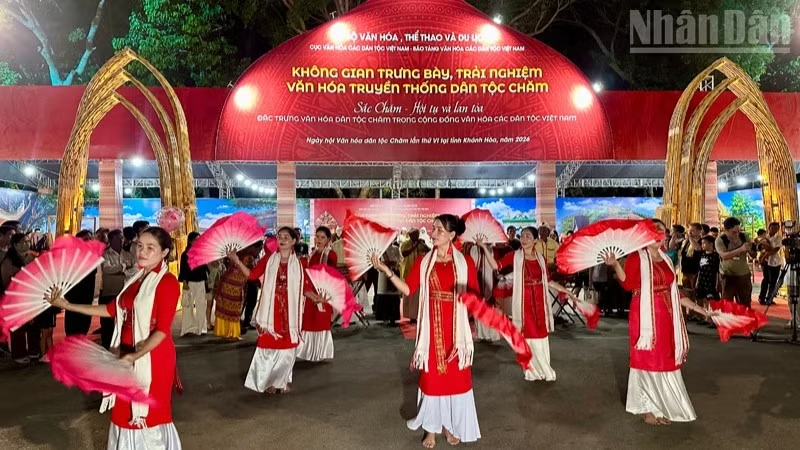
Thousands of visitors will directly experience traditional values and listen to stories preserved over centuries at the 6th Cham Ethnic Culture Festival in 2026 in Khanh Hoa province.
Each locality has its own cultural story.
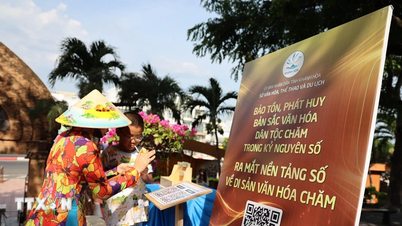
On the morning of June 27th, the exhibition and promotion area for traditional culture of the participating delegations at the festival became more bustling than ever as the Art Council proceeded to score the exhibits, traditional handicraft demonstrations, community tourism skills, and introductions to cultural destinations.
The most captivating aspect lies not in the artifacts displayed behind glass cases, but in the fact that all cultural values are present in real life. Locals and tourists can witness firsthand artisans weaving brocade and making pottery, hear the sound of looms, smell the scent of earthenware in the sun, and directly converse with those who are preserving traditional crafts every day.
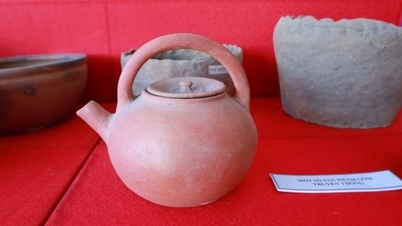
The space for the Khanh Hoa delegation was always packed with visitors. Alongside the vibrant brocade fabrics, there was a demonstration of Bau Truc pottery making – a craft that has become a symbol of Cham culture.
Mr. Phu Huu Minh Thuan, Director of the Bau Truc Cham Pottery Cooperative (Ninh Phuoc commune), said that Bau Truc pottery village is considered one of the oldest pottery villages in Southeast Asia, still preserving almost entirely its traditional handcrafted production methods.
What makes Bau Truc pottery so special is that the entire crafting process is done entirely by hand. There are no potter's wheels, no industrial machinery; the artisans use only their hands, feet, and experience passed down through generations.
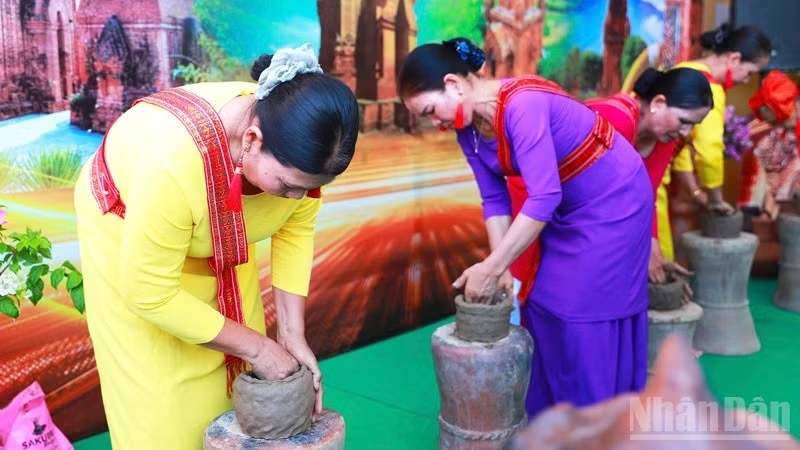
Clay is sourced from the banks of the Quao River and mixed with fine sand using traditional folk techniques. There's no fixed formula; all proportions are "measured" by the craftsman's intuition. After shaping, the products are sun-dried and then fired outdoors using firewood, straw, and other natural materials. This unique firing method creates shades of brick red, yellowish-brown, or smoky black, giving each product its own distinct beauty—no two are alike.
At the end of 2022, the Cham pottery art was inscribed by UNESCO as an Intangible Cultural Heritage in need of urgent safeguarding. This is not only a source of pride for the Cham community but also a recognition of a craft that has endured for centuries.
Today, the Bau Truc pottery village has also become an attractive community tourism destination. Visitors can directly knead clay, shape products, chat with artisans, enjoy traditional cuisine , listen to Cham folk songs, and immerse themselves in the peaceful life of this sunny and windy land.
While Khanh Hoa captivates tourists with the sound of pottery kilns, Lam Dong province's cultural space reveals a whole historical flow of the Champa kingdom.
Through the explanations of the artisans, visitors learn more about the fact that after the merger, Lam Dong province now has over 43,000 Cham people living concentrated in many localities. Over hundreds of years, this community has preserved a vast system of tangible and intangible heritage.
According to tour guide Lam Thi Bao Thi, the Champa influence is still present through the system of temples, mosques, dozens of ruins, and hundreds of traditional rituals and festivals such as Katê, Cambur, Rija Nâgar, Yuer Yang, and Ramưwan.
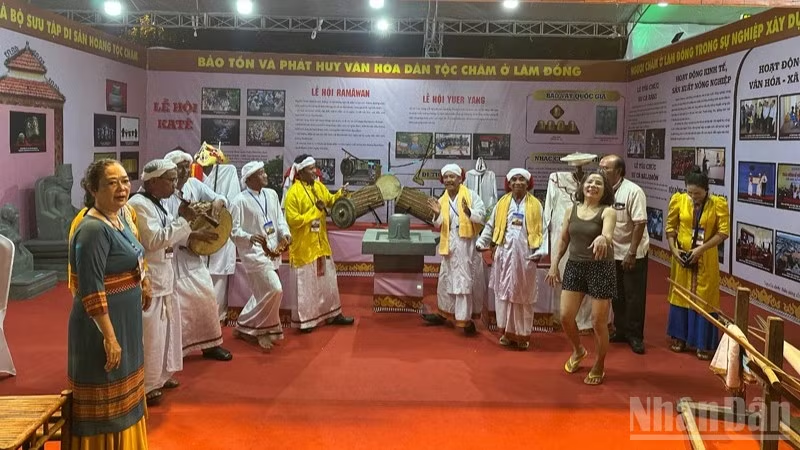
Many visitors lingered for quite some time before the presentation about the collection of treasures from the Champa dynasties, currently preserved by the family of Ms. Nguyen Thi Them (Tinh My village, Hong Thai commune). Among them, the golden crown of the Champa king and queen became a highlight, attracting the attention of researchers and the public alike.
When heritage comes closer to the public.
From the South Central region of Vietnam, the journey of discovery continues, taking viewers to the Cham Islamic cultural space in An Giang province.
Along the Hau River, the Cham Muslim community has created a rich cultural heritage with mosque architecture, traditional crafts, clothing, beliefs, and culinary arts deeply rooted in Islamic traditions.
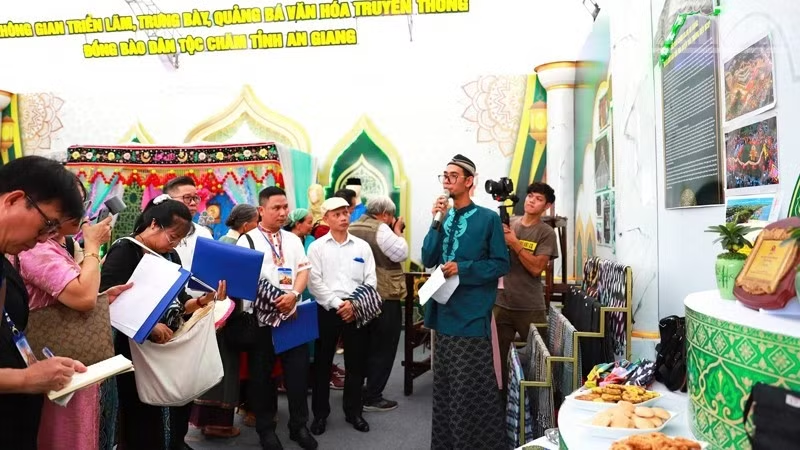
In particular, the "One Commune, One Product" (OCOP) program has opened up new avenues for the local people, as many traditional products have been commercialized and reached the market. Most notably, Tung Lo Mo – a famous beef sausage processed according to Halal standards – has become a representative OCOP product of the Cham Muslim community.
The space of the Cham Hroi troupe from Dak Lak province is always filled with laughter and performances of folk art.
According to Ms. Do Anh Thu from the Dak Lak Provincial Folk Art Troupe, the Cham Hroi people wish to introduce to the public a land that once belonged to the Champa cultural space, a place that still preserves many unique cultural values from centuries past.
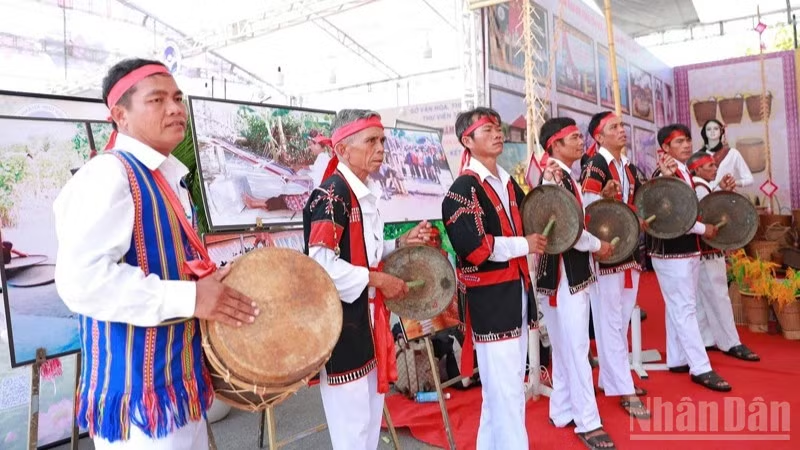
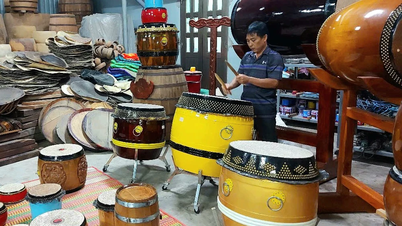
Besides the rich treasury of folk tales, epics, folk songs, and proverbs, the special highlight is the art of performing with double drums, triple gongs, and five cymbals – a form that has been recognized by the Ministry of Culture, Sports and Tourism as a National Intangible Cultural Heritage.



The drums resounding in the April 16th Square transport viewers back to traditional festivals in the mountains and forests, where every gong beat and every song tells a story of labor, love for the homeland, and aspirations for a prosperous life.
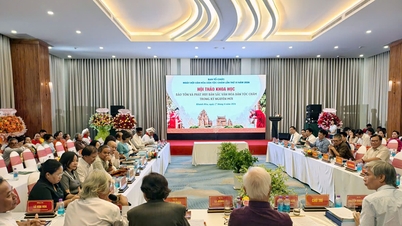
The exhibition space at the festival is not simply a competition to showcase the culture of different localities, but has become a place to connect the community with heritage.
There, centuries-old crafts are no longer just memories in books; festivals, folk songs, traditional dishes, and OCOP products are all told through the stories of the people who are preserving them.
Amidst the bustling crowds, many tourists linger for a long time to try weaving some brocade, molding a small earthenware pot, or listening to the resonant sounds of Cham drums. It is these authentic experiences that truly touch the emotions of the public, continuing to spread the enduring vitality of this unique heritage within the flow of Vietnamese culture.
Source: https://nhandan.vn/van-hoa-truyen-thong-cham-hut-hon-du-khach-post971921.html