

 |
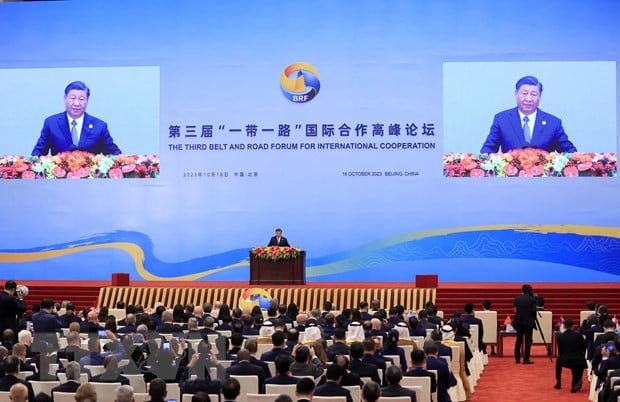
| Chinese President Xi Jinping delivers the opening speech at the 2023 Belt and Road Initiative International Cooperation Forum. (Photo: Thong Nhat) |
The large turnout of representatives from around the world at the Belt and Road Initiative (BRF) Summit, which recently concluded in Beijing (October 18), demonstrated its unique appeal. It also served as a "clear message that China is gaining its own allies and challenging the US-led world order," commented Associate Professor Alfred Wu of the Lee Kuan Yew School of Public Policy (Singapore).
A new world order?
In many respects, the first decade of the BRI has been surprisingly successful, demonstrating an undeniable power. Over 150 countries have joined the BRI, accounting for 23% of global GDP and 3.68 billion people – 47% of the world's population, with 18 out of 27 countries being EU members. This has helped China become the largest creditor of the developing world, significantly increasing its diplomatic and geopolitical influence.
ECB President Christine Lagarde, who was formerly IMF Managing Director, once said that countries should not treat the financing that Beijing pours into infrastructure projects as a "free lunch".
However, it cannot be denied that the BRI has brought concrete benefits to many developing countries – places where roads and railways would not have been built until now.
Over the past decade, the Belt and Road Initiative (BRI) has grown rapidly, both geopolitically and in terms of international cooperation. The BRI White Paper, published by China ahead of the 2023 Belt and Road Initiative (BRF), states that the initiative has attracted participation from over three-quarters of the world and more than 30 international organizations. The framework for cooperation is extensive, ranging from infrastructure and technology to even maritime and aviation sectors.
However, investment within the BRI framework has begun to decline, especially in Africa, both in terms of the number and size of loans. According to the Center for Global Development Policy at Boston University, in the period before the Covid-19 pandemic (2017-2019) and the post-pandemic period (2020-2022), the size of loans decreased by an average of 37%, from $213.03 million to $135.15 million. Overall Chinese activity in countries participating in the BRI has decreased by approximately 40% compared to its peak in 2018.
Progress on the BRI is slowing down. Many loans in the early years of the program, due to a lack of rigorous assessment, have become non-performing, forcing Beijing to change its approach and become more cautious.
Meanwhile, the consequences of China's handling of the Covid-19 pandemic by "closing its doors" to the world, and scandals related to BRI projects, have somewhat shaken Beijing's position.
Furthermore, from the "other side," some countries are also becoming more cautious about being friendly with China, as its global competition with the US intensifies. The EU has tightened regulations on foreign investment in critical infrastructure, citing national security concerns. In early 2023, Italy – the only G7 member participating in the BRI – announced its intention to withdraw.
Furthermore, while Western countries were slow to recognize the importance of the BRI a decade ago, they are now striving to reclaim the opportunity to offer alternatives. A plan to build a transport corridor connecting India to the Middle East and Europe was announced at the G20 summit last month in Delhi. The US has also pledged to increase lending to developing countries through the World Bank.
The BRI's progress may be hampered, but it has changed the course of the world. And in this new context, Beijing is still trying to adjust its objectives.
Overcoming outdated thinking , creating a new model of international cooperation.
The Belt and Road Initiative (BRI) is considered an ambitious foreign policy initiative of Chinese President Xi Jinping. Aimed at linking economies through a global network of transportation and trade, with China playing a central role, Beijing has funded billions of dollars in investment in the massive trade infrastructure system that the BRI passes through, including roads, railways, and other critical infrastructure across Eurasia and Africa.
Despite criticism that the BRI has burdened some countries with massive debt since its inception, at the Forum in Beijing, the Chinese leader hailed the initiative as a foreign policy success and a sustainable development model that could counterbalance the West.
The large number of Southern Hemisphere leaders attending this forum to show support for the BRI and to test Beijing's ability to handle the new agreements has become evidence for China to respond to criticism.
In fact, the BRI has provided funding for infrastructure construction projects and efforts to create common standards in transportation systems, customs procedures, information technology, and many other areas. The BRI also aims to promote the globalization of the Renminbi, build a currency swap system to supplement or replace emergency IMF loans, and establish other institutions for trade and investment liberalization.
Beijing claims that the Belt and Road Initiative (BRI) has created 420,000 jobs and lifted 40 million people out of poverty worldwide.
So, does the BRI initiative truly promote international development, or does it impose some kind of constraint that Beijing can control? That will remain a long-standing debate between the parties involved.
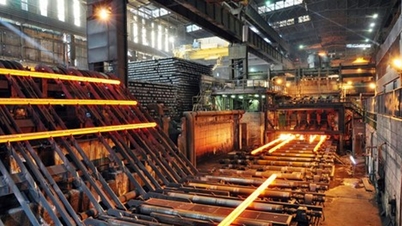
The website eurasiareview.com analyzes, “By investing in infrastructure, Beijing hopes to create new markets for Chinese companies, such as high-speed rail companies, and export some of the country’s huge surplus capacity in cement, steel, and other metals.”
By investing in volatile Central Asian countries, the Chinese leader sought to create a more stable neighborhood for the unstable western regions.
And by creating more Chinese projects in the region, the aim is to consolidate Beijing's influence within the "Belt and Road" initiative they are designing.
In an interview with international media, Chinese Foreign Ministry official Li Kexin affirmed that the Belt and Road Initiative (BRI) has "transcended old thinking about geopolitical games and created a new model of international cooperation." Accordingly, Beijing has introduced a new approach that does not aim to "dominate world economic development, control economic rules…".
Senior expert Raffaello Pantucci of the S. Rajaratnam School of International Studies (Singapore) argues that the Chinese President not only succeeded in using the BRI Forum to respond to criticism, but also skillfully integrated the BRI into a “new foreign policy vision within a global order centered on China; in this context, the BRI is always a concept with very flexible objectives… Therefore, Beijing can adjust its objectives and redefine what success will look like.”
Source


![[Photo] General Secretary and President To Lam presides over a meeting on assessing national development resources.](https://vphoto.vietnam.vn/thumb/1200x675/vietnam/resource/IMAGE/2026/05/20/1779253785852_a1-bnd-2943-8519-jpg.webp)

![[Photo] National Assembly Chairman Tran Thanh Man working with the Standing Committee of the Economic and Financial Committee](https://vphoto.vietnam.vn/thumb/1200x675/vietnam/resource/IMAGE/2026/05/20/1779249584387_ndo_br_1-jpg.webp)


































![[Workers' Month 2026] Spreading love on the Vinh - Dong Hoi frontline: Nearly 1 billion VND spent on caring for the lives of workers.](https://vphoto.vietnam.vn/thumb/402x226/vietnam/resource/IMAGE/2026/05/20/1779237885217_img_8650.jpeg)





























Comment (0)