The area of Thach Khe, Dong Khe commune, Dong Son district (now part of Thanh Hoa city) was also known as Ke Run. This name is not only associated with ancient historical and cultural relics, but also evokes memories of a developed trading region.
“Thach Khe is home to many clans... the most numerous being the Le clan. This is a fertile land with vast rice paddies stretching as far as the eye can see, and picturesque scenery. In the past, it was also famous for its beautiful lotus ponds running along the shallow river often called Mau Run, fragrant with lotus blossoms throughout the summer and autumn... Thach Khe is a region with a tradition of scholarship and academic achievement; in the past, there was a Confucian temple dedicated to Confucius and a place that promoted Confucianism, with steles inscribed with the names of those who passed the examinations..." (From the book "Literary and Martial Talents of Thanh Hoa").
From the center of Thanh Hoa City, traveling west (along National Highway 47) for about 12km will lead you to the ancient land of Ke Run. With many favorable geographical features, Ke Run has been inhabited since very early times. According to local documents, the earliest name of this ancient land was Ke Run, then Run village. Around the 7th century, the village was called Thach Khe. At that time, Thach Khe was only a short distance from the Truong Xuan district capital. During the reign of Emperor Gia Long (Nguyen Dynasty), the Dong Son district capital was temporarily moved to Ke Run.
During the period of Chinese rule, when Lê Ngọc, the governor of Cửu Chân district, built the Trường Xuân capital and launched an uprising against the Tang dynasty, the people of Kẻ Rủn - Thạch Khê enthusiastically responded. Later, the uprising failed, and its leader, Lê Ngọc, and his sons were captured and killed. To commemorate their indomitable spirit in resisting foreign invaders, the local people erected a temple to worship them.
In the 15th century, Nguyen Chich from Dong Ninh raised the banner of rebellion against the Ming dynasty's rule, using the Hoang Nghieu mountain range as a base and defensive line against the invaders. The men of Thach Khe village enthusiastically rallied under the banner of the renowned general Nguyen Chich. Later, Nguyen Chich's rebel army joined forces with the Lam Son rebels, enduring years of hardship and suffering to drive the invaders out of Vietnam...
When King Quang Trung marched north to drive out the invading Qing army, the young men of Ke Run village eagerly joined the army to fight the enemy. Later, when the French colonialists opened fire to invade our country, in response to the Can Vuong (Support the King) decree, the people of Ke Run village did not hesitate to sacrifice themselves for the country... Especially during the two national resistance wars, "the fathers' generation followed the sons' generation, together with the whole country, the people of Dong Khe continued the great journey of defending the country, actively providing manpower and resources to the front lines... Throughout history, from the time the village was established as the old name Ke Run to the present-day Dong Khe commune, spanning thousands of years, the people of Dong Khe have created glorious golden pages of local history and contributed significantly to making the land of "spiritual and talented people" in Dong Son district" (History of the Dong Khe Commune Party Committee).
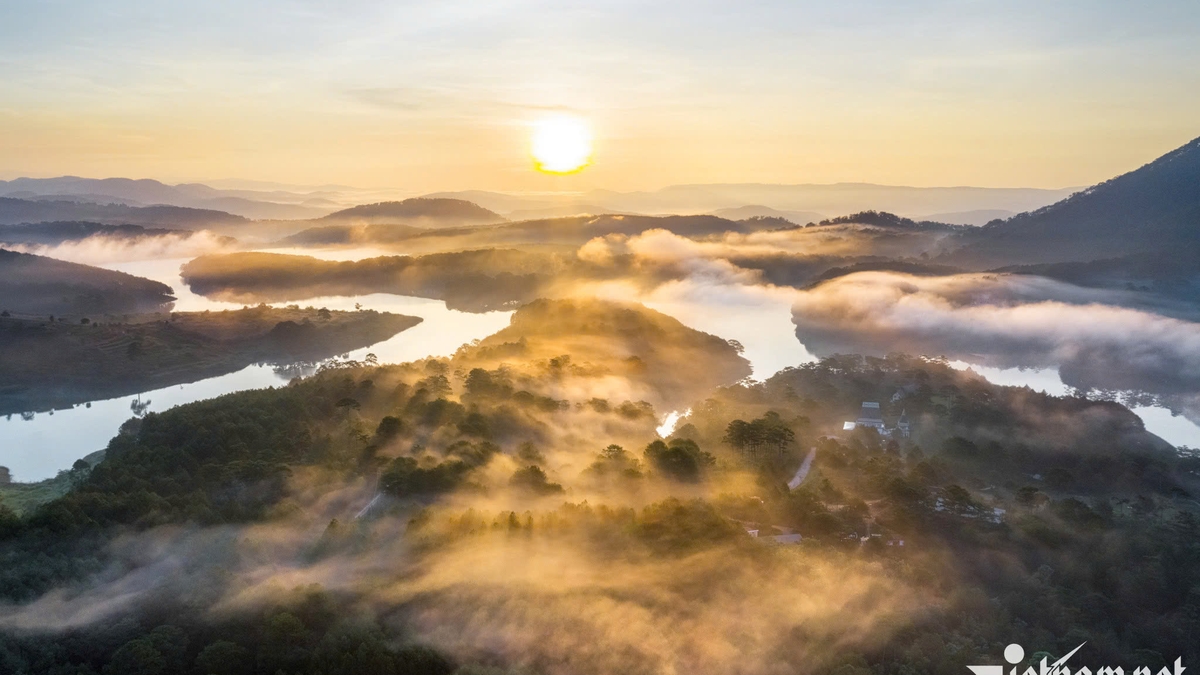
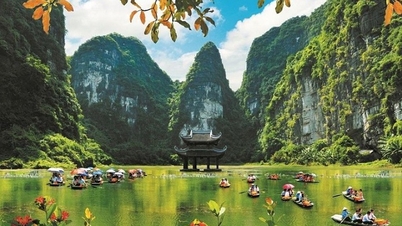
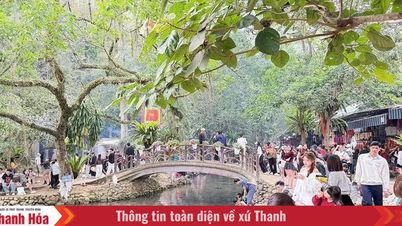
Through the passage of time and the ups and downs of national history, Ke Run has changed and developed day by day. Nevertheless, this land retains its peaceful rural landscape with the inherent beauty of Vietnamese villages. Within this landscape, visitors from afar are inevitably impressed by the vast Mau (lake) of Run – a highlight that adds to the verdant and refreshing beauty of the countryside.

Mau Run stretches from Dong Hoang, through Dong Khe, connecting to the canal system of the Le Dynasty. Some believe that Mau Run may have been a branch of the Hoang River in the past, and the "shift" of the river's course left Mau Run in this ancient land. Mau Run has been closely intertwined with the lives of the people of Ke Run from ancient times to the present day. It not only provides water for production and daily life, and regulates the ecological environment, but also brings in fish and shrimp for the local people. Because of these advantages, for hundreds of years, both banks of Mau Run have been inhabited by people in the region.
The northern bank of Mau Run is Thach Khe Thuong village (Thuong village); followed by Thach Khe Tien village (Tien village)... Mau Run is surrounded by bamboo groves. And outside the mausoleum are fertile rice fields. According to the elders in the village, in the past, the southern side of Mau Run was the Run market. It is said that the Run market was once a major trading center in the region. Here, agricultural and forestry products from the upper districts, seafood, salt, and rice from the plains and coastal areas were brought in. And along with that, goods from other places also arrived... From this, the Run market was bustling with wholesale trade.
With a history of village formation dating back to very early times, the people of Kẻ Rủn, in their journey of establishing and developing their village, not only strived to make a living but also built and nurtured traditional cultural values.
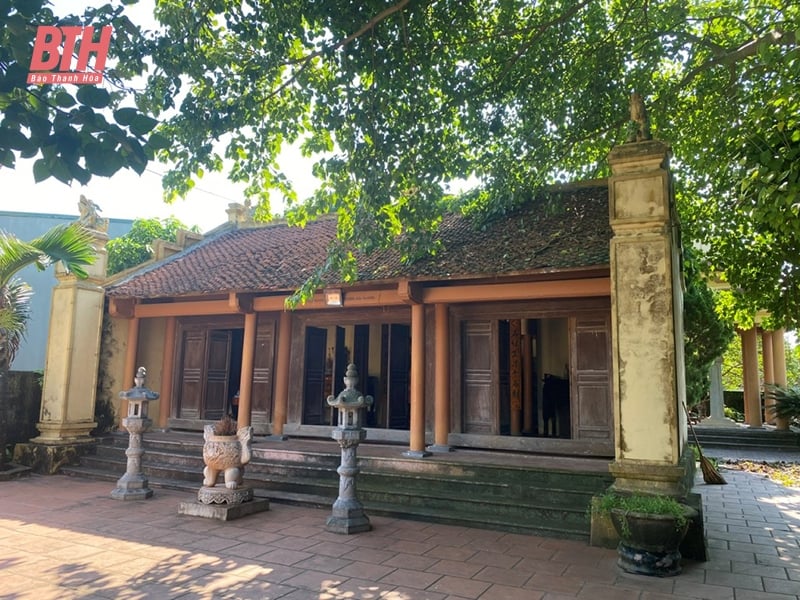
Like many traditional Vietnamese villages, the land of Kẻ Rủn in the past was home to numerous architectural and cultural structures, closely linked to the religious beliefs of the villagers. According to the elders, in the old Thạch Khê village, each (small) village had a temple dedicated to its tutelary deity. For example, Thạch Khê Thượng village worshipped the tutelary deity of Phổ Minh village; Thạch Khê Tiên village worshipped the tutelary deity of Quang Minh village. The tutelary deities of Phổ Minh and Quang Minh villages are believed to be the sons of Lê Ngọc, the former governor of Cửu Chân district.
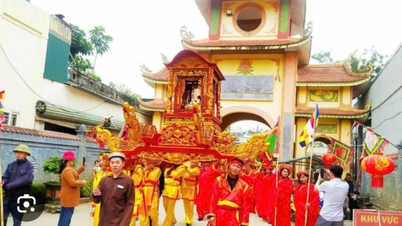
Located between the villages of Thach Khe Thuong and Thach Khe Tien is Trung communal house, where meetings are held to discuss important village (or commune) affairs. Trung communal house is also a cultural space where festivals are held during holidays and festivals for the local people.
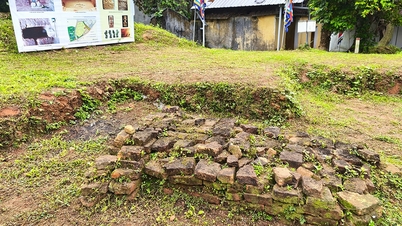
In addition, the village also has a pagoda, a stone bridge connecting the north and south banks of Mau Run; and the "ink well and pen tip," associated with stories about the studious spirit of the land and people of Thach Khe.
When mentioning historical sites in the ancient land of Thach Khe, it is impossible not to mention the National Historical Monument of the Stone Stele and Temple of Prime Minister Le Hy - a famous historical figure during the Le Trung Hung period. His name is mentioned in many historical texts such as the Dai Viet Su Ky Toan Thu (Complete History of Dai Viet) and the Kham Dinh Viet Su Thong Giam Cuong Muc (Imperial-approved Comprehensive History of Vietnam)... History "remembers" Le Hy not only as a high-ranking and influential politician, but also as a historian who contributed his intellect and efforts to the completion of the national history book, Dai Viet Su Ky Toan Thu.
And the ancient land of Ke Run - Thach Khe is also known as the birthplace of the late General Secretary Le Kha Phieu.

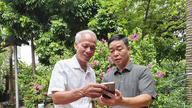
Leading us on a tour around the village, Mr. Le Huy Khai, a local resident, proudly said: “Ke Run, formerly Thach Khe, now Dong Khe, is an ancient land. Its antiquity lies not only in its name and place names, but also in the traditions and cultural beauty preserved by generations of people. This is our pride and also the motivation for the land and people of Dong Khe to continue striving to develop and build their homeland.”
Khanh Loc
(This article references and uses content from the books "Literary and Martial Talents of Thanh Hoa Province" and "History of the Dong Khe Commune Party Committee").
Source: https://baothanhhoa.vn/ve-dat-co-ke-run-235678.htm