

From the birthplace of the miners' movement
The Than Newspaper, the official mouthpiece of the first branch of the Vietnam Revolutionary Youth League in the mining area, is the origin of revolutionary journalism in Quang Ninh today. Going back in history, in 1928, a group of party members from Hai Phong and Thai Binh came to Cam Pha and Cua Ong to establish the first branch in Quang Ninh, under the Hai Phong City Party Committee. The branch decided to publish a newspaper called Than to propagate revolutionary awareness among workers, with Secretary Dang Chau Tue as editor-in-chief. The newspaper's editorial office was a rented temporary house located on the former Boocdo Street, now Quang Trung Street, in Cam Dong Ward, Cam Pha City. Today, the simple two-story house from those days remains, nestled in a small alley, quietly present amidst the bustling contemporary life. The house has become a historical witness throughout nearly a century of upheaval in the mining area.
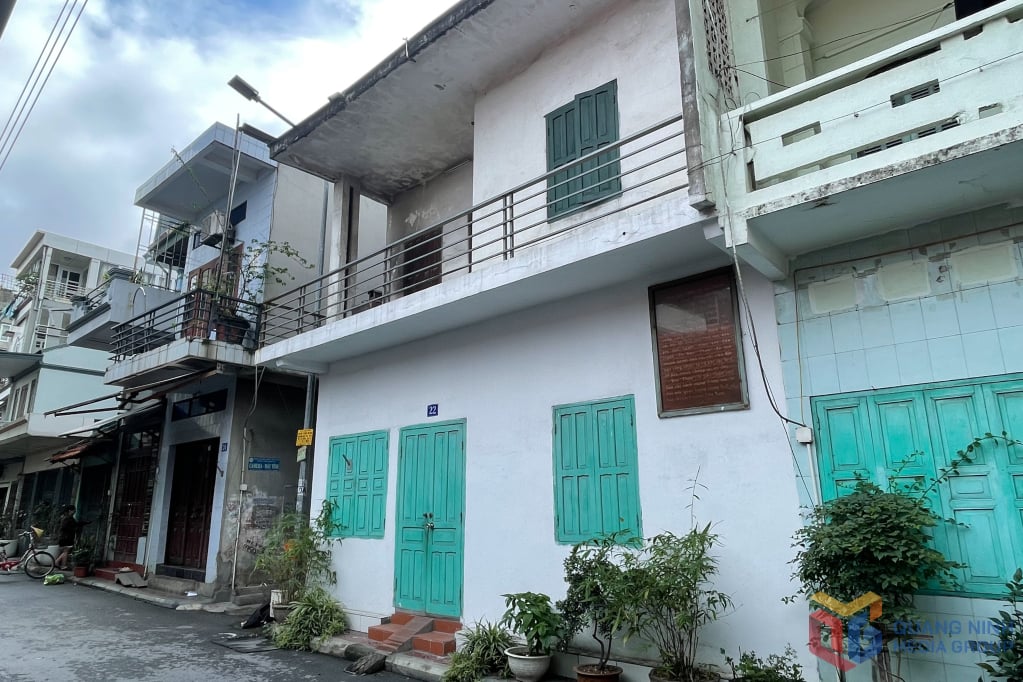
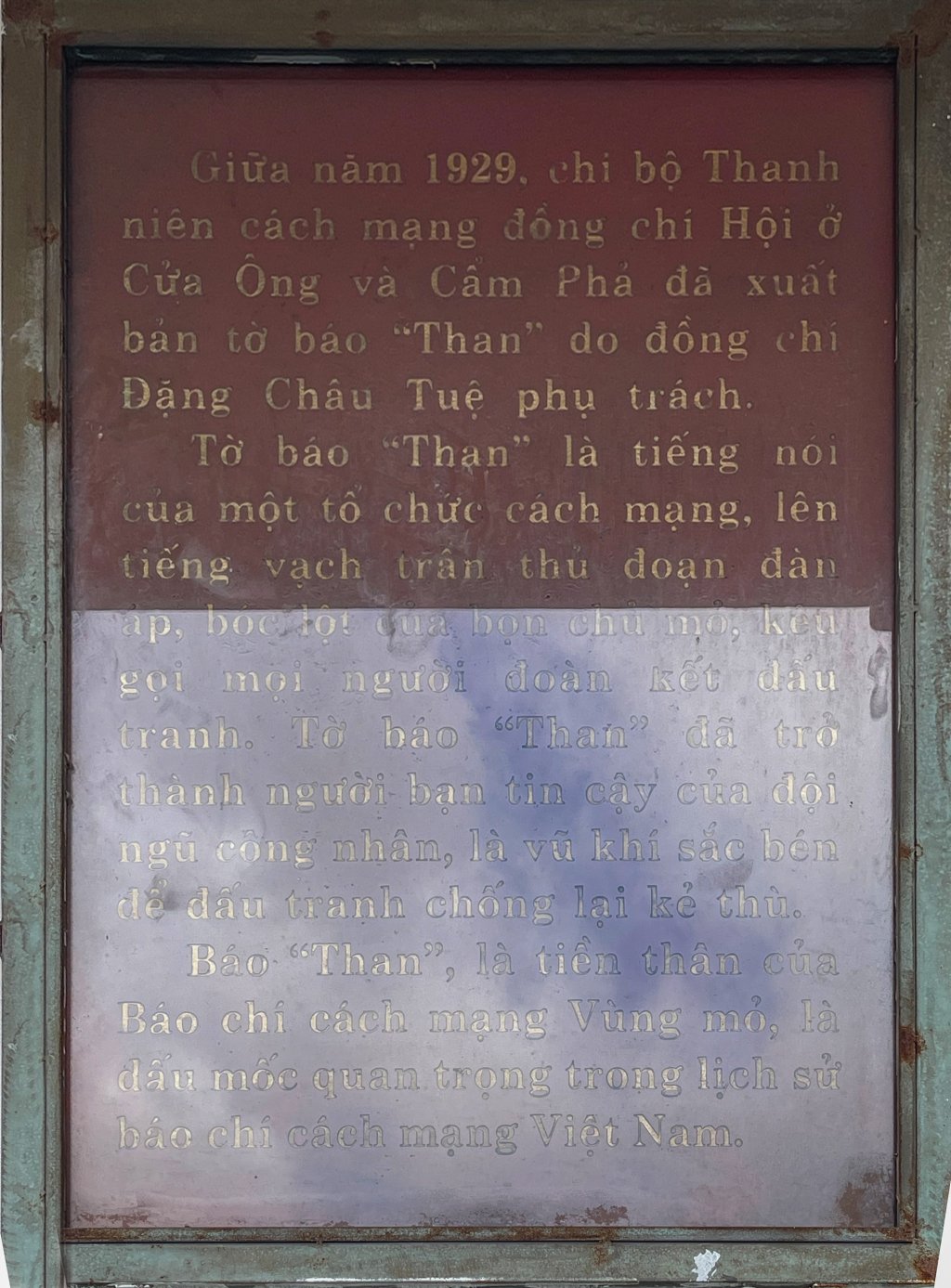
It should be added that the establishment of the Than newspaper in Cam Pha held a rather special significance. This was because it was one of the earliest "cradles" of the Vietnamese working class. It was also the starting point of the patriotic struggle of miners in particular, and of the vast majority of people and ethnic groups in Quang Ninh province in general, against the pressure and exploitation of the French colonialists and mine owners. Perhaps it was precisely because of this special characteristic that, despite being small and hidden in enemy-occupied territory, and using simple, even rudimentary, printing methods, this small editorial office persistently produced pages full of information and propaganda for the revolution. It was a sharp weapon exposing the repressive and exploitative tactics of the mine owners, presenting a true picture of the daily hardships of the miners, and calling on them to rise up and fight. The newspaper also served as a source of moral support for the miners' struggle movements, enabling them to grow in both quantity and quality, gradually transforming into a conscious, organized form of struggle that attracted a large number of workers and achieved both economic and political rights.
Following the Than newspaper, the predecessor of Quang Ninh Newspaper had many names that were merged, even interrupted, suspended, and then republished... according to the ups and downs of revolutionary history. From after the August 1945 Revolution to 1963, several newspapers were established, such as the Bach Dang Wave newspaper printed in the Dong Trieu War Zone; the Hai Ninh News newspaper printed in Dinh Lap; the Hai Ninh Liberation Newspaper printed in Binh Lieu; the Quang Yen Newspaper, the Mining Region newspaper, the Miners' Magazine, the News newspaper, the Hong Quang News newspaper... Until Quang Ninh province was established on October 30, 1963, Quang Ninh Newspaper was officially established according to Resolution No. 03-NQ-TU of the Provincial Party Committee dated December 31, 1963.
Less than a year after the province's establishment, the entire North entered a war of attrition against the destructive air and naval attacks of the American imperialists. From the headquarters of the Quang Ninh Newspaper, then located at 31 Huu Nghi Street, Hon Gai town (later the site of the Vietnam-Japan Labor Culture Palace), articles reporting on battles and the victories of the army and people of the mining region continued to be published regularly and without interruption. When the enemy escalated the war and bombarded the area more fiercely, the editorial office had to evacuate to the Huu Nghi mine, Ha Lam mine, and later to the Quang Hanh rocky mountain area (Cam Pha). The rugged mountains and forests provided shelter from bombs and bullets, creating conditions for the newspaper's staff and reporters to continue their work, remaining steadfast fighters on the information and propaganda front.
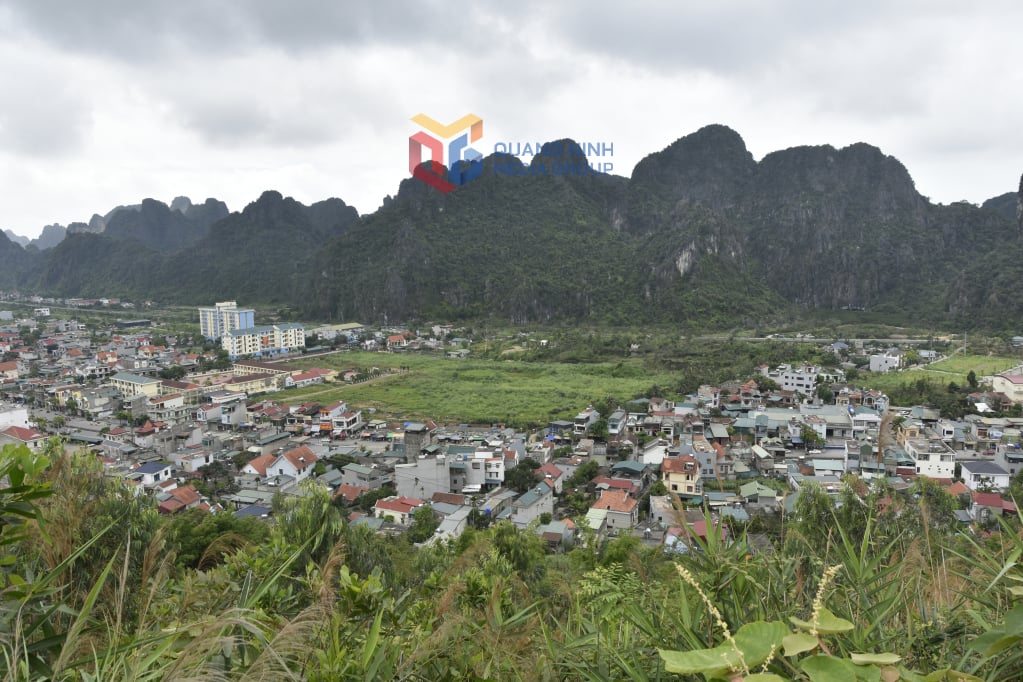
However, the Quang Ninh Newspaper only stayed in the Quang Hanh area for nearly a year before having to evacuate again to the Hoanh Bo area (now Ha Long City) to ensure safe and secret operations, avoiding areas heavily bombed by aircraft. Especially Son Duong commune, with its high mountainous terrain, many caves interspersed with plains, and its relatively close proximity to the center of Hon Gai, was chosen as a revolutionary base and evacuation area for many agencies, factories, hospitals, etc. of Quang Ninh province during the resistance war. Specifically, it served as a revolutionary base for Hoanh Bo district throughout the nine-year long resistance against French colonialism until victory; afterwards, it became a safe evacuation point for the Provincial Party Committee, departments, agencies of the province and Hoanh Bo district, and the Naval Command, Northeast Military Region during the resistance war against the US from 1964-1968. During those years, the people of the commune actively participated in sheltering cadres and contributing manpower and resources to serve the revolution. Thanks to these contributions, in 2005, Son Duong commune was granted the status of a provincial-level historical revolutionary base by the Provincial People's Committee; and in 2010, the commune was honored to receive the title of Hero of the People's Armed Forces.
In 1968-1969, the Quang Ninh Newspaper headquarters was located in the rocky mountainous area of Son Duong commune, opposite Cay Thi hamlet, with the printing house also nearby. From 1970-1972, the headquarters evacuated to the forest west of Dan Chu commune, while the printing house moved deep into the Dong Dinh forest, about 3km from the headquarters. Despite difficult transportation, lack of electricity, and shortages of living and working conditions, the staff and reporters overcame countless challenges. Clearly aware of the important revolutionary task entrusted to them, and with the wholehearted support and protection of the people of Son Duong, the Quang Ninh Newspaper continued to publish regularly, without interruption, news articles about the situation in key bomb-ridden areas, and highlighting exemplary production and combat achievements...
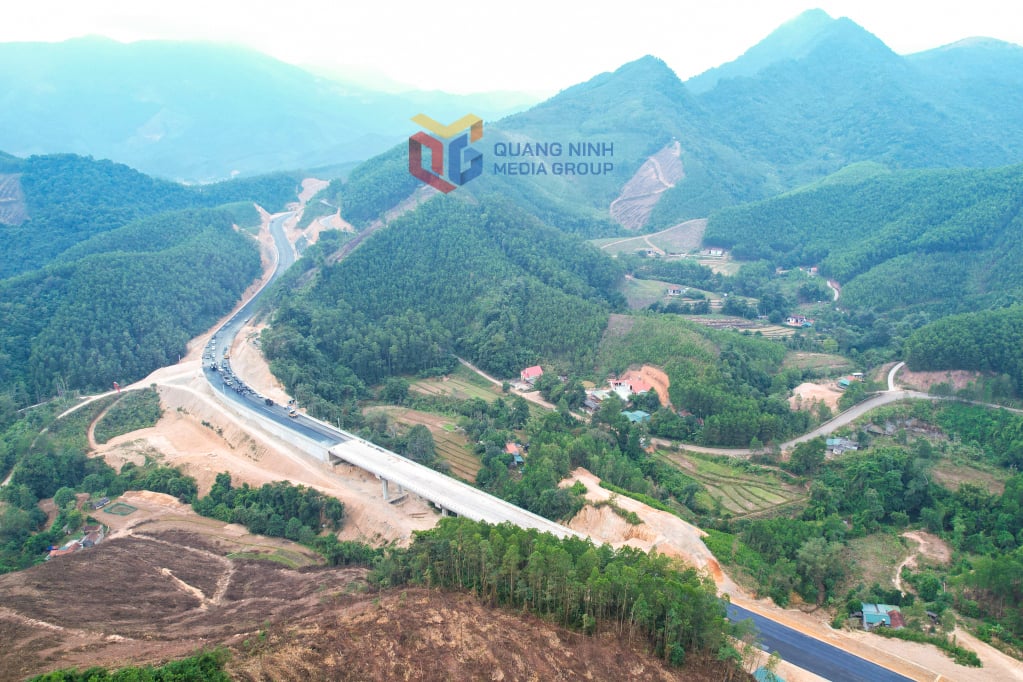
Undeterred by danger, they relentlessly overcome difficulties.
During the war of resistance against the US, radio broadcasts played an extremely important role, becoming a close friend of our army and people. Thanks to the widespread radio waves, news of victories and military communiqués were quickly transmitted to every unit, locality, and officer and soldier. These broadcasts also helped the people understand the enemy's new war schemes and tactics, wholeheartedly supporting the revolution and contributing their utmost to the fight to repel foreign invaders and achieve peace and national reunification.
In April 1956, one year after the liberation of the mining area, the Hon Gai Radio Station and the Cam Pha Radio Station were built with assistance from the Soviet Union. These were two of the 11 radio stations in the entire North that received assistance from the Soviet Union at that time, and because it was an industrial zone, the mining area was prioritized for the construction of these two radio stations. According to the accounts of veteran journalists, the headquarters of the Hon Gai Radio Station was then located in Ben Doan. Due to difficult and limited conditions, there were only a few pieces of equipment, including two 600W amplifiers, one specialized machine, a Mac8 tape recorder, a recording room, and a system of wires running from the station's center in Ben Doan to the Bai Chay, Ha Lam, Coc 5, and Ha Tu ferry terminals. The initial public address system consisted of 16 large speakers and 95 smaller 1/4W speakers, with wires strung along major streets to utilize existing utility poles.
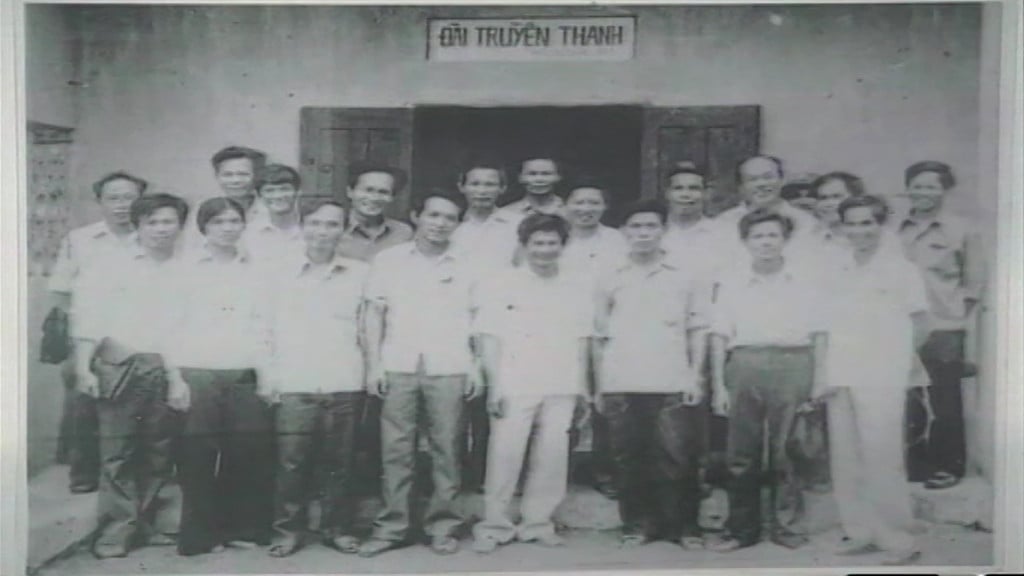
The first loudspeaker broadcast in Quang Ninh Province sounded at exactly 7:00 AM on September 2nd, 1956. It was a relay broadcast from the Voice of Vietnam, with the Hon Gai loudspeaker system broadcasting a live report of the National Day celebration in Hanoi. The people of Hon Gai listened intently to President Ho Chi Minh's voice, transmitted from the historic Ba Dinh Square, a warm and sacred sound. This first broadcast laid the foundation for Quang Ninh's broadcasting career. Following this success, the radio stations in Cam Pha, Quang Yen, Tien Yen, and Mong Cai also quickly began operating, utilizing equipment provided by China. Later, the three stations in Hon Gai, Cam Pha, and Quang Yen were merged into the Hong Quang Regional Radio Station, under the Hong Quang Administrative Committee. Until October 30, 1963, when Quang Ninh province was established, the radio stations of the two localities of Hai Ninh and Hong Quang were merged under the name Quang Ninh Radio Station.
As the war against the US intensified, the radio station's headquarters changed locations several times; its personnel and equipment had to be evacuated to many places to ensure operational safety. Initially, it was located at Ham Cot 8 Mountain, Beo Mountain, then at Deo But Cave (Cam Pha), and later at Dong Dinh (Hoanh Bo), Bo Hon Slope, Bai Tho Mountain... However, due to the nature of the work, which depended heavily on machinery and equipment, it was impossible to evacuate the entire staff. At that time, a small group remained at the central headquarters, steadfastly holding their ground to serve in program production and combat. Regardless of the circumstances or the difficulties, radio broadcasts continued to be produced. Amidst numerous air raids, the radio reporters, along with the anti-aircraft artillery soldiers guarding the skies, remained calm and courageous, promptly grasping the enemy's movements to inform the army units, self-defense units, and the people. On June 9, 1972, American planes dropped four bombs on the radio station's headquarters in Ben Doan, completely destroying the facilities and resulting in the heroic deaths of three staff members.

The location chosen for the new headquarters of Quang Ninh Radio Station was the former Provincial Party Committee headquarters at Bai Chay ferry terminal. With the province's support, the staff, reporters, and employees of the station became even more passionate about their profession and dedicated to their information and propaganda mission. Many important milestones recording the station's significant development are still preserved. Specifically, in 1976, the radio station officially became Quang Ninh Broadcasting Station, receiving a GZ-10-2 medium-wave transmitter with a power of 10KW and a frequency of KHZ from the Central Government. Simultaneously, thanks to proactive research, surveys, and the development of television broadcasting plans, the first Quang Ninh television broadcast was conducted on September 2nd, 1983, marking a significant milestone in the development of Quang Ninh's journalism. With this event, Quang Ninh province became the first locality in the entire Northern region to have an independent television station in addition to Vietnam Television in Hanoi. The agency was officially renamed Quang Ninh Radio and Television Station, ushering in a period of strong and comprehensive breakthroughs that continues to this day.
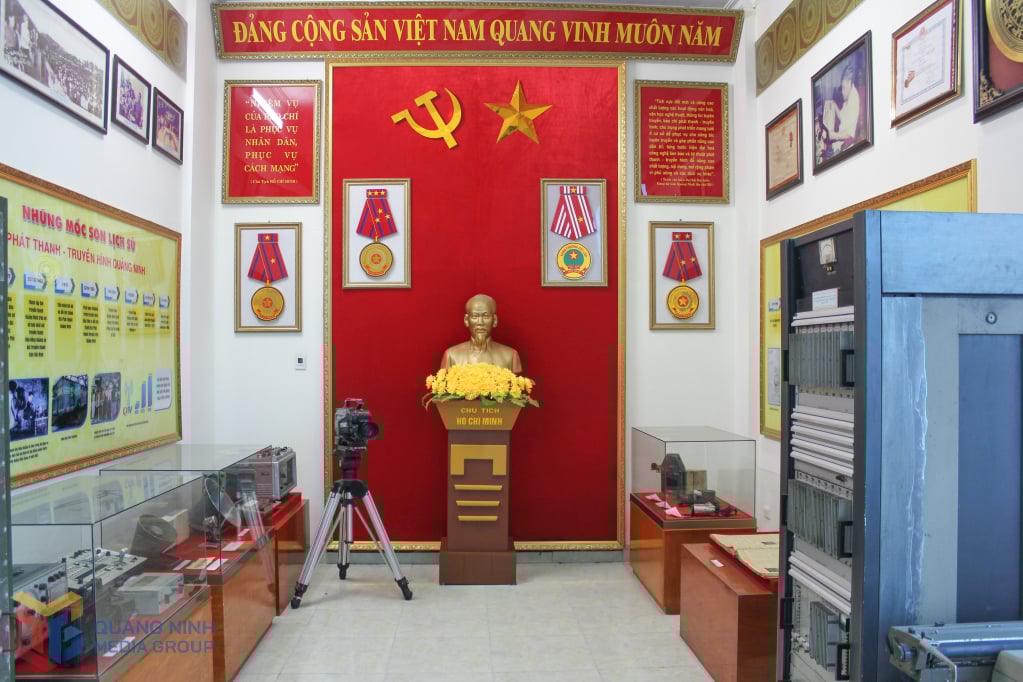

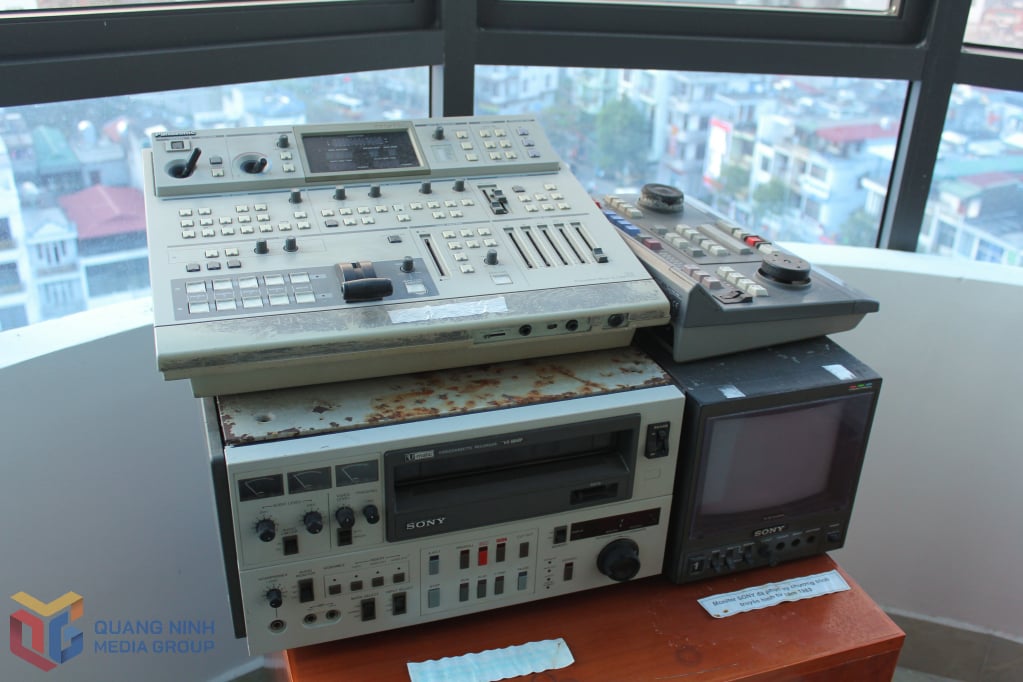
Remembering the glorious past helps us appreciate today's achievements. The team of journalists in Quang Ninh is striving to uphold the revolutionary traditions of previous generations, worthy of the trust of the Party Committee, the government, and the people of all ethnic groups in the province, and accompanying the development of our mining homeland.
Source: https://baoquangninh.vn/ve-nguon-thoi-khang-chien-3359885.html


![[Photo] A vibrant celebration of generations of Nhan Dan Newspaper staff](https://vphoto.vietnam.vn/thumb/1200x675/vietnam/resource/IMAGE/2026/03/11/1773228432744_cb-75-nam-7-7034-jpg.webp)























































































Comment (0)